Weighted Plate Overhead Reverse Lunge
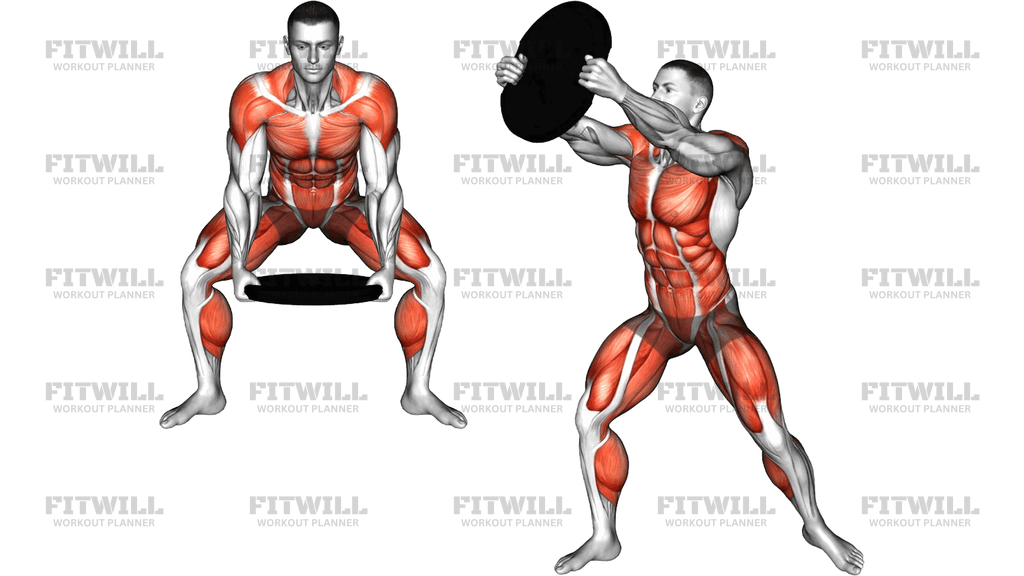
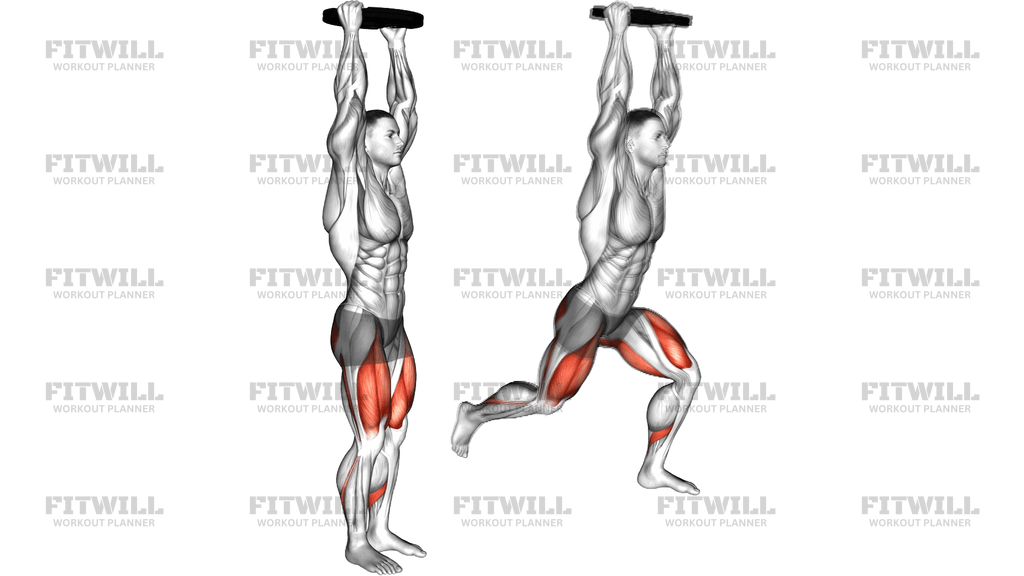
The Weighted Plate Overhead Reverse Lunge is a full-body strength movement that combines an overhead hold with a backward-stepping lunge. You press or hold a weight plate with both hands, lock your arms straight above your head, and keep the plate there for the entire set while you step one leg back into a lunge and drive back up to standing. Because the load sits directly over your shoulders and spine, every rep demands a tall torso, a braced midsection, and stable shoulders.
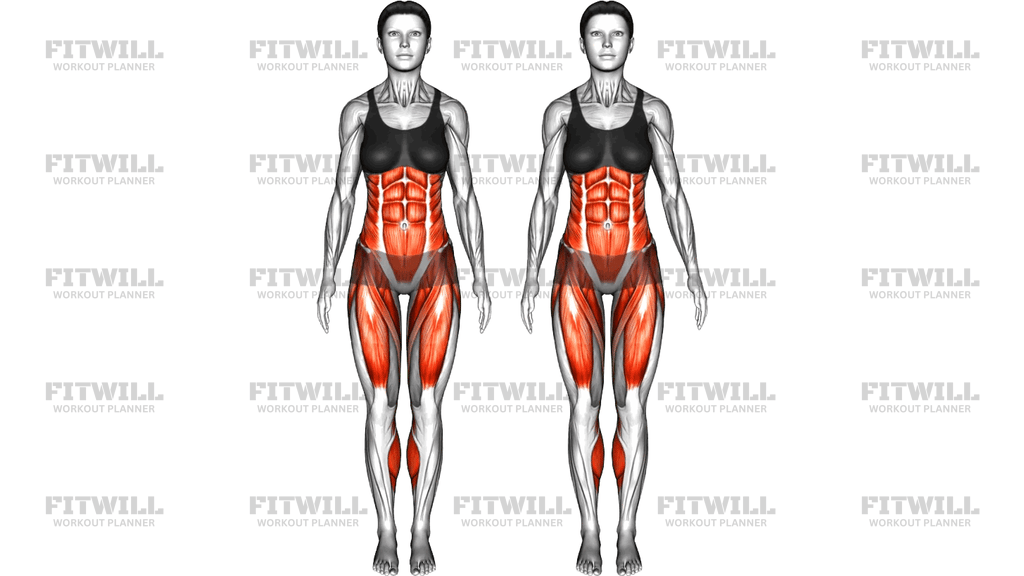
This exercise works two jobs at once. The reverse lunge itself targets the quadriceps and glutes of the front leg, with the hamstrings and calves helping to control the descent and power the return. Holding the plate overhead keeps the shoulders, upper back, and triceps under continuous tension, while the core has to resist the pull of the weight in every direction to keep your ribcage stacked over your hips.
The overhead position is what separates this from a standard lunge, so the setup matters more than usual. A plate held too far forward turns the movement into a lower-back test instead of a leg and shoulder exercise. Before you step back, get the plate stacked over the middle of your head, pull your ribs down, and squeeze your glutes. If you cannot hold that position comfortably while standing, the plate is too heavy.
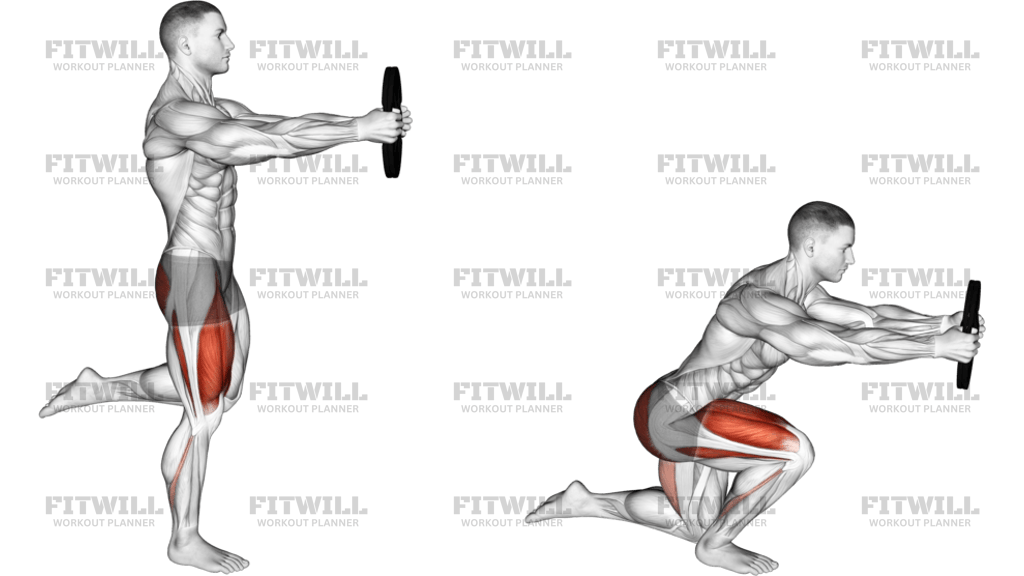
Execution is straightforward but unforgiving. From a standing position with feet hip-width apart, step one foot straight back and lower until your front thigh is roughly parallel to the floor and your back knee hovers just above the ground. The front shin should stay close to vertical, and the plate should travel with you without drifting forward or behind you. Push through the front foot to return to standing, then repeat on the other side or complete all reps on one leg before switching.
This movement suits lifters who already own a decent overhead position and solid lunge mechanics. It shows up often in conditioning circuits, athletic training, and functional strength programs because it trains the legs, shoulders, and trunk in one economical pattern. People with cranky knees often tolerate the reverse lunge better than a forward lunge, since stepping back loads the front leg more gradually and discourages overstriding.
Start conservative with the weight. A 5 to 10 kg plate is plenty for most people at first, because the limiting factor is almost always overhead and core stability, not leg strength. Keep the reps controlled, stop the set when the plate starts to drift out of position, and only progress the load when you can hold the overhead lockout without your lower back arching or your arms bending.
[ Workout Log & Planner ]
Put your next workout in Fitwill
Keep your plan and training log ready when you are.


Instructions
- Stand tall with your feet hip-width apart and hold a weight plate by its edges with both hands at chest height.
- Press the plate straight up until your arms are fully locked out overhead, positioning it so it sits directly over the crown of your head, slightly in front of your face.
- Squeeze your glutes, brace your abs, and pull your ribs down so your lower back is not arched under the weight.
- Keep your eyes forward and your shoulders actively pressed up toward the plate rather than letting them shrug loosely around your ears.
- Step one foot straight back into a long stance and lower your back knee toward the floor, keeping your front shin close to vertical.
- Descend until your front thigh is about parallel to the floor and your back knee is just above or lightly touching the ground, with the plate still stacked over your head.
- Drive through the heel and midfoot of your front leg to push back up to a full standing position without letting the plate drift forward.
- Exhale as you step back and lower, inhale at the bottom, and breathe steadily as you return to standing.
- Complete the reps on one side, then switch legs, or alternate legs rep by rep if that feels more balanced.
- Lower the plate back to your chest or set it down on a bench between sets, and reset your overhead position before starting the next set.
Tips & Tricks
- If the plate keeps drifting forward as you lunge, it is usually a core brace problem, not a shoulder problem. Exhale hard, pull your ribs down, and re-squeeze your glutes before stepping back.
- Bending your elbows mid-set is a sign the load is too heavy for your overhead position. Drop to a lighter plate rather than turning the hold into a partial press.
- Keep your stepping foot traveling straight back, not out to the side. A crossover step narrows your base and makes the overhead balance much harder than it needs to be.
- Think about pushing the floor away with your front leg on the way up instead of pulling your back leg forward. This keeps tension in the quads and glutes and protects your knees.
- If your lower back arches when you press the plate up, stretch your lats and shoulders first. Limited overhead mobility forces people to compensate through the lumbar spine.
- A plate with a smooth rim can be harder to grip than a dumbbell or kettlebell. Chalk or a plate with gripped edges makes a real difference once your hands get sweaty.
- Control the descent for two counts instead of dropping into the lunge. The overhead hold gets much harder when momentum is added, and rushing usually pushes the plate forward.
- Stand near a wall or rack when learning the movement. If you lose the overhead position, set the plate down safely instead of fighting to save a failing rep.
- Shorten your range before shortening your stance. A deeper lunge with a long stance is easier on the knees than a short, cramped stance with an upright torso jammed forward.
Frequently Asked Questions
Which muscles does the Weighted Plate Overhead Reverse Lunge work the most?
The quadriceps and glutes of the front leg do most of the work during each lunge. Holding the plate overhead keeps the shoulders, upper back, and triceps under steady tension, and your core works the whole time to keep your torso upright.
Why hold the plate overhead instead of at my chest or by my sides?
The overhead hold adds a shoulder and trunk stability demand that a front rack or goblet position does not. It forces you to stay tall and braced, which makes the lunge harder without adding much weight.
Is the Weighted Plate Overhead Reverse Lunge suitable for beginners?
Beginners should first master bodyweight reverse lunges and an overhead press with a light plate before combining them. Starting with a very light plate and short sets is a reasonable way to learn the combined pattern.
How heavy should the plate be?
Choose a weight you can hold locked out overhead with straight arms and a neutral ribcage for the entire set. For most people this is far less than what their legs could lunge, often 5 to 15 kg.
Should I alternate legs or complete all reps on one side?
Both work. Completing all reps on one side before switching makes it easier to notice left-right differences in overhead control, while alternating keeps the effort even across a timed set.
Why does my lower back feel this more than my abs?
That usually means the plate is sitting in front of your head and pulling your torso forward, so your lumbar spine is arching to compensate. Re-stack the plate directly overhead, squeeze your glutes, and reduce the weight if the arch persists.
What can I use if I do not have a weight plate?
A single dumbbell held vertically with both hands under the top head, a kettlebell held by the horns, or even a light sandbag works the same way. The key is a load you can grip securely with both hands overhead.
Are reverse lunges safer for the knees than forward lunges?
For many people, yes. Stepping back lets you place the front foot deliberately and load the leg gradually, which reduces the abrupt braking demand of a forward step. Anyone with knee pain should still move within a pain-free range and consult a professional if discomfort continues.
How deep should I lunge while holding the plate overhead?
Lower until your front thigh is roughly parallel to the floor and your back knee is just above the ground, as long as you can keep the plate stacked and your torso upright. If depth costs you the overhead position, lunge less deep and work on mobility separately.
How should I breathe during the Weighted Plate Overhead Reverse Lunge?
Inhale before you step back and brace your trunk, then exhale as you drive up to standing. Avoid holding your breath for long stretches, especially with a load overhead.