Weighted Sandbag Hang Power Clean
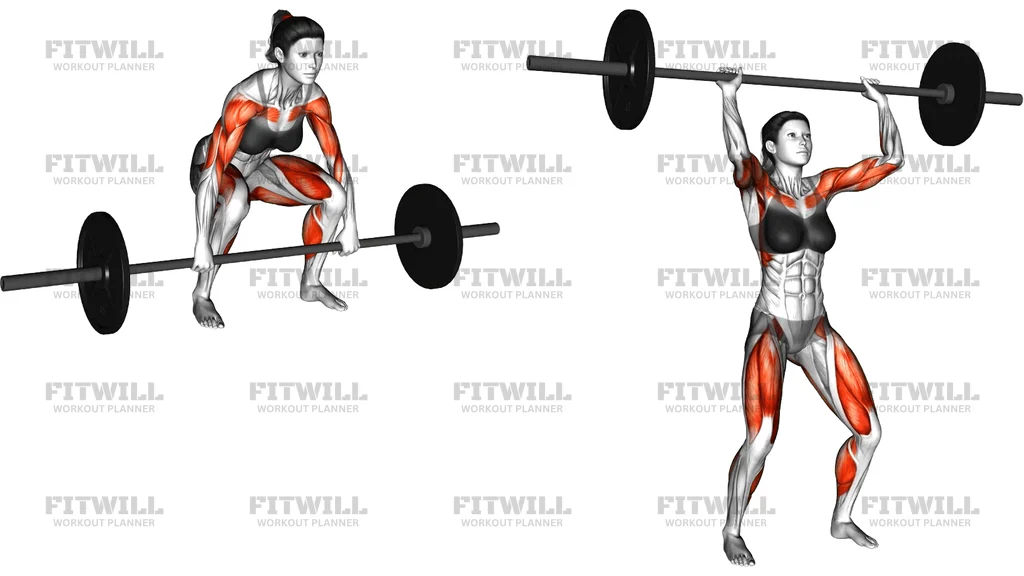
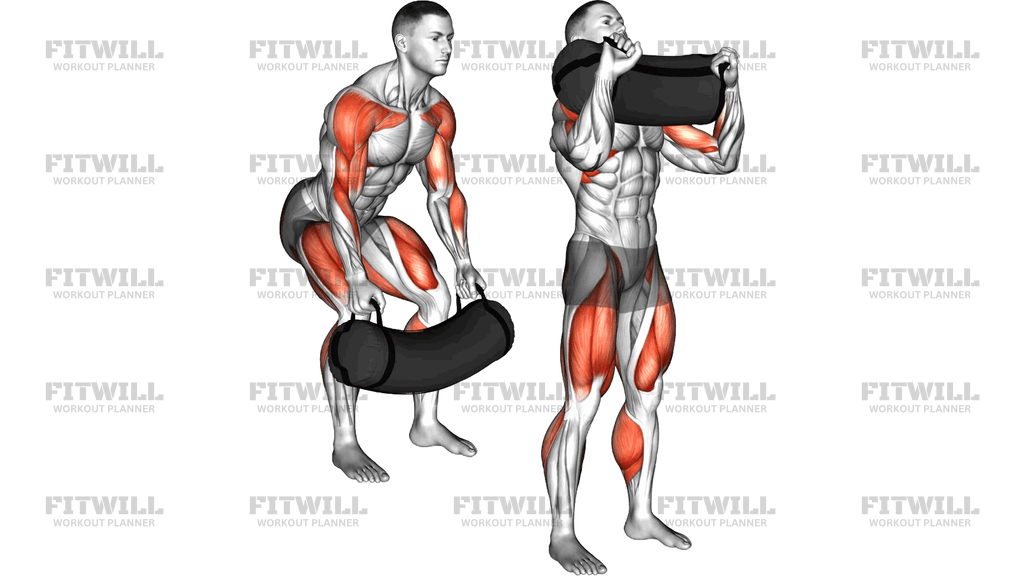
The Weighted Sandbag Hang Power Clean is a full-body explosive lift where you pull a loaded sandbag from around knee or mid-thigh height and catch it at your shoulders in a tall stance, without dropping into a deep squat. The hang position is what separates this from a floor-start clean: you set up in a hinged athletic posture, sandbag hanging from straight arms, then drive the floor away and pull the bag up in one continuous burst. In the finished position the sandbag rests across your upper chest and shoulders with elbows high in front, which is why this lift is so demanding on the whole trunk and upper back.
The sandbag changes the character of the clean compared to a barbell. The load shifts inside the bag as you move, the handles give you a narrower, more forgiving grip, and the soft body of the bag lets you catch it high on the chest without bruising your shoulders. That makes the movement approachable for lifters who want Olympic-lift-style power training without a barbell or bumper plates. It also makes it harder in a specific way: your forearms, grip, and trunk have to manage a shifting object while you produce force at speed.
This exercise is useful for field-sport athletes, grapplers, and general strength trainees who want to build hip and leg power, a strong pull, and conditioning all at once. Because it starts from the hang, it emphasizes the second pull — the violent hip and knee extension that drives the bag upward — more than the slow pull from the floor. It trains the quads, glutes, and hamstrings as the engines, with the traps, shoulders, and upper back guiding the bag into the rack position, and the lower back and core holding your spine rigid through the transition.
Setup matters more than most people expect. Your stance should be about hip width with weight balanced over the middle of your foot, the sandbag hanging close to your legs, and your hinge coming from the hips rather than a rounded low back. If you start too far over the bag or let it drift away from your body, the pull loses its vertical path and the catch turns into a wrestling match. A tight setup lets the power flow upward; a loose one turns the lift into a deadlift-and-curl combination.
Execute the lift by extending your hips and knees hard, keeping the bag close to your thighs, then shrugging and pulling your elbows up and through so the bag rolls over your hands and lands on your front shoulders. Catch it with bent knees in a shallow dip — that is the "power" portion, meaning you stay relatively tall rather than riding the catch into a full squat. Lower the bag back to the hang with control, reset your hinge, and breathe before the next rep rather than holding your breath through a whole set.
Keep the load honest. A sandbag clean rewards crisp technique with real carryover to sprinting, jumping, and carrying, but a bag that is too heavy pulls you forward and encourages your lower back to take over the lift. Start with a moderate weight, groove the timing of hip extension and elbow turnover, and only add filler to the bag when the catch lands cleanly on your shoulders rep after rep.
[ Workout Log & Planner ]
Put your next workout in Fitwill
Keep your plan and training log ready when you are.


Instructions
- Load a sandbag to a moderate weight and set it on the floor in front of you with the handles facing up.
- Stand with your feet about hip width apart, toes turned out slightly, and grip the bag's handles with both hands just outside your thighs.
- Hinge at the hips and bend your knees until the sandbag hangs at knee to mid-thigh height, arms straight, shoulders slightly ahead of the bag, and your spine flat.
- Take a breath and brace your trunk like you are about to be punched, keeping the bag tight against your legs.
- Drive your heels into the floor and snap your hips and knees open to full extension, letting the momentum carry the sandbag up along your thighs and torso.
- As the bag reaches your mid-chest, shrug your traps, pull your elbows up high and fast, then whip your elbows under so your forearms are vertical in front of you.
- Catch the sandbag across your front shoulders and upper chest in a shallow knee dip, keeping your torso upright and eyes forward.
- Stand all the way up with the bag racked on your shoulders, elbows pointing down or slightly out to keep the bag settled.
- Lower the sandbag back to the hang position under control by dropping your elbows and hinging at the hips, letting the bag slide down your thighs.
- Exhale, reset your hinge and grip, and breathe before starting the next repetition.
Tips & Tricks
- The most common fault is turning the pull into a heavy deadlift followed by an arm curl — if your elbows bend before your hips finish extending, the bag will stall and drift forward. Focus on finishing the hip snap first, then pulling.
- Keep the sandbag dragging along your thighs during the pull. If it swings away from your body, it lands heavy on your chest and pulls your torso forward at the catch.
- Do not round your lower back in the hang setup. Sit your hips back and pull your chest up so the hinge comes from your hips, not your spine.
- Catch the bag on your front delts and upper chest, not in your hands. Elbows under the bag, forearms roughly vertical — if the bag is resting on your biceps, you will feel it in your wrists and elbows.
- Use a shallow dip for the catch. If you find yourself dropping into a deep squat to get under the bag, the weight is too heavy or your pull is too slow.
- The shifting fill inside the bag is part of the training effect — squeeze the handles hard and keep your trunk braced so the bag's movement does not rotate your shoulders.
- Reps of this lift fatigue the grip fast. Once your forearms start burning and the bag begins to slip, end the set rather than letting the bag drop away mid-pull.
- Space your reps as short restorative pauses rather than one continuous grind: breathe and reset your hinge at the hang each rep so the lift stays crisp and explosive.
- If your knees cave inward as you extend, think about spreading the floor with your feet and keeping your shins vertical a moment longer before the drive.
Frequently Asked Questions
What muscles does the Weighted Sandbag Hang Power Clean work?
The quads, glutes, and hamstrings produce the explosive extension, while the traps, shoulders, and upper back guide the bag into the rack. Your forearms, grip, and entire trunk work hard to control the shifting sandbag throughout.
Is the Weighted Sandbag Hang Power Clean good for beginners?
Yes, it is one of the friendliest ways to learn clean mechanics because the soft bag and neutral handles are forgiving on the shoulders and wrists. Beginners should start light and practice the hip extension and elbow turnover before adding significant weight.
Why start from the hang instead of the floor with a sandbag?
The hang position removes the slow floor pull and puts you straight into the explosive second pull, where the hips and knees extend hard. It also makes the setup simpler and reduces how much lower back strength the start demands.
How deep should I dip when catching the Weighted Sandbag Hang Power Clean?
Only a shallow knee bend — a few inches. If you need to drop into a deep squat to receive the bag, the pull was too slow or the load too heavy, so reduce the weight and sharpen the hip snap.
Where exactly should the sandbag sit at the top of the movement?
It should rest across your front shoulders and upper chest with your elbows tucked under it, not hanging in your hands. This rack position keeps your torso upright and lets your legs and trunk absorb the catch.
My lower back gets sore after this lift — what am I doing wrong?
A sore lower back usually means your spine is doing the hinging work instead of your hips, or the bag is drifting away from your body and pulling you forward. Rebuild the setup with a flat back, bag tight to the legs, and moderate weight before loading further.
What can I substitute if I do not have a sandbag?
A barbell or dumbbell hang power clean covers the same movement pattern, and a kettlebell or medicine ball clean works well for explosive hip training. Each tool changes the catch slightly, so start lighter than you think you need.
How many reps and sets should I use for the Weighted Sandbag Hang Power Clean?
Keep sets short and explosive — 3 to 5 reps per set works well, since the lift is about power quality, not muscular burn. Rest enough between sets that each rep stays fast and technically sharp.
How should I breathe during this exercise?
Inhale and brace before each pull, exhale at the top or during the reset at the hang. Avoid holding your breath across multiple reps, because trunk pressure and grip both fade quickly on cleans.