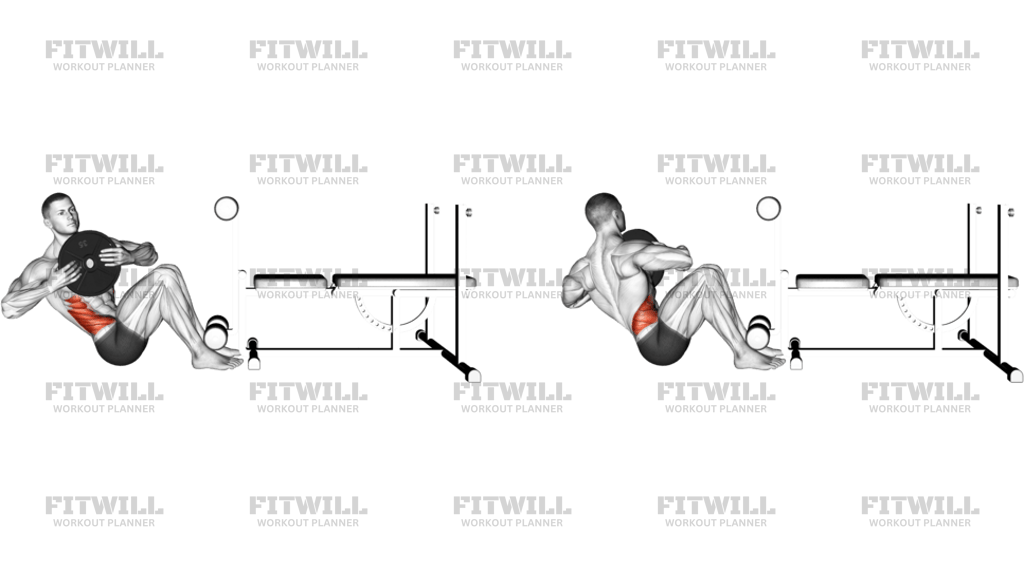
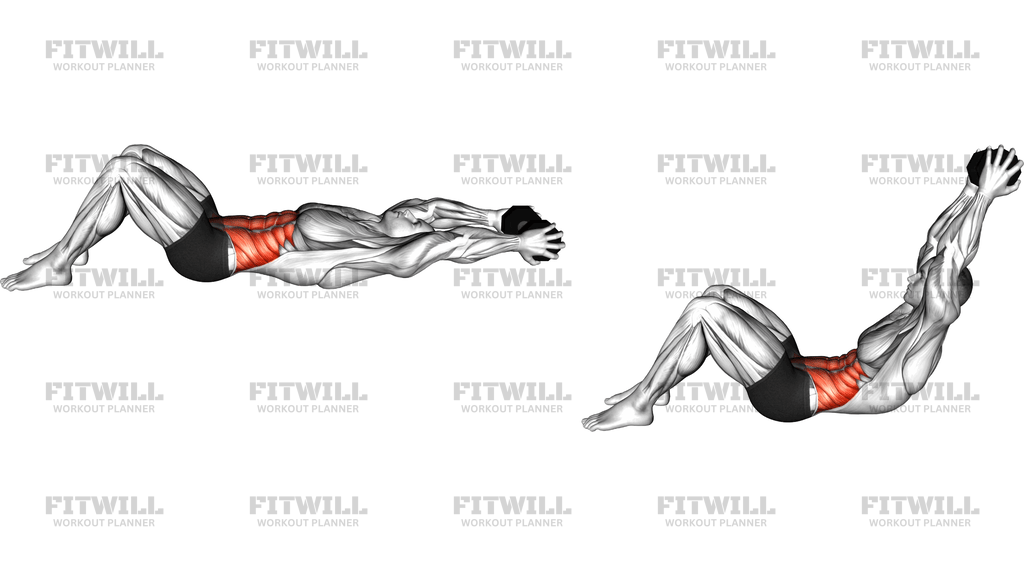
Dumbbell Twisting Crunch Legs On Bench
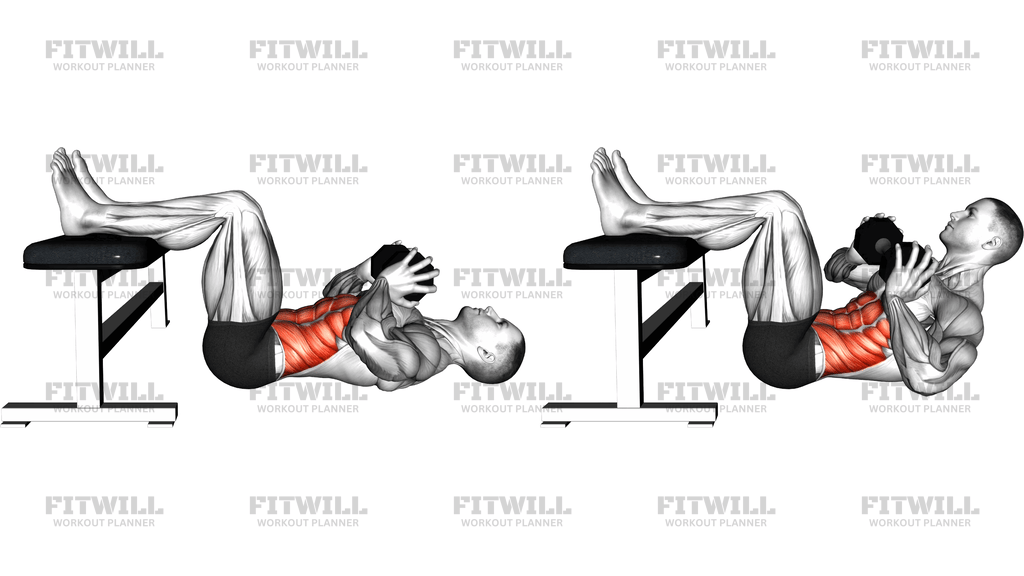
The Dumbbell Twisting Crunch is a weighted abdominal exercise performed lying on the floor with your lower legs resting on a flat bench. You hold a single dumbbell against your chest with both hands, crunch your upper body off the floor, and add a rotation so one shoulder drives across your body toward the opposite hip. The weighted load plus the twisting angle makes this a step up from a standard floor crunch, both in difficulty and in how much of the midsection it challenges.
The primary work comes from the rectus abdominis, the front wall of the abs that pulls the ribs toward the pelvis. The rotation shifts significant demand onto the obliques on the side of the torso, which contract to shorten the distance between one shoulder and the opposite hip. Keeping the legs elevated and supported on the bench also removes most of the hip flexor contribution you get when the feet are planted, so the abdominal muscles do the lifting instead of the legs pulling.
This setup matters more than it might seem. Resting the calves on the bench takes tension out of the lower back, stabilizes the pelvis, and stops your feet from helping or anchoring the movement the way they do in a classic feet-on-the-floor crunch. Holding the dumbbell snugly against the chest keeps the load close to your center of mass; letting it drift forward or swing turns the crunch into a sloppy press and steals tension from the abs.
To perform it well, exhale as you curl up, leading with the ribs rather than the head or elbows, and rotate so the elbow moves toward the opposite knee or hip. Your lower back should stay in contact with the floor at the top of most repetitions, with the movement coming from spinal flexion and rotation, not momentum. Lower down slowly until the head and shoulders are just above the floor, then repeat, alternating sides on each rep or completing all reps on one side before switching.
This exercise suits lifters who already handle bodyweight crunches comfortably and want to load the pattern, as well as anyone training the waist with limited equipment. It is commonly used in core finishers, ab-focused days, and rotational strength work for sports that involve turning, throwing, or changing direction. Start light; even a modest dumbbell makes this noticeably harder than an unweighted twisting crunch.
The main safety point is spinal control. Because the exercise combines flexion and rotation under load, keep the rep tempo deliberate and never yank the dumbbell across with the arms. If you feel it in your neck, the weight is probably too heavy or you are pulling with your head instead of curling with the ribs.
[ Workout Log & Planner ]
Put your next workout in Fitwill
Keep your plan and training log ready when you are.


Instructions
- Place a flat bench beside you and lie on the floor on your back, then rest your lower legs on the bench so your hips and knees are both bent at roughly 90 degrees.
- Hold one dumbbell with both hands pressed against your upper chest, elbows tucked in toward your ribs, and keep the weight in contact with your torso throughout the set.
- Lightly brace your abs and press your lower back into the floor before you begin the first rep.
- Exhale and curl your head, shoulders, and upper back off the floor, driving your ribs down toward your pelvis.
- As you rise, rotate your torso so one elbow and shoulder travel across your body toward the opposite hip, keeping the dumbbell hugged to your chest.
- Pause briefly at the top with the abs fully shortened; do not let the dumbbell drift forward past the collarbones.
- Inhale as you lower under control, unrotating and descending until your head and shoulders are just above the floor without resting fully.
- Rotate to the opposite side on the next rep, or complete all reps on one side before switching, depending on how your program is set up.
- Keep your hips and lower back flat on the floor the entire time; your legs stay supported and passive on the bench.
- Finish the set by lowering completely, sitting up carefully with the dumbbell still held to the chest, and resetting before the next set.
Tips & Tricks
- Choose a lighter dumbbell than you expect; once rotation is added, a weight that feels easy on a straight crunch becomes much harder to control.
- If the dumbbell pulls you forward as you rise, clamp it tighter to the sternum with both hands and focus on driving the ribs down instead of lifting the weight up.
- The most common mistake is turning this into an elbow-to-knee race, where the arm swings across instead of the spine rotating; think about shortening the side of your waist, not reaching with the elbow.
- If your neck tires before your abs, place your tongue on the roof of your mouth and support your head lightly with the fingers of one hand while the other hand steadies the dumbbell, or reduce the load until your abs can do the work.
- Do not let your hips lift or rock side to side as you rotate; if they do, slow the tempo and reduce the twist angle until the pelvis stays planted.
- Stopping just short of full rest between reps keeps constant tension on the abs; if you must rest your head fully on the floor each rep, the weight is likely too heavy.
- Because the calves rest on the bench, your legs cannot anchor the movement, so avoid pushing down through the bench to help yourself up.
- Alternate sides every rep if your goal is balanced oblique development, or run one side to fatigue then match the rep count on the other side.
- Pair this with an unweighted or reverse-crunch variation in the same session so the lower abs and hip-side stabilizers get direct work too.
Frequently Asked Questions
Which muscles does the Dumbbell Twisting Crunch work?
The rectus abdominis does most of the lifting, while the obliques on the rotating side contract hard to twist the shoulder toward the opposite hip. Deep core muscles stabilize the pelvis and spine throughout.
Why are the legs placed on a bench instead of the feet flat on the floor?
Elevating the calves on the bench flattens the lower back against the floor, stabilizes the pelvis, and takes the feet out of the equation so the legs cannot help or anchor the crunch. This forces the abs and obliques to do the work.
Is the Dumbbell Twisting Crunch suitable for beginners?
It is better treated as an intermediate progression. Beginners should first master unweighted crunches and bodyweight twisting crunches, then add a very light dumbbell such as 2 to 5 kg before increasing the load.
How heavy should the dumbbell be?
Pick a weight you can hold against your chest for 12 to 20 controlled reps without the dumbbell drifting forward or the rotation turning into an arm swing. The load should challenge the abs, not the grip or arms.
Should I alternate sides every repetition?
Alternating each rep keeps the work balanced and mimics rotational sports demands. Completing all reps on one side first can make it easier to feel the oblique working, as long as you match the count on the other side.
What is the most common mistake in this exercise?
Swinging the elbow across the body instead of rotating the spine. If the arm travels but the ribs and hips stay in the same relationship, the obliques are not doing the work; cue yourself to shorten the side of your waist toward the opposite hip.
What can I use instead of a dumbbell for the Dumbbell Twisting Crunch?
A weight plate, kettlebell, or medicine ball held to the chest works the same way. With no equipment at all, a bodyweight twisting crunch with the hands lightly behind the head is the closest substitute.
Is this exercise hard on the lower back?
The bench-supported setup keeps the lower back flat and supported, which makes it friendlier than many loaded floor exercises. Still, use a slow tempo and moderate weight, and if you cannot keep your back pressed to the floor, reduce the load or range.
Why do I feel this more in my neck than my abs?
That usually means the head is being pulled forward instead of the ribs curling down, or the load is heavy enough that the neck assists. Lighten the weight, keep the dumbbell pressed to the chest, and think about lifting with the breastbone.
How should I breathe during the Dumbbell Twisting Crunch?
Exhale forcefully as you crunch and rotate up, then inhale as you lower back down. Exhaling on the way up helps the abs contract fully and makes the top position easier to hold.