In And Out Jack
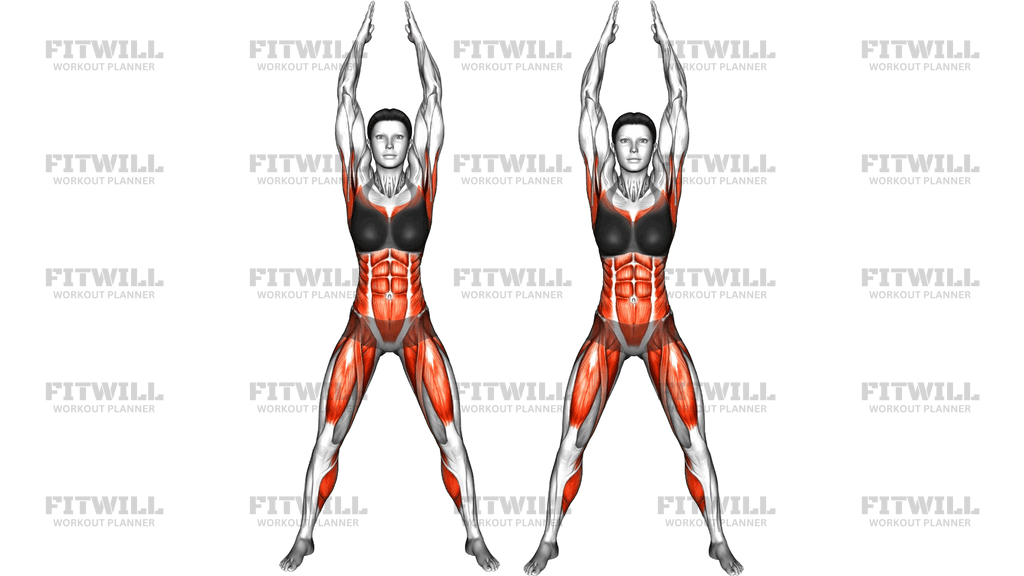
The In And Out Jack is a dynamic bodyweight movement that combines the rhythm of a jumping jack with a deep wide-stance squat. From a tall standing position, you jump your feet out to a wide stance while sinking your hips down into a lateral squat, then explode back up and jump the feet together, sweeping the arms overhead. The result is one continuous, flowing repetition that challenges the legs, raises the heart rate quickly, and keeps the whole body moving as a single unit.
This exercise earns its place in warm-ups, circuit training, and conditioning intervals because it does two jobs at once. The wide jump and squat load the quads, glutes, and inner thighs through a generous range of motion, while the rapid in-and-out rhythm drives the cardiovascular system hard without any equipment. The overhead arm reach at the top adds shoulder involvement and gives you a natural full-body extension point before you drop into the next rep.
Setup matters more than most people expect. Because you are jumping into a deep wide position and then back in, the landing mechanics decide whether this feels smooth or beats up your knees. Land with the whole foot on the floor, knees tracking over the toes, and keep your chest lifted as you descend. The arms should coordinate with the legs rather than flail: they come down and slightly forward or out for balance as you sink, then sweep up as you jump in.
The movement is well suited to anyone who wants a no-equipment conditioning drill, from beginners who can perform it at a slower tempo to advanced trainees who use it as a high-intensity finisher. Because each rep starts and ends standing tall with arms overhead, it is easy to count, easy to pace, and easy to scale by adjusting speed, squat depth, or total reps.
A few practical points will keep the exercise productive. Push the hips back as you land wide instead of letting the knees cave inward, and keep the weight distributed across the whole foot rather than dumping into the toes. If the floor is hard or your calves and ankles feel overworked, scale back to stepping out and in before returning to jumps, and progress as your landing control improves.
[ Workout Log & Planner ]
Put your next workout in Fitwill
Keep your plan and training log ready when you are.


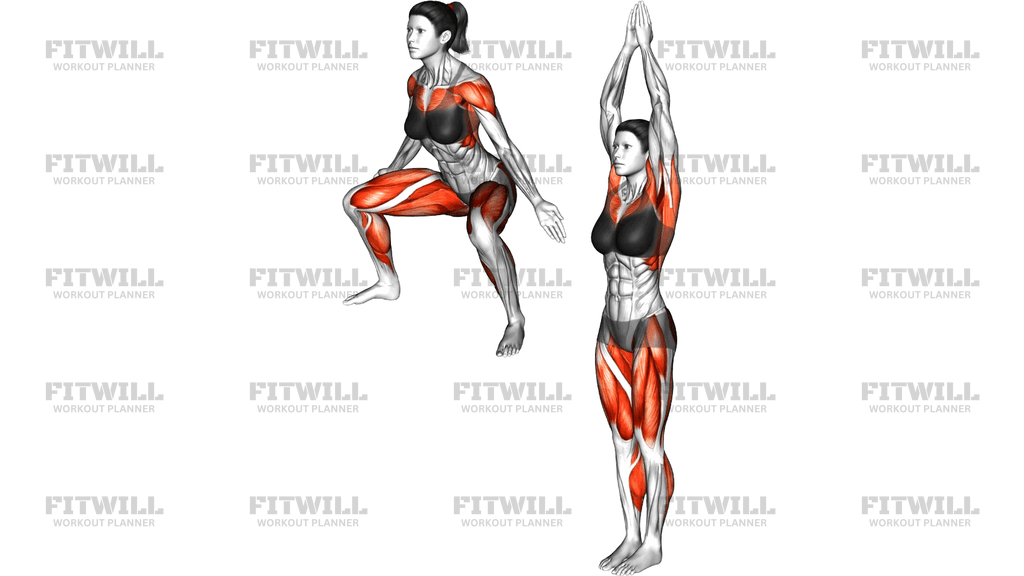
Instructions
- Stand with your feet together, arms relaxed at your sides, on a flat surface with enough clearance around you for a wide stance.
- Brace your core lightly and soften your knees so you are ready to move, with your weight balanced over the middle of each foot.
- Jump both feet out to a wide stance at the same time, letting the arms drift down and slightly forward for balance.
- As you land wide, sink into a squat with your hips pushed back, knees tracking over your toes, and your chest upright.
- Without pausing at the bottom, drive through the floor and jump both feet back in toward each other.
- As you come up to standing, sweep both arms straight overhead so your body is fully extended at the top, feet together.
- Breathe in on the way down into the wide squat and exhale forcefully as you jump back in and reach up.
- Lower the arms back down and immediately flow into the next repetition, keeping the tempo steady and the landings quiet.
- When you finish the set, stop jumping, reset your stance, and shake out the legs and shoulders before starting again.
Tips & Tricks
- If your knees drift inward as you land wide, think about spreading the floor with your feet and corkscrewing the knees slightly outward over the toes.
- Land soft and quiet. A loud, heavy landing means your calves and quads are absorbing the jump stiffly instead of bending smoothly at the ankle, knee, and hip.
- Keep the squat depth honest but comfortable; a shallow wide stance turns this into a hop, while dropping too deep with poor control shifts stress onto the knee joints.
- Coordinate the arms deliberately: down and out as you land wide, up overhead as you jump in. Random arm flailing throws off your balance on the landing.
- Keep the heels from slamming down. If you feel each landing in your shins or heels, shorten the jump distance slightly and focus on a mid-foot landing.
- Pace yourself with the breath rather than the count. When the exhale at the top becomes ragged, slow the tempo instead of stopping entirely.
- Beginners can step one foot out at a time and step back in, keeping the same squat and arm pattern until the landing feels natural.
- Stay on a shock-absorbing surface or a mat when possible, and avoid performing this on concrete for long sets if your ankles or calves feel beaten up.
Frequently Asked Questions
What muscles does the In And Out Jack work?
The quads and glutes do most of the work during the wide squat and the jump back in, while the calves power each jump. The shoulders assist with the overhead reach and the core keeps your torso stable through every landing.
Is the In And Out Jack good for beginners?
Yes, as long as you scale it. Start by stepping one foot out at a time into the wide squat instead of jumping, then progress to the full jump once your landings feel controlled and quiet.
How wide should my stance be at the bottom of the In And Out Jack?
Wide enough that your knees can bend deeply while still tracking over your toes, usually well outside shoulder width. If your knees collapse inward or your feet turn sharply outward, the stance is too wide for your current mobility.
Why do my arms swing up overhead during this movement?
The overhead reach at the top extends the whole body, adds shoulder involvement, and acts as a timing cue for the jump back in. It also helps you finish each rep tall rather than slouching forward.
What is the most common mistake in the In And Out Jack?
Letting the knees cave inward on the wide landing. Fix it by pushing the hips back as you descend and consciously pressing the knees out over the toes throughout the squat.
Can I use the In And Out Jack in a warm-up?
Absolutely. Performed at a moderate tempo for 30 to 60 seconds, it raises your heart rate and takes the hips, knees, ankles, and shoulders through a full range of motion, which makes it an efficient warm-up drill.
How can I make the In And Out Jack more challenging?
Increase your pace, deepen the wide squat slightly while keeping control, or use it in timed intervals with short rests. Holding a light medicine ball at the chest is another option once your landings are solid.
Is the In And Out Jack safe for my knees?
For healthy knees, it is generally well tolerated when you land softly, keep the knees aligned over the toes, and build up volume gradually. If you have a current knee issue, use the stepping version or check with a qualified professional first.
What surface is best for performing the In And Out Jack?
A sprung floor, rubber flooring, or a firm mat is ideal because it absorbs some landing force. Avoid very soft or uneven surfaces, which can destabilize your ankle on each landing.