Dumbbell Lying Triceps Extension Skull Crusher
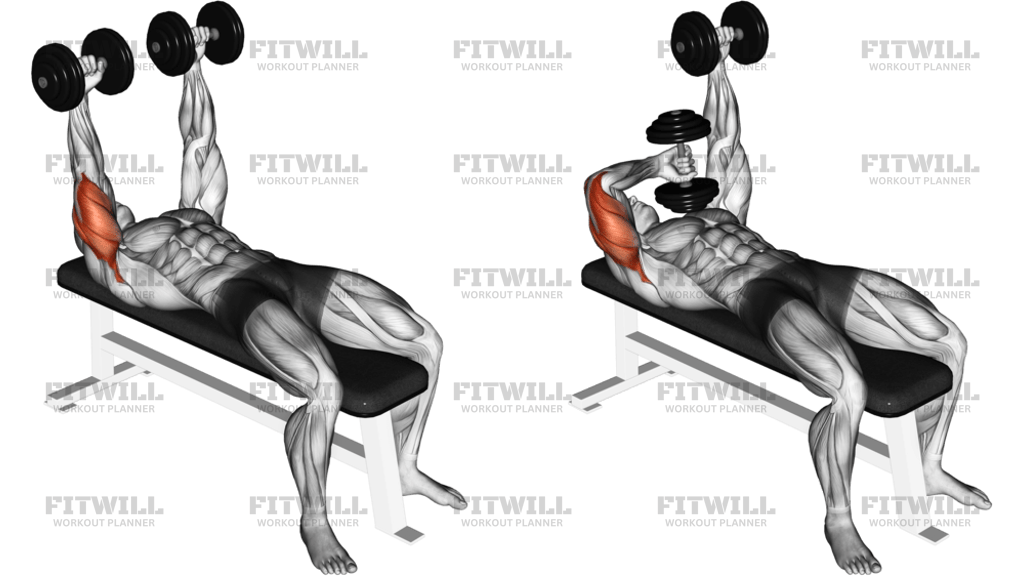
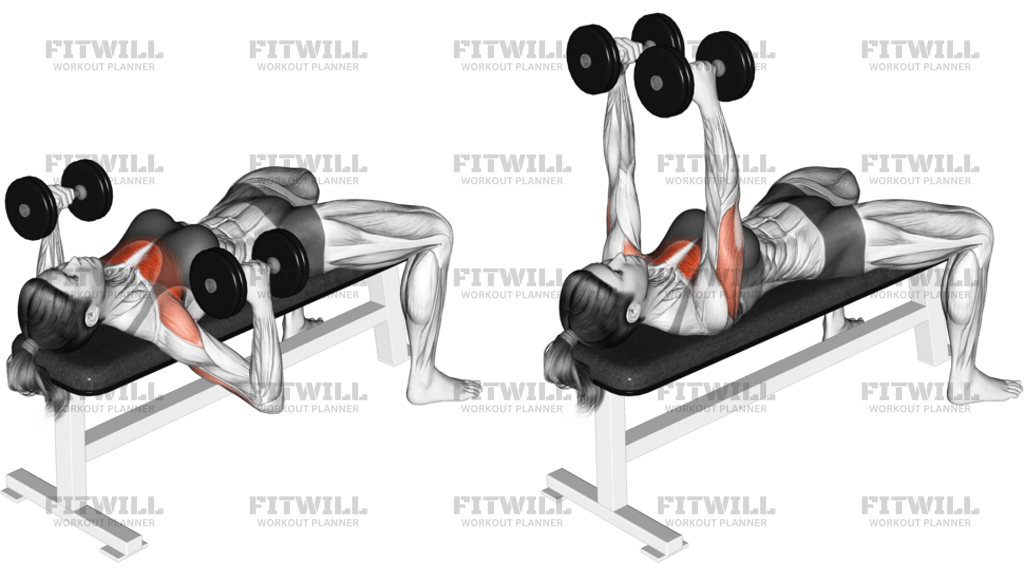
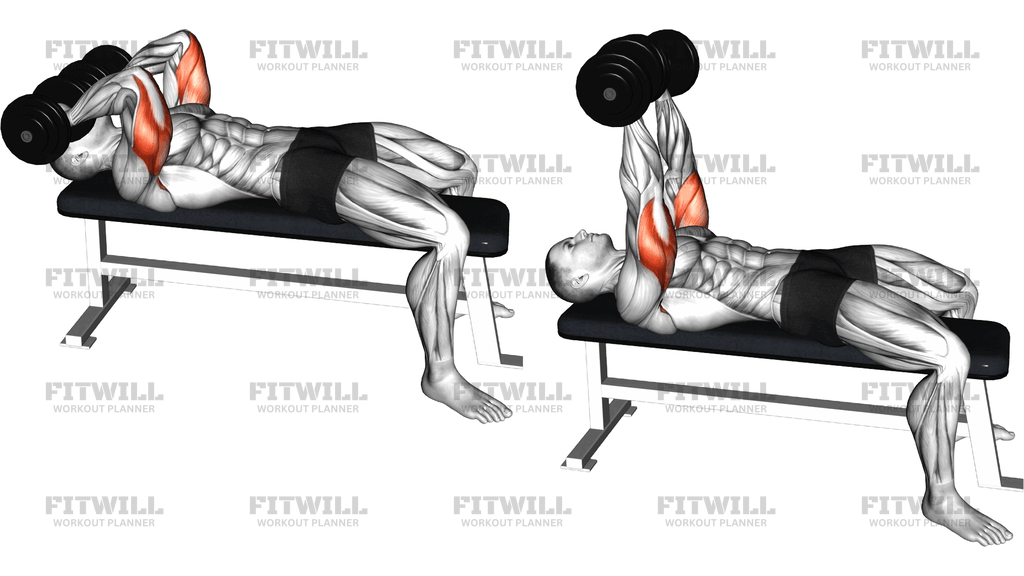
The Dumbbell Lying Triceps Extension Skull Crusher is a triceps isolation exercise performed on a flat bench with a dumbbell in each hand. You lie on your back, press the dumbbells to a position above your chest, and then bend at the elbows to lower the weights down beside your head before extending your arms back to the top. The elbow joint does all the work while the shoulder stays fixed, which is exactly what makes this movement such a direct builder of the back of the upper arm.
Because the arms move overhead relative to your torso, this version places a meaningful stretch on the long head of the triceps, the largest of the three triceps heads. If your goal is fuller-looking arms, this is one of the exercises worth prioritizing, since pressing movements alone often undertrain that long head. It fits well into any arm-focused day, a push day, or as a finishing movement after heavier compound pressing work.
Setup matters more than people expect. Your head, shoulders, and hips should stay in contact with the bench, your feet planted on the floor for stability, and your upper arms held roughly perpendicular to your torso so they stay vertical throughout the set. If your elbows drift forward or flare wildly to the sides, the exercise turns into a partial press and the triceps lose their stretch. Keeping the upper arms still and letting only the forearms travel is the core skill of the movement.
To execute it well, lower the dumbbells under control until they reach roughly ear level or slightly behind your head, feeling a stretch along the back of the arm, then press them back up by straightening the elbows without letting the weights clash together at the top. Dumbbells are actually an advantage here: each arm works independently, so side-to-side strength differences get evened out, and you can angle your wrists slightly to find a position that feels comfortable at the bottom.
A few practical safety points go a long way. Choose a weight you can lower slowly for every rep, because this position puts the elbows under load in a stretched state. Never bounce the weights off the bottom, and if you feel sharp elbow discomfort rather than muscle effort, reduce the load and tighten up your elbow position. Many lifters also like having a spotter hand them the dumbbells to start, since getting into position with heavy weights while lying down is often the riskiest part of the whole exercise.
[ Workout Log & Planner ]
Put your next workout in Fitwill
Keep your plan and training log ready when you are.


Instructions
- Sit on the end of a flat bench with a dumbbell resting on each thigh, then lie back and use your knees to help kick the dumbbells up as you get into position.
- Press the dumbbells directly above your chest with your palms facing each other or slightly turned inward, and keep your head, shoulders, and hips in contact with the bench.
- Plant your feet flat on the floor on either side of the bench and brace your core to stop your ribcage from flaring upward.
- Bend only at the elbows and slowly lower both dumbbells in an arc back toward the sides of your head, keeping your upper arms vertical and pointing at the ceiling.
- Continue lowering until the dumbbells reach about ear level or just behind your head and you feel a stretch along the back of your arms.
- Pause briefly at the bottom without letting the weights drop or bounce, keeping tension in the triceps.
- Press the dumbbells back up by straightening your elbows until your arms are extended over your chest, stopping just short of locking out hard.
- Exhale as you press the weight up and inhale as you lower it back down behind your head.
- Complete all reps, then bring the dumbbells back over your chest, sit up, and set them on the floor rather than dropping them from the lying position.
Tips & Tricks
- The most common mistake is letting the elbows drift forward as fatigue sets in, which turns the movement into a half press. Cue yourself to keep the upper arms aimed at the ceiling for every rep.
- Flaring the elbows wide toward the sides shifts stress onto the shoulders. Keep them relatively narrow and pointing upward so the triceps stay the limiting factor.
- Lower the dumbbells to the sides of your head, not straight back behind it. Dropping them too far back turns the exercise into a shoulder-dominated pullover pattern.
- Letting the dumbbells clank together at lockout gives the triceps a free rest. Leave a few centimeters between the weights at the top and squeeze the triceps instead.
- If your elbows ache at the bottom, try turning your palms slightly so your wrists angle inward a few degrees; the neutral grip of dumbbells lets you find a joint-friendly path that a barbell does not.
- Start with a lighter weight than you think you need. This exercise loads the elbows in a stretched position, and the margin for error with a heavy pair of dumbbells over your face is small.
- Control the descent for two to three seconds. The stretch behind the head is where most of the long head growth stimulus comes from, so rushing it wastes the best part of the rep.
- Keep your lower back from arching off the bench by bracing your abs and pressing your ribcage down; the arch usually shows up when the weight is too heavy to lower slowly.
- If getting two heavy dumbbells into position feels awkward, have a partner hand them to you once you are lying down, or press them up one at a time from your knees before settling your back onto the bench.
Frequently Asked Questions
What muscles does the Dumbbell Lying Triceps Extension Skull Crusher work?
It primarily targets the triceps, with particular emphasis on the long head because the arms are positioned overhead relative to your torso. There is minor involvement from the forearms and the stabilizing muscles around the shoulder, but the elbow extensors do nearly all the work.
Why use dumbbells instead of a barbell or EZ bar for skull crushers?
Dumbbells let each arm work independently, which helps correct side-to-side strength imbalances, and they allow small adjustments to wrist angle and grip width that can make the exercise much more comfortable on the elbows.
How low should I lower the dumbbells during the Dumbbell Lying Triceps Extension Skull Crusher?
Lower them until they reach roughly ear level or slightly behind your head and you feel a clear stretch along the back of your arms. Going deeper only helps if you can keep your upper arms vertical and your elbows from flaring.
Is this exercise safe for beginners?
Yes, as long as beginners start with light dumbbells and focus on keeping the upper arms still while only the forearms move. Learning the elbow-only movement pattern with a modest load is far more valuable than pushing heavy weight early on.
Why do my elbows hurt when doing skull crushers with dumbbells?
Elbow discomfort usually comes from lowering too quickly, using too much weight, or letting the elbows flare and drift. Slow the descent, reduce the load, and keep your palms turned slightly inward so your wrists and elbows track in a more neutral line.
Should my elbows stay pointed at the ceiling the whole time?
Yes. Keeping the upper arms vertical and fixed is what isolates the triceps. If your elbows travel forward or outward, the shoulders take over and the stretch on the triceps long head is lost.
How is the Dumbbell Lying Triceps Extension Skull Crusher different from a close-grip bench press?
A close-grip bench press is a compound movement where the shoulder and elbow both move under load, while skull crushers isolate the elbows so the triceps do nearly all the work. Skull crushers give a deeper long-head stretch; close-grip presses let you handle more total load.
What can I use instead of a bench if I train at home?
You can perform the same elbow extension on the floor, though the reduced shoulder range limits the stretch at the bottom. A stability ball or a sturdy padded surface can also substitute, but a flat bench gives the most reliable support for weights held over your head.
Do I need a spotter for this exercise?
A spotter is not required with light dumbbells, but is useful with heavier loads because the weights travel over your face and neck. If you train alone, get the dumbbells into position from your thighs rather than swinging them, and choose a weight you can lower under complete control.
Where should I place the Dumbbell Lying Triceps Extension Skull Crusher in my workout?
It works well after heavier compound pressing movements like bench presses or dips, when the triceps are warm but you still want quality isolation volume. Two to four sets of eight to fifteen reps is a common working range.