Two Ropes Climb
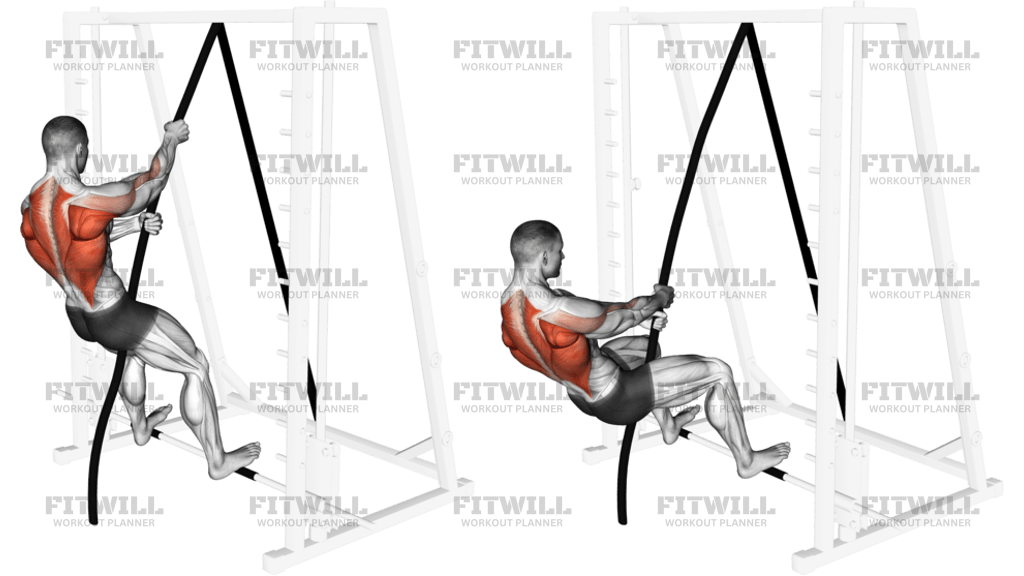
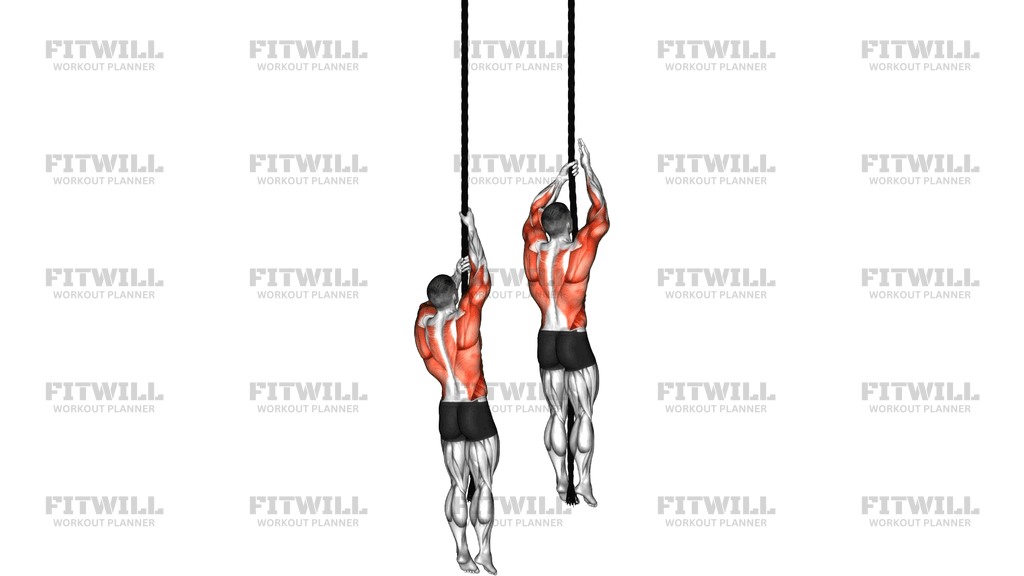
The Two Ropes Climb is an upper-body pulling exercise performed on two vertical ropes hung side by side. Unlike a standard rope climb where the legs and feet do much of the driving work, this version is typically performed legless or with minimal leg contribution, forcing the lats, biceps, forearms, and upper back to handle the entire ascent. The two-rope setup also demands more from your grip than a single rope, because each hand controls its own separate line and any asymmetry shows up immediately as you climb.
This movement is best suited to intermediate and advanced trainees who already own a solid pulling base — think multiple strict pull-ups, comfortable hangs, and ideally some single-rope climbing experience. It shows up regularly in obstacle course racing, functional fitness competitions, and climbing-specific conditioning, where the ability to pull your body weight up a vertical line repeatedly is a genuine performance requirement. Gymnasts and wrestlers have used rope work for decades precisely because it builds real-world pulling strength rather than track-only strength.
The primary muscles at work are the lats, which drive the downward pull that lifts your torso, along with the biceps and forearm flexors, which hold and re-grip the rope with each reach. The traps and rhomboids stabilize and depress the shoulder blades every time you pull, and the core stays quietly busy the whole time keeping your legs from swinging as you release and re-grip. Because one hand is always off the rope during the reach, your grip endures a bracing load that few other exercises replicate.
Setup matters more than most people expect. The ropes should hang close enough together that you can reach from one to the other without twisting your torso, and the anchor point needs to be secure enough to handle your full weight plus dynamic pulling force. Start each climb from a controlled hanging position rather than jumping into the first pull, and keep your feet together below you — letting them flail or hook the rope turns the drill into a different, easier exercise.
To execute it well, think of the climb as a repeating cycle: pull down hard with one hand while reaching as high as possible with the other, re-grip, then switch. Keep each pull close to the body and your elbows driving down rather than flaring out. Descend under control — hand over hand, with tension maintained on the rope the entire way down — because an uncontrolled drop loads the elbows and shoulders far more than the climb itself.
Practice this movement in short, high-quality sets. Two or three clean ascents with full rest beat a dozen sloppy ones, especially early on. If you cannot yet climb legless, use your legs on a single rope to build volume, and train dead hangs and pull-ups to close the gap safely before committing your full body weight to two separate ropes overhead.
[ Workout Log & Planner ]
Put your next workout in Fitwill
Keep your plan and training log ready when you are.


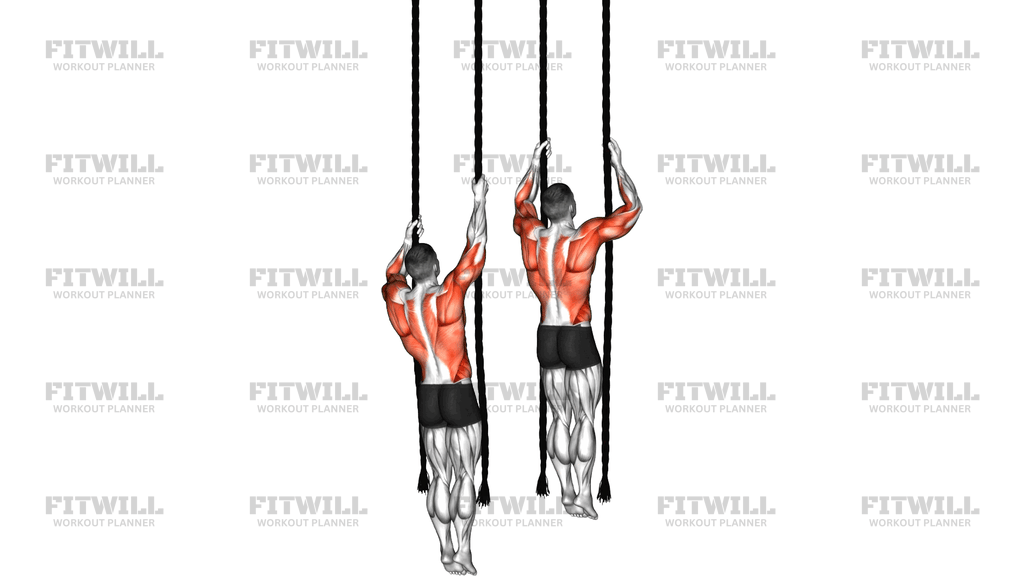
Instructions
- Stand beneath two ropes hung side by side from a secure anchor, positioned so each rope falls just outside shoulder width and you can reach either rope with a slight arm extension.
- Reach up and take a firm grip on each rope at roughly head height or above, wrapping the rope through the palm so the load sits across the fingers rather than hooked at the wrist.
- Pull your shoulder blades down and brace your core, letting your legs hang straight and together with feet pointed slightly to keep them from swinging.
- Pull down hard with one hand while releasing the opposite hand and reaching as high up its rope as your range allows, keeping your torso close to vertical rather than leaning back.
- Re-grip the high hand firmly, transfer your weight onto it, then repeat the cycle with the other arm to continue ascending.
- Keep your elbows driving down toward your ribs on every pull instead of letting them flare wide, which keeps the lats doing the work instead of dumping stress into the shoulders.
- Stop at the target height, hold briefly with both hands anchored, then descend hand over hand, sliding each grip down only after the opposite hand is locked on.
- Exhale on each pull and inhale during the reach and re-grip; avoid holding your breath through the whole climb.
- Maintain full rope tension on the way down — never drop or free-slide the last section — and land softly on the balls of your feet with bent knees.
- Reset your grip, shake out your forearms, and rest fully before the next climb so each attempt is performed with a fresh hold.
Tips & Tricks
- The most common failure point is the grip, not the pull — if your forearms burn out before your back does, you are squeezing at maximum tension the entire climb. Learn to hang on the rope structure with your skeleton between pulls instead of death-gripping through every phase.
- Avoid the instinct to reach with a straight, relaxed arm; a soft reach followed by a hard re-grip keeps tension on the working side and prevents a jarring catch at the shoulder.
- Keep your chin level and your gaze forward or slightly up. Looking straight down at your hands tilts the torso back and makes each pull noticeably harder.
- If your legs start to bicycle or scissor mid-climb, you are pulling asymmetrically. Slow the reach phase down until both sides of the cycle are even.
- Chalk your hands before climbing. Two separate ropes mean two separate friction points, and sweaty palms on rope are the fastest route to a slipped grip.
- Do not let your elbows drift behind your body at the top of each pull; pulling with the elbows tucked in front keeps the lats in a strong line and reduces strain on the front of the shoulder.
- Scale the descent, not just the ascent. If you can climb up but not down with control, stop climbing to the top and practice half-height ascents with full controlled returns.
- Wear long socks or train on a padded surface if you are new to rope work — the rope will occasionally brush the legs, and a flinch mid-climb is worse than the contact itself.
- For strength work, treat the Two Ropes Climb as a low-rep skill: few climbs, full rest, perfect grips. Endurance gains come later from shortened rest, not from grinding out exhausted, sloppy reps.
Frequently Asked Questions
What muscles does the Two Ropes Climb work?
The lats do most of the pulling work, supported heavily by the biceps and forearm flexors during gripping and re-gripping. The traps and rhomboids stabilize the shoulder blades, and the core keeps the hanging legs from swinging.
Is the Two Ropes Climb suitable for beginners?
It is generally too demanding for beginners because one hand releases the rope on every reach, placing your full weight on a single grip. Build a base with dead hangs, strict pull-ups, and leg-assisted single rope climbs first.
How is the Two Ropes Climb different from a regular rope climb?
A standard rope climb lets you pinch the rope between your feet and drive with the legs, which is why most people can do it long before they can climb arm-only. The two-rope version relies almost entirely on upper-body pulling, and each hand manages its own separate rope.
Why use two ropes instead of one for an arm-only climb?
Two ropes provide two independent gripping points, which forces alternating reaches and prevents you from sliding both hands together the way you can on a single rope. It also challenges coordination, since each side must secure its own hold before the other hand releases.
How high should the ropes hang for the Two Ropes Climb?
Set the ropes so the bottom ends clear the floor by enough to land safely, and anchor them from a rated structure that can hold your body weight plus dynamic force. Start with half-height targets until your descent is fully controlled.
What is the most common mistake on the Two Ropes Climb?
Sliding or dropping down the rope on the way back instead of descending hand over hand. The eccentric loading on the elbows and shoulders from an uncontrolled descent causes more problems than the climb itself.
Can I substitute the Two Ropes Climb if I have no ropes?
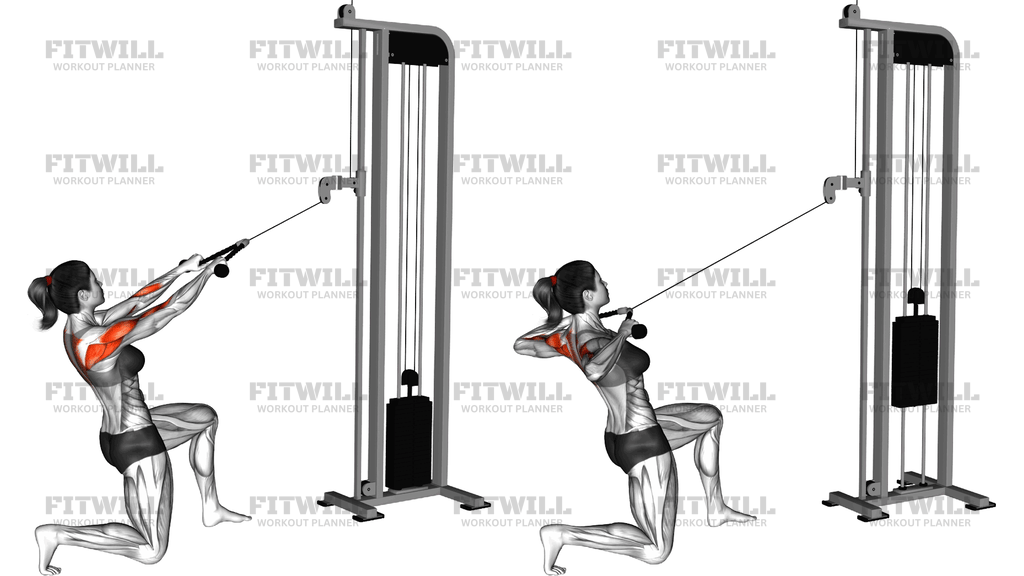
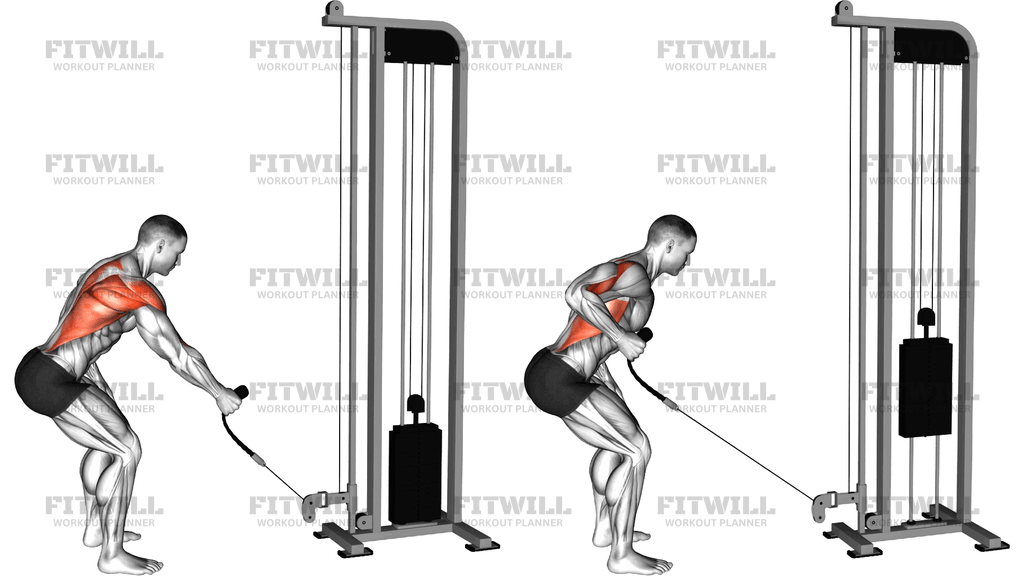
Legless rope pulls on a cable machine, towel pull-ups, and weighted dead hangs all train the same grip and pulling qualities. None fully replicate the alternating reach, but together they cover most of the demand.
How do I stop my forearms from failing first on the Two Ropes Climb?
Use chalk, grip with the rope wrapped across the palm and fingers rather than hooked only in the fingers, and practice hanging between pulls so you are not squeezing at full tension constantly. Direct grip work like dead hangs and farmer carries also builds the needed endurance.
Is the Two Ropes Climb safe for the shoulders?
It is safe for healthy shoulders when you depress the shoulder blades before pulling, keep the elbows tracking down rather than flaring, and never catch your full weight on a loose, reaching arm. Anyone with a history of shoulder instability should build up through single-rope and assisted variations first.