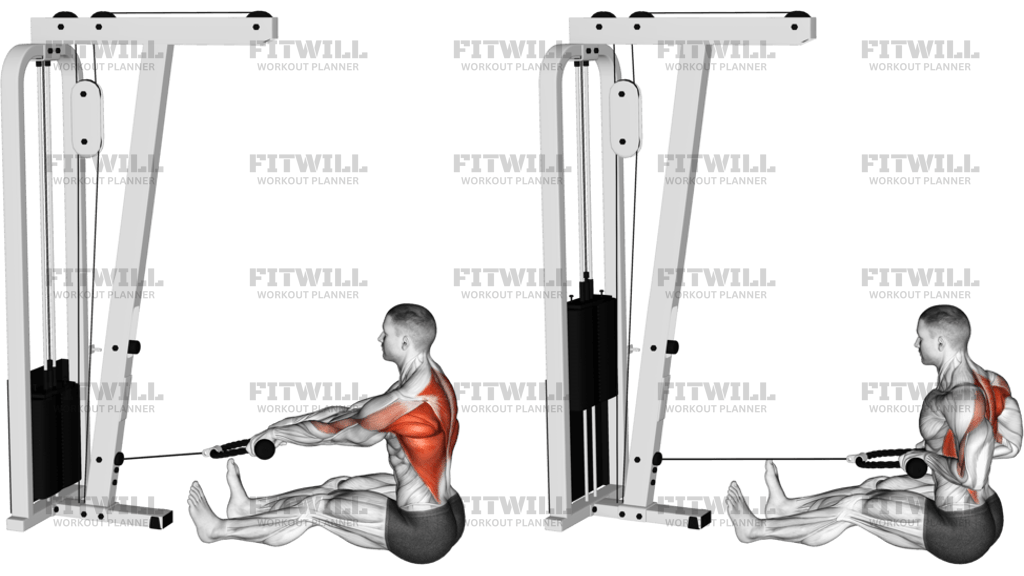
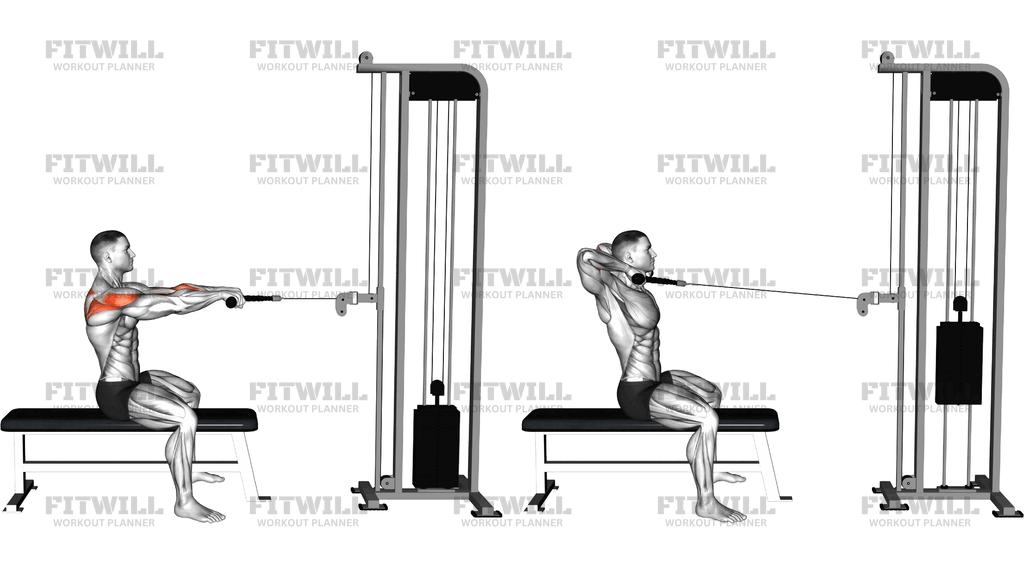
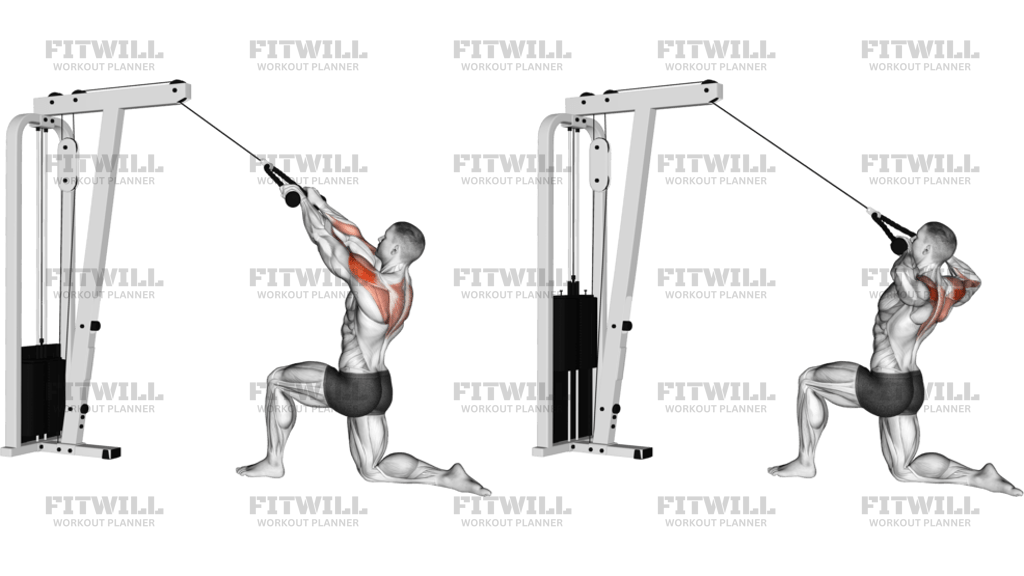
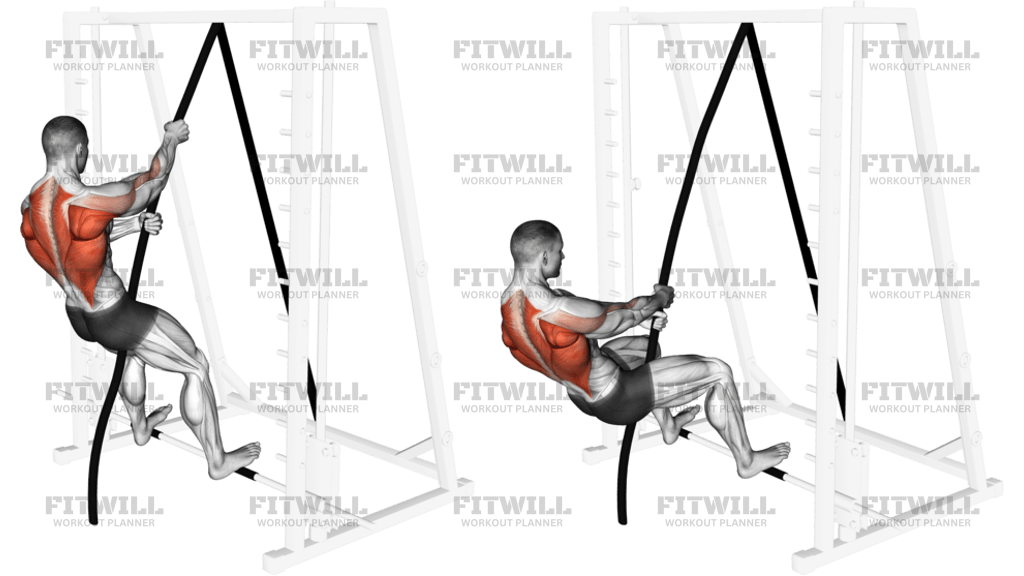
Cable Single Arm Low Row With Rope Attachment
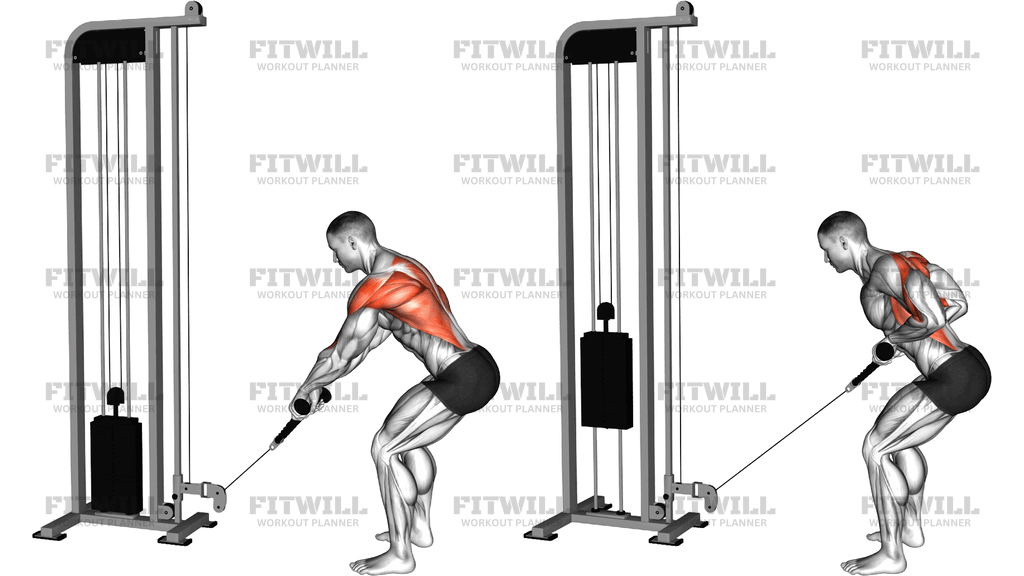
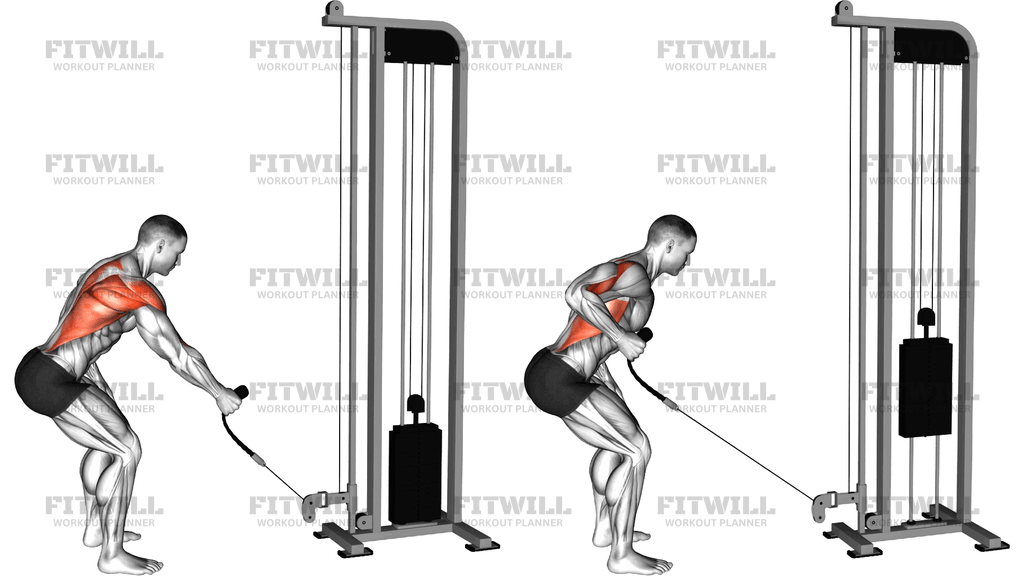
The Cable Single Arm Low Row With Rope Attachment is a standing row performed at a cable station with a rope handle clipped to the low pulley. You take an athletic stance facing the machine, hinge forward at the hips with soft knees, and pull one end of the rope back toward your hip so the working side of your back does the work. Because the rope lets your wrist travel through a natural arc and each side is trained on its own, this version of the low row often feels smoother on the shoulder and elbow than a fixed straight bar.
This movement primarily targets the lats, with strong contributions from the rhomboids and mid-traps as the shoulder blade retracts at the end of the pull. The biceps and rear delts assist, while your core and lower back work the whole time to hold the hinged torso position steady. That torso demand is part of the value: unlike a seated row, nothing supports your spine, so you build trunk control alongside pulling strength.
The single-arm setup matters for two reasons. First, it exposes and corrects side-to-side differences, since your stronger arm can no longer cover for the weaker one. Second, it gives you room to achieve a fuller stretch at the start and a cleaner squeeze at the hip, which is harder to feel with two hands on a bar. The neutral grip on the rope end also tends to sit comfortably in the shoulder joint for people who find internally rotated bar rows cranky.
To execute it well, keep the hinge honest: hips back, spine long, chest angled toward the floor but not rounded. Pull the rope end toward your hip rather than your chest, drive the elbow past your ribs, and finish with the shoulder blade pulled back and down. Return the handle with control until the arm is extended and the lat is stretched, then repeat. Resist the urge to stand upright and turn this into an upright pull — the hip hinge is what keeps the tension on the back.
This exercise fits well as an accessory after heavy barbell or dumbbell rows, as a main back builder in machines-only gyms, or as a rehab-friendly row for lifters managing shoulder or elbow discomfort with fixed bars. Start with a load you can control for 8 to 12 controlled reps per side, and only add weight when you can keep the torso from twisting on every rep.
[ Workout Log & Planner ]
Put your next workout in Fitwill
Keep your plan and training log ready when you are.


Instructions
- Clip a rope attachment to the low pulley of a cable machine and set the pin to a light-to-moderate weight.
- Stand facing the machine with feet about shoulder-width apart, then push your hips back and hinge forward roughly 30 to 45 degrees so your torso is angled over the pulley with knees softly bent.
- Grip one end of the rope in your working hand with a neutral palm facing inward, and brace your core so your spine stays long before any weight is pulled.
- Let the arm extend fully toward the pulley and feel a stretch across the lat and back of the shoulder to set the starting position.
- Pull the rope end back toward your hip, keeping the elbow close to the body rather than flaring it wide.
- At the end of the pull, squeeze the shoulder blade back and down and pause briefly with the hand at hip level.
- Slowly extend the arm back toward the pulley, letting the shoulder blade move forward under control until the arm is straight again.
- Exhale as you pull the rope back and inhale as you return to the stretched position.
- Complete all reps on one side, then re-brace and switch hands, making sure the cable does not twist your torso on the way back.
- Stand up fully between sets and step away from the cable before resting the handle down or changing the weight.
Tips & Tricks
- If your torso rotates toward the cable on each rep, the weight is too heavy — your hips and shoulders should stay square to the machine throughout the set.
- Pull the rope to the hip, not the chest; dragging it high turns the movement into an upright row and shifts work away from the lats.
- Keep a small bend in the knees and your weight in your heels during the hinge. Locking the knees while bent forward loads the hamstrings oddly and makes the low back work harder than it should.
- Let the shoulder blade protract at full arm extension instead of holding it pinned the whole set — the stretch at the bottom is where a large part of the lat work happens.
- Avoid shrugging the working shoulder toward your ear as you fatigue; think of pulling the elbow back and down into your side.
- The rope lets you split your hands or rotate the wrist slightly at the top of the pull. Use a small natural rotation if your shoulder feels pinched, but don't exaggerate it.
- Set the weight with the non-working hand free to hold the machine frame for balance, not to help pull — it should only steady you.
- Control the eccentric for two to three seconds. Letting the stack yank your arm back to the pulley is the most common reason the stretch position gets sloppy.
- If your lower back tires before your lat, reduce the hinge angle slightly and tighten the brace rather than rounding forward as the set continues.
Frequently Asked Questions
Which muscles does the Cable Single Arm Low Row With Rope Attachment work?
The lats are the primary movers, with the rhomboids and mid-traps retracting the shoulder blade at the end of each pull. The biceps, rear delts, and forearms assist, while the core and lower back stabilize your hinged torso.
Why use a rope attachment instead of a straight bar for single-arm rows?
The rope allows a neutral grip and a freer wrist path, which many people find easier on the shoulder and elbow than the fixed position of a bar. It also makes it simple to pull slightly across the body for a longer lat range.
Is the Cable Single Arm Low Row With Rope Attachment suitable for beginners?
Yes, but beginners should start light to learn the hip hinge and torso control first. Because there is no seat or chest support, mastering the braced standing position matters more than the amount of weight on the stack.
Should I row with a hinged torso or stand upright?
A forward hinge of roughly 30 to 45 degrees is what makes this a low row and keeps tension on the lats. Standing upright changes the pull angle, turns it closer to an upright row, and usually means the weight is too heavy.
How do I stop my lower back from getting tired during this exercise?
Push your hips further back into the hinge, keep the knees softly bent, and brace your core before each rep. If fatigue shows up as rounding, reduce the weight and shorten the set rather than grinding through it.
How many reps and sets should I do per arm?
Two to four sets of 8 to 12 reps per side works well as a back accessory. Prioritize matching the rep count and effort between sides so the weaker arm is not shortchanged.
What can I substitute if my gym has no rope attachment for the low pulley?
A single handle works with the same hinge and pull path, or you can use a seated cable row with one hand on a standard handle. A dumbbell single-arm row on a bench is a reasonable free-weight alternative, though the cable's constant tension differs.
How far should my arm travel at the start of each rep?
Let the arm extend fully toward the pulley until you feel a stretch in the lat and shoulder blade moving forward. Stopping short of full extension cuts the range short and reduces the training effect on the back.
Is it a mistake to twist my torso toward the working arm while pulling?
Yes. Rotation adds momentum and hides the strength difference between sides, which defeats the purpose of training one arm at a time. Keep your chest facing the floor and the machine throughout the set.
Is this exercise safe for people with shoulder discomfort?
The neutral rope grip and self-selected arm path are often well tolerated, but comfort varies by individual. Choose a pain-free range, keep the load modest, and consult a qualified professional if you have an existing shoulder condition.