Stepback Oblique Twist
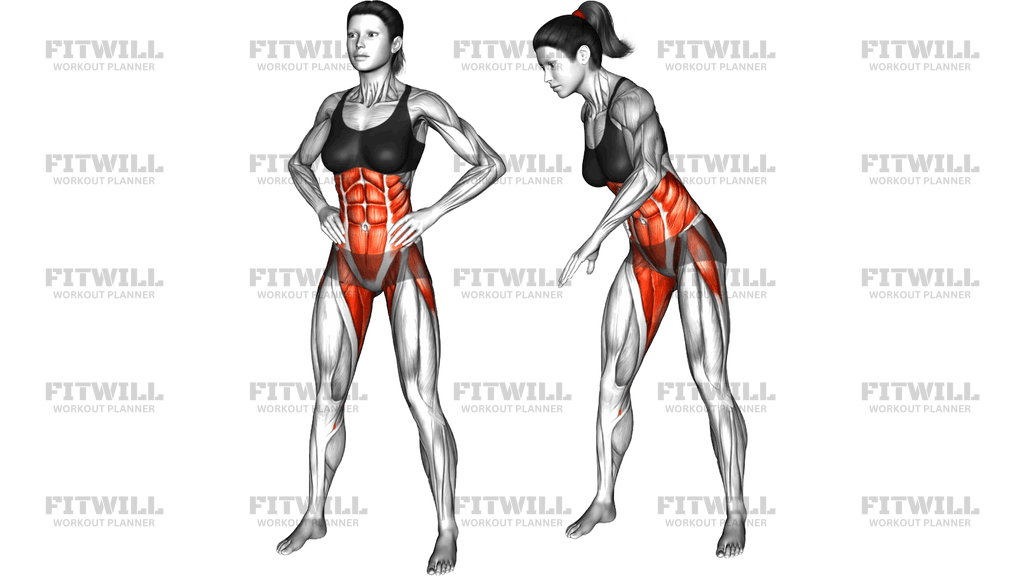
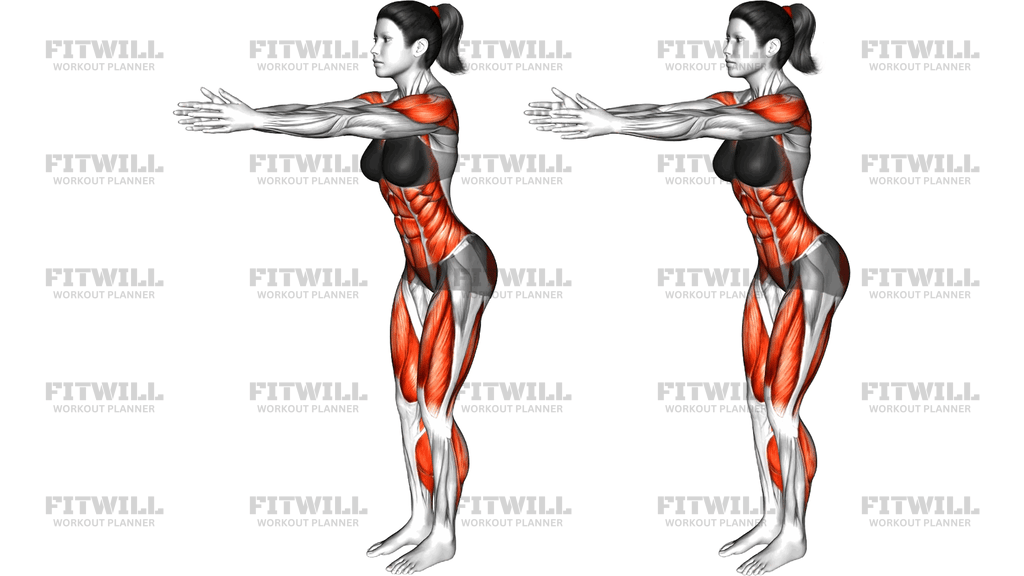
The Stepback Oblique Twist is a standing bodyweight exercise that combines a reverse step with a deliberate rotation of the torso, driving the work through the obliques while the arms stay extended in front of the chest. From a tall stance with both arms reaching straight ahead at shoulder height, you step one foot back into a staggered position and simultaneously rotate your ribcage toward the front leg's side, then return to center and repeat on the other side. The extended arms act as a long lever, so even without added resistance the rotation asks a real effort from your waist.
This movement is a good fit for anyone who wants to train rotation without loading the spine with external weight. Because it uses only your body, it suits home workouts, warm-ups, and group settings where no equipment is available. It also works well as a teaching progression toward heavier rotational work like cable woodchops or medicine ball throws, since it lets you practice keeping the hips stable while the upper body turns.
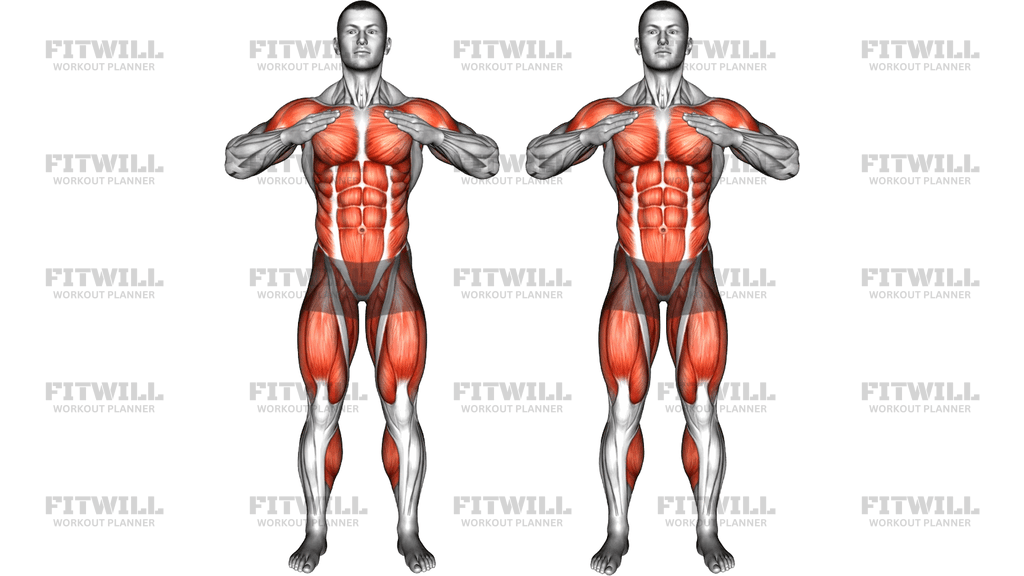
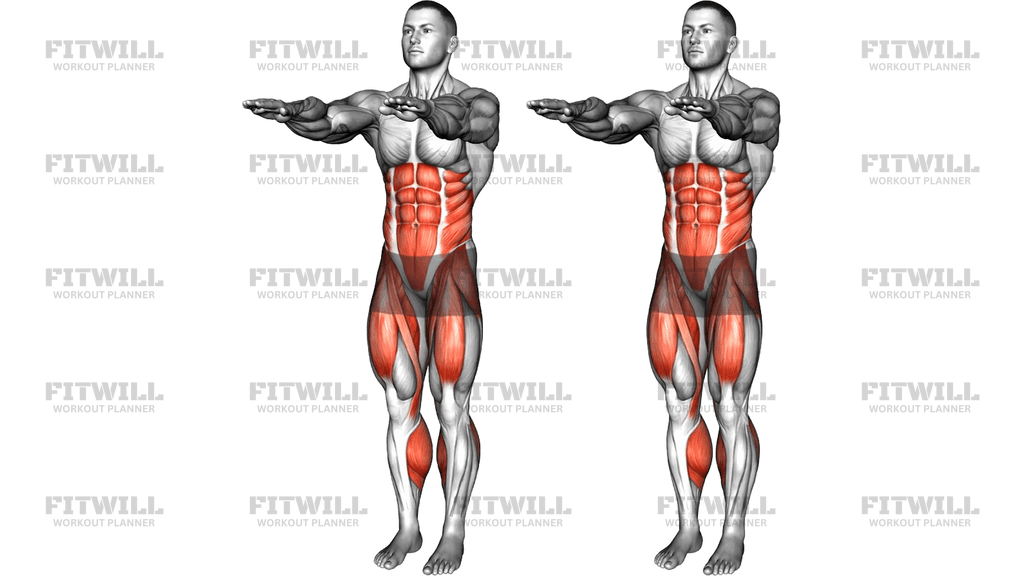
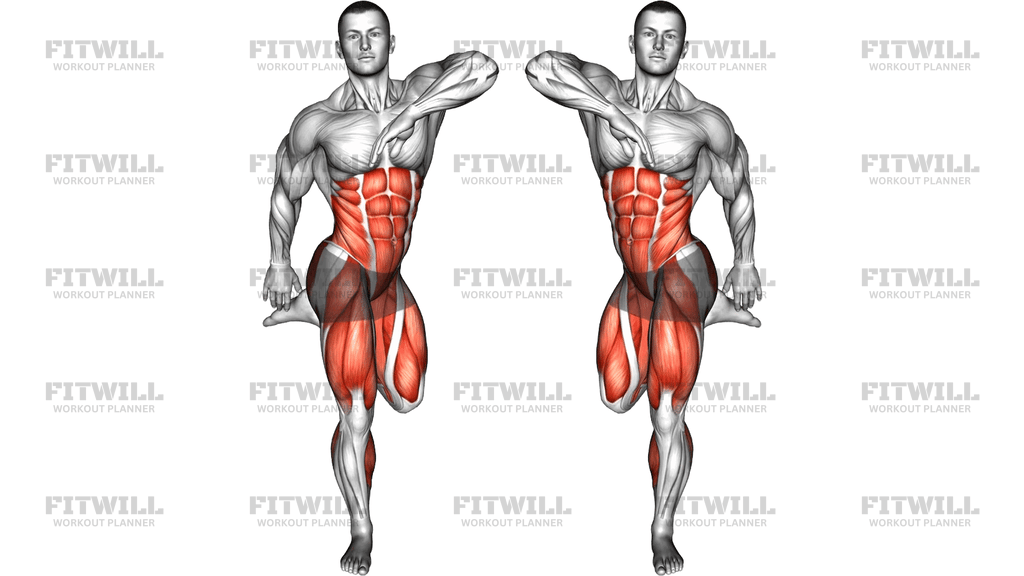
The primary muscles at work are the obliques on the side of the waist, which handle the twisting of the ribcage. Supporting them, the deep core braces to keep the trunk from collapsing, the glutes and quads of the front leg absorb the step-back, and the hip flexors and adductors of the trailing leg control the stride. The shoulders and upper back hold the arms out in front, so you will feel some endurance work there as well.
Setup matters more than it looks. Your feet should start about hip-width apart, arms extended and roughly parallel to the floor, with a tall spine and ribs stacked over the pelvis. If the arms droop or the lower back arches before you even begin stepping, the rotation tends to happen in the lumbar spine instead of the trunk, which is both less effective and less comfortable. Keep the hips facing forward as much as possible and let the rotation come from the ribcage and waist.
To execute well, step back with control, plant the ball of the trailing foot, and twist the upper body toward the front thigh in the same smooth motion. Rotate to a range where you can keep the arms level and the torso tall, pause briefly at the end of the turn, then unwind and step back to center before switching sides. Breathe steadily, exhaling as you rotate. Common use cases include core finishers, dynamic warm-ups for sports that involve turning and changing direction, and low-impact routines for people who want standing core work without getting on the floor.
A few practical points will keep this safe and productive. Move at a pace you can control rather than whipping through the twist, keep the knees soft so the step-back is absorbed through the leg instead of jamming into the kneecap, and reduce the depth of the step if you notice your balance wandering. Stop and shorten the range if rotation produces any pinching in the lower back or hips.
[ Workout Log & Planner ]
Put your next workout in Fitwill
Keep your plan and training log ready when you are.


Instructions
- Stand tall with your feet hip-width apart and extend both arms straight in front of your chest at shoulder height, palms facing each other or turned down.
- Brace your core lightly, pull your ribs down over your pelvis, and soften your knees so you are not locked out.
- Pick a starting side. Step your right foot back into a comfortable stride, placing the ball of that foot on the floor behind you while your left hip stays pointing forward.
- As the back foot plants, rotate your ribcage and shoulders to the left, sweeping your extended arms toward the left side over your front leg.
- Twist until you feel the right oblique working and your arms have traveled as far as you can control without your hips swinging out of line.
- Pause for a beat at the end of the rotation, keeping the arms parallel to the floor and the torso tall.
- Reverse the motion in one smooth return: unwind the torso back to center as the right foot steps forward to hip-width again.
- Repeat the same step and twist on the left side, rotating right over your right front leg, to complete one full rep.
- Exhale as you step back and rotate, inhale as you unwind and return to center, keeping the breath steady throughout.
- Complete your set by alternating sides, then reset your stance and arm height before finishing so each rep starts from the same tall, braced position.
Tips & Tricks
- The most common mistake is letting the hips rotate with the shoulders. Keep the front foot planted and the pelvis squared forward so the twist happens at the waist, not by swinging the whole body around.
- Dropping the arms during the turn shortens the lever and cuts the oblique effort. Check that your hands finish the rotation at shoulder height, not drifting toward your thigh.
- If you twist only halfway and rush back, the trailing leg never gets loaded. Step back far enough that the back knee bends and the ball of that foot is clearly planted before you rotate.
- Avoid arching your lower back as you rotate. If your ribs flare and your stomach pushes forward, exhale and think of turning from the ribcage while the belt line stays quiet.
- For balance trouble, hold the step-back position a second longer before twisting. The pause gives your foot time to grip the floor and stabilizes the base before the upper body moves.
- Keep the back knee soft and pointing down rather than caving inward. The step-back should feel like a reverse lunge rhythm, not a stumble backward.
- Slow the tempo down before adding reps. A three-second rotation and a two-second return will challenge the obliques far more than fast, bouncy twists with a loose middle.
- If your shoulders fatigue before your waist, lower the arms slightly from shoulder height to mid-chest. Still keep them extended so the rotation stays loaded.
- On soft surfaces like thick carpet, the ball of the trailing foot can wobble. Move to a firmer floor or widen your base slightly to keep the plant steady.
Frequently Asked Questions
Which muscles does the Stepback Oblique Twist target?
The obliques along the sides of your waist do the main work of rotating the torso. Your deep core stabilizes the trunk, while the glutes, quads, and hip flexors of both legs handle the step-back and return.
Is the Stepback Oblique Twist suitable for beginners?
Yes, because it uses only your bodyweight and the range is easy to adjust. Beginners can start with a shorter step-back and a smaller rotation, then increase the depth as balance and control improve.
Should my hips twist along with my shoulders during the Stepback Oblique Twist?
Keep the front hip and pelvis facing forward as much as you can and let the ribcage do the turning. If your whole body swings around, the obliques stop being the limiting factor and the rotation loses its point.
How far back should I step in this exercise?
Step back far enough that the ball of your trailing foot plants firmly and your back knee bends slightly, similar to the top of a reverse lunge. A stride that is too short removes the leg work and makes balancing harder, not easier.
Why do my arms need to stay extended at shoulder height?
Extended arms lengthen the lever your obliques have to rotate, which is what creates the resistance in a bodyweight twist. If your arms drop toward your thighs, the waist effort falls off noticeably.
Can I do the Stepback Oblique Twist if I have lower back sensitivity?
Many people tolerate it well because the rotation comes from the trunk rather than loaded spinal flexion, but keep the range modest and prioritize a braced, tall torso. If twisting produces pinching or pain, reduce the range or skip rotational work and consult a professional first.
What can I use instead if I want more challenge than the bodyweight version?
Hold a light medicine ball or a single light weight with both hands at chest height and perform the same step-back and rotation. A cable woodchop is a natural next progression once the bodyweight pattern feels solid.
How many reps and sets should I do of the Stepback Oblique Twist?
For general core work, 8 to 12 full alternating reps per set for 2 to 3 sets is a practical starting point. Since the goal is controlled rotation rather than speed, count one rep each time both sides have completed a twist.
Where should I feel the Stepback Oblique Twist working?
You should feel the oblique on the side opposite your rotation working hardest, plus a mild brace through the abs and some effort in the front leg from supporting the step-back. Shoulder fatigue in the extended arms is normal, but sharp lower back or hip pinching is not.
Can this exercise be used in a warm-up?
Yes, it works well as a dynamic warm-up before sports or lifting sessions that involve rotation and direction changes. Use a smaller range and slower pace for warm-up purposes, saving deeper twists for your main core work.