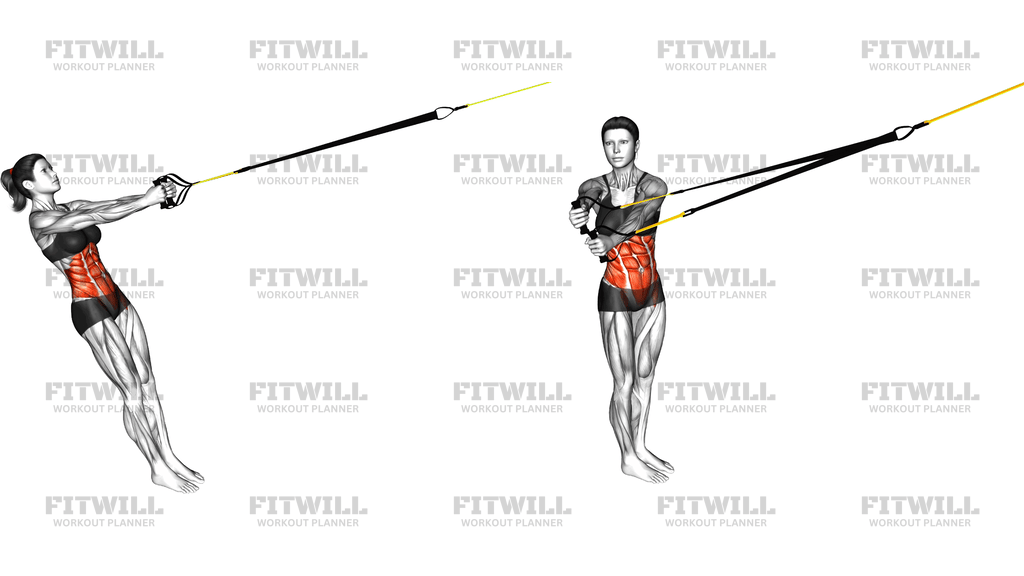
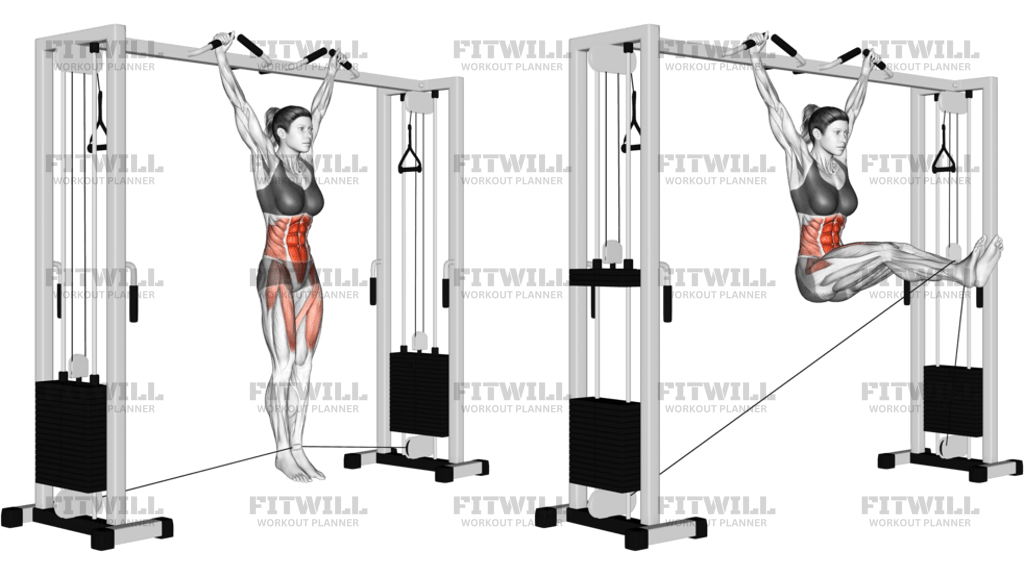
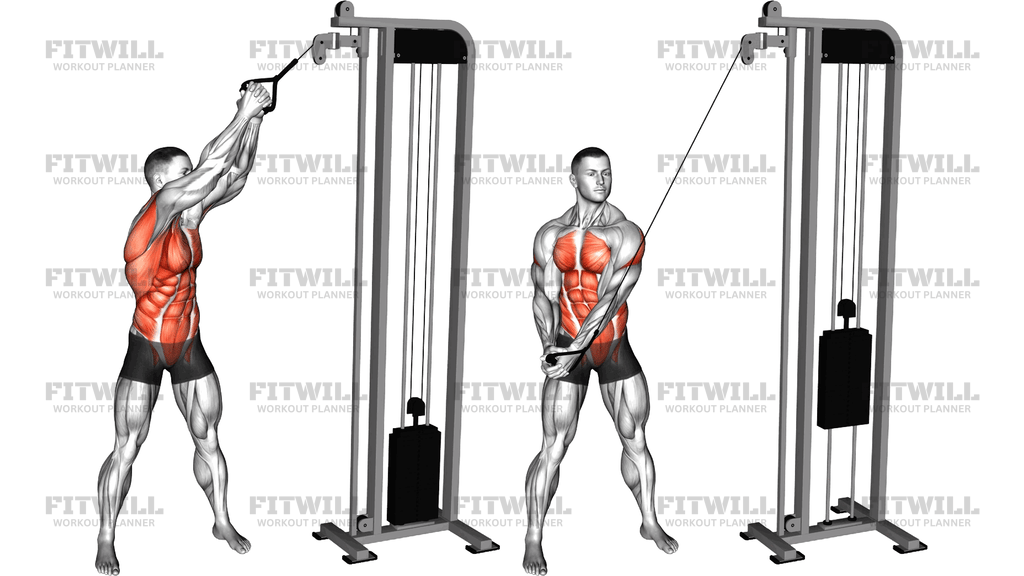
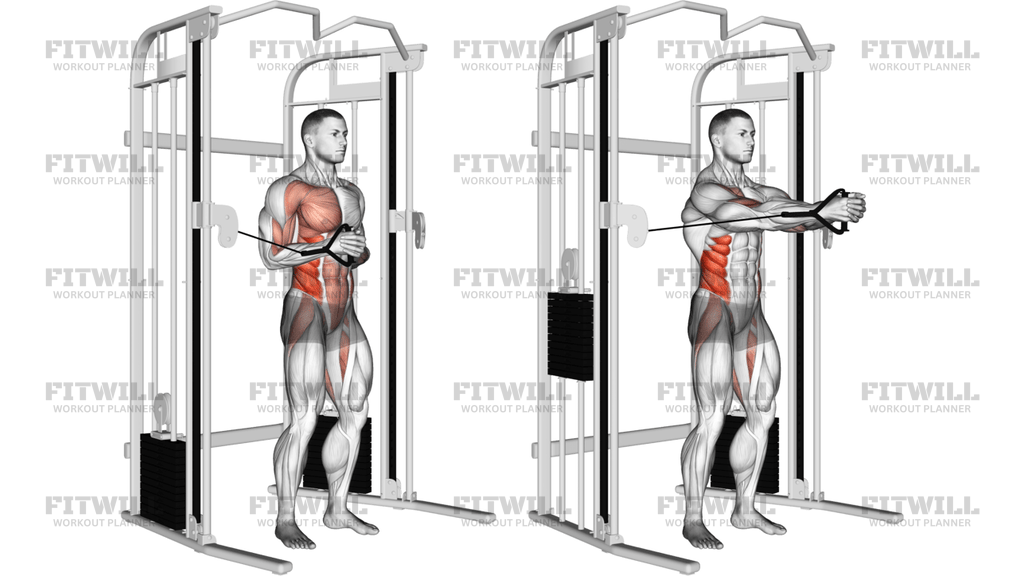
Cable Standing Wood Chopper
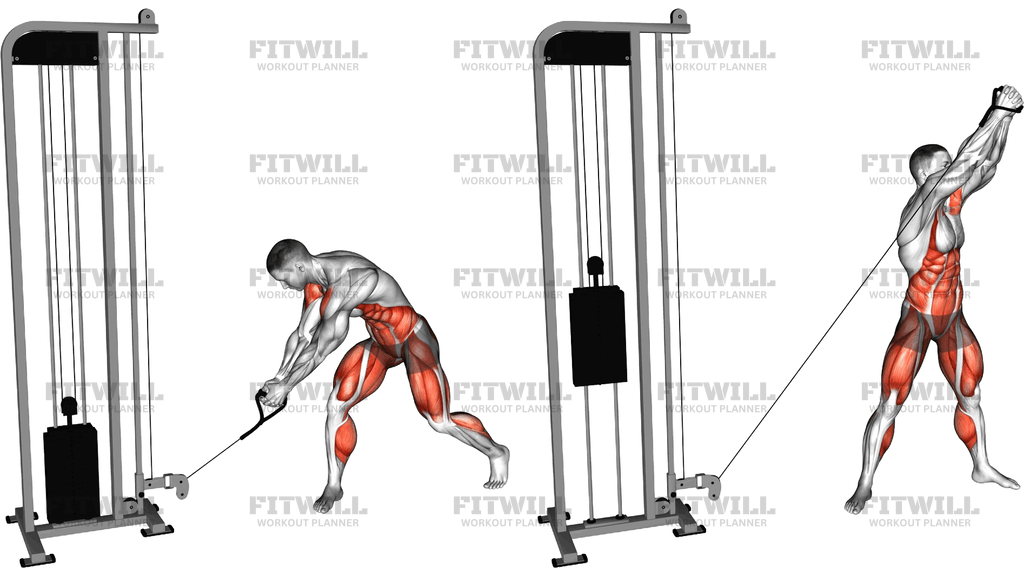
The Cable Standing Wood Chopper is a rotational core exercise performed with a single handle attached to a cable pulley set at roughly chest height. You stand sideways to the machine with feet wider than shoulder width, hold the handle with both hands and arms extended, and rotate your torso to pull the handle across your body toward the opposite side, then control it back. The movement mimics the diagonal swing of chopping wood, which is why it carries that name.
This exercise earns its place in a program because rotation is one of the most undertrained movement patterns in the gym. Most core work happens in the front-to-back plane, but daily life and nearly every sport involve twisting: swinging a bat or racket, throwing, changing direction on the field, or simply turning to grab something behind you. The cable provides constant tension through the entire arc, something a medicine ball or dumbbell cannot match at the end ranges where the load would otherwise go weightless.
The primary muscles at work are the obliques on the side of the trunk, supported by the deep abdominal wall that stabilizes the spine during the turn. Because you pivot through the hips and the cable tries to pull you backward, the glutes and legs do real work anchoring your stance, and the shoulders and arms simply transfer the force rather than produce it. That force-transfer quality is exactly what makes this a functional exercise rather than just an ab movement.
Setup matters more here than in most core exercises. If the pulley is too high or too low relative to your chest, or if you stand too close to the machine, the resistance angle changes and the rotation turns into an arm pull. Stand far enough away that the cable stays taut at both ends of the range, and let the feet, hips, and torso rotate together as one unit.
To execute it well, brace your core before you move, keep your arms nearly straight as an extension of the cable, and think about rotating from the ribcage and hips rather than dragging the handle with your hands. Pause briefly at the far end of the rotation, then resist the cable on the way back instead of letting it whip you to the start. Exhale through the pull and inhale on the return.
Use the Cable Standing Wood Chopper as a core strengthener at the end of upper-body or full-body sessions, or as a rotational power drill with lighter weight and crisper turns. Athletes in swinging and throwing sports get the most direct carryover, but anyone who wants a trunk that resists and produces rotation benefits. Start light, prioritize a smooth controlled arc over load, and stop the set as soon as your lower back starts doing the rotating for you.
[ Workout Log & Planner ]
Put your next workout in Fitwill
Keep your plan and training log ready when you are.


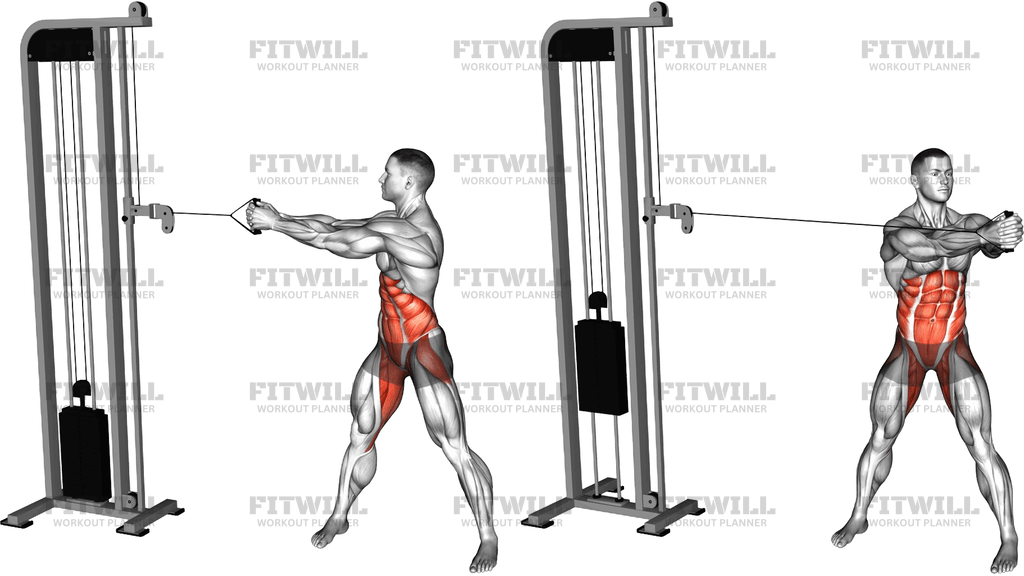
Instructions
- Set the cable pulley to about chest height and attach a single handle. Stand sideways to the machine with the cable on your near side.
- Set your feet wider than shoulder width with a slight bend in the knees, then reach across your body and grip the handle with both hands, one over the other, arms extended toward the pulley.
- Take a step away from the machine so the cable is taut before you begin, and turn your torso to face the pulley so the handle starts outside your near shoulder.
- Brace your abdominal wall as if bracing for a light push, and keep your chest tall and shoulders down.
- Exhale and rotate your whole torso away from the machine, pivoting the back foot and hip as you pull the handle across your body in a smooth arc toward the far side.
- Finish with your arms extended in the direction of the rotation and your hips and shoulders turned together, holding the end position for a brief pause.
- Inhale and slowly reverse the arc, resisting the cable as it rotates you back to the starting position with the handle outside the near shoulder.
- Complete all repetitions on one side, then re-grip and perform the same number on the opposite side with the cable on the other near side.
- Reset your stance and brace between sets, keeping the movement driven by the trunk rather than the arms throughout.
Tips & Tricks
- The most common error is turning this into an arm exercise. Lock your arms in a nearly straight position and let the rotation of the ribcage move them, so the hands just follow the cable.
- If the cable slackens at the start position, you are standing too close to the machine. Step out until there is steady tension even with the handle outside your near shoulder.
- Let the back heel pivot and lift naturally as you rotate. Forcing the feet to stay glued down jams the hips and pushes stress into the knees and lower back.
- Keep the handle at chest height throughout the arc. Letting it drift down toward your thigh means the shoulders are taking over and the obliques are losing the work.
- Do not let the cable pull your shoulders forward and round your upper back at the start. Sit tall, then rotate.
- Choose a weight you can stop anywhere in the arc. If momentum is swinging the handle at the end of the pull, the load is too heavy for your core to control.
- Keep your head and eyes traveling with the handle. Watching your hands move keeps the rotation smooth and prevents neck strain from twisting against a fixed gaze.
- A brief pause at full rotation is worth more than extra weight. It forces the obliques to hold the position instead of bouncing out of the stretch.
- Expect one side to feel stronger and smoother than the other. Start with your weaker side, match the reps, and do not add weight until both sides feel even.
Frequently Asked Questions
Which muscles does the Cable Standing Wood Chopper work?
The obliques along the sides of your trunk do most of the work, with the deep abdominal muscles bracing the spine throughout. Your glutes and legs anchor the stance, and the shoulders and arms mainly transfer the force from the cable.
What height should the cable pulley be set at?
Set the pulley at approximately chest height so the cable pulls level through the arc of the rotation. If the pulley is much higher or lower, the exercise drifts away from a pure horizontal rotation and the shoulders compensate.
Is the Cable Standing Wood Chopper suitable for beginners?
Yes, as long as you start with light weight and learn the hip-and-ribcage rotation before loading it. Beginners often benefit most from this exercise because it teaches them to move from the trunk instead of the arms.
Why do my arms and shoulders feel this more than my abs?
Your arms are probably bending and pulling the handle instead of staying extended as the torso rotates. Straighten the arms, grip lightly, and cue the rotation from your ribcage and hips so the hands just ride along with the cable.
How far should I stand from the cable machine?
Stand far enough that the cable stays taut with the handle held outside your near shoulder before you pull. If the cable goes slack at any point in the range, take another step away.
Should I do both sides in the same set?
Complete all repetitions on one side, then turn around and work the other side with the cable on the opposite near side. Alternating rep by rep wastes time repositioning and makes it easy to lose your brace.
Can I substitute the Cable Standing Wood Chopper if my gym has no cable machine?
A resistance band anchored at chest height gives you a similar tension profile, or you can use a medicine ball rotational throw for a more explosive version. The cable version is still the smoothest option because tension never drops at the end of the arc.
How heavy should I go on this exercise?
Use a load you can decelerate and control through the entire arc, pausing at full rotation. This is a trunk rotation exercise, so a weight that swings you around turns it into a momentum drill with little core benefit.
Is it safe for my lower back?
When performed with a braced core, tall posture, and pivoting hips, it is generally well tolerated and actually trains the trunk to handle rotation. Keep the weight modest, avoid twisting under a heavy load at speed, and stop if you feel sharp discomfort rather than muscular effort.
How is this different from lifting the cable high to low?
The high-to-low version adds a downward diagonal, hitting the obliques along a different line. The chest-height version shown here keeps the pull horizontal, which makes the hip and trunk rotation the clear focus and is easier to learn first.