Alternating Under Knee Clap
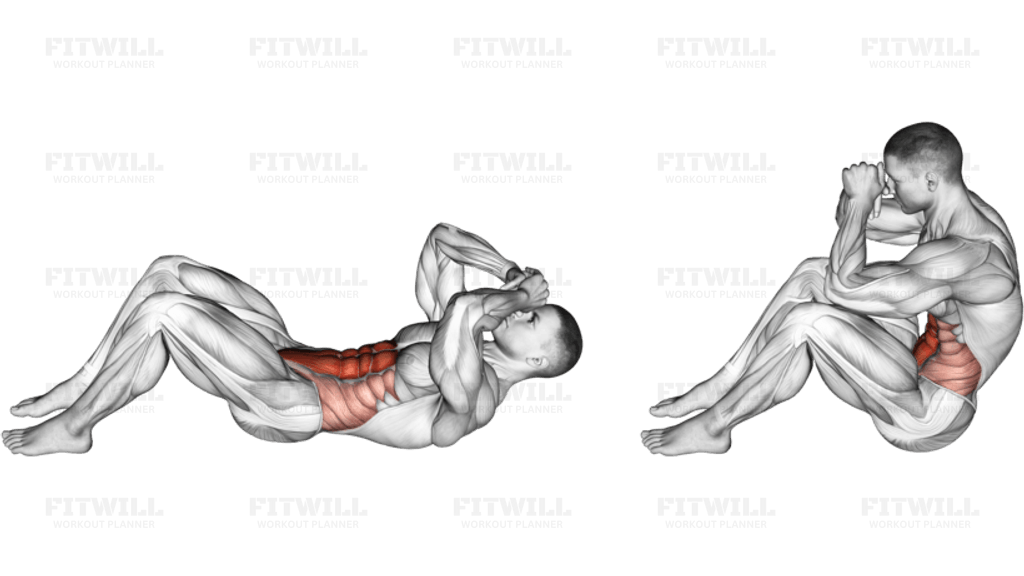
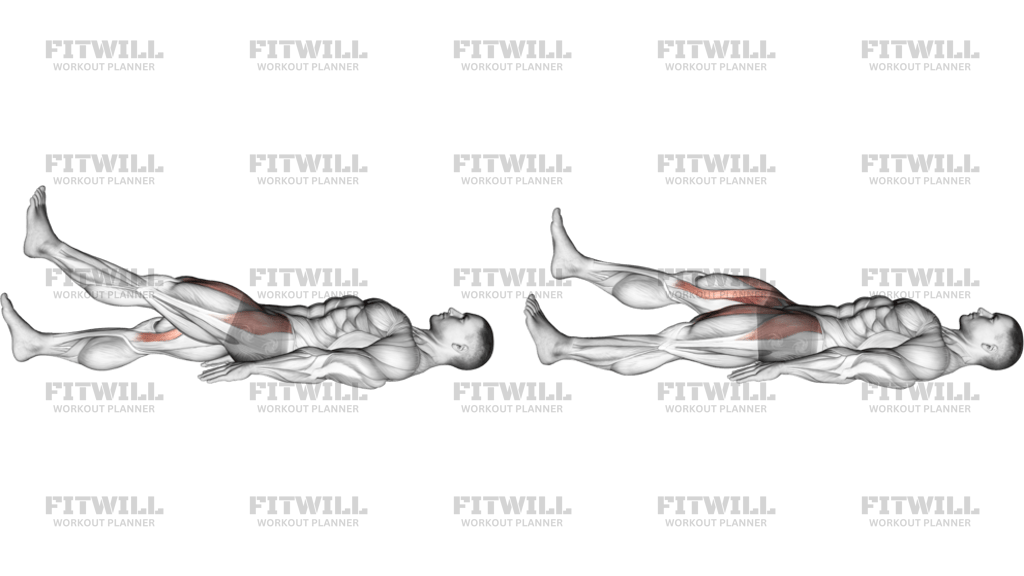
The Alternating Under Knee Clap is a bodyweight core exercise performed lying on your back. You repeatedly lift one knee toward your chest, clap your hands underneath it, then switch legs while keeping your head and shoulders lifted off the floor and the extended leg hovering just above the ground. Because you alternate sides without resting, the whole sequence works as a continuous, rhythm-driven core challenge rather than a slow crunch.
This movement is especially useful for anyone who wants to strengthen the lower portion of the abs and the hip flexors without any equipment. The hovering extended leg is what makes it demanding: your lower abs have to work to keep the pelvis stable while the opposite hip pulls a knee in. Swimmers, martial artists, and field-sport athletes appreciate the coordination component, since the hands and legs must move in a precise alternating rhythm, but it works just as well in a general core circuit at home or in the gym.
Setup matters here. Lying flat on a mat with the lower back pressed toward the floor, the head and shoulders lifted, and the legs long creates the baseline position. From there, each rep is a single-leg tuck: drive one knee toward your chest, meet it with a clap under the thigh or behind the knee, then extend that leg back out as the other knee comes in. If the setup is sloppy and the lower back arches off the floor, the lumbar spine takes load that the abs should be handling, which is the most common reason this exercise feels wrong instead of hard in the right place.
To execute it well, move with control rather than speed. The clap is a useful built-in accuracy check: it forces you to actually get the knee high enough and the hands low enough to meet it, so there is no cheating the range. Keep the shoulders raised the entire time, keep the extended leg straight with the heel an inch or two off the floor, and let the breath follow the rhythm. A common mistake is turning it into a sprint where the torso drops and the legs swing loosely; slowing the tempo down usually fixes both problems at once.
In programming terms, the Alternating Under Knee Clap fits best near the middle or end of a core session, when the abs are already warm but you still want a coordination-heavy finisher. Start with sets of 20 to 30 total claps, resting when your lower back wants to arch, and build volume gradually. If the floor feels uncomfortable on the tailbone or you cannot keep the extended leg up yet, place your hands under the hips for support or bend the extended leg slightly until your strength improves.
[ Workout Log & Planner ]
Put your next workout in Fitwill
Keep your plan and training log ready when you are.


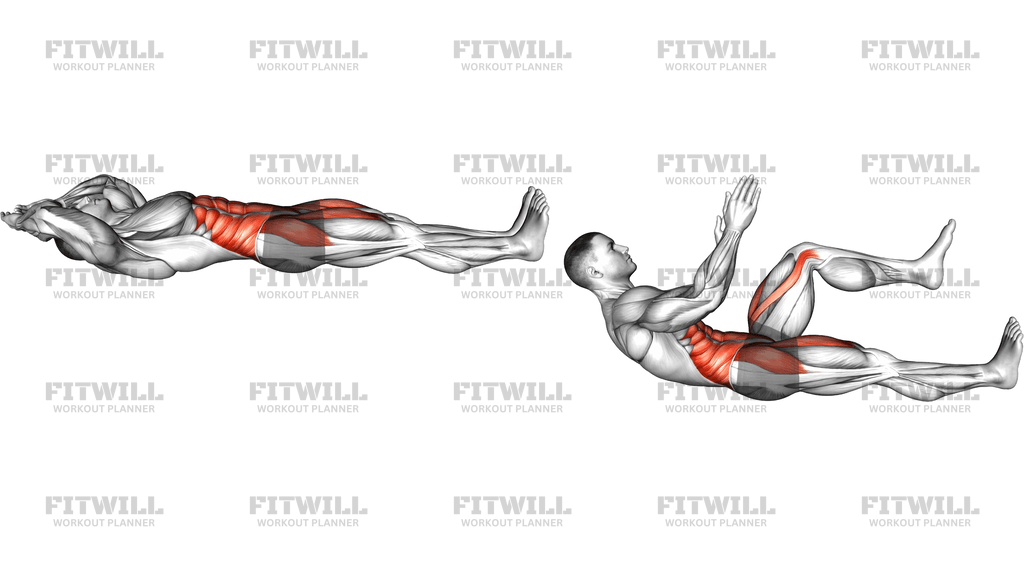
Instructions
- Lie on your back on an exercise mat with your legs fully extended and your arms resting alongside your body.
- Lift your head and shoulders off the floor and press your lower back gently down into the mat so there is no gap under the lumbar spine.
- Extend both arms straight out in front of you, toward the thighs, ready to meet the incoming knee.
- Brace your abdominal muscles and lift both legs slightly off the floor so the heels hover a few centimeters above the mat.
- Drive your right knee up toward your chest, keeping the left leg long and elevated, and clap both hands underneath the raised thigh or behind the knee.
- Extend the right leg back out to the hover position as you simultaneously pull the left knee in, and clap under that knee.
- Continue alternating knee drives and claps at a steady, controlled rhythm, keeping the shoulders lifted throughout the entire set.
- Exhale as each knee tucks in and inhale as it extends back out.
- When you finish the set, lower both legs and your torso down together rather than collapsing, and rest briefly before the next set.
Tips & Tricks
- If your lower back starts to arch or lift off the mat, stop the set or raise the extended leg slightly higher, because the arch means your abs have handed the load off to your lumbar spine.
- Do not let the clap become a rushed hand slap near the shin. Reach under the thigh or behind the knee so the knee reaches a genuinely high tuck each rep.
- Keep your head in a neutral line with the spine. Pulling the chin toward the chest to hold the shoulders up usually leads to neck strain before the abs fatigue.
- If you feel it mostly in the hip fronts rather than the abs, slow the tempo down and focus on tilting the pelvis slightly toward the ribs as each knee comes in.
- The extended leg tends to drift downward or bend as the set gets hard; think of actively reaching the heel toward the far wall to keep it long.
- Count reps in pairs, one clap on each side, so you do not end up lopsided or lose track of the rhythm.
- On a hard floor without a mat, cushioning the tailbone matters because you spend the whole set resting on the sacrum area.
- Beginners can keep the extended leg bent with the foot lightly tapped down between claps, then progress to the fully hovering straight leg as control improves.
Frequently Asked Questions
What muscles does the Alternating Under Knee Clap work?
The primary work comes from the lower abs, with strong support from the hip flexors as each knee tucks in. The quads help keep the extended leg straight, and the obliques and deep core stabilize the pelvis as you alternate sides.
Is the Alternating Under Knee Clap suitable for beginners?
Yes, but beginners should reduce the difficulty by bending the extended leg or letting the hovering foot rest lightly on the floor between claps. Keeping the shoulders lower can also make the position easier to hold while the abs build strength.
Why do I feel the Alternating Under Knee Clap in my lower back?
That usually means your lower back is arching off the mat while the extended leg hovers, shifting load from the abs to the lumbar spine. Press the lower back down, raise the extended leg slightly, or shorten the set before fatigue forces bad positioning.
How high should my knee come during the under knee clap?
The knee should tuck high enough that you can clap underneath the thigh or behind the knee while your shoulders stay lifted. If you cannot reach it cleanly, the knee is not coming in high enough or your torso is dropping too low.
How many reps of the Alternating Under Knee Clap should I do?
A good starting point is 2 to 3 sets of 20 to 30 total claps, counting each side as one clap. Rest when your form breaks down rather than pushing through with an arched back or dropped shoulders.
Can I substitute the Alternating Under Knee Clap with another exercise?
Yes. Lying alternating toe touches, dead bugs, or slow bicycle crunches train similar lower ab and hip flexor patterns with less coordination demand. Reverse crunches are a good option if you want the lower ab emphasis without the alternating rhythm.
Should my shoulders stay off the floor the entire set?
Ideally yes, because holding the shoulders up keeps constant tension on the abs and makes the clap path possible. If your neck tires before your abs, lower your head briefly to rest, then resume rather than straining to hold the position.
Is the Alternating Under Knee Clap done quickly or slowly?
A moderate, controlled rhythm works best. Moving too fast usually causes the legs to swing and the shoulders to drop, while a deliberate tempo keeps each knee tuck and clap precise and keeps tension on the abs.
Do I need any equipment for the Alternating Under Knee Clap?
No equipment is required beyond an exercise mat or a soft floor surface, since the exercise is entirely bodyweight and performed lying down.