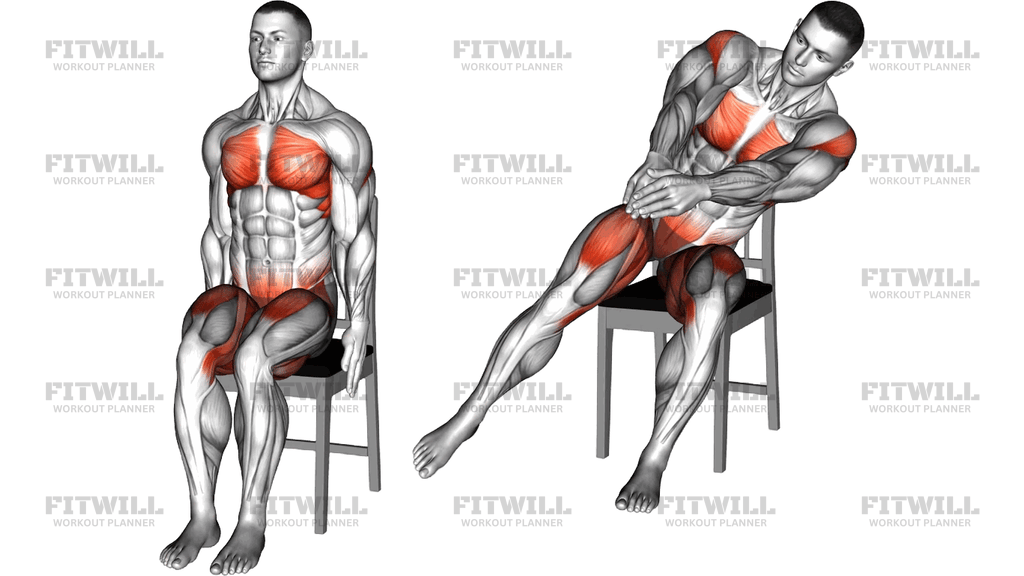
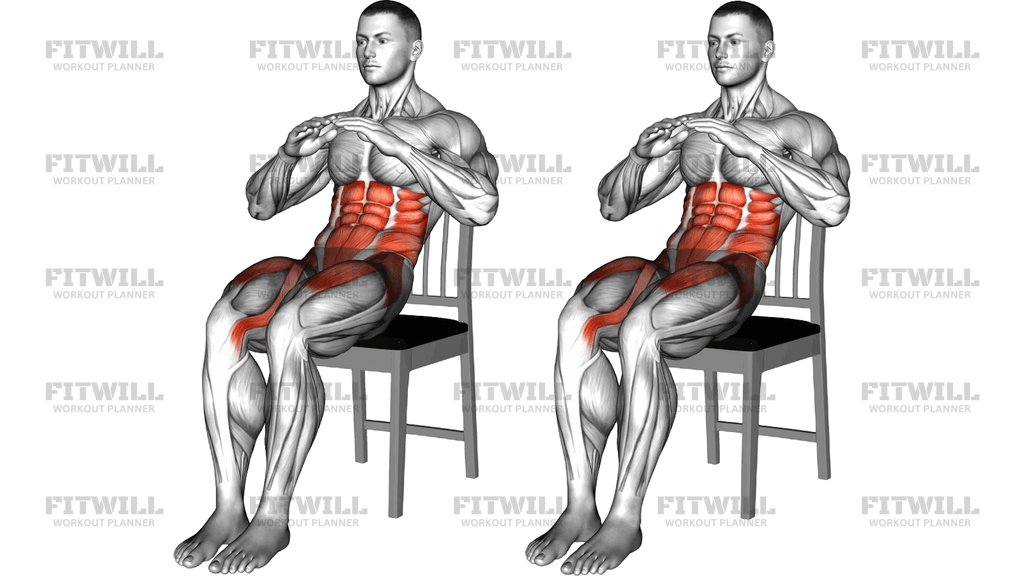
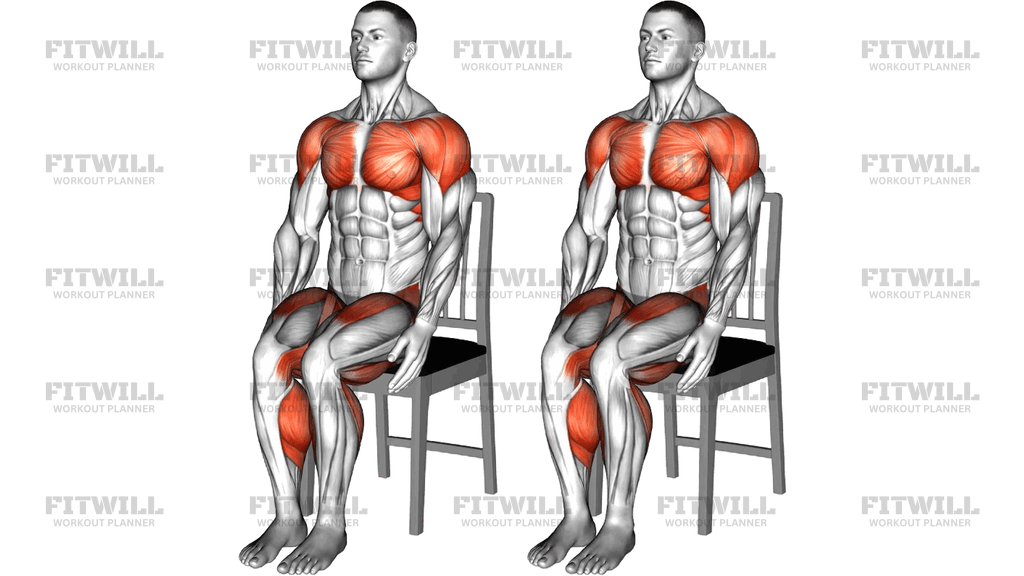
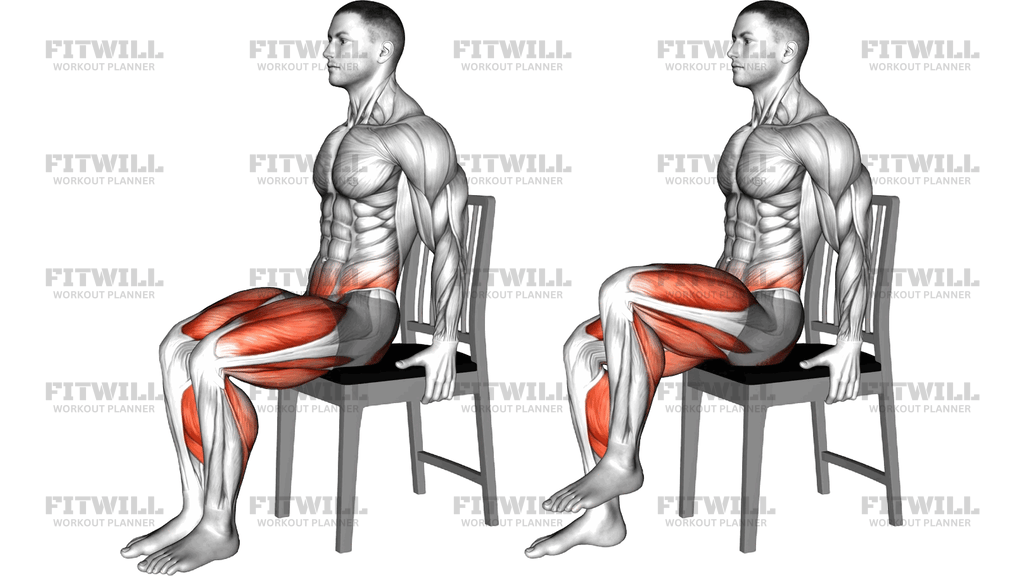
Seated Quick Step On A Chair
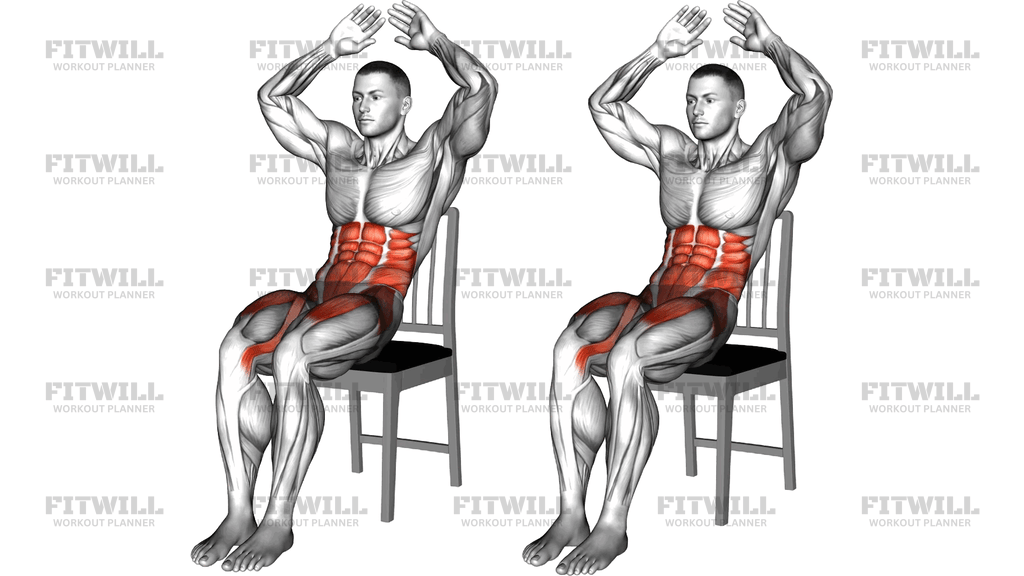
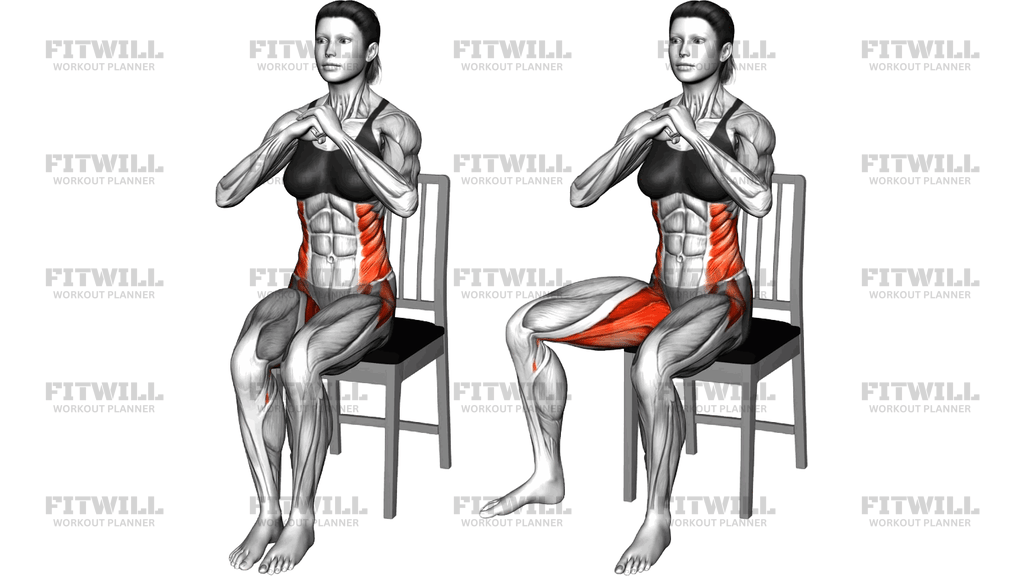
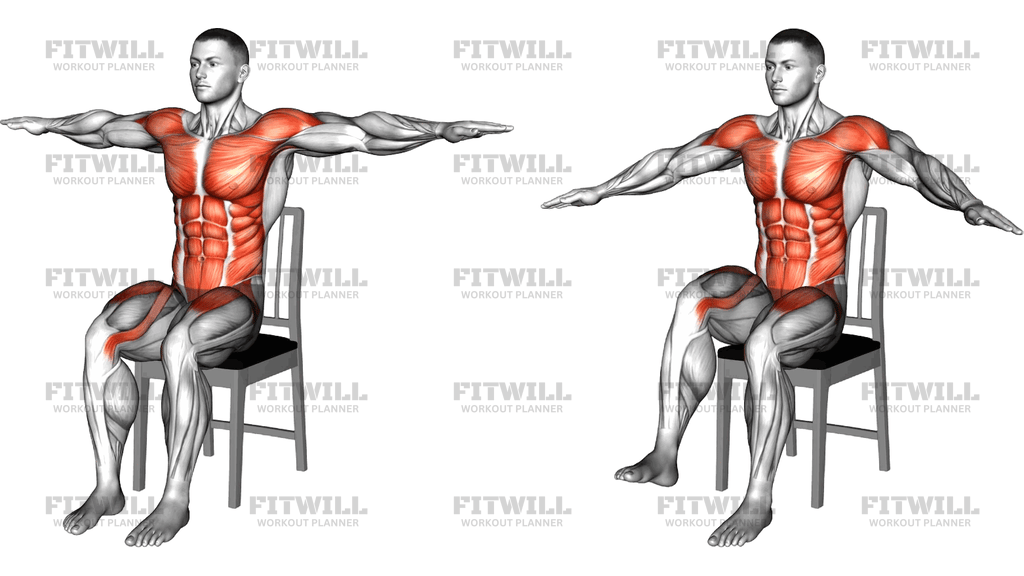
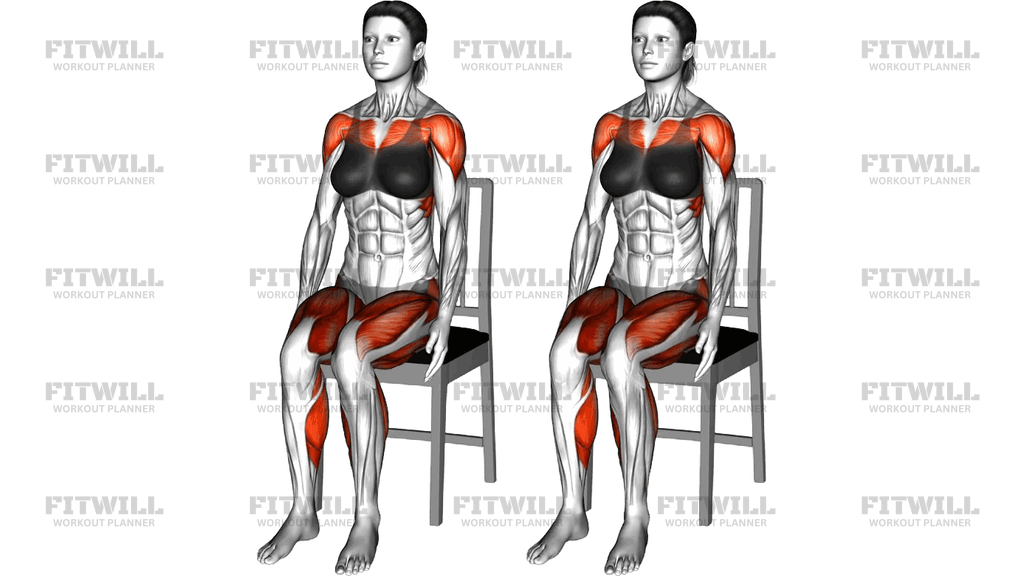
Seated Quick Step On A Chair is a low-impact cardio drill where you sit upright on a sturdy chair and rapidly alternate lifting your feet off the floor, as if marching in place while seated. Because your body weight stays supported by the seat, the movement puts almost no load on the knees, hips, or lower back, yet it still drives your heart rate up and keeps the hip flexors working continuously. It is one of the simplest ways to turn a chair into a piece of cardio equipment.
This exercise is especially useful for beginners, older adults, people returning from a layoff, and anyone who spends long hours sitting at a desk. Office workers can use it as a short movement break between meetings, and it works well as a warm-up before leg training because it raises the core temperature and lubricates the hips without fatiguing them. It is also a practical option for people with balance limitations who cannot safely perform standing marches or step-ups.
The main work comes from the hip flexors, which pull each thigh upward toward the torso with every repetition. The quads help lift the lower leg, the calves and ankle stabilizers control the foot as it leaves and returns to the floor, and the core stays engaged to keep your torso upright instead of slumping into the backrest. Even the shoulders and arms get involved if you swing them naturally with the rhythm, which is why the exercise feels more like cardio than isolated strength work.
Setup matters more than it looks. Choose a chair that will not slide or tip, sit toward the front half of the seat, and keep your feet flat on the floor with knees bent to roughly ninety degrees. Sitting too far back and leaning against the backrest shortens the hip range and encourages slouching, while perching too far forward on the edge makes it hard to stay tall. A stable, upright torso lets the legs move quickly without your whole body rocking.
To execute it well, brace the trunk lightly, then begin lifting one foot a few centimeters off the floor while the other stays planted, and switch at a brisk but controlled pace. Keep the rhythm steady rather than jerky, breathe continuously through the nose and mouth, and aim for a pace you could hold for thirty to sixty seconds. As fitness improves, raise the knees slightly higher or extend the work intervals, but never sacrifice the upright posture to gain speed.
A few practical points keep this safe. If the chair slides on a smooth floor, place it against a wall or use a chair with rubber feet. Stop if you feel pinching at the front of the hip or any knee discomfort, and reduce the height of each lift before reducing the speed. Done consistently in short bouts, Seated Quick Step On A Chair is a surprisingly effective way to add daily movement without standing up.
[ Workout Log & Planner ]
Put your next workout in Fitwill
Keep your plan and training log ready when you are.


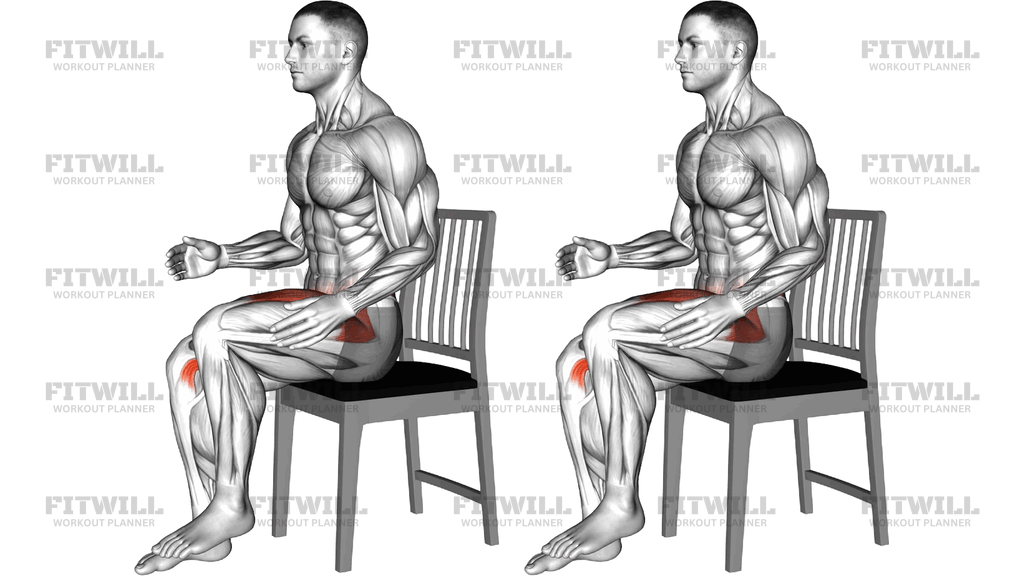
Instructions
- Place a sturdy, armless chair on a non-slip surface, ideally with its back against a wall so it cannot slide.
- Sit toward the front half of the seat with your feet flat on the floor, knees bent about ninety degrees, and your torso tall without leaning on the backrest.
- Rest your hands lightly on your thighs or hold them bent at your sides, ready to swing naturally with your legs.
- Brace your core gently to keep the ribcage stacked over the pelvis and your gaze forward.
- Lift one foot a few centimeters off the floor by bending the knee, keeping the movement driven from the hip.
- Set that foot back down and immediately lift the opposite foot, alternating at a quick, even marching rhythm.
- Keep each lift short and controlled so the chair stays quiet and your upper body does not rock side to side.
- Breathe steadily throughout, exhaling naturally every few steps rather than holding your breath.
- Continue for a set time, such as twenty to sixty seconds, then stop, plant both feet, and reset your posture before the next bout.
Tips & Tricks
- If the chair starts to wobble or slide, you are driving the legs too forcefully from a loose torso; squeeze the core and shorten each lift instead of speeding up.
- Slouching into the backrest is the most common fault in this drill, and it hides itself because the legs keep moving, so check that your lower back stays off the chair back for the whole set.
- Keep the lifted knee traveling straight up in line with the hip; letting the knee drift outward turns the drill into a sloppy hip rotation rather than a clean march.
- Start with the feet barely leaving the floor and progress the height only when you can hold the rhythm without your torso pitching forward on each step.
- Planting the working foot loudly usually means dropping it instead of setting it down; aim for quiet, soft landings to protect the knees and keep the pace even.
- If your hip flexors cramp, which is common for desk workers, lower the knee height and slow the tempo slightly for the first few sessions.
- Use your arms in a natural counter-swing to raise the heart rate, but keep the shoulders relaxed rather than shrugging them toward your ears.
- Place the chair on a mat or against a wall on tile or hardwood floors so it cannot scoot backward mid-set.
- Time your bouts rather than counting steps; a steady thirty-second effort with good posture beats a rushed sixty-second effort with a collapsed torso.
Frequently Asked Questions
What muscles does Seated Quick Step On A Chair work?
The hip flexors do most of the work pulling each knee upward, with help from the quads to lift the lower leg and the calves to control the foot. The core works isometrically to keep your torso upright throughout the set.
Is Seated Quick Step On A Chair good cardio for beginners?
Yes, it is one of the gentlest ways to raise your heart rate because the chair supports your body weight and there is no impact on landing. Beginners can start with short twenty-second bouts and build up gradually.
How high should I lift my feet during Seated Quick Step On A Chair?
Start with the foot just a few centimeters off the floor and only raise the knee higher once you can keep your torso tall and the rhythm smooth. Height increases intensity, but it also makes rocking and slouching more likely.
Why does my chair slide when I do this exercise?
Sliding usually happens on smooth floors or when the legs are stamped down too hard. Place the chair against a wall, use a chair with rubber feet, or put it on a non-slip mat, and set each foot down softly.
Can I do Seated Quick Step On A Chair at my desk?
Yes, as long as your chair is stable and has no wheels, or the wheels are locked. It makes a good two-minute movement break between periods of sitting, though a rolling office chair is not a safe platform for it.
What is the most common mistake in this exercise?
Leaning back against the chair backrest while the legs keep moving, which collapses the posture and reduces hip flexor range. Sit forward on the seat and keep your lower back off the backrest for the entire bout.
What can I use if I do not have a suitable chair?
Any stable seated surface works, such as a sturdy bench, a padded workout box, or the edge of a bed that will not move. Avoid swivel chairs, folding chairs, or anything with soft cushions that shifts under you.
How long should each set of Seated Quick Step On A Chair last?
Twenty to sixty seconds per bout is a practical range, repeated a few times with short rests. As your conditioning improves, extend the bouts or shorten the rests rather than sacrificing your upright posture for speed.
Is this exercise safe for people with knee problems?
It is generally gentle on the knees because the body weight stays on the chair and there is no impact, but everyone's situation differs. Keep the lift low, move slowly at first, and stop if you feel any knee pain.