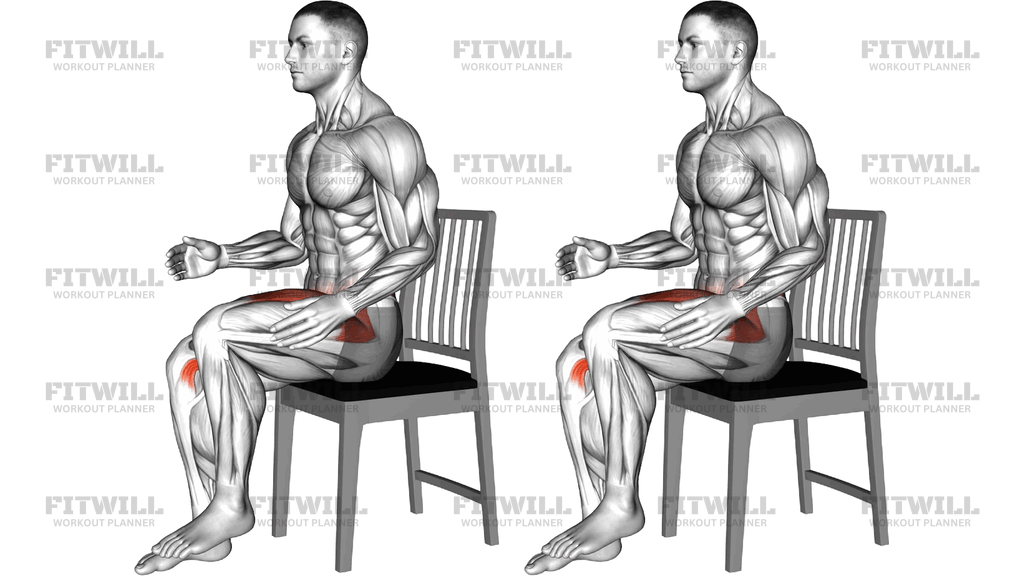
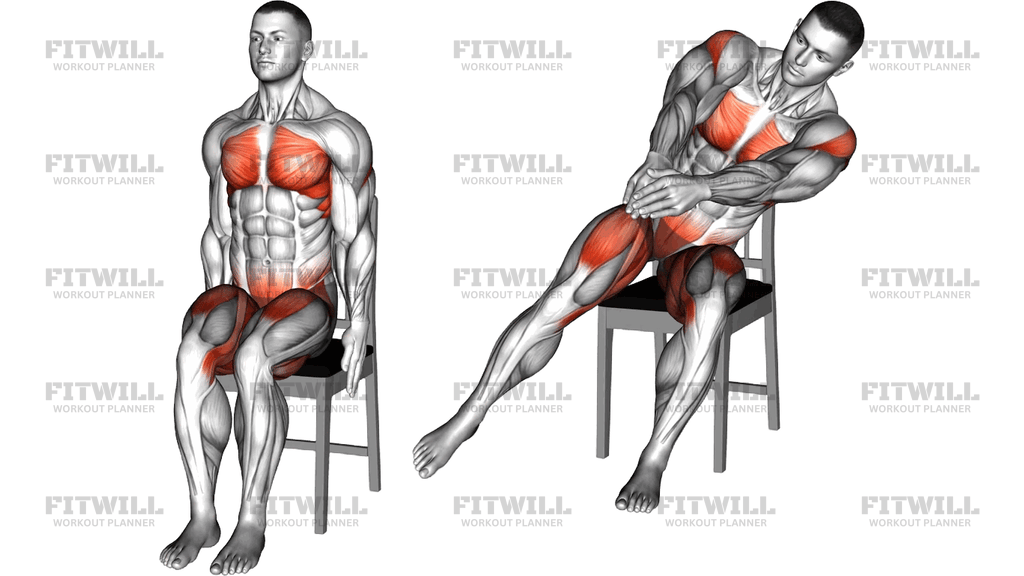
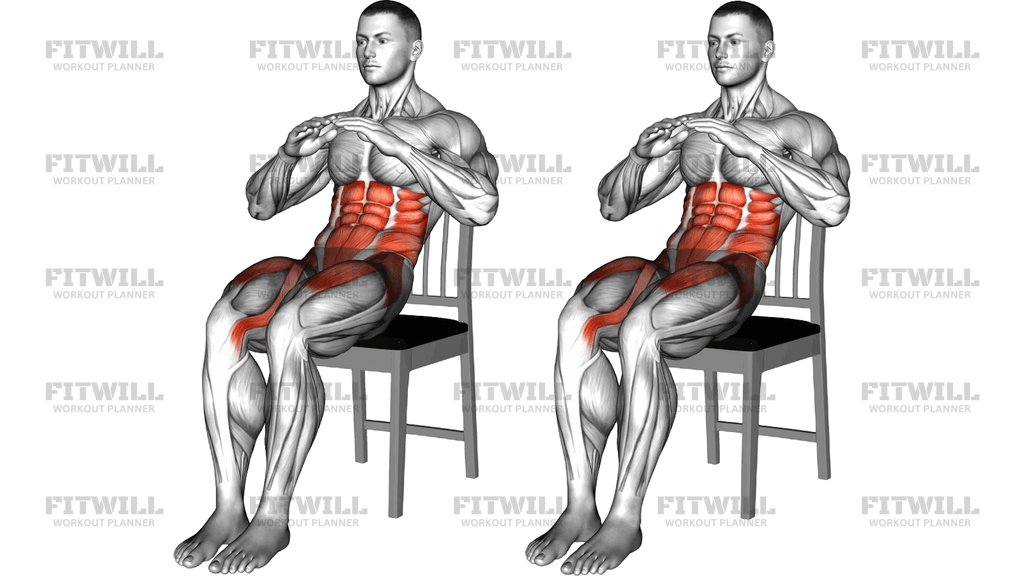
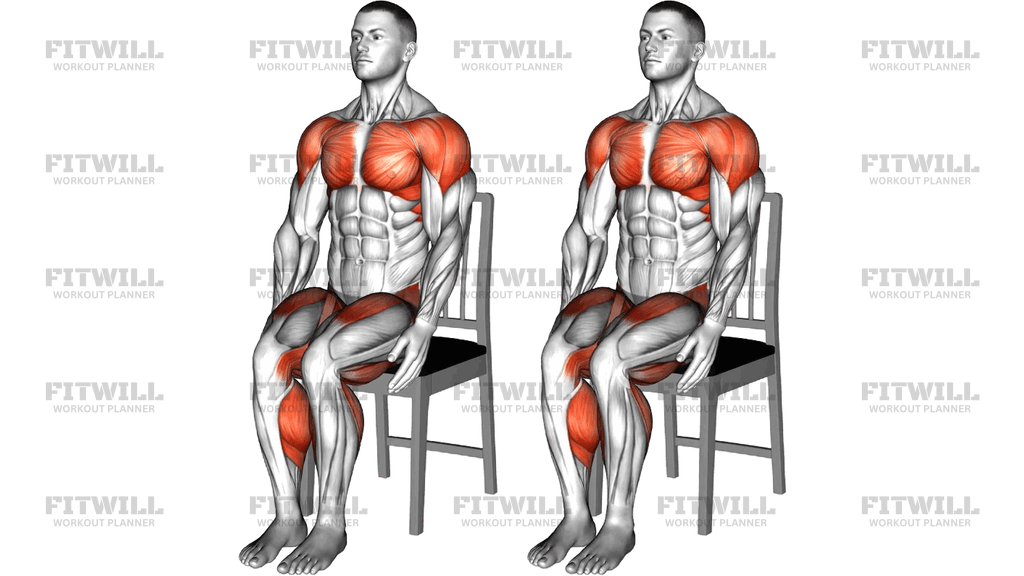
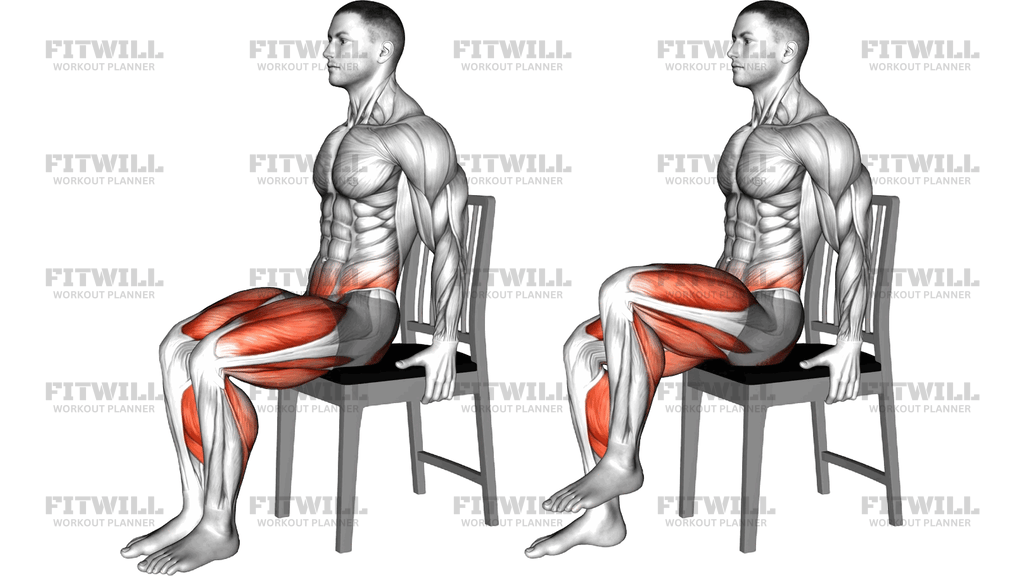
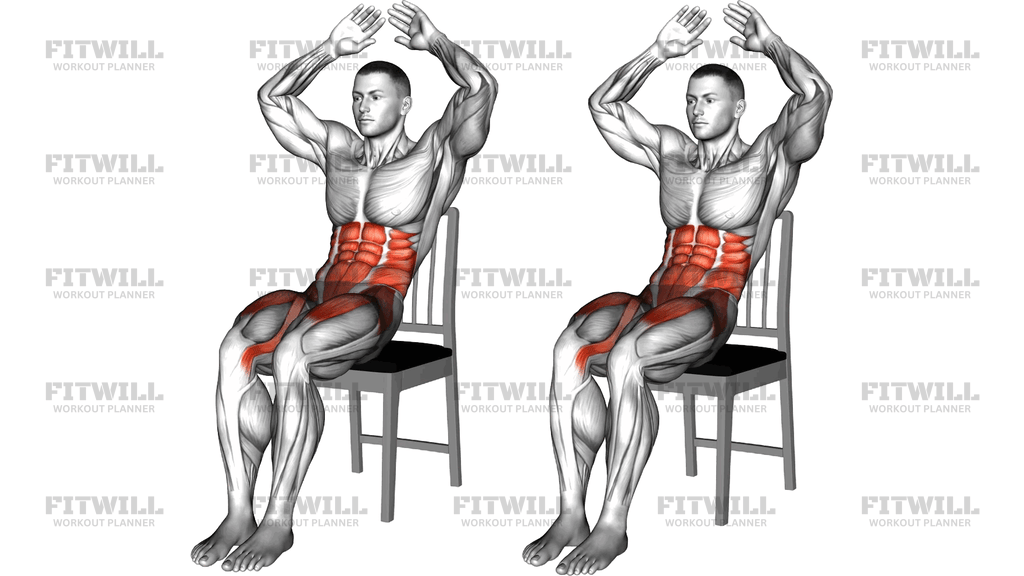
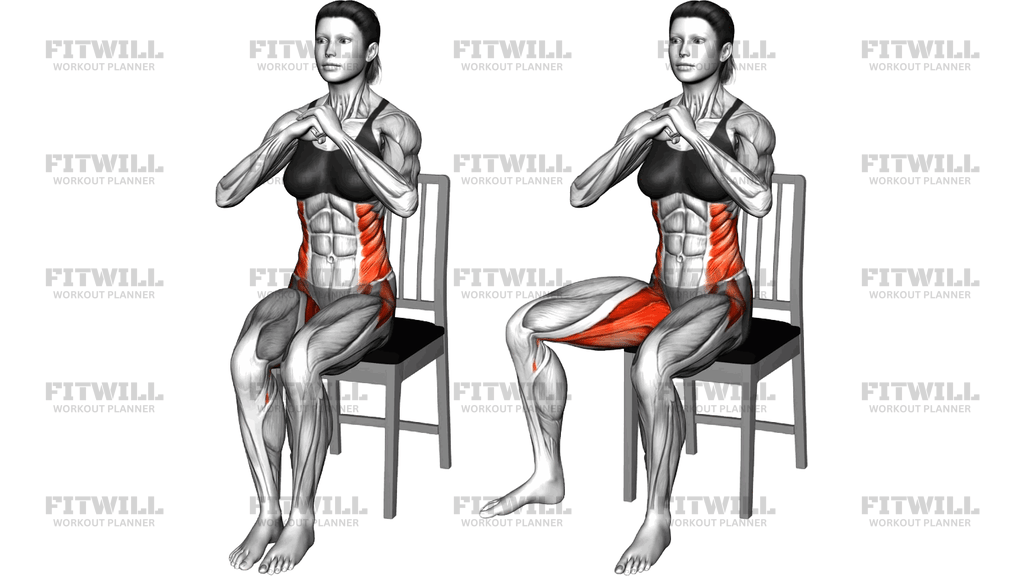
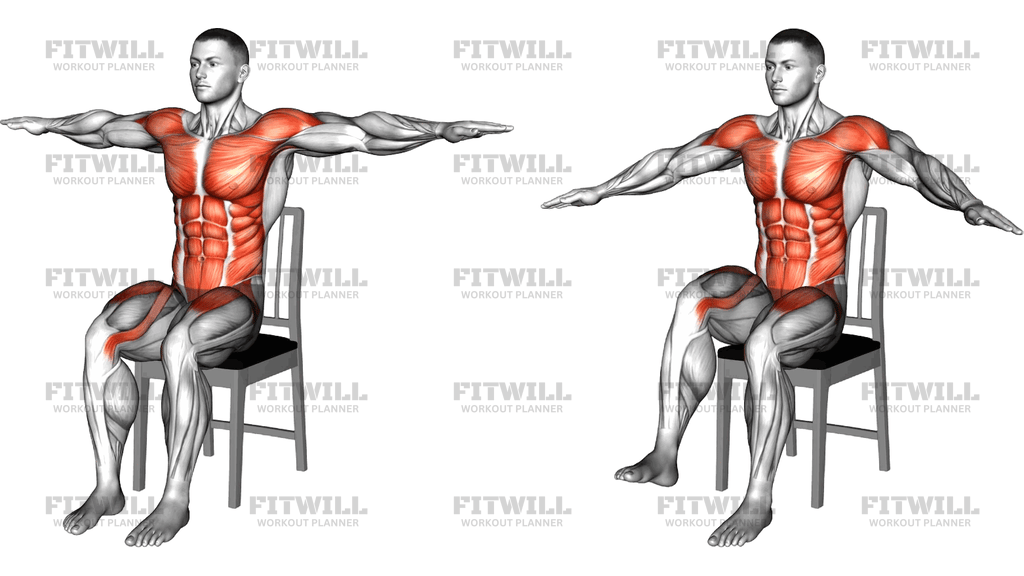
Sitting Jack On A Chair
The Sitting Jack On A Chair is a seated version of the classic jumping jack, built for people who need or prefer to keep their weight off their feet. Instead of hopping the legs out and overhead the arms, you stay planted on a sturdy chair and perform the same open-and-close pattern: legs swing wide apart and back together while the arms sweep up from your sides and back down. It keeps the rhythm and coordination of the original movement without any impact on the knees, ankles, or hips.
This is one of the best entry points into rhythmic exercise for older adults, people recovering lower-body mobility, office workers who want a discreet movement break, and anyone doing seated workouts. Because the chair supports your weight, your heart rate rises from repeated hip and shoulder movement rather than from jumping, so you can sustain it longer and use it as a gentle warm-up or low-impact conditioning drill.
The work comes from several areas at once. The hip flexors and thighs drive the legs in and out, the inner thighs control the closing phase, the shoulders and upper arms lift the limbs through each repetition, and the abdominal muscles hold your torso upright as everything else moves. That combination makes it more of a whole-body coordination drill than it first appears, especially when you keep the tempo steady for thirty seconds or more.
Setup matters more here than in most chair exercises. A chair without wheels, with a firm seat and no armrests, gives your legs room to swing freely and keeps you stable. Sit tall toward the front half of the seat so your hips can open fully, and keep your feet flat before each rep begins. A slouched or perched-too-far-back position restricts the leg path and shifts the work into your lower back instead of your hips.
Execution is simple but worth doing precisely: exhale as the legs open and the arms rise, inhale as they close and lower, and let the arms lead slightly so the timing stays smooth. Move at a pace you could hold for a full minute without your shoulders shrugging or your posture collapsing. If the full arm sweep is too much at first, keep your hands on your thighs or work the legs alone until the pattern feels natural.
Aim for intervals of 20 to 60 seconds, rest, and repeat. As a warm-up, two or three light sets are enough; as a standalone conditioning block, string several intervals together with short rests. Stop if you feel any pinching at the front of the hips or sharp discomfort in the knees, and shorten the range before abandoning the movement entirely.
[ Workout Log & Planner ]
Put your next workout in Fitwill
Keep your plan and training log ready when you are.


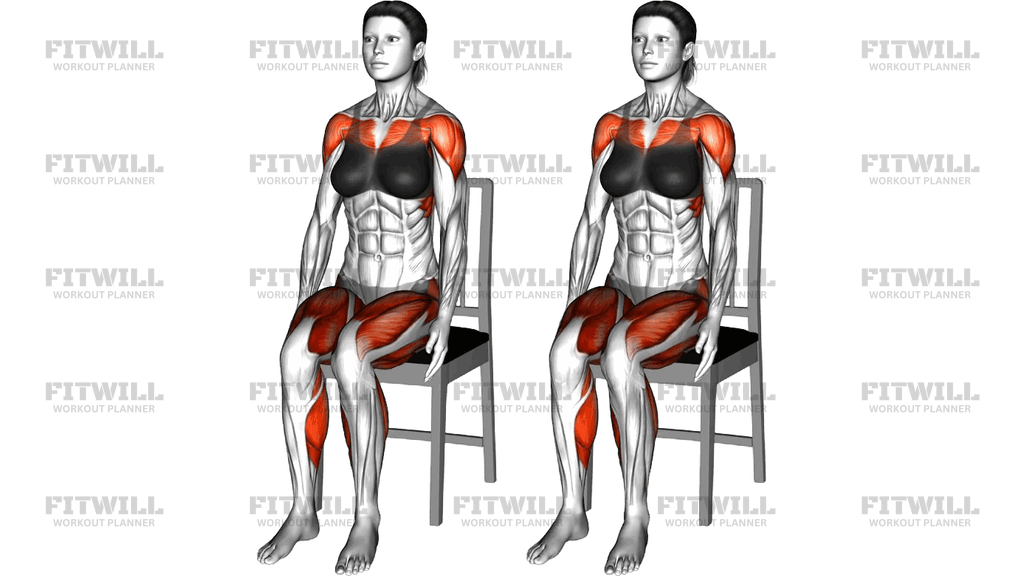
Instructions
- Choose a sturdy, armless chair on a non-slip floor and sit toward the front edge of the seat with your feet flat and together.
- Sit tall: lengthen through the crown of your head, relax your shoulders down, and let your arms hang at your sides with your palms facing in.
- Brace your abdominal muscles lightly to keep your ribcage stacked over your pelvis before you start moving.
- Open your legs wide apart by sliding both feet out to the sides at the same time, keeping your heels low to the floor.
- As the legs open, sweep both arms out and up to the sides until they are raised overhead or as high as is comfortable.
- Close the legs by drawing your feet back together while lowering your arms along the same path to your sides.
- Exhale on the opening phase and inhale on the closing phase, keeping the breath matched to the rhythm.
- Repeat the open-close cycle at a steady, even tempo, staying seated tall throughout.
- When you finish, plant both feet flat, rest your hands on your thighs, and let your breathing settle before the next set.
Tips & Tricks
- The most common fault is letting the torso rock backward as the legs swing wide; press your sit bones into the seat and keep your chest lifted to stay anchored.
- If your shoulders creep up toward your ears as your arms rise, drop the arm path to shoulder height instead of overhead until the upper traps relax.
- Keep the movement of the feet low and gliding rather than lifting the legs high; this protects the hip flexors and keeps the rhythm smooth.
- Avoid a chair with wheels or a soft couch; a firm, stable seat is what lets you control the leg speed safely.
- Lead slightly with the arms when opening and closing; matching arm and leg timing keeps the pattern feeling like a jack rather than two separate motions.
- If your lower back arches as the legs open, shorten the width of the leg swing and tighten your abdominal brace before widening again.
- Bare feet or flat-soled shoes both work, but make sure the soles of your feet can slide on the floor without catching.
- Start with 20-second intervals to learn the coordination, then build to 45-60 seconds as the pattern becomes automatic.
- For a harder version, add light hand weights or wrist weights, but only after your posture holds steady for a full minute of movement.
Frequently Asked Questions
What muscles does the Sitting Jack On A Chair work?
The main work comes from the hip flexors and thighs moving the legs, with the inner thighs closing them. The shoulders and upper arms lift through each rep, and the abdominal muscles steady your upright torso.
Is the Sitting Jack On A Chair good cardio for beginners?
Yes. Because the chair carries your body weight, you can keep a steady rhythm far longer than with standing jumping jacks, which raises your heart rate gently and without joint impact.
What kind of chair should I use for the Sitting Jack On A Chair?
Use a stable, armless chair with a firm seat and no wheels, positioned on a non-slip surface. Armrests block the arm path, and wheels make the seat slide during the leg movement.
Why do my lower back muscles fatigue during seated jacks?
This usually means your torso is rocking or arching as the legs swing wide. Sit taller, brace your abdominals, and slightly reduce how wide you open your legs until your back stays quiet.
Can I do the Sitting Jack On A Chair with limited shoulder mobility?
Absolutely. Limit the arm lift to shoulder height or simply rest your hands on your thighs and let the legs do the work while you build range.
How long should a set of the Sitting Jack On A Chair last?
Start with 20 to 30 seconds and rest between rounds. Once the coordination feels automatic, work up to 45-60 second intervals with short rests.
Is this exercise safe after hip or knee surgery?
It is often used in seated rehab settings because there is no impact, but you should get clearance from your doctor or physical therapist first and keep the leg range small and pain-free.
How can I make the Sitting Jack On A Chair more challenging?
Increase the tempo slightly, extend each interval, or hold light hand weights so the shoulders work harder through the arm sweep.
Can the Sitting Jack On A Chair replace standing jumping jacks in a workout?
It trains the same pattern with far less impact, so it is a good substitute when balance, joint comfort, or floor space is a concern, though it burns fewer calories at the same pace.