Seated Under Knee Clap On A Chair
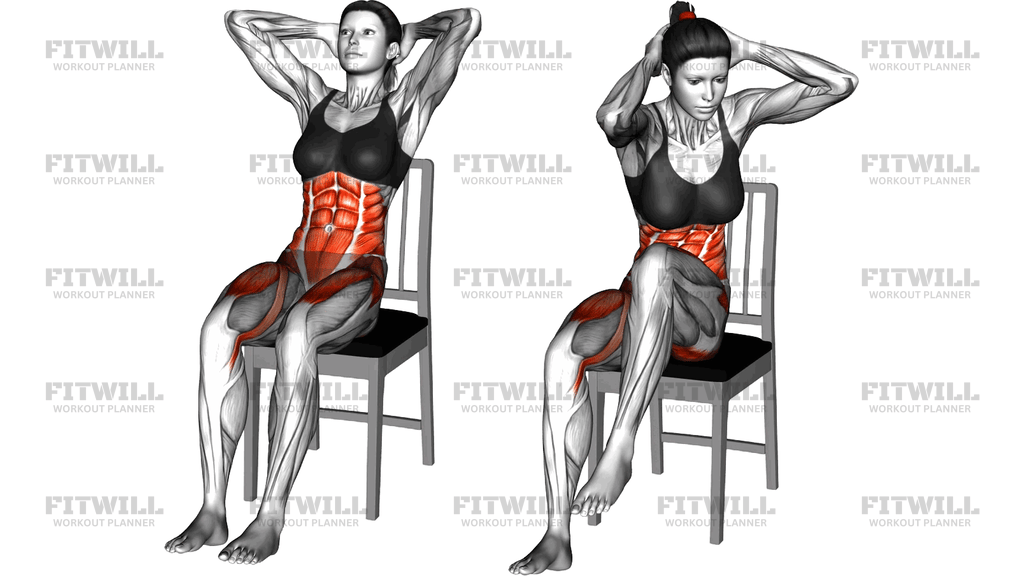
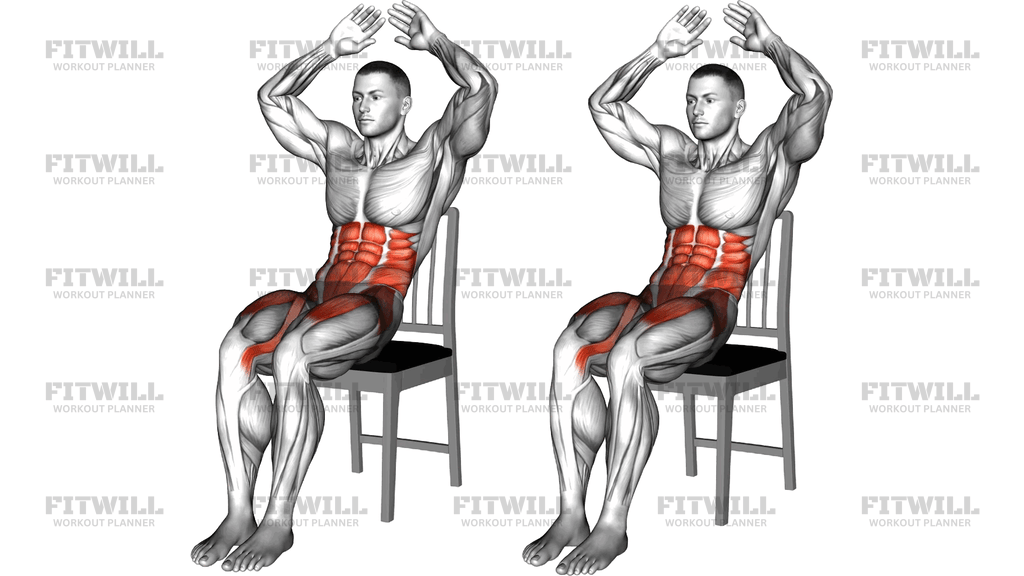
The Seated Under Knee Clap On A Chair is a rhythmic seated cardio drill that combines a knee drive with a fast hand clap underneath the lifted thigh. You sit upright on a standard chair with your arms raised overhead, then drive one knee up toward your chest and slap your hands together beneath it before pressing them back up as the foot returns to the floor. It looks simple, but the coordination of arms, legs, and trunk makes it a surprisingly demanding core and conditioning move.
Because everything happens from a seated position, this exercise is a good fit for people who need low-impact cardio options: beginners building a base, older adults working on coordination, office workers breaking up long sitting periods, or anyone recovering intensity gradually after time away from training. It also works well as a warm-up drill, since it raises the heart rate while waking up the hip flexors and abdominal muscles without loading the joints.
The main work comes from the abdominals, which brace and slightly flex the trunk every time the knee drives up, and from the hip flexors, which lift the thigh against the resistance of your own leg. The quads assist on the knee drive, the shoulders and arms handle the repeated overhead reach and clap, and the steady tempo gives you a modest cardiovascular stimulus. The chair removes the balance demands of a standing version, so you can focus on speed and rhythm instead of staying upright.
Setup matters more than it seems. A sturdy chair without wheels, positioned on a non-slip surface, lets you lean slightly back from vertical as the knee comes up without the chair tipping or sliding. Sitting forward on the seat so your back stays clear of the backrest keeps your trunk active; slouching against the backrest turns the drill into a lazy leg lift. Feet start flat and together so each knee drive begins from the same position.
To execute it well, think in two beats: clap on the lift, hands overhead on the lower. The clap should happen under the thigh, close to the knee, with a genuine hand contact rather than a tap on your shin. Keep your chest tall and your neck relaxed as your arms travel, and let the pace stay quick but repeatable. If your form gets sloppy, slow down before you lose the clap entirely.
In practice, this movement shines in seated circuit workouts, desk-break routines, and low-impact conditioning sessions. Two to three rounds of twenty to forty seconds per side is enough for most people, either alternating legs rep by rep or working one side before switching. Stop if you feel any pinching in the front of the hip or strain in the lower back.
[ Workout Log & Planner ]
Put your next workout in Fitwill
Keep your plan and training log ready when you are.


Instructions
- Sit forward on a sturdy, stable chair with your feet flat on the floor, knees bent to roughly 90 degrees, and your back away from the backrest.
- Brace your abdominal muscles lightly and sit tall, as if a string were lifting the crown of your head toward the ceiling.
- Raise both arms overhead with a slight bend in the elbows and your palms facing forward, hands about shoulder-width apart.
- Drive one knee up toward your chest while keeping your torso upright and your foot relaxed.
- As the thigh rises, sweep both hands down quickly and clap them together underneath the lifted knee.
- Immediately separate your hands and press them back overhead as you lower the foot back to the floor under control.
- Exhale sharply on the knee drive and clap, then inhale as the leg returns and the arms go back up.
- Repeat on the same leg for your target reps, or alternate legs each rep if you prefer a marching rhythm.
- Reset your posture between sets: feet flat, chest tall, arms overhead, before starting the next round.
Tips & Tricks
- The most common miss is clapping on top of the thigh or tapping the shin instead of making clean contact under the knee — lift the knee high enough that your hands have room to meet beneath it.
- If you find yourself slumping back as the knee comes up, press the opposite foot gently into the floor and think about lifting your chest an inch higher on every rep.
- A chair with wheels or a lightweight folding chair can slide; push it against a wall or use a heavier chair so the base stays planted.
- Keep the clap crisp. If your hands are meeting late and the knee is already dropping, you are rushing the arm path — start the hands down a fraction earlier.
- Avoid shrugging your shoulders up toward your ears as the arms travel overhead; keep the shoulder blades settled so your neck stays relaxed.
- Do not let the lower back round into the seat at the bottom of each rep — the torso should return to the same tall position every time.
- Speed is the point of the drill, but only as fast as you can clap cleanly; a sloppy fast rhythm trains nothing but frustration.
- If your shoulders fatigue before your abs, lower the overhead rest position to just above head height instead of full extension.
- On a soft couch or cushioned seat your hips can sink and shorten the knee drive — a firmer chair gives you a more consistent hip angle.
Frequently Asked Questions
What muscles does the Seated Under Knee Clap On A Chair work?
The abdominals and hip flexors do the main work, with the quads assisting on the knee drive. The shoulders and forearms stay busy with the repeated overhead reach and clap.
Is this exercise suitable for complete beginners?
Yes. The chair provides balance support and the movement is low impact, so beginners can start at a slow clap-and-return tempo and build speed as coordination improves.
What kind of chair should I use for the Seated Under Knee Clap On A Chair?
Use a sturdy, armless chair without wheels on a non-slip floor. Dining-style wooden chairs work well because the seat is firm and the base will not slide.
Should I alternate legs or complete all reps on one side?
Both work. Alternating legs each rep creates a marching rhythm that is easier on the hip flexors, while finishing one side first makes each set more demanding on the working hip.
Why do I keep hitting my thigh instead of clapping under the knee?
Your knee is probably not driving high enough, or your hands are starting down too late. Lift the thigh until it is at least parallel to the floor and begin sweeping the hands down as the knee rises.
Does this count as cardio or strength work?
It sits in between but leans cardio, since the quick repeated reps raise your heart rate. The core still works isometrically to keep your torso tall through every rep.
Can I do the Seated Under Knee Clap On A Chair if I have tight hip flexors?
You can, but keep the knee drive to a height that feels smooth rather than forced and shorten your sets. If you feel pinching at the front of the hip, reduce the range rather than pushing through it.
What is a good substitute if I do not have a suitable chair?
A firm bench, a stability ball held against a wall, or the edge of a sturdy ottoman all work. You can also do standing high knees with an under-knee clap if standing is comfortable for you.
How long should I perform the exercise per set?
Twenty to forty seconds of continuous claps is a solid starting point, resting about thirty seconds between sets. Prioritize clean hand contact over squeezing out extra seconds.
Is it safe for my lower back?
For most people, yes, as long as the torso stays upright and the lower back does not round into the seat. If sitting tall feels straining, reduce the knee height and slow the tempo.