Seated Knee Slap On Chair
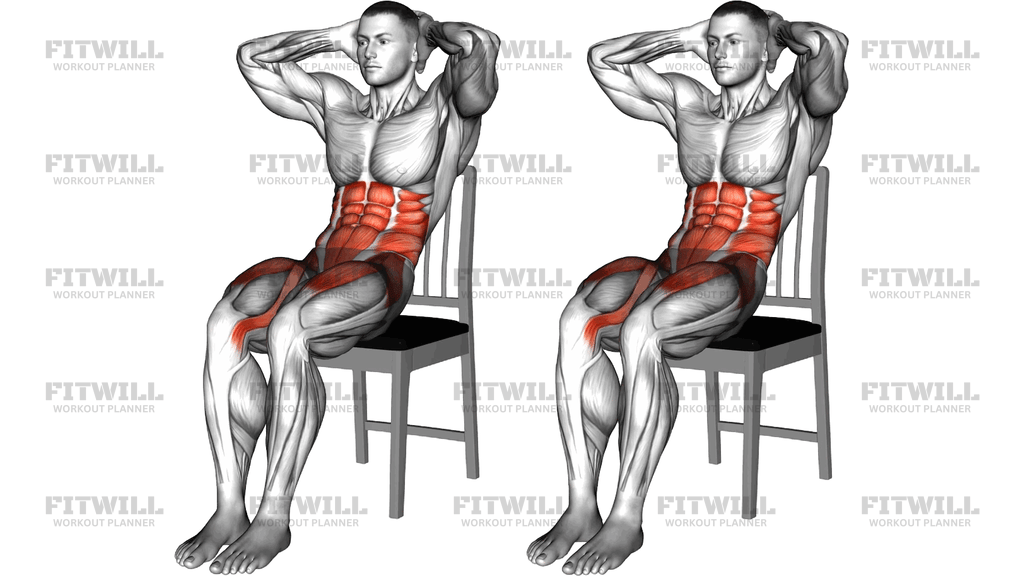
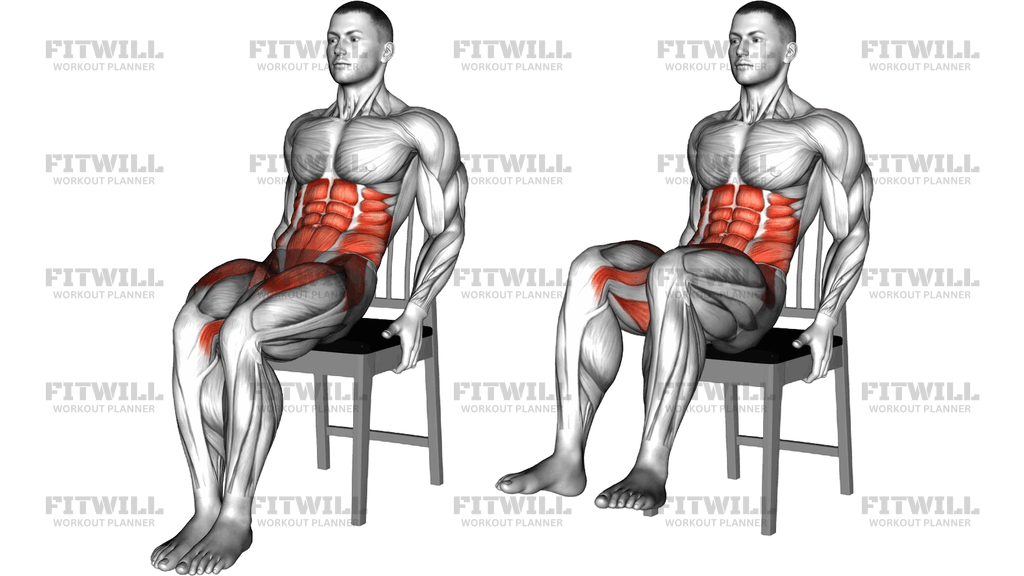
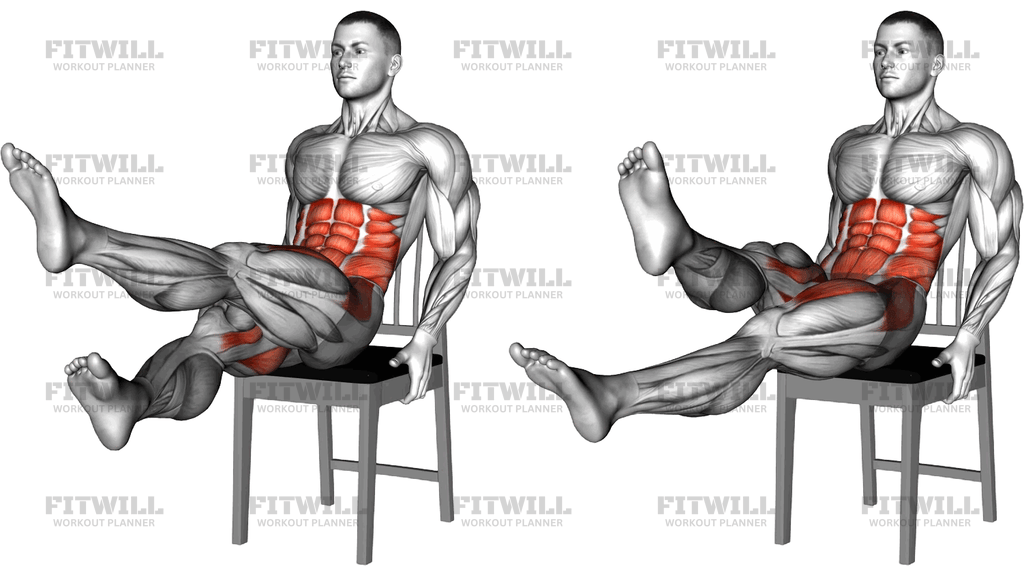
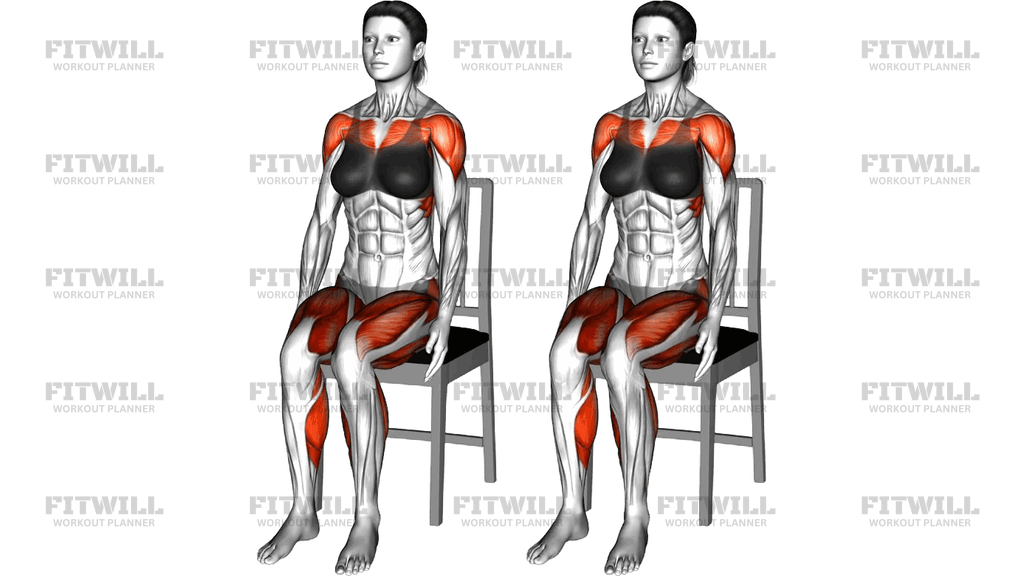
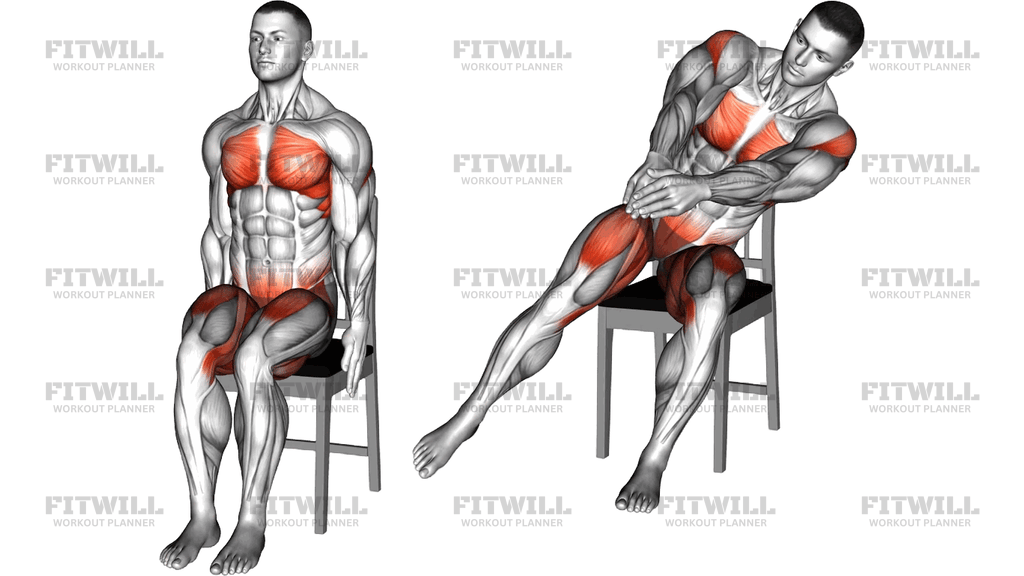
The Seated Knee Slap On Chair is a simple bodyweight movement performed entirely from a sturdy chair. You sit upright, extend one leg straight out in front of you, then lean slightly forward from the hips and slap down along the extended thigh with both hands, finishing at or near the knee. The leg returns to the floor and the action repeats on the other side. It looks almost too easy, but the combination of lifting a straight leg, controlling the torso, and reaching with both arms makes it a genuine full-body coordination drill.
This movement earns its place in warm-ups, seated cardio circuits, and low-impact routines. The hip flexors and quadriceps do the work of extending and holding the leg, the abdominal muscles stabilize your torso as you lean forward, and the hamstrings on the working leg get a light dynamic stretch as the knee straightens. Because one side works at a time, you also get a natural rotational demand through the trunk, which quietly trains the obliques and the muscles that keep your spine organized while seated.
The chair setup is what makes this accessible. Sitting removes the balance and hip-loading demands of standing alternatives, so it suits beginners, older adults, people returning from lower-body layoffs, and anyone who needs a joint-friendly option at a desk or at home. Choose a chair without wheels, with a stable base, and ideally with a backrest you can touch but not lean on. Your feet should rest flat on the floor before each rep, with knees bent to roughly ninety degrees.
To execute it well, think of the leg and the arms as one coordinated action. Extend the leg with intent rather than letting it swing out, keep the knee locked straight so the quadriceps visibly engage, and reach with both palms together along the thigh toward the knee instead of slumping your chest down to meet it. The lean comes from the hips, not from rounding the lower back. A crisp, deliberate slap gives you feedback that you actually reached the target rather than stopping short.
The most common faults are rushing the tempo, letting the extended leg drift into a partial bend, and collapsing the torso instead of hinging. Slowing down and keeping the movement crisp fixes all three. Because this drill is low load, quality of movement matters far more than speed or reps; a controlled set of ten to fifteen slaps per side leaves the hips and trunk working without any joint stress, which is exactly what most people want from it.
[ Workout Log & Planner ]
Put your next workout in Fitwill
Keep your plan and training log ready when you are.


Instructions
- Sit on a stable, armless chair with your feet flat on the floor, knees bent about ninety degrees, and your back tall.
- Place both hands at your sides with palms relaxed and lightly touch the chair with your sitting bones so you feel centered and supported.
- Brace your abdominal muscles gently and lift your chest as if a string were pulling the crown of your head toward the ceiling.
- Extend one leg straight out in front of you, locking the knee so the quadriceps engage, and hold the foot a few inches off the floor.
- As the leg reaches full extension, hinge forward slightly from the hips and bring both hands together above the extended thigh.
- Slap down along the front of the thigh with both palms, finishing at or just past the knee, keeping the leg straight the whole time.
- Sit back upright and lower the leg with control until your foot returns flat to the floor rather than dropping it.
- Exhale as you extend and slap, then inhale as you return to the seated starting position.
- Repeat on the other leg and continue alternating for your target number of reps per side, resetting your posture between reps.
Tips & Tricks
- If your lower back rounds when you reach forward, hinge from the hips instead of curling your spine; imagine bringing your chest toward the extended knee while keeping it lifted.
- A bent or drooping knee is the most common fault here. Squeeze the thigh straight before you start the reach so the slap and the extension happen together.
- Keep your weight evenly spread across both sitting bones. Shifting toward the working side turns the drill into a lean instead of a controlled hinge.
- Do not slam the thigh hard. A firm, quick contact is enough feedback; heavy slapping usually means you are rushing the tempo.
- If the extended leg shakes or drops, hold the top position for a second before slapping. That brief isometric pause builds hip flexor strength faster than more reps.
- Keep the foot of the working leg relaxed and flexed toward your shin to feel the quad and hip flexor working as a team.
- Avoid pushing off the chair seat with your hands during the lean. Your hands should only meet the thigh; the trunk does the reaching.
- If a chair with a low seat makes your hips feel cramped, sit slightly forward on the edge so the extended leg can straighten fully without forcing the lean.
Frequently Asked Questions
What muscles does the Seated Knee Slap On Chair work?
The hip flexors and quadriceps drive the leg extension, while the abdominal muscles stabilize your torso during the forward reach. The hamstrings on the extended leg also get a light dynamic stretch.
Is the Seated Knee Slap On Chair suitable for complete beginners?
Yes, it is one of the most beginner-friendly seated drills because the chair removes balance demands and the only load is your own leg. Start with slow, controlled reps on each side before adding speed.
Why should the leg stay straight during the slap?
A straight knee keeps the quadriceps engaged and ensures the hip flexors, not momentum, control the movement. If the knee bends, the rep loses most of its training value.
Can I do the Seated Knee Slap On Chair at my desk?
Yes, as long as you have a stable, wheeless chair with clearance in front of you to extend the leg fully. It makes a useful break from prolonged sitting.
How many reps should I perform?
Ten to fifteen controlled slaps per side works well for a warm-up or seated circuit. Focus on a crisp extension and reach rather than counting fast reps.
What kind of chair works best for this exercise?
A sturdy, armless chair without wheels, with a seat high enough that your knees bend to about ninety degrees. A rolling office chair or a soft couch will compromise both safety and form.
My lower back rounds when I reach for the knee. How do I fix it?
Hinge forward from the hips instead of curling your spine, and reduce the lean if needed. You can also extend the leg slightly less far until your hip mobility improves.
What can I use instead of the Seated Knee Slap On Chair if I cannot sit on a chair?
The same straight-leg extension and reach pattern can be done seated on a bench, the edge of a bed, or even on the floor with a tall chest. Keep the leg extension and two-hand reach identical so the movement intent stays the same.
Is it safe for people with knee or hip issues?
Because the drill is low load and the leg moves through a comfortable straight-knee extension, most people tolerate it well. If either joint complains during the extension or the lean, shorten the range and consult a professional before continuing.