Seated Switch Jump With Arms Lift On Chair
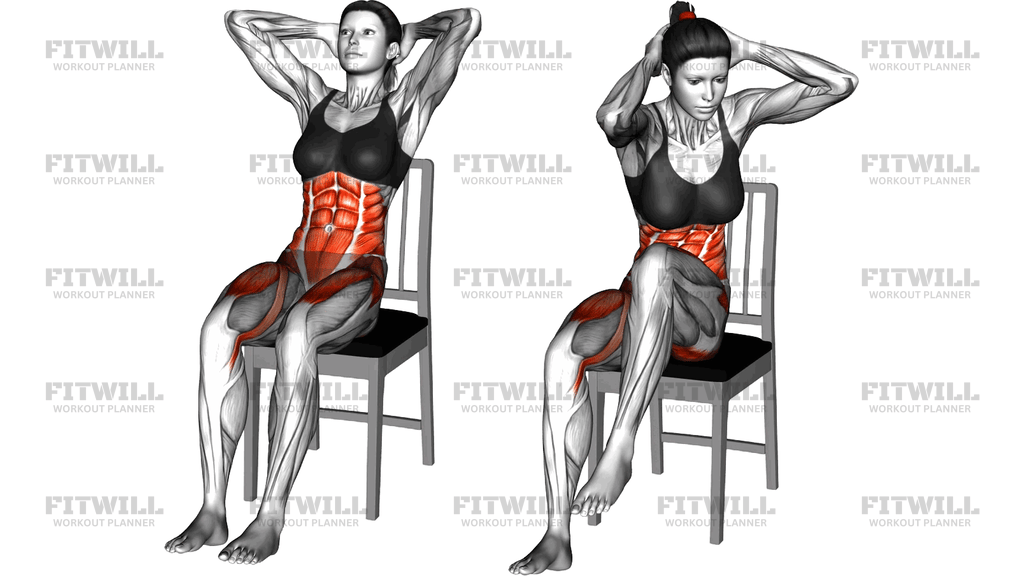
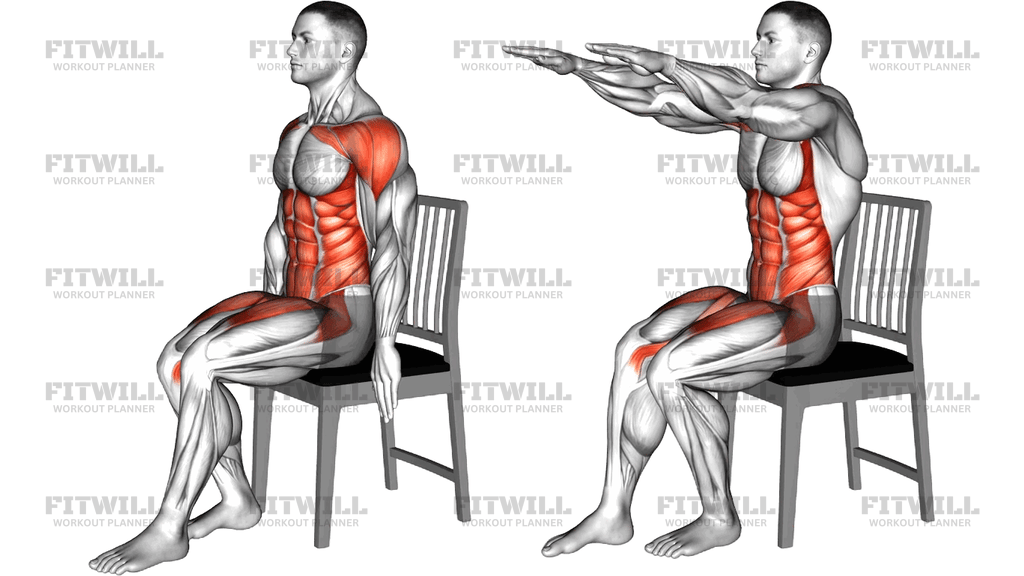
The Seated Switch Jump With Arms Lift On Chair is a low-impact seated movement that pairs an alternating leg switch with a controlled front arm raise, all performed from the front edge of a sturdy chair. You start sitting tall with your arms hanging at your sides and feet flat on the floor. From there, you lift your arms straight forward to shoulder height while switching the position of your legs, then return to the start and repeat on the other side. Because the chair supports your torso, you can focus entirely on moving your arms and legs with precision instead of fighting to keep your balance.
This exercise is a great fit for beginners, older adults, or anyone returning to training after a layoff, as well as office workers who want something they can do between tasks without changing clothes or getting on the floor. It also works well as a warm-up drill before lower-body or shoulder training, because it gently raises your heart rate while taking the hips, knees, and shoulders through a comfortable range of motion.
The main muscles at work are the abdominal muscles, which brace and stabilize your trunk every time a leg lifts, and the front of the shoulders, which raise the arms against gravity. The hip flexors drive the knee lift, the quads help control the leg as it lowers, and the upper back and core work together to keep your spine upright as your limbs move. It looks simple, but when you move slowly and deliberately, the trunk has to stay rigid while one side of the body works independently of the other, which is exactly the kind of control that carries over to walking, climbing stairs, and getting up from a chair.
Setup matters more than most people expect. Sit on the front third of the chair so your weight is on your sit bones rather than slumped against the backrest, with feet flat and roughly hip-width apart. A chair without wheels is essential; a rolling office chair will slide out from under you the moment you lift a leg. Keep your ribs stacked over your pelvis instead of letting your lower back arch as the arms come up.
To execute it well, think of two things happening at once: the arms travel in a smooth arc forward until they reach shoulder height, parallel to the floor, while one knee lifts a few inches off the ground. Lower the arms back down along the same path as you place that foot back down, then switch sides. The tempo should feel almost slow-motion; if you rush, momentum does the work and the abs stop contributing.
A practical safety note: keep the movement small enough that you never feel like you are tipping forward or gripping the chair with your thighs. If your shoulders shrug up toward your ears as the arms rise, lower the arms to just below shoulder height until you can keep the neck relaxed. Stop the set if you feel any pinching in the front of the shoulders or strain in the lower back.
[ Workout Log & Planner ]
Put your next workout in Fitwill
Keep your plan and training log ready when you are.


Instructions
- Place a stable, armless chair on a non-slip surface and sit on the front third of the seat with your sit bones supported and your spine tall.
- Set your feet flat on the floor, hip-width apart, and let your arms hang straight down at your sides with palms facing your thighs.
- Brace your abdominal muscles lightly, as if preparing for a gentle poke to the stomach, and keep your ribs stacked over your pelvis.
- Exhale as you raise both straight arms forward and up to shoulder height while simultaneously lifting one knee a few inches off the floor.
- Hold the top position for a brief moment with arms parallel to the ground, shoulders pressed down away from your ears.
- Inhale as you lower your arms back along the same arc and place the lifted foot back down with control.
- Repeat the arm raise and knee lift with the opposite leg, alternating sides for one smooth repetition each time.
- Keep your gaze forward and your chin level throughout so your head does not drift toward your chest as the arms come up.
- Complete your target repetitions, then rest by sitting back fully against the chair and letting your arms settle at your sides.
Tips & Tricks
- The most common mistake is leaning the torso backward as the arms rise; if you feel your weight shift toward the backrest, brace the abs harder and think of growing taller out of the seat.
- Do not let the shoulders shrug toward the ears at the top of the arm raise — keep the space between your shoulders and ears long, and stop a few inches short of shoulder height if that helps.
- Lift the knee only as high as you can without your lower back rounding or your pelvis tucking under; a two- to three-inch lift done cleanly beats a high knee that collapses your posture.
- Avoid swinging the arms; the lift should take about two seconds up and two seconds down so the front of the shoulders and the abs do the work instead of momentum.
- If the chair seat is soft and you sink into it, place a firm cushion or mat on the seat so your hip position stays consistent between reps.
- Keep both hands open and relaxed rather than fisting them; gripping your hands tightly tends to creep up into the shoulders and neck.
- Check your feet between sets — they should return to the same flat, hip-width position each rep so the leg switch stays even on both sides.
- If you feel pinching at the front of the shoulder, turn your palms slightly to face each other as the arms lift, which gives the shoulder joint a little more room.
- Breathe steadily instead of holding your breath: exhale on the lift, inhale on the lower, especially if you are doing higher-rep sets.
Frequently Asked Questions
What muscles does the Seated Switch Jump With Arms Lift On Chair work?
The primary muscles are the abs and the front of the shoulders, with the hip flexors and quads assisting on each knee lift. The upper back and trunk stabilizers also work to keep you upright while your limbs move.
Do I actually jump during the Seated Switch Jump With Arms Lift On Chair?
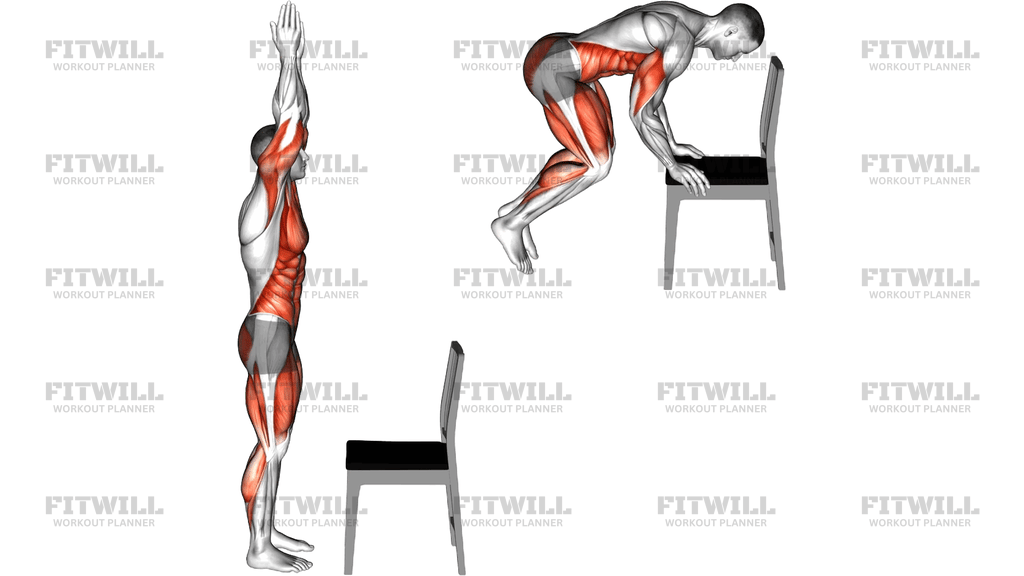
No. Despite the name, the movement is performed seated on a chair with your feet switching position on the floor, so there is no impact on the knees or ankles. It is a controlled seated lift, not a plyometric jump.
Is this exercise suitable for complete beginners?
Yes, it is one of the most approachable ways to train the core and shoulders together because the chair supports your weight. Start with a small knee lift and arms just below shoulder height, then gradually expand the range.
Why should I sit on the front edge of the chair instead of leaning back?
Sitting on the front third of the seat keeps your weight over your sit bones and forces your trunk muscles to hold you tall. Leaning against the backrest lets your abs switch off and turns the movement into mostly an arm exercise.
What kind of chair is safe to use?
Use a sturdy, armless chair without wheels, ideally on a non-slip floor or mat. A rolling office chair or a lightweight folding chair can slide or tip when you lift a leg.
How high should I raise my arms?
Raise them to about shoulder height so your arms are parallel to the floor. If your shoulders shrug or you feel pinching at the top, stop a few inches lower and build up over time.
How many repetitions should I do?
Start with 8 to 12 controlled repetitions per side, resting briefly between sets. Since the goal is quality of movement rather than fatigue, stop the set as soon as your tempo slows or your posture starts to slump.
What is a good substitute if I do not have a suitable chair?
You can perform the same alternating knee lift with an arm front raise while sitting on a bench, the edge of a bed, or a stability ball if you have the balance for it. The key is a firm, stable seat at a height where both feet rest flat on the floor.
Can I use this exercise in a warm-up?
Absolutely. Because it moves the hips, knees, and shoulders through a gentle range while raising your heart rate slightly, it works well for one or two easy sets before lower-body or upper-body training.
Is it normal to feel this more in my thighs than my abs at first?
Yes, especially if you are lifting the knees high, since the hip flexors and quads do much of the leg work. Slow the tempo down and keep the knee lift small, and you will feel your abdominal muscles bracing to control the movement.