Dumbbell Seated Bent Arm Lateral Raise
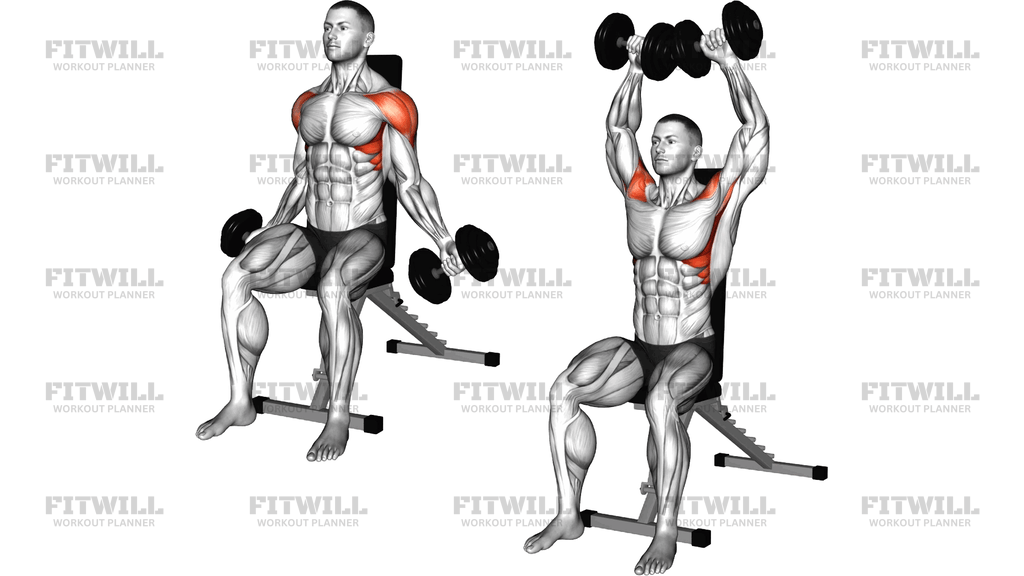
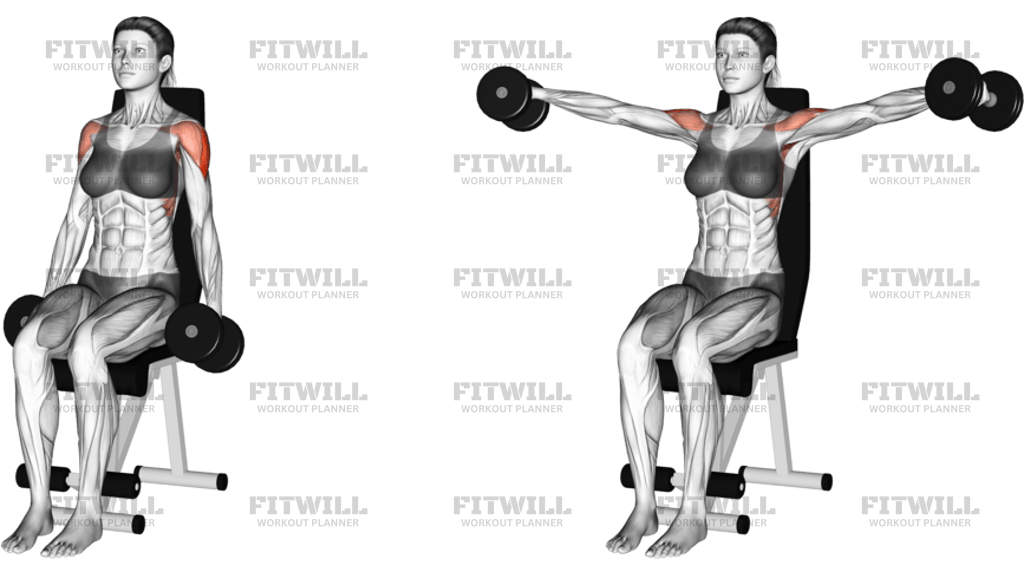
The Dumbbell Seated Bent Arm Lateral Raise is a shoulder isolation exercise performed sitting upright on a bench with a dumbbell in each hand. Instead of keeping the arms straight like a classic lateral raise, you bend your elbows to roughly 90 degrees and keep them fixed there for the whole set. From that position, you lift your upper arms out to the sides until your elbows reach shoulder height, then lower them back down under control. Because the elbow stays bent, the lever arm is shorter and the movement feels smoother and more joint-friendly than the straight-arm version.
This variation is a great fit for lifters who want to focus on the side delts without the momentum, swinging, or lower back stress that often creeps into standing lateral raises. The seated position pins your torso against the bench, which removes most of the body English people use to cheat the weight up. It also suits anyone with cranky shoulders or recovering elbows, since the bent-arm position shortens the resistance arm and lets you load the deltoid with lighter, more manageable dumbbells.
The main muscles worked are the lateral deltoids on the sides of the shoulders, with support from the anterior deltoids at the front of the shoulder, the upper traps as the arms approach shoulder height, and the forearm and grip muscles working to hold the dumbbells steady. Because the elbows stay bent and the forearms stay roughly vertical, the rotator cuff and scapular stabilizers also get quality work controlling the arm path.
Setup matters here more than most people expect. Sit tall on an upright bench with your back supported, feet flat on the floor, and hold the dumbbells vertically in front of your chest with elbows bent and pointing down toward your thighs. If your elbows drift behind your torso or your wrists collapse forward, the emphasis shifts away from the side delts and toward the front shoulders and traps, so keep the arm position consistent from rep to rep.
To execute well, raise your elbows out to the sides in a smooth arc, leading with the elbows rather than the hands, and stop when your upper arms are parallel to the floor. Pause briefly, then lower slowly back to the starting position in front of your chest. Keep the lift quiet and controlled — if you hear plates clanging or feel yourself leaning back into the bench, the weight is too heavy. A common mistake is turning this into an upright row by pulling the dumbbells up along the body; the arms should travel outward, not upward close to the torso.
This exercise slots nicely into a shoulder day as a secondary movement after presses, or as the first isolation lift when side delt width is the priority. It also works well as a burnout finisher with light dumbbells and higher reps, since the bent-arm position lets you accumulate volume without breaking down the elbow or shoulder joints.
[ Workout Log & Planner ]
Put your next workout in Fitwill
Keep your plan and training log ready when you are.


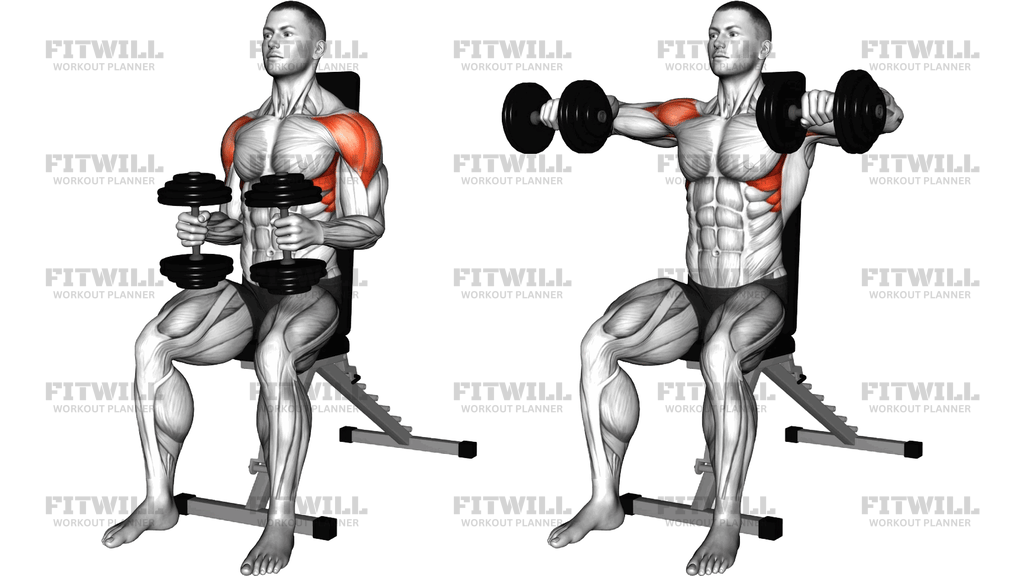
Instructions
- Sit upright on a bench with a back support, feet flat on the floor about hip-width apart, and your head and upper back resting lightly against the pad.
- Hold a dumbbell in each hand with a neutral grip so the dumbbells sit vertically, and raise them in front of your chest with your elbows bent to about 90 degrees and pointing down toward the floor.
- Brace your core lightly, pull your shoulders back and down, and let your forearms rest in front of your torso with wrists straight and knuckles facing forward.
- Exhale as you lift your upper arms out to the sides in a wide arc, keeping the elbow angle locked and the forearms perpendicular to the floor.
- Lead with the elbows, not the hands, and continue until your upper arms are roughly parallel to the floor at shoulder height.
- Pause for a beat at the top without shrugging your shoulders up toward your ears.
- Inhale as you slowly lower your upper arms back down and forward, returning the dumbbells to the starting position in front of your chest.
- Keep your torso glued to the bench pad throughout — no leaning back or rocking the weight up.
- Complete your reps with the same elbow angle and arm path, then set the dumbbells down on the floor or your thighs before standing.
Tips & Tricks
- Think of the movement as opening your elbows out to the sides like double doors, not lifting the dumbbells upward — this keeps tension on the side delts.
- If you feel it more in the front of your shoulders, check that your elbows start pointing down in front of your ribs rather than tucked behind your torso.
- Avoid shrugging at the top; if your upper traps take over, lower the weight and stop the lift just below full shoulder height.
- Keep the dumbbells vertical and wrists neutral. Letting the wrists bend backward turns the set into a forearm and grip exercise.
- A 90-degree elbow is the standard, but slightly less bend is fine as long as the angle never changes during the set — straightening the arms mid-rep is a sneaky way to cheat.
- Because the seated position blocks body English, expect to use noticeably lighter dumbbells than you would for standing lateral raises.
- Control the lowering phase for two to three seconds; the eccentric is where most of the side delt growth stimulus comes from in this movement.
- If your bench pad pushes your shoulders forward, scoot your shoulder blades down the pad or use a lower backrest so your arms can travel freely.
- Light dumbbells and higher reps (12–20) usually work better here than heavy loads, since the deltoid is a small muscle and the bent-arm path exposes sloppy form quickly.
Frequently Asked Questions
Which muscles does the Dumbbell Seated Bent Arm Lateral Raise target?
The lateral deltoids on the sides of the shoulders do most of the work, with help from the anterior deltoids and upper traps. Your forearms and grip also stay engaged holding the dumbbells in position.
Why bend the arms instead of doing a regular lateral raise?
Bending the elbows to about 90 degrees shortens the lever arm, which reduces stress on the shoulder and elbow joints and makes it easier to isolate the side delts. It also makes cheating with momentum harder when seated.
Is the Dumbbell Seated Bent Arm Lateral Raise good for beginners?
Yes, it is actually one of the more beginner-friendly lateral raise variations because the lighter loads and fixed elbow angle make form errors obvious. Start with very light dumbbells and focus on leading with the elbows.
How high should I raise my elbows during the movement?
Raise until your upper arms are roughly parallel to the floor, with elbows at or just below shoulder height. Going much higher shifts work to the upper traps rather than the side delts.
Why do I feel this exercise in my traps instead of my shoulders?
Shrugging your shoulders as you lift takes over for the deltoids. Keep your shoulders pulled down away from your ears and stop the lift at shoulder height to keep the traps out of it.
Can I do this exercise standing instead of seated?
You can, but the bench support is part of what makes this version effective — it prevents leaning back and swinging. If you stand, use lighter dumbbells and brace your core to keep your torso still.
How heavy should the dumbbells be for this movement?
Choose a weight you can lift for 12–15 controlled reps without leaning back or bending your wrists. Most people need roughly half the weight they would use for a standing straight-arm lateral raise.
What is the difference between this and an upright row?
In this exercise the upper arms travel outward away from the body, while an upright row pulls the weight straight up close to the torso. If the dumbbells end up near your ribs, you are rowing, not raising.
Where should I place this in my shoulder workout?
It works well as a secondary isolation movement after overhead presses, or as a high-rep finisher to fatigue the side delts at the end of the session.
Is it safe for people with shoulder discomfort?
The bent-arm position is generally easier on the shoulder joint than straight-arm raises, but stop if you feel pinching at the top of the movement. Reduce the range slightly or check with a qualified professional before continuing.