Squat To Kickback
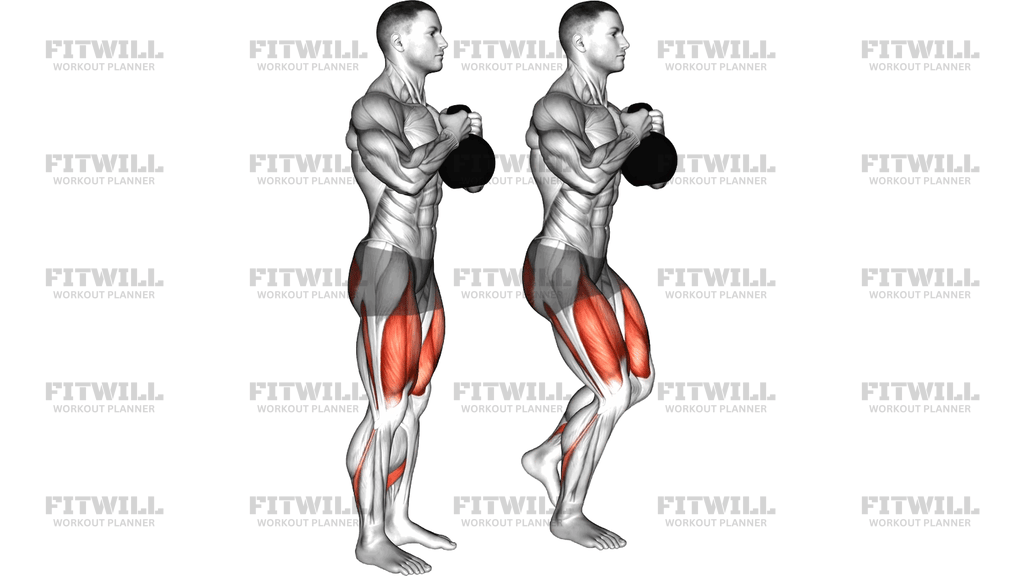
The Squat To Kickback is a bodyweight combination movement that links two lower-body actions into one rep: you drop into a squat, then as you come up you drive one leg straight behind you into a glute kickback before returning to your stance and repeating. Because each rep alternates or repeats the kick, you get the strength work of a squat plus the targeted hip-extension work of a kickback in a single flowing sequence. No equipment is needed, so it works just as well in a living room as in a gym.
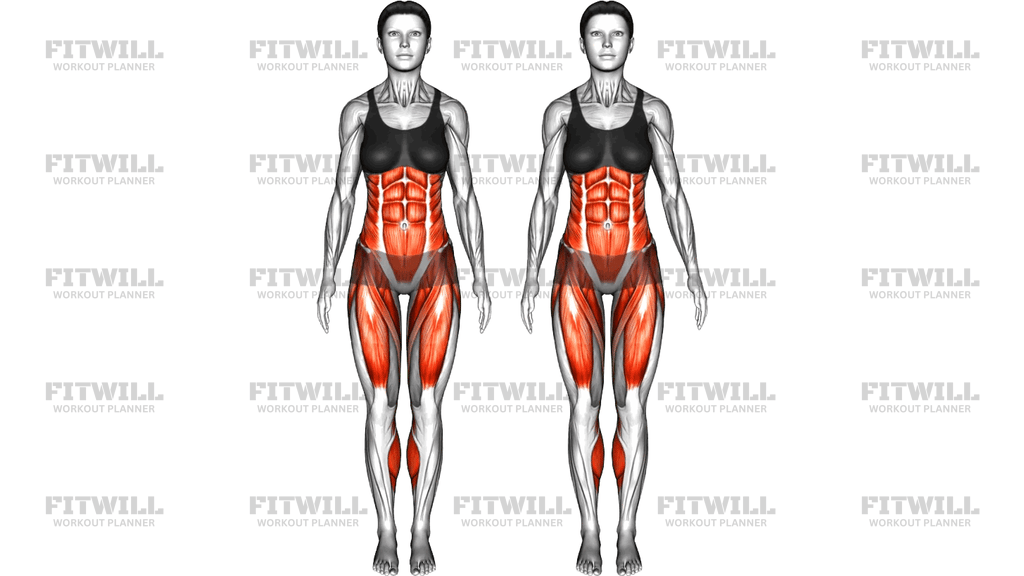
This exercise primarily trains the glutes, with the quads handling most of the squatting load and the hamstrings assisting on both the descent and the backward leg drive. Your core stays busy the whole time — when one leg sweeps behind you, your trunk has to brace hard to keep your hips square and your spine neutral. That balance demand also wakes up the small stabilizers around the standing hip and ankle, which is something a plain squat doesn't ask for.
The Squat To Kickback suits a few different people. Beginners use it to learn hip hinge and squat mechanics while getting comfortable with single-leg control. More experienced lifters use it as a warm-up activation drill before leg day, or as a burnout finisher for the glutes when the barbells are already racked. It's also a common choice in home or hotel-room workouts, since it needs nothing but floor space and a little room behind you.
Setup matters more than it looks. Stand with your feet about hip-width apart, clasp your hands in front of your chest, and make sure you have clear space behind you for the kick. Your weight should sit over the middle of your feet, and your chest should stay tall. If your stance is too narrow the squat gets wobbly; if you stand too close to furniture or a wall, you'll shorten the kick to avoid hitting something — and a shortened kick defeats the purpose.
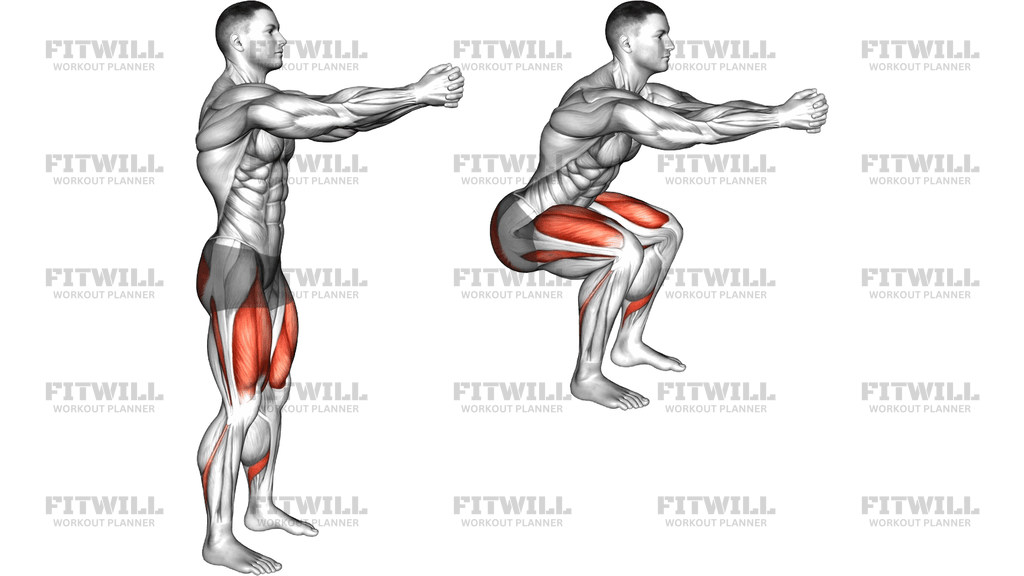
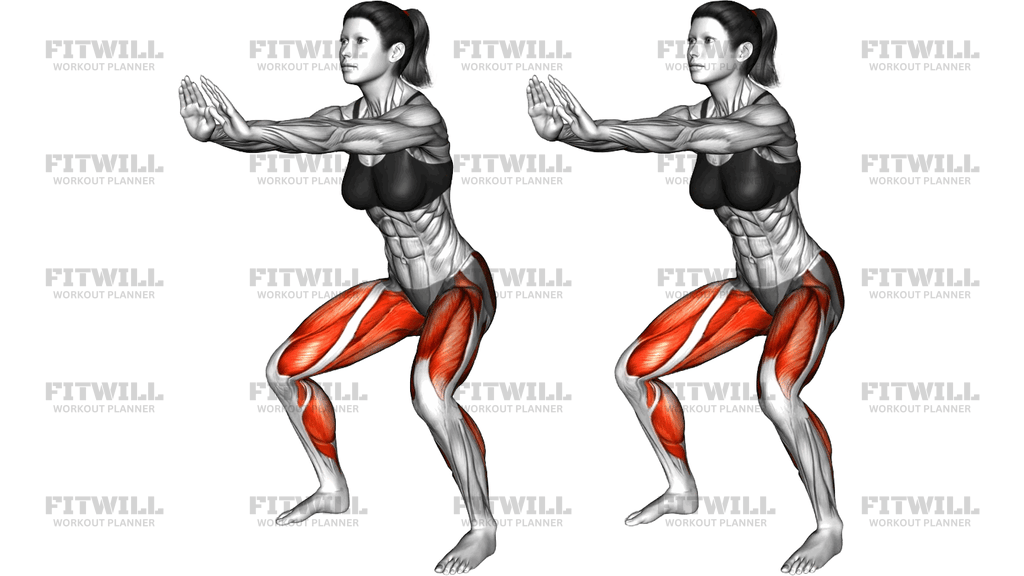
To execute it well, squat down until your thighs are at least close to parallel, keeping your knees tracking over your toes and your back flat. As you drive up, squeeze the glute of your working leg and extend that leg straight back and slightly up, hinging your torso forward a touch as you do. The kick should come from the hip, not from a swing or a lean away. Pause briefly at the top of the kick, then bring the foot back down with control and flow straight into your next squat.
Two practical cautions: first, don't arch your lower back to make the kick look bigger — the leg lifts because the glute extends the hip, not because your spine hyperextends. Second, if balance is a challenge, slow the tempo down before you speed it up; rushing this movement is the fastest way to turn a good glute drill into a sloppy leg flail.
[ Workout Log & Planner ]
Put your next workout in Fitwill
Keep your plan and training log ready when you are.


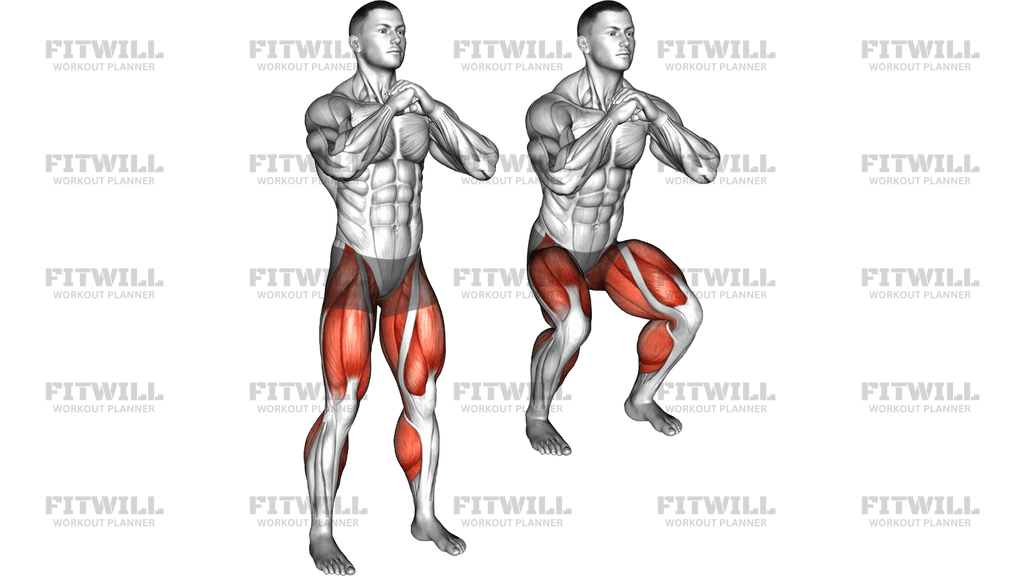
Instructions
- Stand tall with your feet hip-width apart and your hands clasped together in front of your chest, elbows tucked down.
- Check that you have clear floor space behind you, then shift your weight onto the middle of both feet and brace your abs.
- Push your hips back and bend your knees to lower into a squat, keeping your chest up, spine neutral, and knees tracking in line with your toes.
- Descend until your thighs are roughly parallel to the floor, or as deep as you can while keeping your heels planted.
- Drive through your heels to stand up, and as you rise, shift your weight onto one leg.
- Squeeze the glute of your free leg and extend that leg straight back and slightly up behind you, letting your torso hinge forward slightly at the hips while keeping your back flat.
- Pause for a beat at the end of the kick with the glute fully contracted and your hips square to the front.
- With control, bring the foot back down to the floor and lower straight into your next squat.
- Exhale as you rise and kick, inhale as you lower into the squat, and keep breathing steadily through the whole sequence.
- Complete your reps on one leg before switching, or alternate legs each rep, and reset your stance and brace between sets.
Tips & Tricks
- The most common mistake is kicking the leg up so high that your lower back arches — cap the lift at the height your glute can reach with a flat back, usually only slightly behind hip level.
- If you wobble when the leg goes back, shorten the kick and slow the tempo for a few sessions before chasing height or speed.
- Don't let your hips rotate open as the leg sweeps back; imagine your pelvis is a headlight pointing straight ahead the entire time.
- Squeeze the squat's standing glute during the kick — anchoring the standing hip is what keeps you balanced on one leg.
- Avoid swinging the leg for momentum; the movement should be a deliberate hip extension, not a pendulum.
- If your heels lift in the squat, widen your stance slightly and turn your toes out a few degrees before adding the kick.
- Keep your clasped hands at chest height rather than dropping forward — it acts as a counterbalance and helps you sit back into the squat instead of pitching over.
- Alternate legs every rep if you lose focus on form with high-rep single-side sets, or work one side fully if you want a targeted glute burn.
- Do this barefoot or in flat shoes; a cushioned running shoe makes the single-leg balance noticeably harder.
Frequently Asked Questions
What muscles does the Squat To Kickback work?
The glutes are the main target, especially on the kickback portion, while the quads and hamstrings drive the squat. Your core and standing-leg stabilizers work throughout to keep you balanced and square.
Is the Squat To Kickback good for beginners?
Yes — it's low-impact and needs no equipment, so it's a good way to learn squat mechanics plus single-leg hip control. Beginners should start with a shallow squat and a small kick until balance improves.
Should I alternate legs or do all reps on one side?
Both work. Alternating keeps you symmetric and rhythm-focused, while completing all reps on one side before switching gives a stronger isolated glute burn — just do the same number on each leg.
How high should my leg go on the kickback?
Only as high as you can lift it without arching your lower back or opening your hips, which for most people is slightly above hip height at most. The squeeze matters far more than the height.
Why do I feel the Squat To Kickback in my lower back instead of my glutes?
That usually means you're hyperextending your spine to lift the leg instead of extending the hip. Reduce the kick height, brace your abs harder, and consciously squeeze the glute to move the leg.
Can I make the Squat To Kickback harder?
Yes — slow the lowering phase of the squat, add a two- to three-second pause at the end of each kick, or hold a light weight at your chest. Ankle weights also work well once your form is solid.
What can I use instead if my balance is poor on one leg?
Stand next to a wall or chair and rest one hand lightly on it for support, keeping most of your weight off the support. You can also do the squat and the kickback as two separate movements until single-leg control improves.
Is it safe to do Squat To Kickbacks every day?
As a bodyweight movement, it's generally fine to do frequently, but your legs still need recovery like any training. Two to four focused sessions per week is plenty for most people, with rest days in between harder efforts.
Where should the Squat To Kickback fit in my workout?
It works well as an activation drill before squats or deadlifts, or as a high-rep glute finisher at the end of a leg session. As a standalone home workout, pair it with lunges, bridges, and planks for a balanced session.