Barbell Bench Press Catch
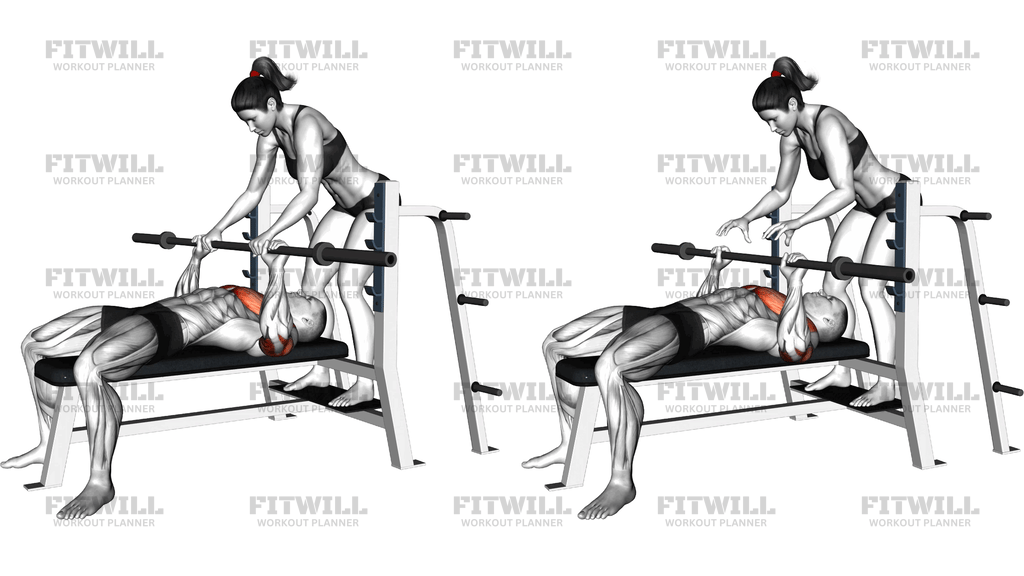
The Barbell Bench Press Catch is a bench press performed with a partner positioned behind your head, ready to take control of the bar the moment your press stalls. On the way down and through the strong portion of the press, the spotter's hands hover just above the bar without touching it. When the bar stops moving or starts drifting back toward your face, the spotter closes their grip and guides it safely back to the rack. That takeover moment is the catch, and it is what separates this setup from a solo bench press or one where a partner lifts the bar through every rep.
This version is most useful for lifters who want to train honestly close to failure. Grinding reps build strength, but a failed rep under a heavy barbell can be dangerous when you are alone. With a competent partner, you can push the last rep of a hard set, attempt a personal best, or work through a sticking point without committing to dumping the bar. It is also a good teaching tool for beginners: it lets them experience what a near-maximal effort feels like while someone else manages the risk.
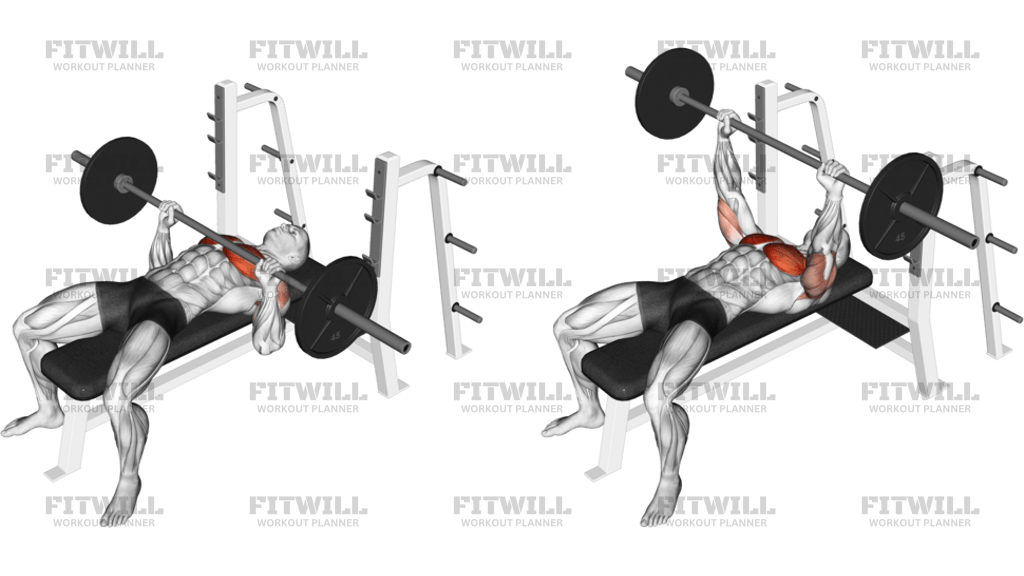
The pressing muscles involved are the same as any flat bench press. The chest does most of the work as the bar travels from above your lower chest back up over your shoulders, with the front delts contributing off the chest and the triceps locking the bar out. Your grip, lats, and upper back stabilize the bar throughout, and the spotter interaction adds one more demand: staying tight and continuing to press even while help is arriving, rather than relaxing the moment you feel hands near the bar.
Setup matters more here than in a normal bench press because two people share responsibility for the bar. Set your grip, pull your shoulder blades down and back, and plant your feet before the bar ever leaves the rack. Your partner should stand directly behind your head, centered, with both hands ready and knees slightly bent. Agree before the set on the signals you will use, because a catch that starts a second late is far less effective than one that starts on a clear call.
Execute the press by lowering the bar under control to your lower chest, letting it touch lightly, then driving it up and slightly back toward your eyes. If the bar slows to a crawl, say your call word loudly. The spotter grips the bar and adds only enough force to keep it moving, or takes it fully if you have nothing left. A good assist feels like a hand on a stalled car, not a tow truck; the more your partner does, the less you actually get out of the set.
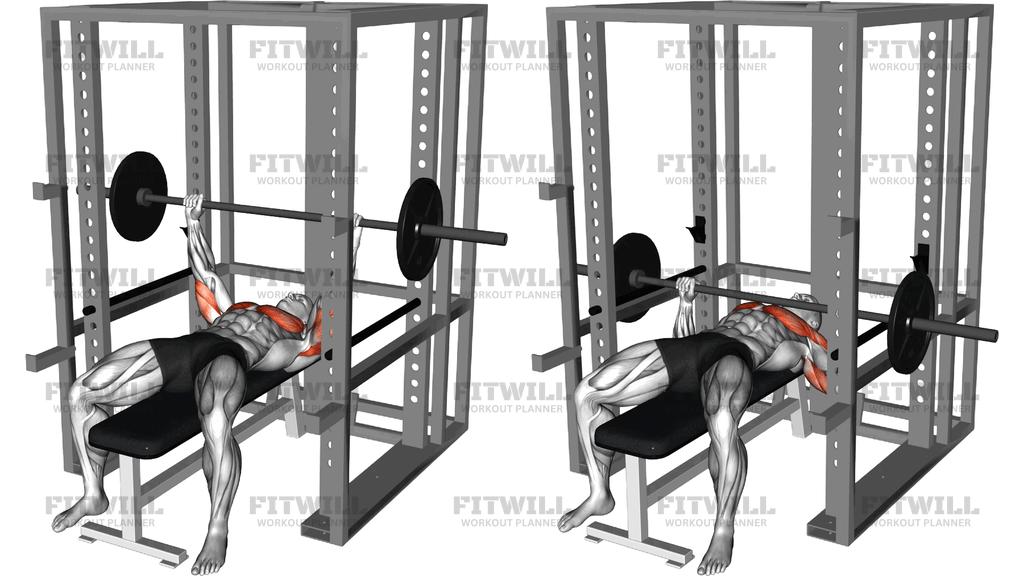
Use this movement when testing strength, finishing hard top sets, or learning to push a bench press to its limit safely. If no partner is available, a power rack with safety pins set just above chest height covers most of the same risk, though it will not help you complete a grinding rep the way a real catch does.
[ Workout Log & Planner ]
Put your next workout in Fitwill
Keep your plan and training log ready when you are.


Instructions
- Lie back on a flat bench with your eyes directly under the barbell and both feet flat on the floor.
- Grip the bar slightly wider than shoulder width with your thumbs wrapped around it, then squeeze your shoulder blades down and back and create a slight arch in your upper back.
- Have your partner stand centered behind your head with both hands hovering a few inches above the bar, knees soft and weight ready to move.
- Ask for a lift-off, then bring the bar forward until it sits directly over your lower chest with your wrists stacked over your elbows.
- Take a deep breath into your belly and brace your torso before you start lowering.
- Lower the bar under control to your lower chest, keeping your elbows at roughly a 45 to 75 degree angle from your torso.
- Touch the chest lightly, then drive the bar up and slightly back toward your face, exhaling as you press through the hardest part.
- If the bar stalls, call your agreed signal; the partner closes both hands on the bar and adds only the force needed to keep it moving or guides it back to the rack.
- Keep pressing with your own arms even during the assist instead of letting go of tension under the bar.
- After your final rep, guide the bar back with your partner's help and seat it fully in the uprights before relaxing your grip.
Tips & Tricks
- Agree on your calls before the first rep. A short word like "take it" for a full takeover and "help" for light assistance prevents confusion when the bar is moving slowly over your face.
- Tell your spotter to keep hands two to four inches above the bar, not resting on it. Constant contact turns this into an assisted press and you lose the true difficulty of the set.
- The most common spotting error is grabbing the bar too early and doing half the work. A good spotter lets the bar slow down before touching it, so you still earn the rep.
- Do not bounce the bar off your chest to escape a hard rep. With a partner present it is tempting to gamble, but a bounce that drifts off course is exactly the situation the catch is meant to prevent.
- Keep your thumbs wrapped around the bar. An open or thumbless grip makes the catch unreliable, because the bar can roll out of your hands at the worst moment.
- Watch the bar path in your final reps. Fatigue usually makes the bar drift back toward your neck or face first; when you notice that drift, call for help immediately.
- Load a weight your partner can realistically control. If the bar comes down on your chest, raw grip strength alone may not be enough to hold a very heavy barbell.
- Keep your hips on the bench and feet planted even during the grind. Lifting your hips to finish a rep changes your angle and makes the return to the rack harder for both of you.
- If you train alone most of the time, set the safety pins in a power rack just above chest height as a backup, and treat the catch technique as the skill to learn for partner sessions.
Frequently Asked Questions
What does the catch mean in the Barbell Bench Press Catch?
It refers to the moment your partner takes control of the bar when your press stalls. Until then, the spotter's hands hover above the bar without touching it, so you are pressing on your own until you genuinely need help.
Which muscles does the Barbell Bench Press Catch work?
The chest is the main mover, with the front shoulders driving the bar off the chest and the triceps finishing the lockout. The grip, lats, and upper back work to stabilize the bar throughout the press.
Where should the bar touch my chest during the Barbell Bench Press Catch?
Lower it to your lower chest, roughly in line with the bottom of your sternum, then press up and slightly back toward your eyes. Touching too high toward the neck narrows the path and makes a failed rep riskier.
Can beginners do the Barbell Bench Press Catch?
Yes, and it is actually a sensible way for a beginner to learn what a hard final rep feels like with a safety net. Keep the load moderate at first so the partner can easily control the bar if a full takeover is needed.
Should the spotter help on every rep of the Barbell Bench Press Catch?
No. The spotter should only add force when the bar stalls or drifts off course. Assisting every rep turns the set into a shared lift and you lose the training effect.
What is the most common mistake lifters make on the Barbell Bench Press Catch?
Relaxing the moment they feel the spotter's hands near the bar. Keep pressing with full tension during the assist, because letting your arms go soft makes the bar drop faster and harder to control.
What can I substitute for the Barbell Bench Press Catch if I have no partner?
Bench pressing inside a power rack with safety pins set just above chest height is the closest solo option. Dumbbell bench presses are also safer to fail on, since you can lower the dumbbells to the floor.
How heavy should I go on the Barbell Bench Press Catch?
Only go heavy enough that your partner could still manage the bar in a worst-case scenario. This setup suits top sets, rep maxes, and grinding last reps, not weights you could not lower under any control.
Why does the spotter use both hands on the bar during the catch?
Two hands give balanced force on both sides of the bar, which keeps it level as it returns to the rack. A one-handed catch on a heavy bar tends to tilt it and can pull the lifter's shoulder into an awkward position.
How do I rack the bar safely after the last rep of the Barbell Bench Press Catch?
Press the bar back over your shoulders until it is above the uprights, then let your partner guide it down onto the hooks before you relax your grip. Never reach sideways or twist your head to chase the hooks.