Barbell Floor Chest Press
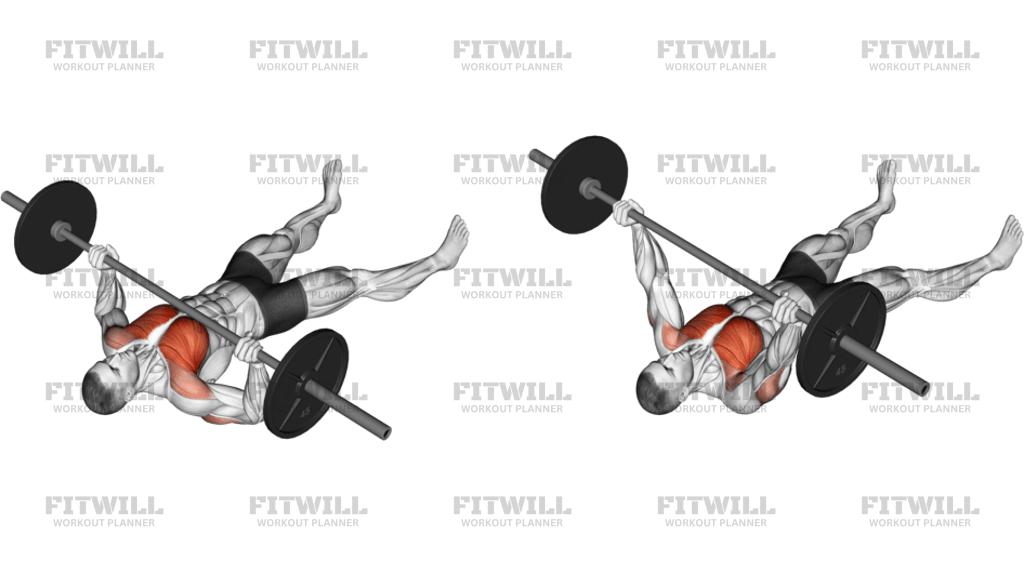
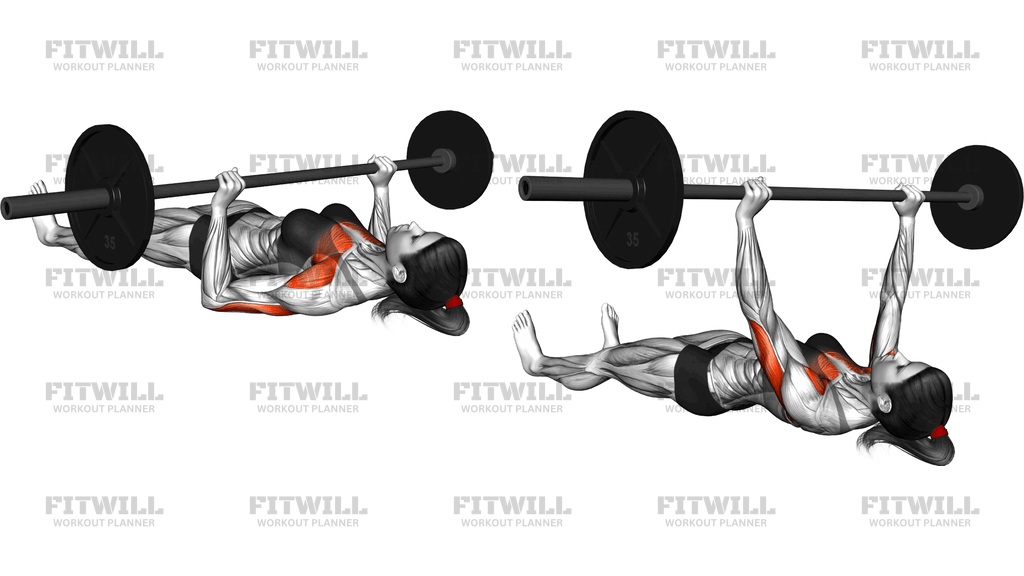
The Barbell Floor Chest Press is a horizontal pressing movement performed lying directly on the floor with a barbell, rather than on a bench. You start with your upper arms resting on the ground, elbows bent at roughly 45 degrees from your torso, press the bar straight up until your arms are extended over your chest, and lower it back under control until your triceps briefly settle on the floor again. Because the floor stops your elbows at the bottom, this version naturally limits how far the bar travels and changes the feel of the press compared with a standard bench press.
This exercise works the same basic pressing muscles as any chest press: the pectorals do most of the pushing, while the triceps extend the elbows and the front delts assist at the start of each rep. What makes it distinct is the shortened range of motion. The floor acts as a built-in safety stop, so you never lower the bar past torso level. That makes it a smart option for anyone training at home without a bench or rack, and for lifters who want heavy pressing work without the shoulder stretch that comes from lowering a bar below the chest.
The setup matters more than it might seem. Since there is no bench, your entire body is braced against the floor: shoulder blades pulled gently together, lower back flat or close to it, feet placed however they help you feel stable. Getting the bar centered over your chest before the first rep, and learning how to get into and out of position safely, is part of doing this movement well. Many people prefer to have a partner hand them the bar, or to load conservatively so they can roll the bar over their body to set up and to exit.
To execute it well, think about pressing up and slightly back so the bar finishes stacked over your shoulders, not drifting toward your face or hips. Keep your wrists stacked over your elbows throughout, and let the backs of your upper arms kiss the floor at the bottom of each rep rather than slamming down or bouncing off it. Pausing briefly on the ground removes momentum and forces the chest and triceps to start the press from a dead stop, which is one of the main reasons lifters use this variation to build pressing strength off the bottom.
The Barbell Floor Chest Press shows up in several contexts: home gym training with minimal equipment, bench press programs that include floor press variations for lockout strength, and upper body sessions for lifters with cranky shoulders who tolerate a reduced range better than a full bench press. Because the barbell fixes your hand position, it demands a bit more mobility than dumbbells, so start light, check that your elbows can sit comfortably at your sides at the bottom, and build up from there.
[ Workout Log & Planner ]
Put your next workout in Fitwill
Keep your plan and training log ready when you are.


Instructions
- Load a barbell with a light to moderate weight and set it on the floor next to where you will lie, or have a partner hand it to you once you are in position.
- Lie flat on your back on the floor with your legs extended and your head, shoulder blades, and hips all in contact with the ground.
- Grip the bar slightly wider than shoulder width with your palms facing forward, and position it directly over your chest with your arms extended.
- Pull your shoulder blades gently down and together, keep your lower back flat against the floor, and brace your core before the first rep.
- Bend your elbows and lower the bar under control until the backs of your upper arms rest on the floor, keeping your elbows around 45 degrees from your torso.
- Pause for a beat with your triceps lightly touching the ground, without relaxing your grip or letting the bar drift.
- Press the bar straight up and slightly back toward your shoulders, exhaling as you push, until your arms are fully extended over your chest.
- Squeeze your chest at the top without locking out harshly, then inhale and lower the bar back down to the floor for the next rep.
- After your final rep, either guide the bar back to the floor beside you with control or hand it off to a partner rather than dropping it.
Tips & Tricks
- If your elbows feel pinched at the bottom, narrow or widen your grip slightly until your forearms sit vertically over your elbows at the point where your triceps meet the floor.
- Do not bounce your triceps off the ground to launch the bar; the pause on the floor is what separates a real floor press from a sloppy half bench press.
- Keep your wrists stacked directly over your elbows. Allowing the bar to drift toward your face shifts tension to the shoulders and makes the lockout unstable.
- Because there is no bench behind you, do not arch your lower back to shorten the press; a flat torso on the floor keeps the work on the chest and triceps.
- Set up with less weight than you think you need the first few sessions, since getting the bar into position and out of position is the hardest part when training alone.
- Point your knees toward the ceiling or leave your legs flat, but whichever you choose, keep your hips planted so your torso does not twist as you press.
- If the bar stalls a few inches off the floor, the issue is usually starting the rep with the chest rather than the triceps; cue yourself to drive your elbows down into the floor first.
- Use collars on both ends of the bar. A plate sliding off while the bar is over your chest on the floor is far more dangerous than it looks.
Frequently Asked Questions
What muscles does the Barbell Floor Chest Press work?
The pectorals are the main movers, with strong assistance from the triceps as they extend the elbows and the front delts during the first half of the press. The core also works to keep your torso stable against the floor.
How is the Barbell Floor Chest Press different from a bench press?
The floor stops your upper arms at torso level, so the range of motion is shorter and there is no stretch at the bottom of the rep. This reduces strain on the shoulder joint and emphasizes the mid-to-top portion of the press where the triceps are heavily involved.
Is the Barbell Floor Chest Press good for beginners?
Yes, as long as you start light. The floor acts as a safety stop so the bar cannot sink below your chest, but you still need to practice getting the bar into and out of position, which is easier with a partner the first few times.
How do I safely get the barbell into position when training alone?
Lie down first, then roll the bar over your chest or guide it into place over your shoulders before pressing, keeping the weight light enough to control. To finish the set, bring the bar back over your chest and lower it to the floor rather than trying to sit up with it.
Why do my elbows touch the floor at the bottom of each rep?
That contact is intentional. Resting the backs of your upper arms on the floor briefly eliminates momentum and forces your chest and triceps to generate force from a dead stop, which is the defining feature of this movement.
What is the most common mistake in this exercise?
Bouncing the triceps off the floor to rebound the bar upward. This turns a controlled strength exercise into a momentum-driven movement and is the fastest way to lose the benefit of the pause.
What can I use instead of a barbell for a floor chest press?
Dumbbells work very well on the floor and are friendlier to the shoulders because each arm can find its own path. They also make it easier to set up and bail out when you are training by yourself.
Should my legs be flat or knees bent during the Barbell Floor Chest Press?
Either position works, but keep your hips on the floor either way. Bending your knees with feet flat can feel more comfortable for the lower back, while extended legs keep the whole body long and stable as shown in the standard setup.
How heavy should I go on this exercise?
Progress conservatively, since you cannot use a rack safety spotter and the floor press handles less load than a bench press for most people. Add weight only when you can complete all reps with a controlled pause on the floor and no elbow bounce.