Stick Lying Front Raise
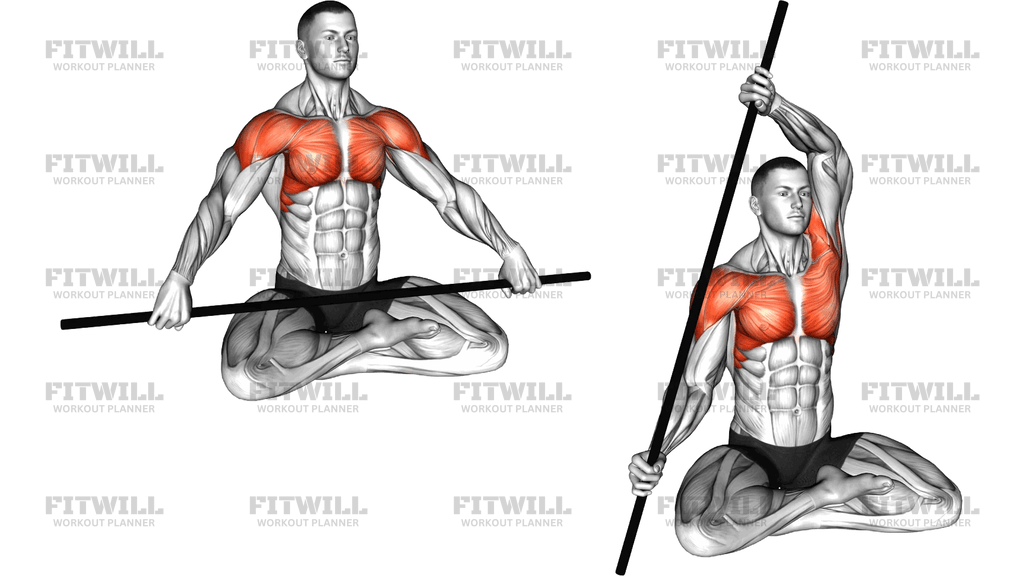
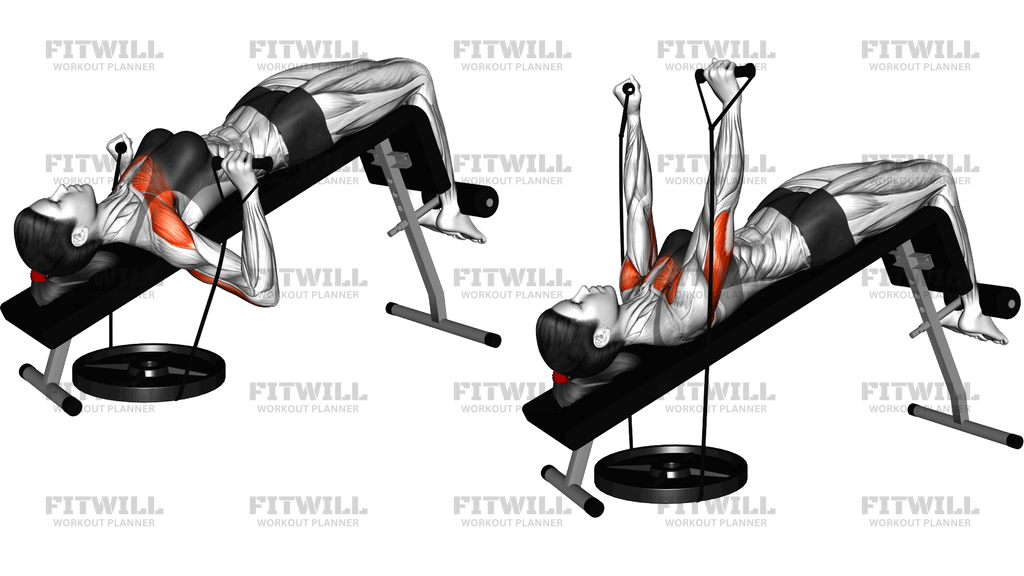
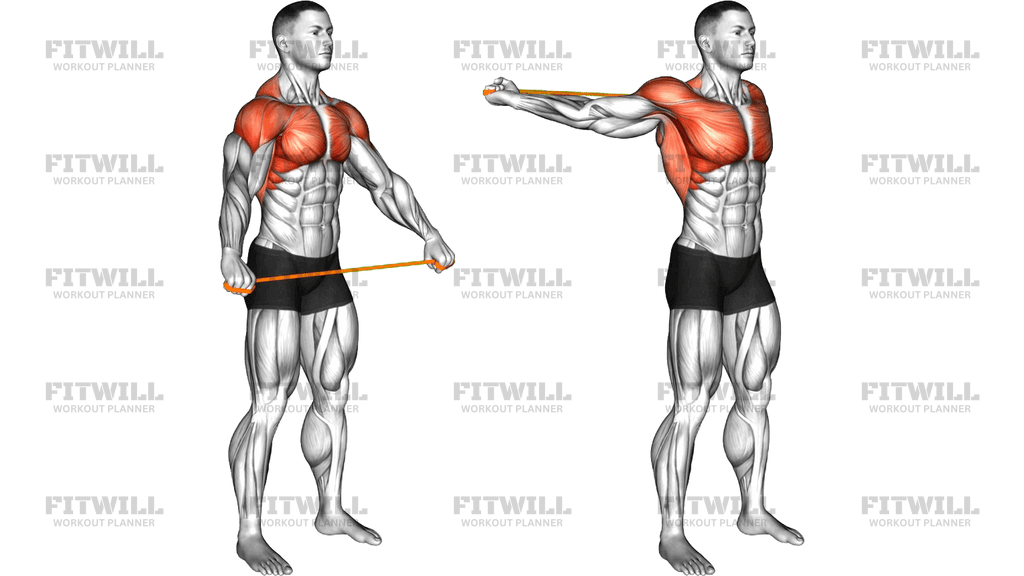
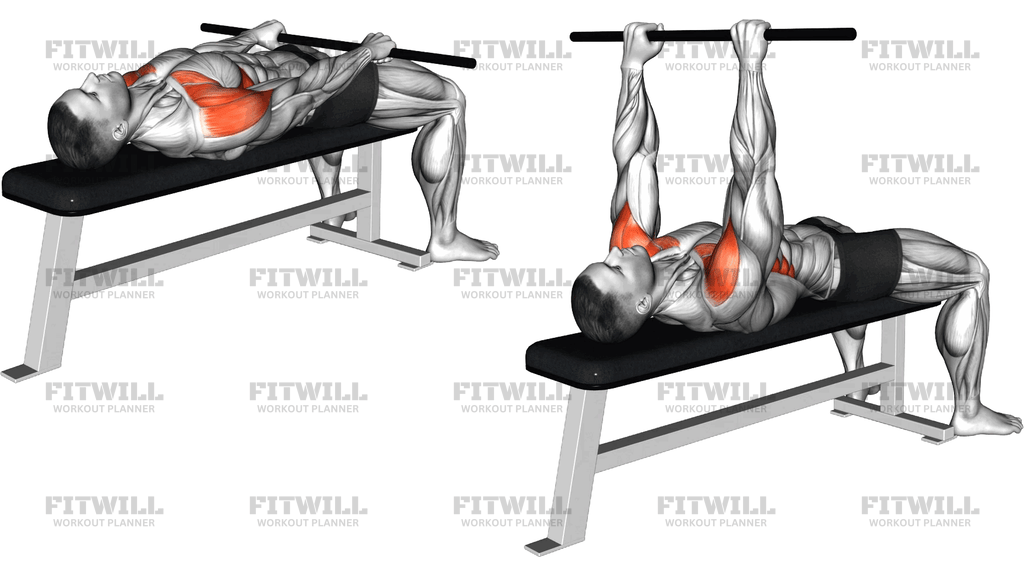
The Stick Lying Front Raise is a supine arm-swing movement performed on a flat bench with a light stick or straight bar held in both hands. You lie on your back, press the stick toward the ceiling with straight arms directly above your chest, then sweep it back overhead in a controlled arc until your arms travel down toward or just past head level, before raising it back to the vertical starting point. Because you are lying down, gravity pulls directly on the arms through the whole arc, which makes the chest and front shoulders work hard to control the descent and drive the lift back up.
The highlighted working muscles in this movement are the pectorals, especially the sternal head across the middle of the chest, along with the anterior deltoids at the front of the shoulders. The lats and triceps assist as the arms travel overhead, and the core works quietly to keep your ribcage and lower back settled against the bench. Since a stick weighs very little, the exercise is really about learning to own this overhead arc with clean positions, which is exactly why it works well as a warm-up, a teaching drill, or a high-rep finisher.
This version with a stick suits beginners learning the straight-arm pullover and front raise pattern, lifters warming up their shoulders before benching or pressing, and anyone rehabbing or easing back into overhead work who wants a very low-load way to rebuild range of motion. It is also a common choice in group or home training because a broomstick, dowel, or light bar is easy to find, and the bench gives your upper back and shoulders full support.
Setup matters more here than it might seem. Lying flat with your head supported, feet planted, and the stick gripped about shoulder-width apart keeps your shoulder blades stable and your lower back from arching excessively as the arms travel behind the head. If you set up too far off the bench or grip too wide, the arc shifts into the shoulder joint in a sloppy way and you lose the clean chest and front-delt tension the movement is meant to create.
Execution is simple on paper: keep the elbows nearly locked with a soft bend, move only at the shoulders, and let the stick travel in a smooth semicircle from vertical over the chest to overhead and back. The most important coaching point is controlling the lowering half. Letting the stick drop behind your head is the classic error, and it is the one that turns a helpful drill into an achy shoulder. Move deliberately, breathe steadily, and stop the range wherever you can keep the arc smooth and pain-free.
[ Workout Log & Planner ]
Put your next workout in Fitwill
Keep your plan and training log ready when you are.


Instructions
- Lie back on a flat bench so your head and shoulder blades are fully supported, with your feet flat on the floor and knees bent.
- Hold a light stick with an overhand grip about shoulder-width apart, and extend your arms straight up so the stick sits directly above your chest.
- Brace your core lightly and press your lower back toward the bench so your ribcage does not flare up during the movement.
- Keep a soft, almost locked bend in the elbows and maintain it for the entire set.
- Inhale and slowly lower the stick back overhead in a smooth arc until your arms reach head level or slightly past, whichever you can control without your lower back arching.
- Exhale and raise the stick back along the same arc until it is vertical above your chest again, feeling your chest and front shoulders drive the lift.
- Pause briefly at the top with the stick over your chest rather than letting it drift toward your face or hips.
- Complete your reps, then sit up carefully, keeping hold of the stick until your torso is upright.
Tips & Tricks
- The most common mistake is dropping the stick quickly behind the head; gravity is the resistance here, so a slow two to three second lowering phase is where the chest actually works.
- If your lower back lifts off the bench as your arms go overhead, stop the descent earlier in the range and keep your ribs down; over time the range will improve.
- Do not grip the stick much wider than your shoulders. A wide grip shortens the arc and lets the elbows bend, which shifts work away from the chest and front delts.
- Keep the stick stacked over the shoulder joints, not drifting toward your chin at the top or toward your hips at the bottom; a crooked path usually means the shoulder blades are not staying settled.
- If your shoulders pinch or feel unstable overhead, bend the elbows slightly more or shorten the range instead of forcing the stick all the way back.
- Start each set by checking that your head is on the bench and your feet are planted; wobbling on the bench compounds small arc errors into bigger ones.
- Use this as a warm-up before benching or overhead pressing with 10 to 15 smooth reps, or as a high-rep finisher with a pause at the top of each rep.
- If you have no bench, you can perform the same arc lying on the floor, but stop the descent before the stick touches the ground to protect the shoulders.
Frequently Asked Questions
Which muscles does the Stick Lying Front Raise work?
The primary muscles are the pectorals, particularly the sternal head of the chest, with strong assistance from the front shoulders. The lats and triceps help as the arms travel overhead, and the core stabilizes your torso on the bench.
Why use a stick instead of a dumbbell or plate for this lying front raise?
A stick keeps the load very low so you can focus on the arc, shoulder position, and control rather than fighting weight. It is ideal for warm-ups, learning the straight-arm pattern, and high-rep sets.
How far back should I lower the stick behind my head?
Lower only until your arms reach roughly head level or slightly past, as long as your lower back stays in contact with the bench and your shoulders feel comfortable. Forcing extra range usually costs you position and shoulder comfort.
Should my elbows be locked during the Stick Lying Front Raise?
Keep the elbows nearly straight with a small, soft bend, and hold that bend constant. Fully slamming the elbows stiff is uncomfortable, and letting them bend turns it into more of a triceps movement.
Is this exercise good for beginners?
Yes, it is one of the friendliest ways to learn the straight-arm pullover and overhead raise pattern because the light stick gives feedback without much load. Beginners should start with a short range behind the head and build it gradually.
Can I do the Stick Lying Front Raise without a bench?
You can lie on the floor and perform the same arc, which is actually more forgiving for the shoulders. Just stop the descent before the stick reaches the floor and keep your ribs pressed down.
How wide should my grip be on the stick?
About shoulder-width with an overhand grip. Much wider than that shortens the arc and makes it easier to bend the elbows, which reduces the chest and front-delt work.
How should I breathe during this exercise?
Inhale as you lower the stick overhead and exhale as you raise it back above your chest. Keep the breath steady rather than holding it through the arc.
When should I use the Stick Lying Front Raise in my workout?
It works well as a shoulder and chest warm-up before pressing exercises, or as a high-rep finisher on a chest day. Because the resistance is light, it is not a primary strength builder on its own.
Is it safe for someone with cranky shoulders?
The low load makes it a gentle option, but shoulder discomfort behind the head is a signal to shorten the range or bend the elbows more. Move within a pain-free arc and stop if you feel pinching rather than muscle effort.