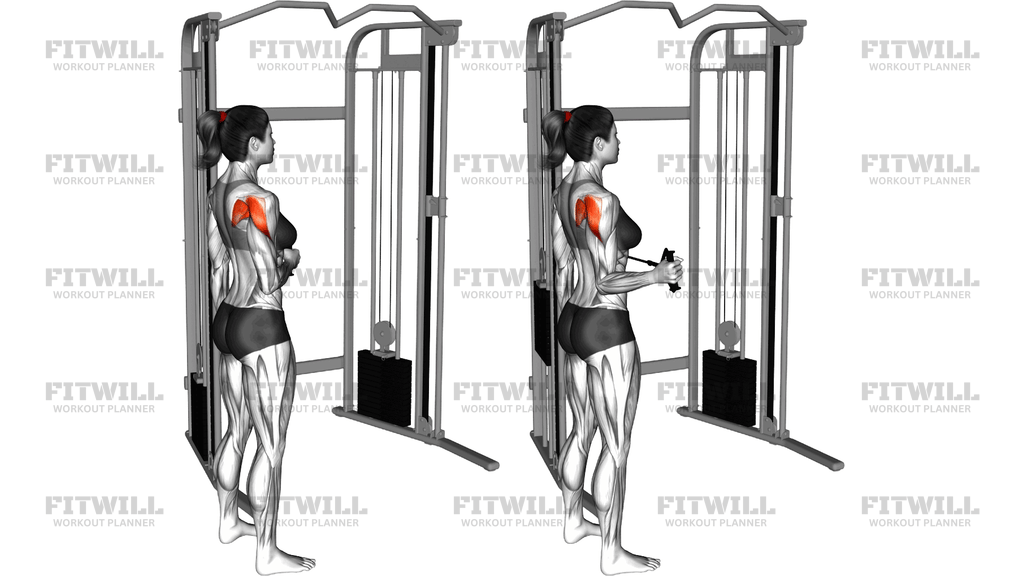
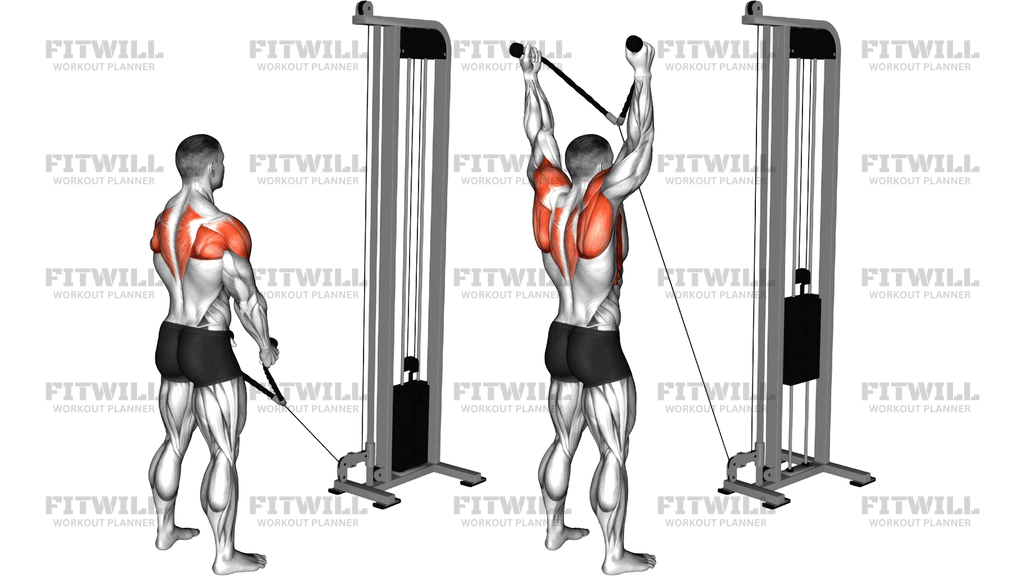
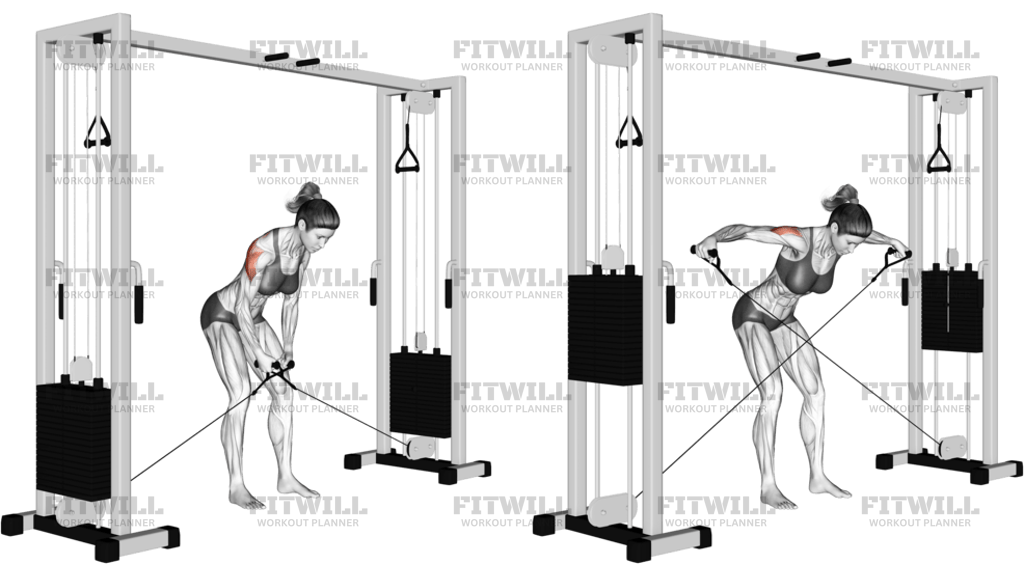
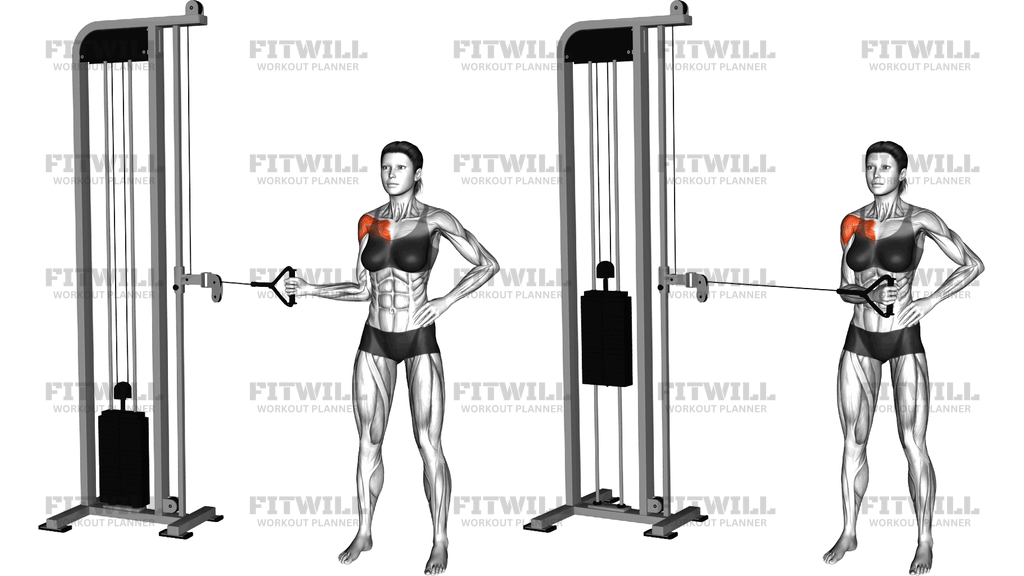
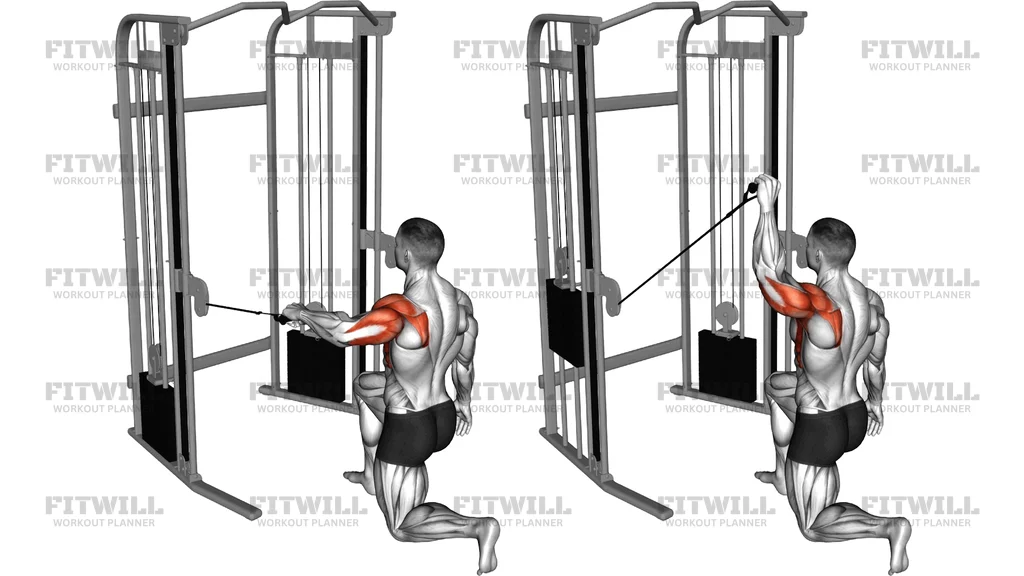
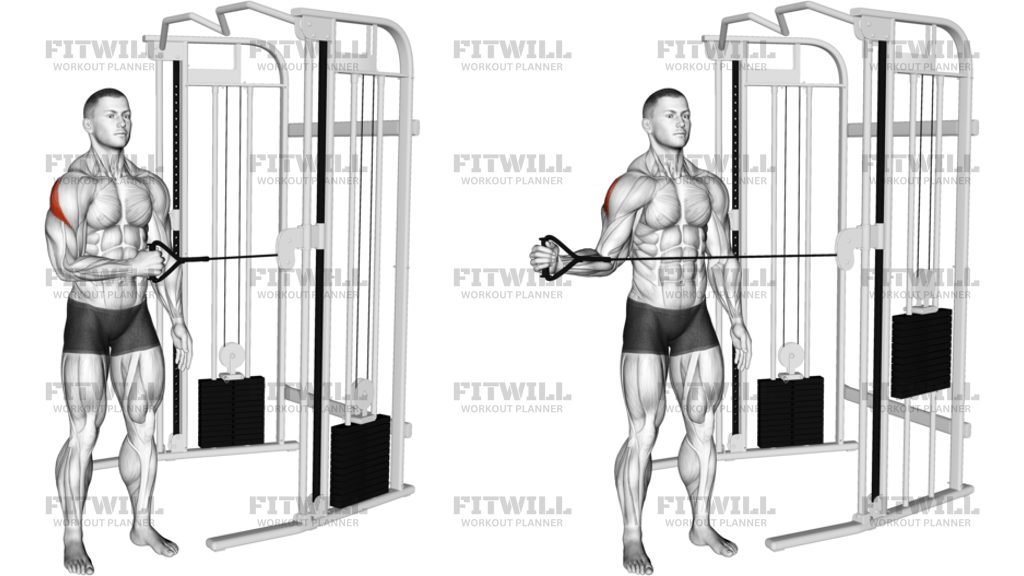
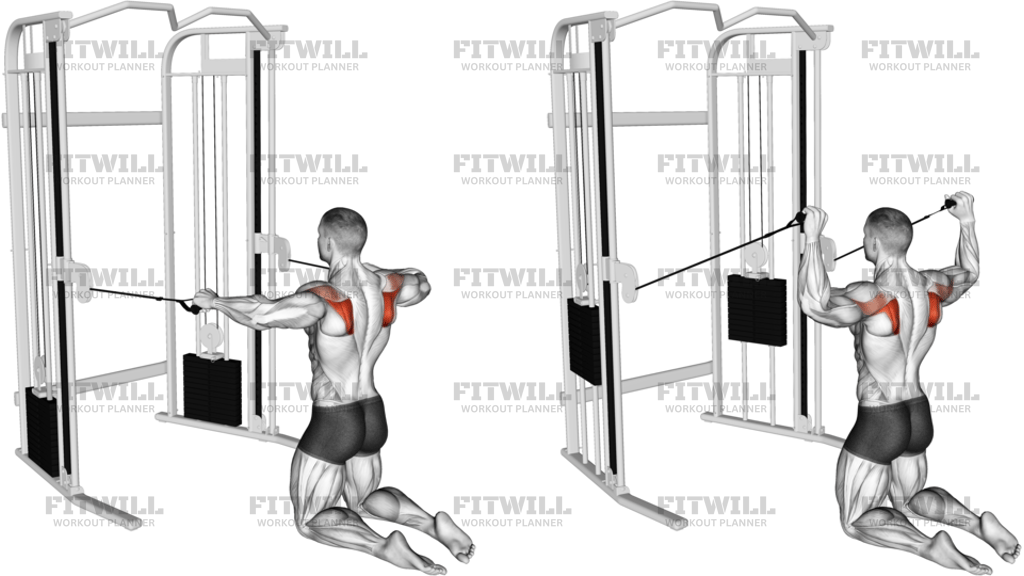
Cable 90 Degrees Internal Rotation Catch
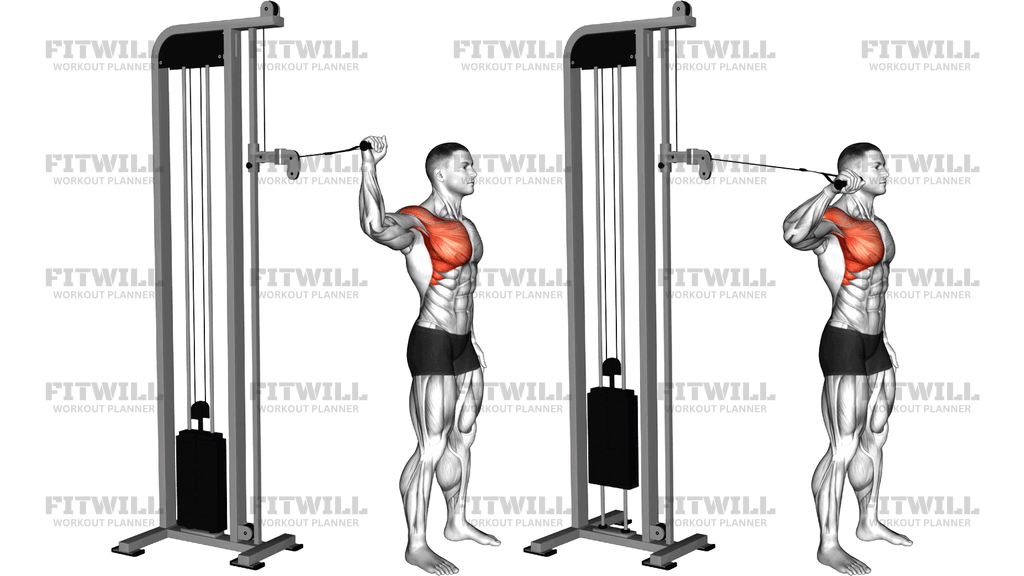
The Cable 90 Degrees Internal Rotation Catch is a shoulder rotation drill performed standing beside a cable machine with the pulley set at or just above head height. You position your working arm so the upper arm is lifted out to the side at shoulder level with the elbow bent to 90 degrees, then rotate the shoulder to pull the handle from the cable side down and across toward your head. Because the resistance comes from a cable rather than a dumbbell, the tension stays constant through the entire arc, which is exactly what you want when training the rotator cuff.
The primary target here is the subscapularis, the largest of the rotator cuff muscles and the main internal rotator of the shoulder. The pectoralis major and front deltoid assist as the arm rotates, and the smaller cuff muscles plus the muscles around the shoulder blade work to keep the upper arm stable at 90 degrees while the forearm sweeps through the range. This makes it a genuine stability exercise, not just a strength movement.
The 90-degree setup is the whole point of the exercise. With the arm abducted and the elbow fixed at shoulder height, the shoulder has to control rotation in one of its more vulnerable positions, which builds the kind of control that carries over to throwing, swinging, and serving actions. That is why this variation shows up frequently in overhead athlete preparation and in late-stage shoulder rehabilitation, where the goal is restoring confident rotation under load rather than moving maximal weight.
The standing, side-on stance matters too. Facing away from the cable or letting the torso twist turns this into a chest or trunk exercise and takes tension off the cuff. Keep your body square and let the shoulder joint do the rotating. Light weights, slow tempo, and a full but pain-free range will do far more for you here than stacking plates.
Treat this as an accessory or prehabilitation movement rather than a main lift. One to three sets of ten to fifteen controlled reps per side, usually placed near the start of an upper-body session as activation or at the end as targeted cuff work, fits well into most programs. Stop the set as soon as your form changes; fatigued rotator cuff reps tend to turn into shrugs and torso swings very quickly.
[ Workout Log & Planner ]
Put your next workout in Fitwill
Keep your plan and training log ready when you are.


Instructions
- Set the pulley of a cable machine at or slightly above head height and attach a single handle.
- Stand upright with your working side closest to the machine, feet about hip-width apart, and grab the handle with that near hand using a neutral grip.
- Raise your elbow out to the side until your upper arm is level with your shoulder and bend the elbow to 90 degrees so the forearm points up toward the cable at the start.
- Step out slightly so there is light tension on the cable before you begin, and keep your torso square to the front with no twist.
- Brace your core and pull your shoulder blades down and back to stop yourself shrugging into the working side.
- Rotate at the shoulder by pulling the handle down and across toward your head until your forearm is roughly horizontal in front of you.
- Pause briefly at the end position, then slowly let the handle rotate back to the starting point, resisting the cable's pull on the way out.
- Exhale as you rotate in, inhale as you return under control.
- Complete all reps on one side, then switch sides and repeat with the other arm.
Tips & Tricks
- The most common fault is dragging the elbow down as you pull. If your upper arm drops below shoulder height mid-rep, the weight is too heavy or you are losing the 90-degree position that makes this exercise work.
- Watch for torso rotation toward the cable. Plant your feet, square your hips, and imagine the movement happening only at the shoulder joint.
- Shrugging the working shoulder is a sign the cuff has handed the job to your upper traps. Reset your shoulder blade down before each rep.
- Start with a very light stack selection, often the lowest plate or two. This is a control exercise, and most people are surprised how little load the cuff tolerates in this position.
- If you feel a pinch at the front of the shoulder, reduce the rotation range slightly rather than forcing the handle all the way across.
- Keep the wrist neutral and grip relaxed. Squeezing the handle hard recruits the forearm and hides feedback from the shoulder.
- Two seconds in and three seconds back is a good tempo guideline; the eccentric return is where a lot of the rotator cuff work happens.
- If the cable path pulls your arm forward at the start, adjust your distance from the machine until the line of pull matches your forearm.
Frequently Asked Questions
Which muscles does the Cable 90 Degrees Internal Rotation Catch work?
The main mover is the subscapularis, the primary internal rotator of the rotator cuff. The pectoralis major and front deltoid assist, while the rest of the cuff and the shoulder blade stabilizers hold the arm steady at 90 degrees.
Why is the arm held at 90 degrees in this exercise?
Training rotation with the upper arm abducted to shoulder height challenges the cuff in a functional position used in throwing and overhead sports. It is more demanding than arm-at-the-side rotations, so it should be progressed into, not started with, if your shoulder is untrained.
Is the Cable 90 Degrees Internal Rotation Catch suitable for beginners?
Yes, provided you begin with a very light weight and a comfortable range. If you have a current or recent shoulder injury, get clearance from a qualified professional before loading rotation at this height.
How heavy should I go on internal rotation work?
Light enough that you can keep your elbow at shoulder height and your torso square for every rep. If you have to drop the elbow or twist to move the stack, the weight has exceeded what the cuff can control.
My elbow keeps dropping during the set. What should I change?
Reduce the load first, then focus on keeping the upper arm parallel to the floor for the entire set. You can also rest your non-working hand on your hip or a stable surface to stop compensating through the trunk.
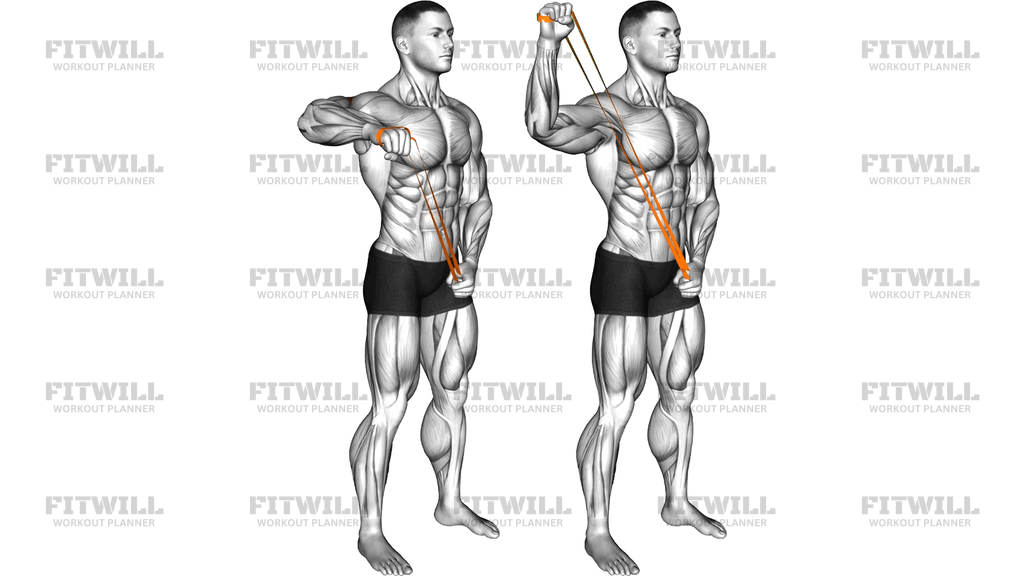
Can I do this exercise with a resistance band instead of a cable machine?
Yes. Anchor a band at head height and stand so the band tension pulls the arm into external rotation, then perform the same 90-degree rotation. The cable gives steadier resistance, but the band version is a solid substitute at home.
Should I pair this with external rotation exercises?
Most coaches recommend balancing internal rotation with external rotation work, such as a cable 90-degree external rotation, since the cuff needs strength in both directions for stable shoulder function.
How many reps and sets are appropriate?
Two to three sets of ten to fifteen slow reps per side is a typical dose. Because the rotator cuff fatigues quickly and form degrades fast, prioritize tempo and position over total volume.
What does the 'catch' part of the name refer to?
It refers to catching and controlling the cable's pull as you decelerate the rotation back to the start, which trains the eccentric control the cuff needs for throwing and swinging actions.