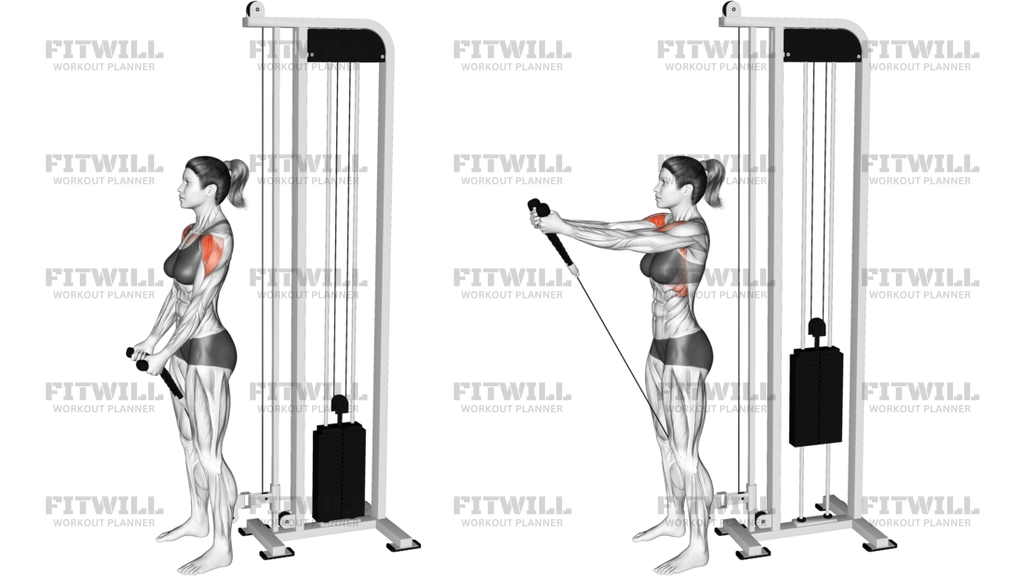
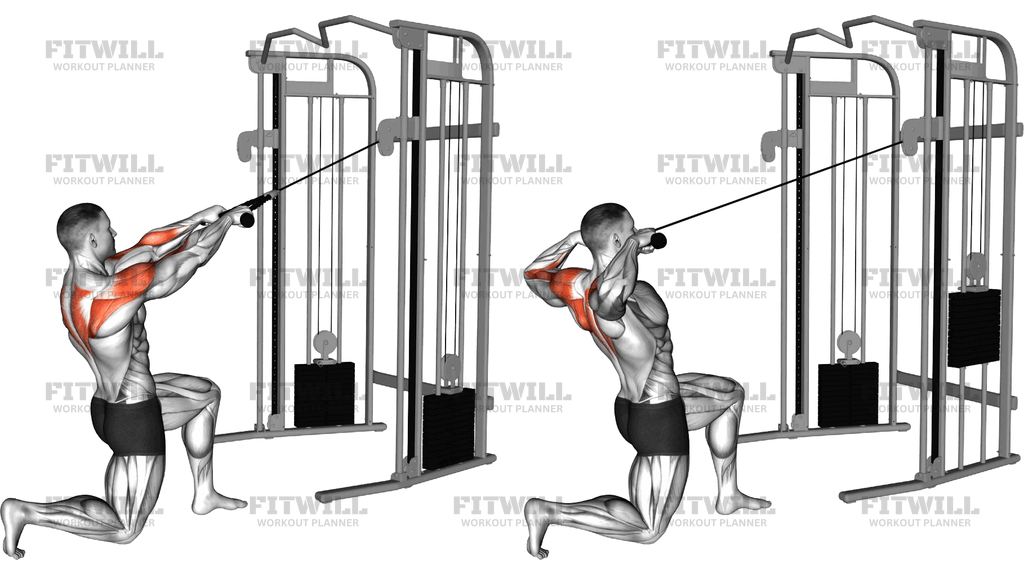
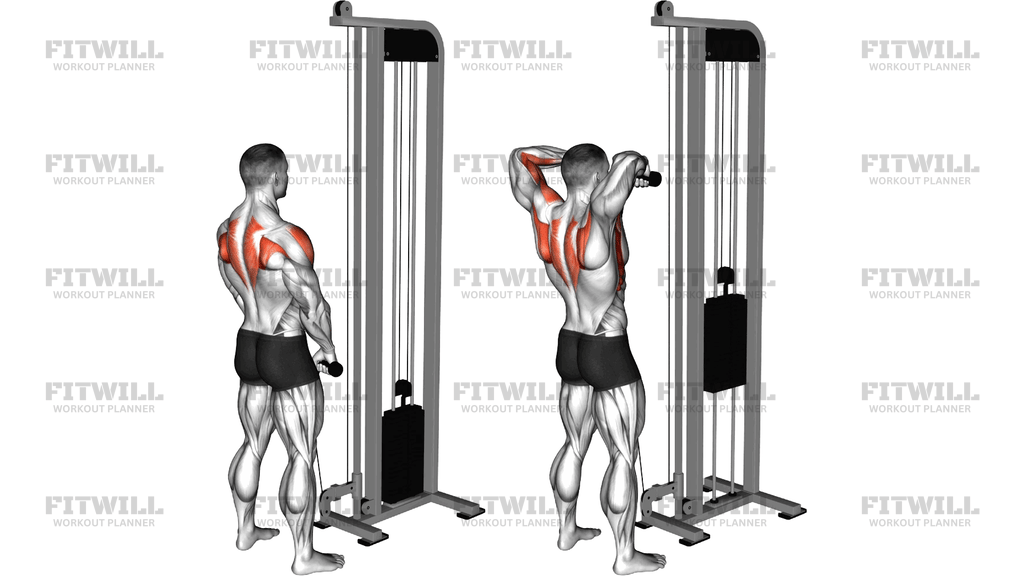
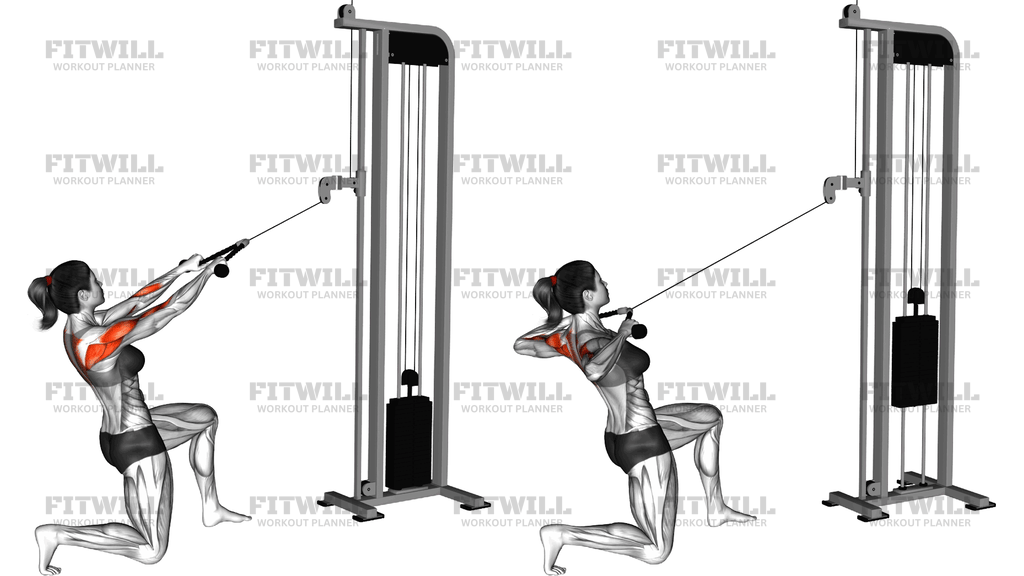
Cable Standing Y Raises (With Rope Attachment)
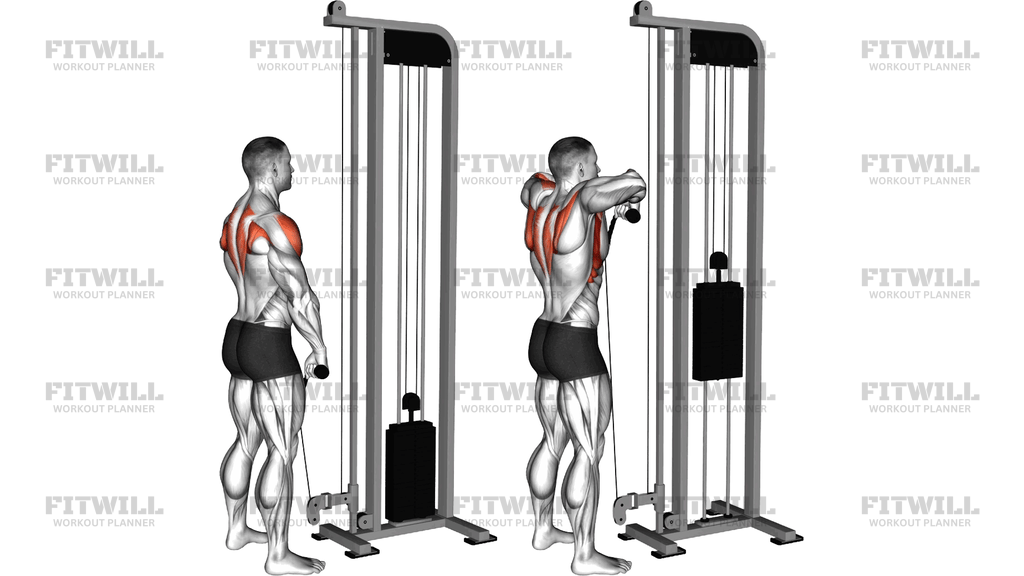
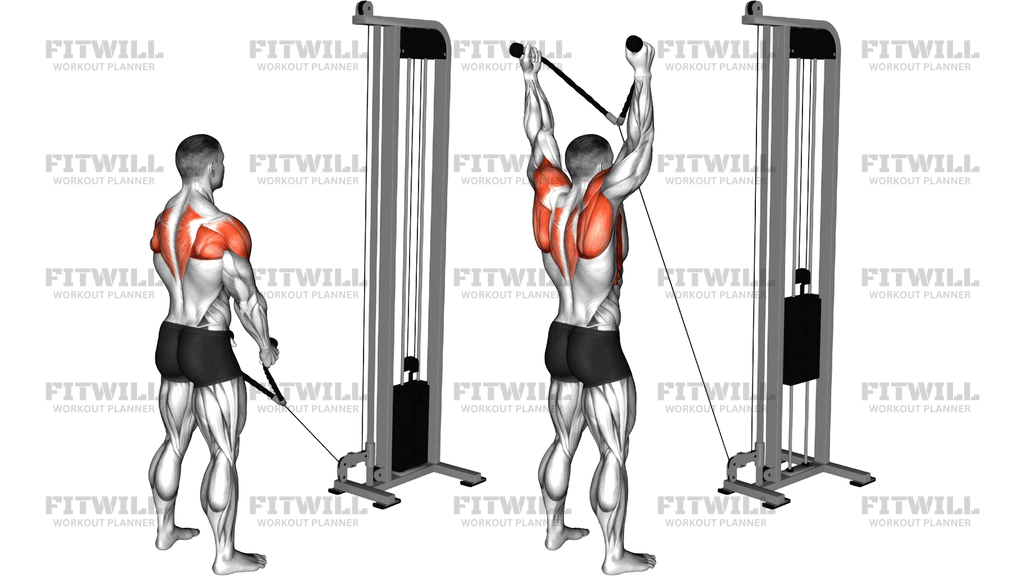
Cable Standing Y Raises (With Rope Attachment) are a shoulder and upper-back exercise performed with a rope handle connected to the low pulley of a cable machine. You stand facing away from the stack, hold the rope ends at your hips, and raise your arms up and outward into a wide Y position overhead. Because the cable pulls from behind and below, the resistance travels with your arms through the entire range, which is something dumbbells cannot replicate in this movement.
The main muscles at work are the trapezius, particularly the lower and upper fibers that control the upward rotation and elevation of the shoulder blades, along with the side and rear shoulders. The rotator cuff and the muscles between the shoulder blades work to keep the arms stable as the rope rises, and the core braces to stop your torso from leaning back as the pull angle shifts overhead.
The cable setup matters more than it might seem. With the anchor point at the floor behind you, the tension is gentle at your hips and steadily increases as your arms climb toward the Y position, where the cable angle makes the top of the movement the hardest. That resistance profile matches the strength curve of the traps and shoulders well, and it keeps constant tension on the way down in a way free weights cannot.
Execution comes down to controlled scapular movement rather than heavy loading. Your arms stay mostly straight with a soft elbow, your hands track out to the sides so your body forms a Y, and your shoulders should rise and rotate without shrugging aggressively toward your ears or arching your lower back. Slow negatives are where a lot of the value sits, so resist the cable as it pulls your arms back down to your hips.
This movement fits well as a warm-up activation drill before presses or pulls, as an accessory on shoulder or back days, or as a higher-rep finisher. It is also a practical option for people who spend long hours sitting and need dedicated work for the muscles that lift and upwardly rotate the shoulder blades. Start with a light weight you can control for 12 to 15 smooth reps, and only add load once your arm path stays clean.
[ Workout Log & Planner ]
Put your next workout in Fitwill
Keep your plan and training log ready when you are.


Instructions
- Attach a rope handle to the low pulley of a cable machine and set the weight to a light load before you step in.
- Stand facing away from the machine with your feet about hip-width apart, gripping one rope end in each hand with a neutral grip so your palms face each other, and step forward a pace or two to create tension.
- Let the rope run back between your legs or alongside your hips, with your arms hanging down and slightly behind you at the start.
- Brace your core, keep your ribs stacked over your pelvis, and stand tall with a soft bend in your knees.
- Raise both arms up and out to the sides at roughly 30 to 45 degrees from your head, keeping your elbows nearly straight, so your body forms a wide Y at the top.
- At the top, your hands should be above shoulder height with the rope ends pulled past head level, and your shoulder blades should feel like they are lifting and wrapping up around your ribcage rather than pinching back hard.
- Pause briefly, then lower your arms along the same wide path back down to your hips, resisting the cable the whole way.
- Exhale as you raise the rope and inhale as you lower it.
- Avoid leaning your torso back as your arms rise; if you have to rock backward, the weight is too heavy.
- Complete your reps, then step back toward the machine and let the stack settle before letting go of the rope.
Tips & Tricks
- The most common fault is turning this into a shrug: if your shoulders creep up toward your ears early, think about the arms traveling on a wide arc away from your body instead of straight up beside your head.
- Keep the rope ends angled slightly outward. If your hands drift forward of your shoulders at the top, you flatten the Y and shift work away from the traps.
- Use less weight here than you think you need. The low-pulley angle makes the top position disproportionately heavy, and a load you can swing at hip level often stalls hard overhead.
- If your lower back arches as your arms rise, squeeze your glutes slightly and exhale through the top to keep your ribs from flaring.
- A slight bend in the elbows is fine and often healthier for the shoulder joint, but the elbow should not actively flex during the raise or you have turned it into a high pull.
- Stand far enough from the machine that the cable never goes slack at the bottom; a fully slack start removes the controlled negative on the first inch of each rep.
- Because you face away from the stack, do a quick check that your stance is stable and clear of the cable path before your first rep, especially on a busy floor.
- Tempo work pays off here: try a one-second pause at the top of the Y and a three-second lowering phase to feel the upper back without adding load.
- If one side leads the movement, slow down and watch your hands in a mirror so both arms reach the top together.
Frequently Asked Questions
Which muscles do Cable Standing Y Raises (With Rope Attachment) work?
The trapezius, especially the lower and upper fibers that elevate and upwardly rotate the shoulder blades, is the prime mover. The side and rear shoulders assist the raise, and the muscles stabilizing the shoulder blade work throughout.
Why use a rope on the low pulley instead of dumbbells for a Y raise?
The cable pulls from behind and below, so tension is smooth at your hips and heaviest overhead, matching where the traps and shoulders are strong. Dumbbells lose resistance as your arms come down and are limited by the perpendicular-to-the-floor strength curve.
How high should my arms go at the top of the Y?
Aim for your hands to finish above head level and wide of your shoulders so your torso and arms form a Y. If you cannot reach that position without shrugging hard or arching back, the weight is too heavy.
Is this exercise suitable for beginners?
Yes, provided the load stays light. Beginners often benefit most from it as a low-load activation drill, learning to feel the shoulder blades move before progressing to heavier upper-back work.
Should my elbows be locked out during the raise?
Keep the elbows nearly straight but not jammed rigid. A soft bend protects the elbow joint, while actively bending them during the rep turns the movement into more of a high pull and reduces the trap focus.
What is the most common mistake with this movement?
Loading it too heavily and turning the raise into a combination shrug, lower-back lean, and arm swing. If your torso rocks backward or your shoulders collapse toward your ears, drop the weight and rebuild the arm path.
Where should I place this in my workout?
It works well early in a session as shoulder and upper-back activation, or at the end as a higher-rep finisher with 12 to 20 reps per set. It pairs naturally with pressing days where scapular upward rotation needs attention.
Can I do this exercise if my shoulders click or pinch overhead?
Mild, pain-free clicking is common, but if the raise produces pinching or sharp discomfort, reduce the range so your hands stop below the point of symptoms. A slightly wider or higher pulley setting can also change the angle enough to feel better.
What can I substitute if the low pulley is taken?
A resistance band anchored under your feet or behind you works with the same Y-raise arm path, or you can perform prone Y raises lying face down on an incline bench, which trades the cable's overhead tension profile for a stable torso position.
How far should I stand from the cable machine?
Far enough that the cable stays taut at the bottom of every rep with your arms hanging at your hips, but not so far that the rope drags across your body or pulls you off balance. One to two paces forward of the pulley is usually enough.