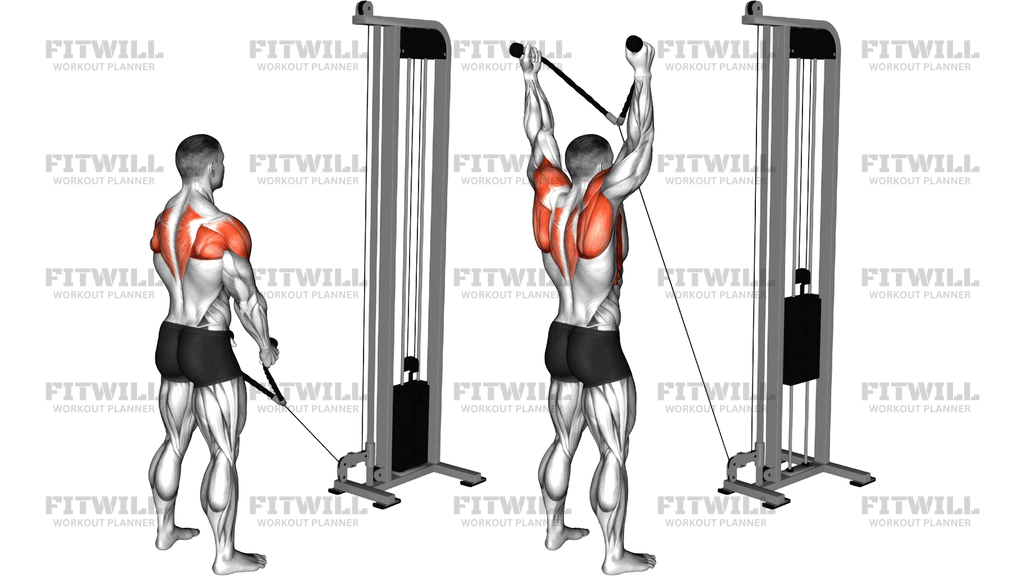
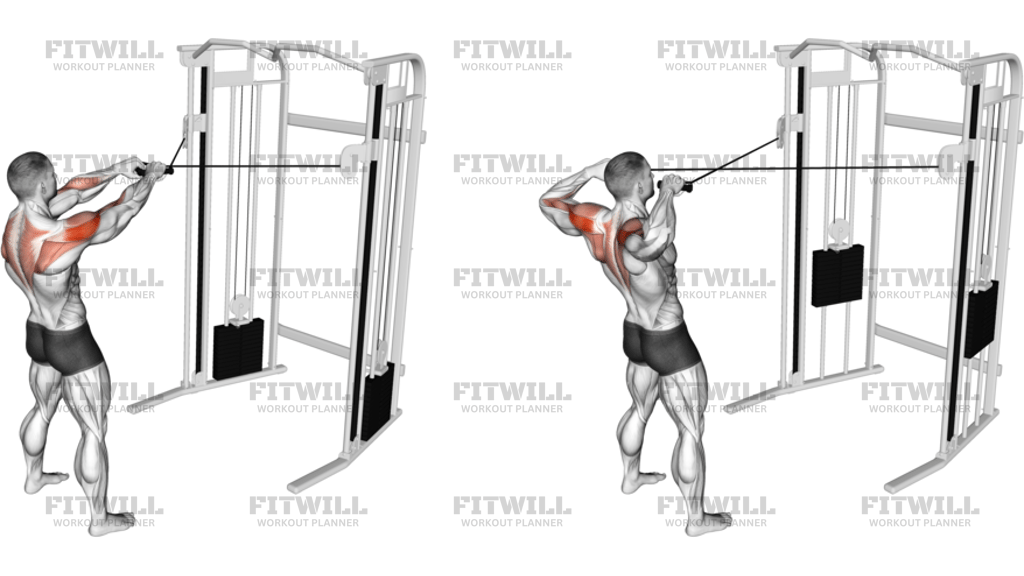
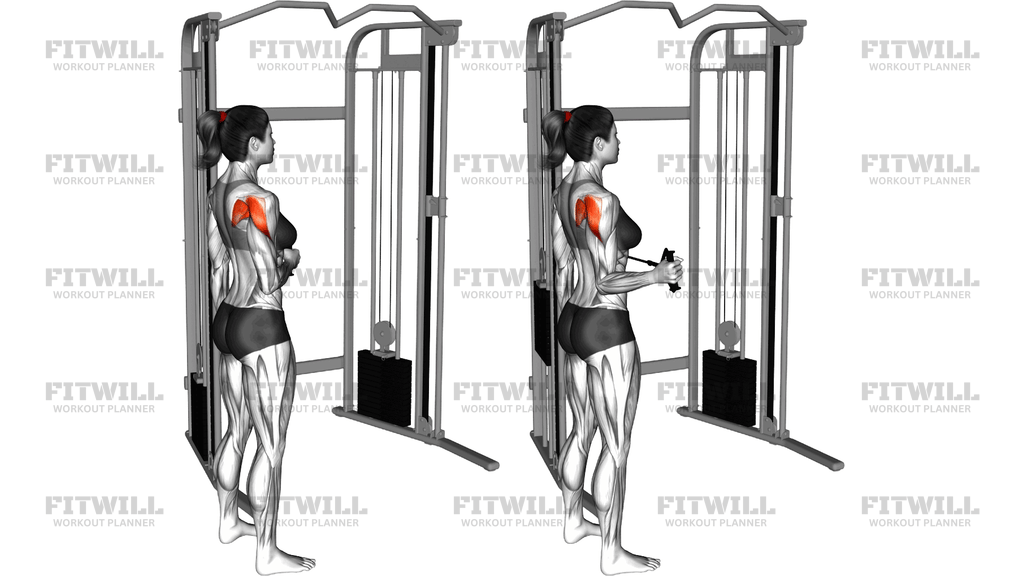
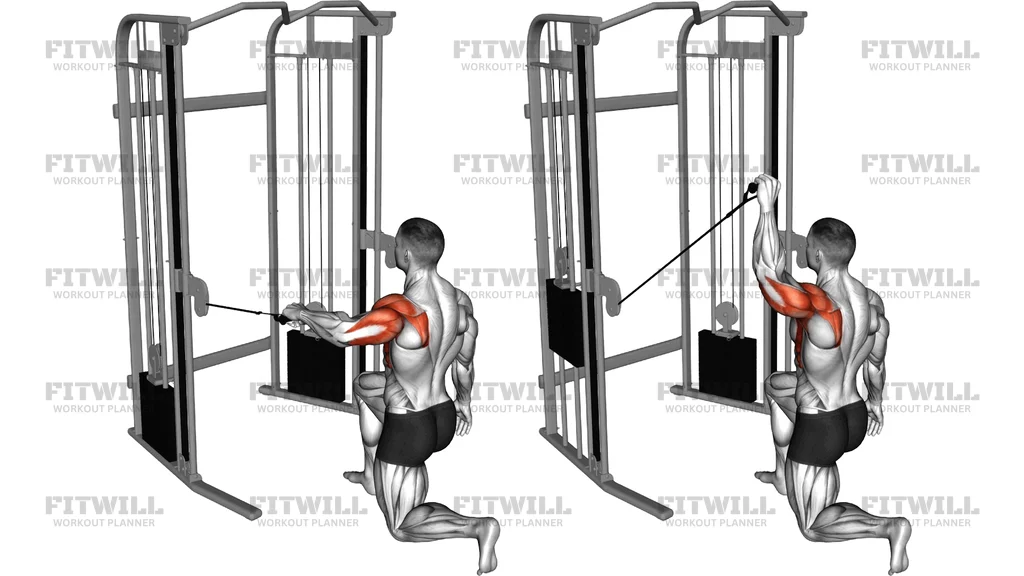
Cable Shoulder Internal Rotation
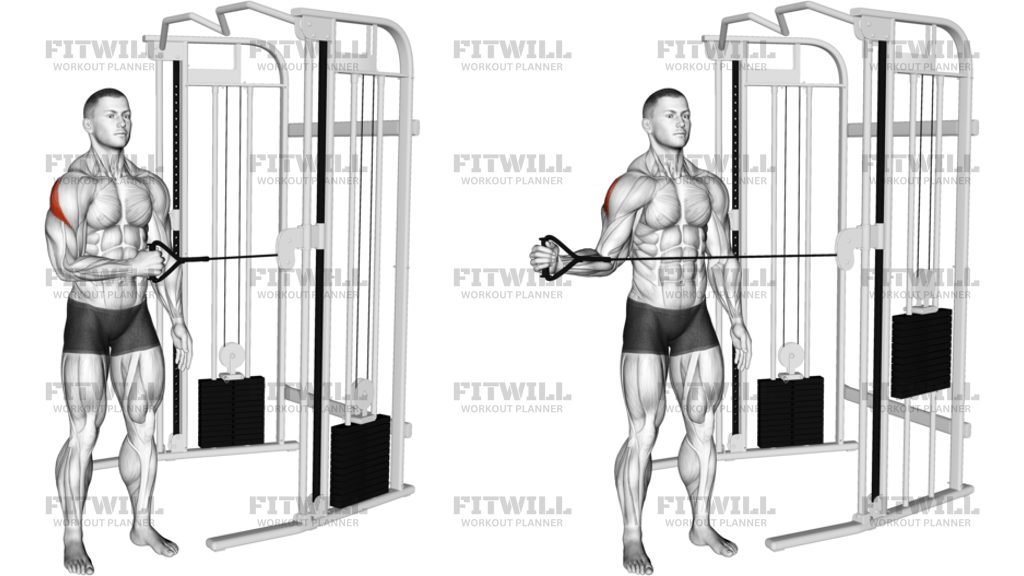
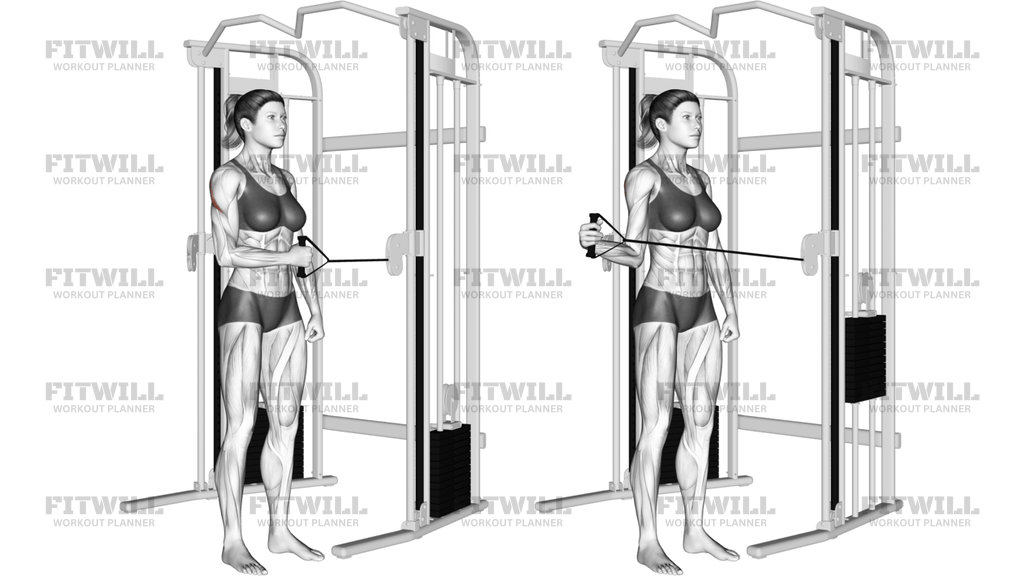
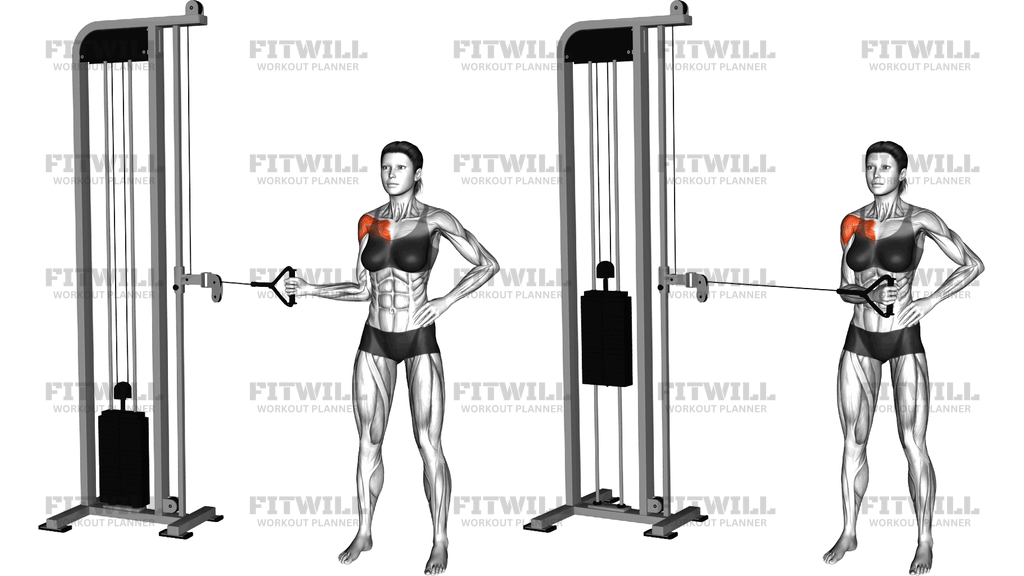
Cable Shoulder Internal Rotation is a targeted rotator cuff exercise that strengthens the muscles responsible for rotating your upper arm inward toward the midline of your body. You stand beside a cable machine with the pulley set to roughly elbow height, hold a single handle with the arm closest to the machine, and pull the handle across the front of your torso by rotating at the shoulder while your elbow stays bent and pinned to your side. The movement is small, deliberate, and quite different from the big pressing and pulling exercises most shoulder training is built around.
The main muscle at work here is the subscapularis, the largest of the four rotator cuff muscles, with the pectoralis major and front deltoid assisting as the arm crosses the body. Because the cable provides tension through the entire range rather than only against gravity, this exercise loads the internal rotators smoothly from start to finish. That constant resistance is one of the main reasons cables are preferred over dumbbells for rotational shoulder work.
This is a valuable movement for anyone whose training is heavy on pressing, since pressing develops the external-facing shoulder muscles but often leaves the internal rotators undertrained. It is also a common inclusion in rehabilitation and prehabilitation programs for shoulder health, and racket-sport athletes, swimmers, and throwers use it to balance the rotational demands of their sports. The setup matters a great deal: the pulley height, your distance from the machine, and the position of your elbow all determine whether the resistance lines up correctly with the shoulder's rotational axis.
To execute it well, keep the working elbow glued to your ribs and bent to about 90 degrees, and let all of the motion come from the shoulder joint itself. Rotate your forearm across your stomach until your hand reaches the midline or slightly past it, pause briefly, then allow the cable to draw your hand back out to the starting position under control. Your torso should stay square and quiet throughout — if you find yourself twisting your trunk or dragging the handle with body English, the weight is too heavy.
Because the rotator cuff muscles are small, this exercise works best with light loads, higher repetitions, and strict form. Treat it as a precision movement rather than a strength showcase, and place it early in a shoulder session as an activation tool or at the end as focused cuff work.
[ Workout Log & Planner ]
Put your next workout in Fitwill
Keep your plan and training log ready when you are.


Instructions
- Set the pulley of a cable machine to approximately elbow height and attach a single handle.
- Stand sideways to the machine with your working arm closest to it, feet about shoulder-width apart, and grab the handle with a neutral grip so the cable runs straight out to the side of your body.
- Bend your working elbow to 90 degrees and tuck it firmly against your ribs, with your forearm pointing across your body toward the machine at the start.
- Step a short distance away from the machine so there is light tension on the cable before you begin, and brace your core to keep your torso from twisting.
- Exhale and rotate your shoulder to pull the handle across the front of your abdomen, keeping the elbow locked in place against your side the entire time.
- Continue until your hand crosses the midline of your body and your forearm rests against your stomach, and hold that finished position for a beat.
- Inhale and slowly let the cable rotate your forearm back out to the starting position, resisting the pull rather than letting it snap your arm back.
- Complete all repetitions on one side, then switch sides so the opposite arm works with the cable running from the other machine side or a matched setup.
- Between sets, reset your stance and check that your elbow position and distance from the machine have not drifted.
Tips & Tricks
- The most common mistake is letting the elbow drift away from the ribs — once it moves, the exercise turns into a press or a fly and stops training rotation, so think of your elbow as a hinge pinned to your side.
- If you feel the movement in the front of the shoulder rather than a deep pulling sensation, reduce the weight noticeably; heavy loads on this exercise almost always recruit the chest and trunk to cheat.
- Do not twist your torso toward or away from the machine to gain range — square hips and shoulders make a short, honest range far more effective than a long assisted one.
- Keep your wrist neutral and your grip relaxed; squeezing the handle hard shifts effort into the forearms and masks the shoulder rotation you are trying to feel.
- A towel rolled and tucked between your elbow and ribs is a simple way to confirm the elbow stays put — if the towel drops, your form broke down.
- Stop the return phase just before your forearm fully swings out to the side, keeping tension on the rotator cuff instead of letting the cable rest at the endpoint.
- Start with very light weight, even just one small plate on the stack, and build up over weeks; the internal rotators respond to volume and control, not maximal loads.
- If the cable height feels like it pulls your arm up or down out of line, adjust the pulley rather than compensating with your shoulder — elbow height is the reference point.
- Pair this with Cable Shoulder External Rotation in the same session so both rotational directions of the cuff get trained evenly.
Frequently Asked Questions
Which muscles does the Cable Shoulder Internal Rotation work?
The primary mover is the subscapularis, a rotator cuff muscle on the underside of the shoulder blade, with the pectoralis major and front deltoid assisting as the arm crosses the body.
Why is the cable pulley set at elbow height for this exercise?
Elbow height lets the cable pull in line with the shoulder's rotational axis while your upper arm hangs at your side. If the pulley is much higher or lower, the resistance drags your elbow out of position and the rotation becomes sloppy.
Can beginners do the Cable Shoulder Internal Rotation?
Yes, and it is actually a good early shoulder exercise because the loads are small and the movement is easy to learn. Beginners should start with the lightest plate on the stack and prioritize a still elbow over adding weight.
How heavy should I go on the Cable Shoulder Internal Rotation?
Lighter than you expect. The rotator cuff muscles are small stabilizers, so most people get the best results with modest weight, slow tempo, and repetitions in the 10 to 20 range per side.
Why does my elbow keep moving during the set?
This usually means the weight is too heavy or you are rushing the reps. Tuck the elbow against your ribs, imagine it is bolted there, and if it still breaks free, drop the load until you can keep it fixed for every repetition.
What can I use instead of a cable machine for internal rotation?
A resistance band anchored at elbow height reproduces the same pulling path, and a light dumbbell done lying on your side is another option, though the band and cable versions keep tension through the whole range more consistently.
Should my hand go all the way across my body at the end of the rep?
Bringing the handle to the midline of your stomach is a good target, and a slight crossing past it is fine as long as your elbow stays down and nothing pinches. Rotate only as far as you can move without your trunk or shoulder blade joining in.
Is the Cable Shoulder Internal Rotation safe for shoulder pain?
It is commonly used in shoulder rehabilitation settings because it loads the cuff gently, but if you currently have pain or a diagnosed injury, get clearance from a physical therapist or doctor before training through it.
Where should this exercise fit in my workout?
It works well as a warm-up activation before pressing days or as focused rotator cuff work at the end of a shoulder session. Because the load is light, it will not interfere with your heavier lifts either way.