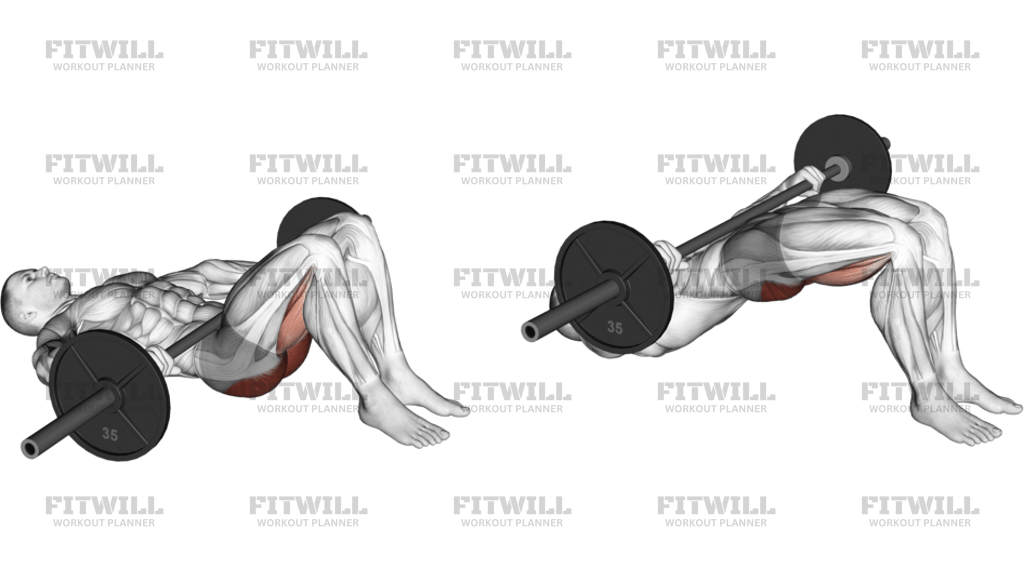
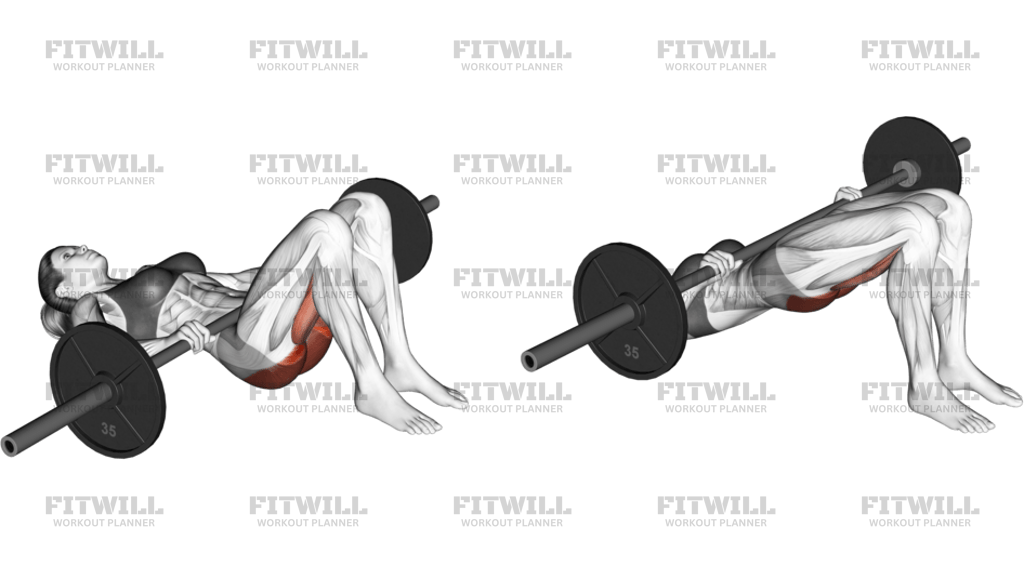
Barbell One Leg Hip Thrust
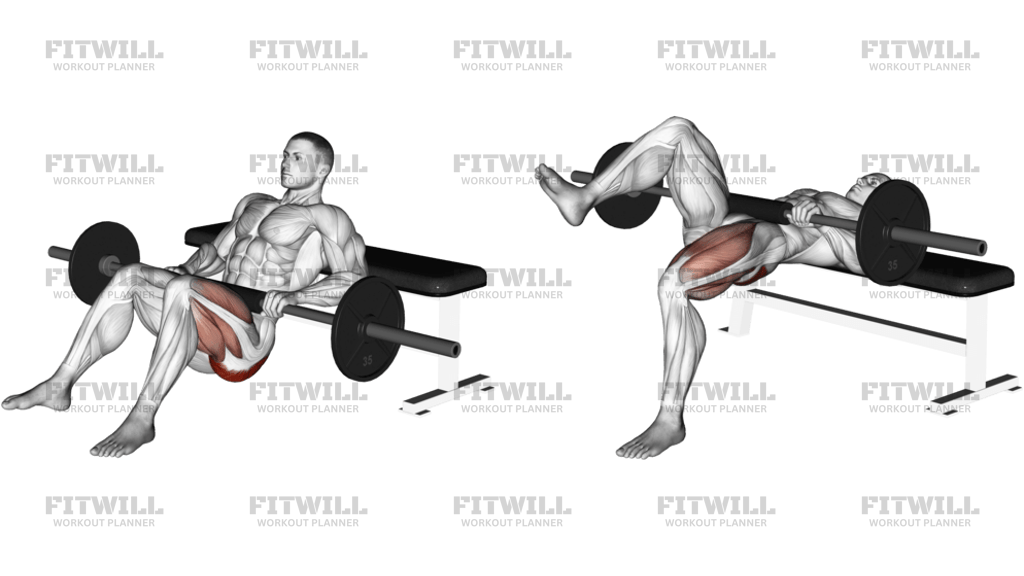
Barbell One Leg Hip Thrust is a unilateral glute-focused strength exercise built around a bench, a barbell, and one planted foot. With the upper back supported on the bench and the hips driving upward against the bar, the movement trains hip extension while forcing the pelvis and trunk to stay level. It is especially useful for lifters who want stronger glutes, better single-leg control, and a cleaner bridge pattern than a bilateral hip thrust can sometimes expose.
The main target is the gluteus maximus, with the hamstrings helping at the hip and the core working hard to keep the torso from twisting. Because only one leg is doing the lifting, this variation quickly exposes side-to-side strength differences and any tendency to shift through the lower back instead of the hips. That makes it valuable as an accessory lift for lower-body strength, athletic conditioning, and glute hypertrophy work.
The setup matters as much as the rep itself. Position the upper back on the bench so the shoulder blades and lower edge of the bench give you a solid anchor, then place the barbell across the hip crease with enough padding to keep the load comfortable. Plant one foot flat on the floor, set the other leg off the ground, and keep the knee of the working leg tracking over the midfoot so the drive comes straight up instead of drifting forward or sideways.
At the top of the rep, squeeze the working glute hard and finish with the hips high, ribs down, and the pelvis controlled rather than over-arched. The non-working leg should stay quiet so it does not help you twist through the finish. Lower the bar with control until the working hip is loaded again, then drive back up by pressing through the heel and midfoot of the planted leg. A smooth tempo and a brief pause at the top usually do more for this exercise than bouncing through extra reps.
Barbell One Leg Hip Thrust fits well in a lower-body session after the main compound lift or as a targeted glute accessory on its own. It is also useful when you want glute work without the same spinal loading you would get from heavier squats or deadlifts. If the bar feels awkward or the pelvis rocks from side to side, reduce the load, shorten the range slightly, and rebuild the rep with a steadier setup before adding weight again.
[ Workout Log & Planner ]
Put your next workout in Fitwill
Keep your plan and training log ready when you are.


Instructions
- Sit on the floor with your upper back against the edge of a flat bench and a loaded barbell resting across your hip crease.
- Plant one foot flat on the floor so the shin is roughly vertical, then lift the other leg off the ground and keep it quiet throughout the set.
- Grip the bar with both hands to keep it centered and place a pad or towel on the bar if the load digs into your hips.
- Brace your ribs down and tilt your pelvis slightly so your lower back does not take over the lift.
- Press through the heel and midfoot of the planted leg to drive your hips upward until your torso and thigh line up.
- Squeeze the working glute hard at the top without letting the hips rotate or the non-working side drop.
- Lower the bar under control until the working glute is loaded again and the pelvis stays level.
- Reset your breath at the bottom, then repeat for the planned reps before lowering the bar to the floor safely.
Tips & Tricks
- Keep the bar centered in the hip crease; if it drifts to one side, the torso will usually rotate with it.
- Use enough bench height that your shoulder blades stay anchored, but not so much that you lose leverage at the top.
- Press through the heel and midfoot of the working leg, not the toes, to keep the glute doing the bulk of the work.
- Think about lifting the hips straight up rather than reaching the bar toward your head.
- Pause for a moment at the top when the pelvis is level; that is where the glute work is most obvious.
- If the lower back feels dominant, lower the finish point slightly and tuck the ribs down harder before the next rep.
- Keep the free leg relaxed so it does not swing and create momentum.
- Choose a load that lets you stay controlled on the way down, because the eccentric phase is where the position usually breaks first.
Frequently Asked Questions
What does Barbell One Leg Hip Thrust work most?
It mainly trains the glutes, especially the gluteus maximus, with the hamstrings and core helping keep the pelvis steady.
How should I position the barbell on Barbell One Leg Hip Thrust?
Place the bar across the hip crease, not the stomach, and keep it centered so the load does not pull you into a twist.
Where should my shoulders sit on the bench?
Your upper back should rest on the bench edge with the shoulder blades anchored so the hips can move freely without sliding around.
Why does my lower back feel this exercise more than my glutes?
Usually the ribs are flaring or the finish is too high. Keep the ribs down, brace before each rep, and stop when the torso and thigh line up.
Can I do Barbell One Leg Hip Thrust without a pad?
Yes, but a pad or folded towel helps make the bar more comfortable and lets you focus on the glute drive instead of the pressure on your hips.
Is the non-working leg supposed to stay bent or straight?
Either is fine as long as it stays out of the way and does not help you swing or twist through the rep.
What is the biggest mistake in Barbell One Leg Hip Thrust?
Letting the pelvis rotate or drop on one side is the main error. Keep the bar level and the planted foot driving straight into the floor.
What is a good progression for this movement?
Start with bodyweight or a light barbell, then add load only after you can hold the top position and control the descent on every rep.