Lever High Row
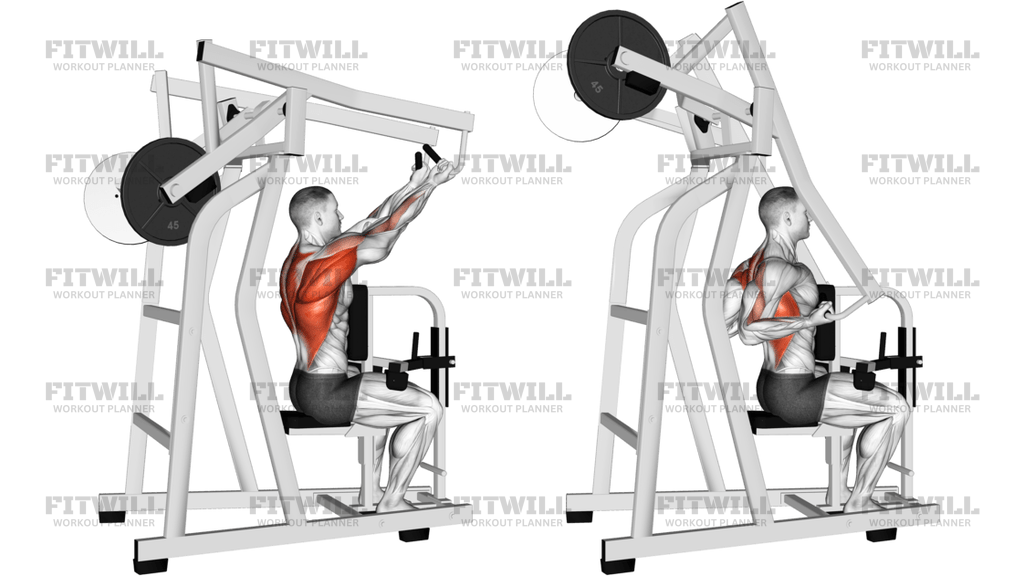
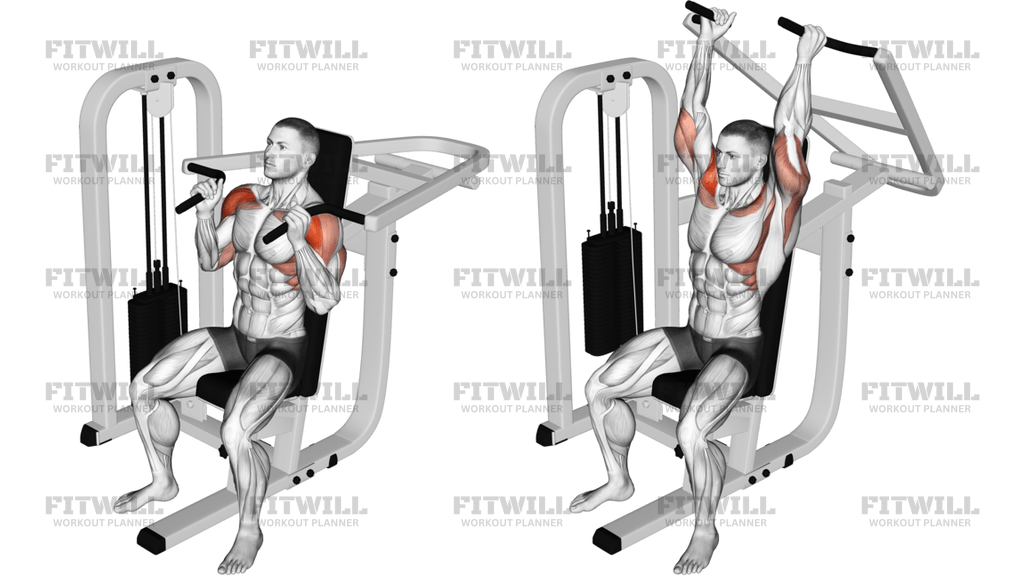
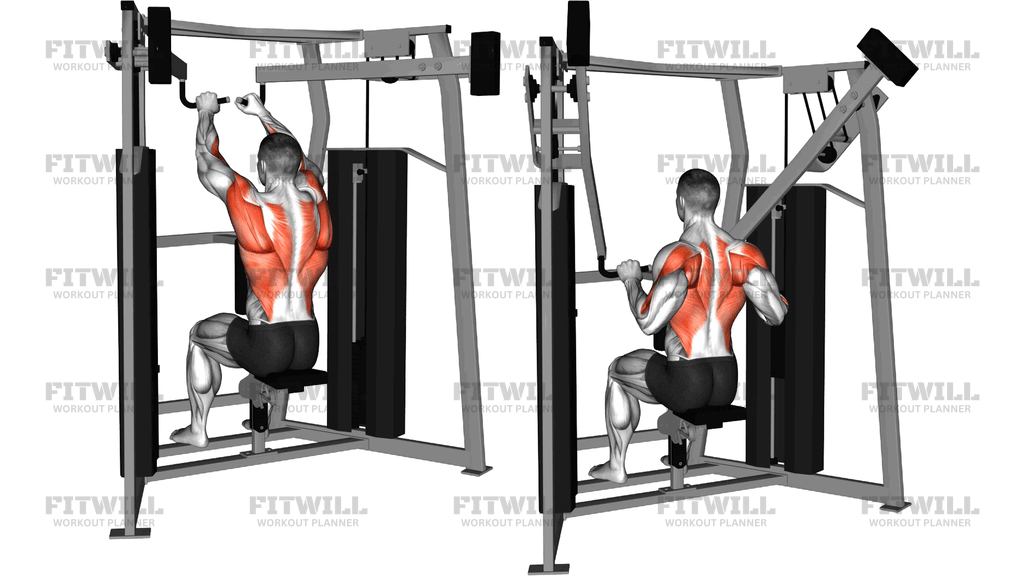
The Lever High Row is a machine-based row performed on a plate-loaded leverage station where you sit facing the machine and pull a set of handles from an overhead starting position down and back toward your upper chest. Because the handles start high and wide, the pull travels on a downward diagonal rather than straight back, which shifts emphasis across the upper back, the upper fibers of the lats, and the rear of the shoulders. The highlighted areas in this movement pattern are the rhomboids and mid-traps sandwiched between the shoulder blades, along with the broad sheet of the lats on either side of the spine.
This lift works well for anyone who wants a thick, dense upper back without having to stabilize a free-weight barbell. The leverage arm provides resistance along a fixed path, so your energy goes into pulling hard instead of controlling wobble. That makes it a solid choice for lifters learning to feel their back muscles contract, for heavier training blocks where you want to push the upper back without a spotter, and for bodybuilders chasing detail in the area between and below the shoulder blades.
Setup matters more on this machine than most people realize. Because you face the unit with your arms reaching overhead at the start, a seat set too low or too far back turns the pull into a shoulder shrug, while a seat set too high lets you lean away and steal work from the target muscles. Adjust the seat so your chest stays tall, your feet are flat and braced, and the handles line up roughly with or slightly above your hands at full reach.
Execution is straightforward but easy to rush. Pull the handles down and back toward your upper chest, driving your elbows out and down rather than letting them flare loosely forward. Squeeze the shoulder blades together at the hardest point of the rep, then let the arms travel back up under control until you feel a full stretch across the lats and upper back. The stretch at the top and the squeeze at the bottom are where this movement earns its place in your program.
A few practical points keep it productive. Keep your ribcage from flaring up as the weight gets heavy, because arching back turns a row into a half pull-down and loads the lower back unnecessarily. Use a full but controlled range, and treat the negative as part of the work rather than a coast back to the start. The Lever High Row pairs naturally with straight-arm pulldowns or lat pulldowns in a back session, and it also serves as a safe finishing movement on a day dedicated to pressing, since it balances all that horizontal pushing with an equally strong pull.
[ Workout Log & Planner ]
Put your next workout in Fitwill
Keep your plan and training log ready when you are.


Instructions
- Sit on the machine's seat facing the weight stack with your feet flat on the floor or foot platform, knees bent roughly 90 degrees.
- Adjust the seat height so that when you reach up, you can grip the parallel handles with your arms nearly straight overhead and your chest held tall without shrugging.
- Take a neutral, palms-facing grip on both handles and set your torso upright with a slight forward lean toward the machine.
- Brace your core lightly and pull your shoulders down away from your ears before initiating the rep.
- Pull the handles down and back along the machine's arc until they arrive near your upper chest and your elbows point down and slightly out.
- Squeeze your shoulder blades together at the fully pulled position and hold for a beat.
- Release slowly, letting the handles travel back up the same arc until your arms are extended and you feel a stretch through the lats and upper back.
- Exhale as you pull down and inhale as you return to the starting stretch.
- Complete your reps without letting the weight stack slam back, then let go of the handles only after the lever has fully settled.
Tips & Tricks
- If you feel the work only in your biceps, drop the weight slightly and focus on leading with your elbows instead of your hands.
- A common error is pulling the handles to the belly instead of the upper chest; that flattens the arc and turns this into a generic row, so keep the pull high.
- Avoid leaning back as you pull. If your torso rocks away from the pad, the load is beyond what your upper back can move with good technique.
- Do not start each rep with a shrug. Depress the shoulder blades first, then pull, so the traps do not hijack the movement.
- Because the leverage arm is strongest at the top, use the fully stretched position deliberately; stopping short of full extension cuts the lat involvement.
- Pause for one full second at the pulled position rather than bouncing between reps, which is easy to do on a smooth machine path.
- If your shoulders pinch at the top of the stretch, reduce your range slightly and keep your chest angled a touch more toward the machine.
- Grip the handles firmly but do not squeeze to the point of forearm fatigue; a death grip shifts tension away from the upper back.
- Wrist straps can help on heavy sets, but earn the heavier weight with raw grip first on this machine before reaching for them.
Frequently Asked Questions
Which muscles does the Lever High Row work?
The primary targets are the rhomboids and mid-traps of the upper back, with strong assistance from the upper lats and rear shoulders. The biceps contribute as pulling helpers on every rep.
How is the Lever High Row different from a seated cable row?
The handles start overhead and travel down and back toward the upper chest, while a seated cable row pulls straight back at torso level. The high angle shifts more work to the upper back and upper lat fibers.
Is the Lever High Row good for beginners?
Yes, the fixed leverage path removes balance demands, so beginners can focus on learning to squeeze the shoulder blades. Start light and prioritize feeling the upper back over moving heavy weight.
Where should my elbows point during the Lever High Row?
As you pull the handles toward your upper chest, your elbows should travel down and slightly outward. Letting them drop straight down narrows the pull, while flaring them fully wide shifts stress to the rear shoulders.
Why do I feel this in my shoulders instead of my back?
This usually means the seat is set too low, causing you to shrug into the pull, or you are pulling with your arms before setting the shoulder blades. Lower your shoulders away from your ears first and let the elbows drive the movement.
What can I substitute for the Lever High Row?
A wide-grip lat pulldown or a chest-supported machine row set at a high angle covers similar territory. Cable high rows with a rope attachment are another close match for the downward pull angle.
Should my chest stay against the machine during the Lever High Row?
A light, consistent lean toward the machine is fine, but you do not need to slam your chest into any pad. The key is that your torso angle stays fixed so the back does the pulling, not momentum.
How heavy should I go on the Lever High Row?
Choose a load you can pull to the upper chest with a one-second squeeze and a slow return for 8 to 12 reps. If your torso starts rocking back or the handles stop before they reach your chest, the weight is too heavy.
Is the overhead starting position safe for my shoulders?
For most lifters the stretch is comfortable and beneficial, but if you have a history of shoulder irritation, reduce the range at the top so the stretch stays pain-free. Never force the arms deeper than feels natural.