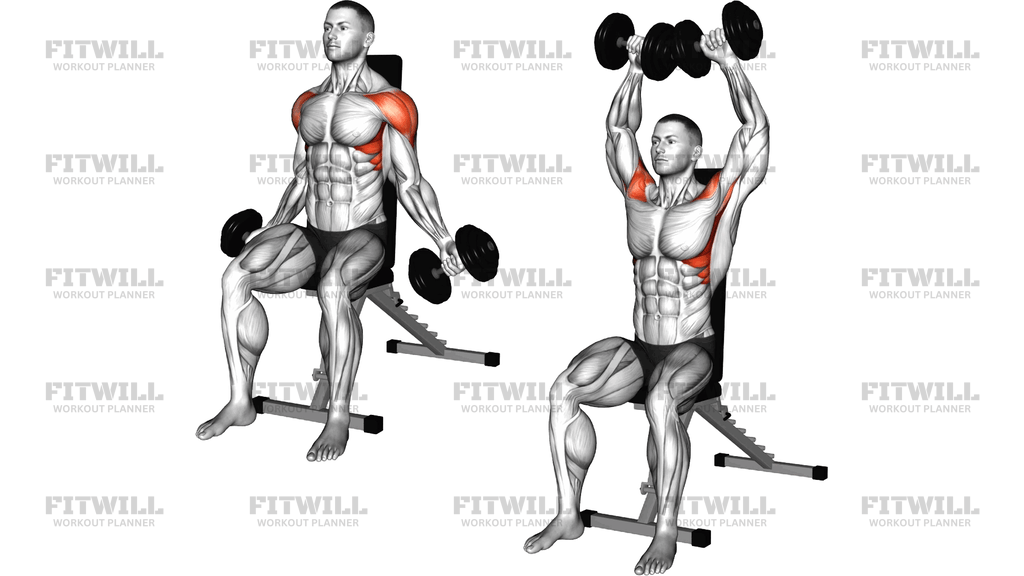
Dumbbell Super Rom Lateral Raise
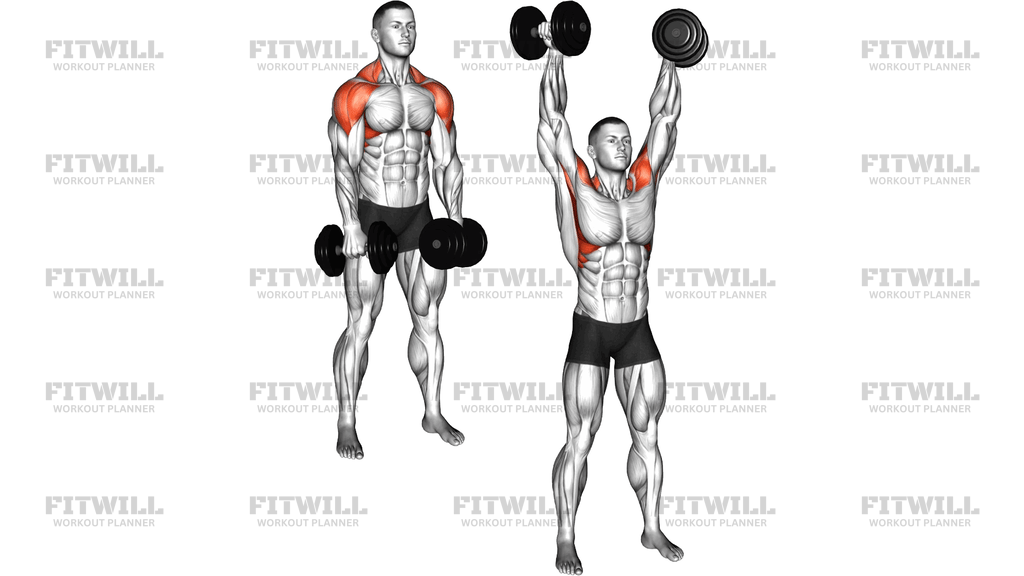
The Dumbbell Super Rom Lateral Raise is a full range of motion version of the classic lateral raise. Instead of stopping at shoulder height, you sweep the dumbbells from your sides all the way overhead in one continuous arc, then lower them back down under control. The extra distance above shoulder level shifts more work onto the upper portion of the deltoids and the upper traps, and it forces the shoulder blade upward rotators to stay involved through the entire lift.
This movement suits intermediate lifters who already own a solid standard lateral raise and want to extend the range without switching to presses. Because the arm travels through flexion, abduction, and overhead elevation in a single path, it trains the side delts through a longer working distance than almost any other isolation variation. Lifters chasing fuller shoulder caps, or anyone whose delt development has stalled on shoulder-height raises, tend to benefit most from it.
Setup matters more here than in a short-range raise. Standing tall with a light pair of dumbbells, a slight bend in the elbows, and a braced torso gives the deltoids a stable origin to pull from. If you lean back, shrug early, or swing the weights, the momentum bleeds tension out of the side delts and dumps the load onto the lower back and traps before the shoulders have done their job.
Execution is simple on paper: lead with the elbows, sweep the arms out and up in a wide arc, and keep rising until the dumbbells meet overhead with arms extended. The return is where most lifters lose the benefit. Lower slowly along the same path, resisting all the way down to the thighs, rather than letting gravity catch the weights halfway.
Use this exercise as a secondary shoulder movement after presses, typically for moderate to higher reps, since the long range and single-joint nature respond poorly to max loads. Keep the weight honest: if you cannot pause briefly overhead without shrugging or arching, the dumbbells are too heavy for the full arc.
[ Workout Log & Planner ]
Put your next workout in Fitwill
Keep your plan and training log ready when you are.


Instructions
- Stand with feet about hip-width apart, holding a dumbbell in each hand at your sides with a neutral grip, palms facing your thighs.
- Keep a slight, fixed bend in both elbows and roll your shoulders back and down so the traps are not already shortened before you start.
- Brace your core, pull your ribs down, and set your gaze forward so your torso stays vertical throughout the set.
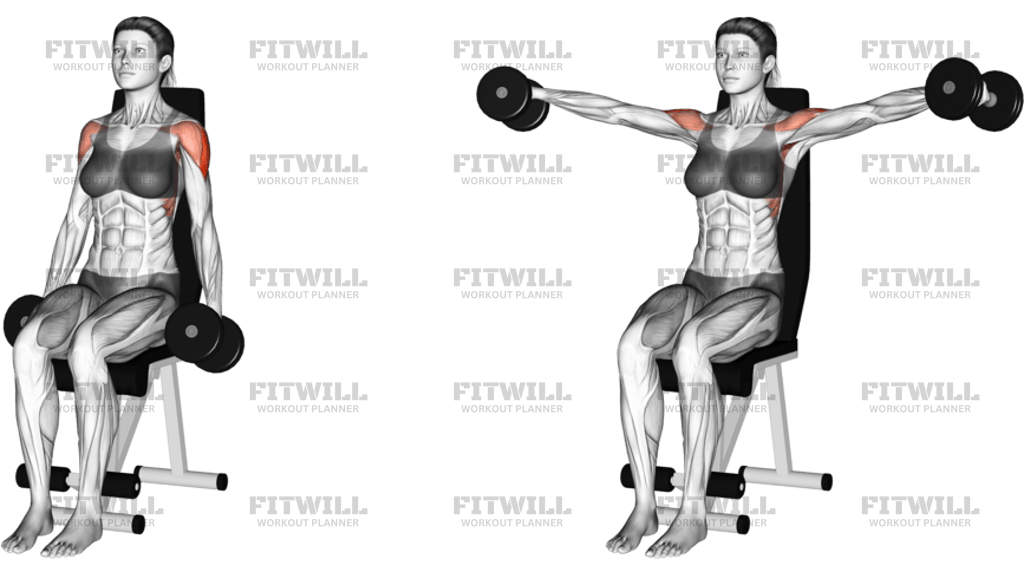
- Exhale and raise both dumbbells out to the sides in a wide arc, leading with the elbows rather than the hands.
- Continue the arc past shoulder height without pausing, letting the arms travel upward until the dumbbells meet above your head with arms nearly straight.
- At the top, the dumbbells should be close together overhead, shoulders elevated toward the ears under control, with no arching of the lower back.
- Inhale and lower the dumbbells back along the same wide path, taking two to three seconds to descend from overhead to your thighs.
- Do not let the weights crash down or swing at the bottom; stop briefly with arms at your sides to reset tension before the next rep.
- Repeat for the target number of reps, keeping the elbow bend identical on every repetition so the range stays consistent.
Tips & Tricks
- Choose a weight roughly 30-40% lighter than your normal lateral raise weight; the overhead segment of the arc is a mechanical disadvantage and the standard load will turn the top half into a shrug.
- If you find yourself leaning backward as the dumbbells pass head height, brace harder and think about pushing the floor away with your feet rather than lifting the weights up.
- Shrugging before the arms reach shoulder height steals work from the side delts; delay trap involvement until the dumbbells are already above shoulder level.
- Keep the pinkies slightly higher than the thumbs as you pass shoulder height to keep the arc in the abduction plane; rotating the palms forward turns the top half into a front raise.
- A common fault is bending the elbows more as the weights get heavy, which shortens the lever and makes the lift easier; lock in your elbow bend before the first rep and hold it.
- If your shoulders pinch near the top, stop just short of full overhead contact and work within that arc; the range can grow as overhead mobility improves.
- Control the descent past shoulder height especially well, since that stretch-loaded portion is where momentum from a fast drop hides most of the growth stimulus.
- Perform this movement after your overhead or bench pressing, not before, so fatigue in the deltoids does not compromise your heavy pressing stability.
Frequently Asked Questions
What muscles does the Dumbbell Super Rom Lateral Raise work?
The side delts do most of the work through the lower and middle arc, while the upper traps and serratus anterior take over as the dumbbells travel overhead. The front delts assist slightly as the arms move past shoulder height toward the top.
How is the Dumbbell Super Rom Lateral Raise different from a standard lateral raise?
A standard lateral raise stops at shoulder height, while this version continues the same arc until the dumbbells meet overhead. That extended range adds work for the upper traps and trains the delts through a much longer path under tension.
Can beginners do the Dumbbell Super Rom Lateral Raise?
Beginners are better off mastering the standard lateral raise first, since controlling the weight above head height demands good shoulder mobility and body awareness. Once shoulder-height raises feel stable with light dumbbells, the full range can be added with even lighter weights.
Why do the dumbbells touch above my head at the top?
Allowing the dumbbells to meet overhead marks the true end of the range and ensures the upper traps and upward rotators finish the lift. Just avoid clanging them together forcefully; bring them close under control.
Should I use a heavy weight for the Dumbbell Super Rom Lateral Raise?
No. The overhead segment is a weak leverage position, so a load that feels easy at thigh height often becomes impossible above the head. Use lighter dumbbells than your normal lateral raise and prioritize a smooth, unbroken arc.
My lower back arches when the dumbbells go overhead. How do I fix it?
Arching usually means the weight is too heavy or the core is not braced. Squeeze your glutes, pull your ribs down, and exhale as you rise; if the arch persists, drop the load until you can keep a tall, neutral torso through the top half.
What can I substitute if I do not have dumbbells for the Dumbbell Super Rom Lateral Raise?
A cable lateral raise taken overhead, or a resistance band lateral raise with a full arc, replicates the same long range. Cables keep tension at the bottom of the movement, which dumbbells lose when the arms hang at the sides.
How many reps should I do for the Dumbbell Super Rom Lateral Raise?
Because it is a long-range, single-joint movement with lighter loads, moderate to higher rep ranges of roughly 10-15 reps per set work well. Stop the set when the arc shortens or you start swinging rather than when the shoulders simply feel tired.
Is it safe to raise dumbbells all the way overhead with this exercise?
It is generally safe for healthy shoulders with light weights and controlled tempo, but anyone with shoulder impingement history should move cautiously. If you feel pinching near the top, reduce the range slightly or stick to shoulder-height lateral raises and consult a qualified professional.