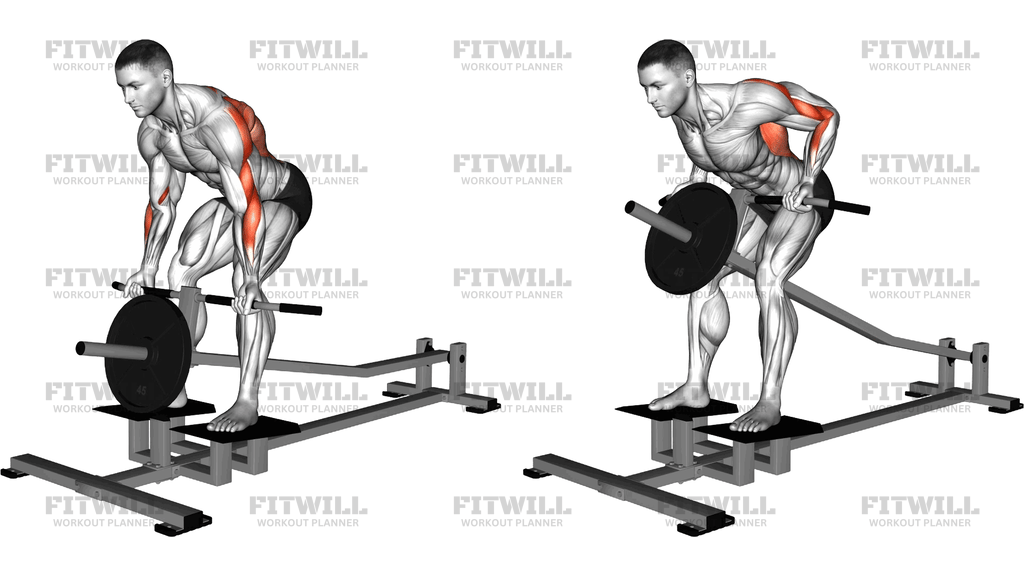
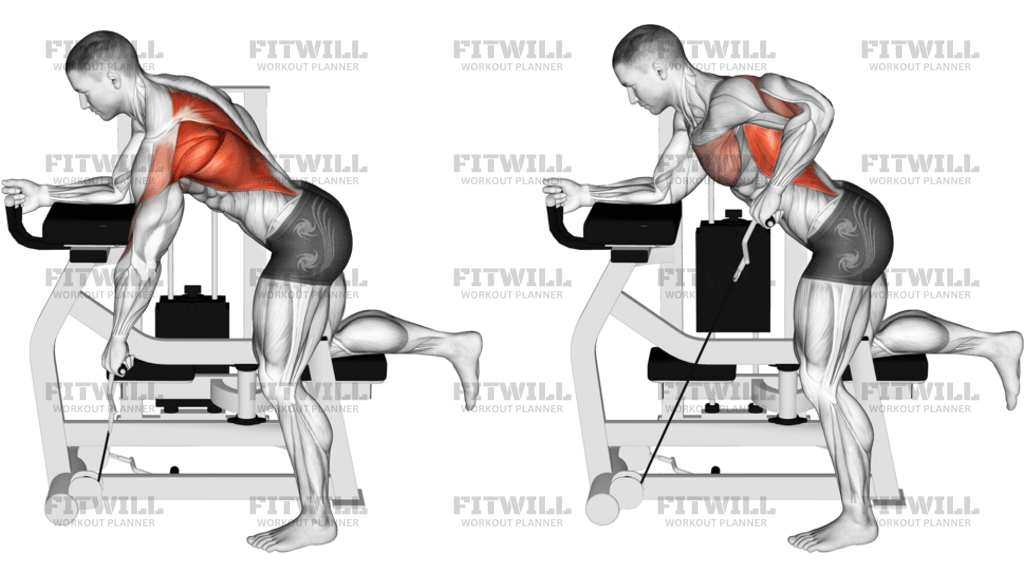
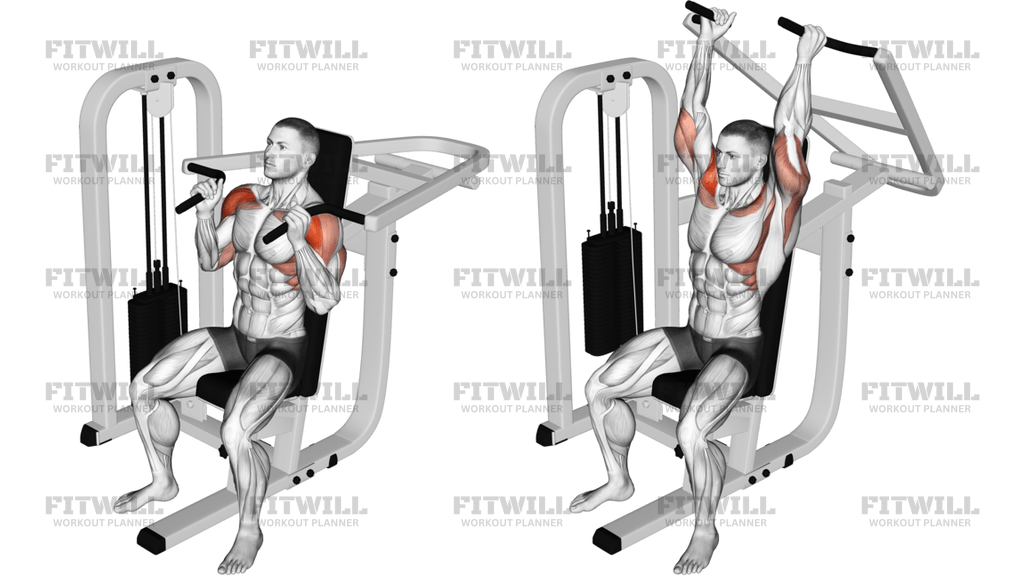
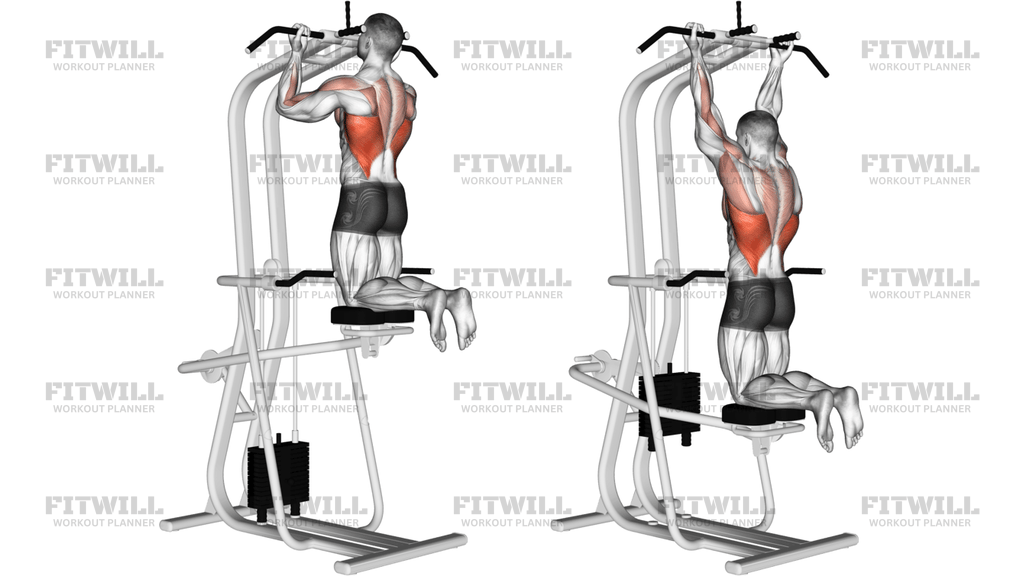
Lever Incline Prone Row
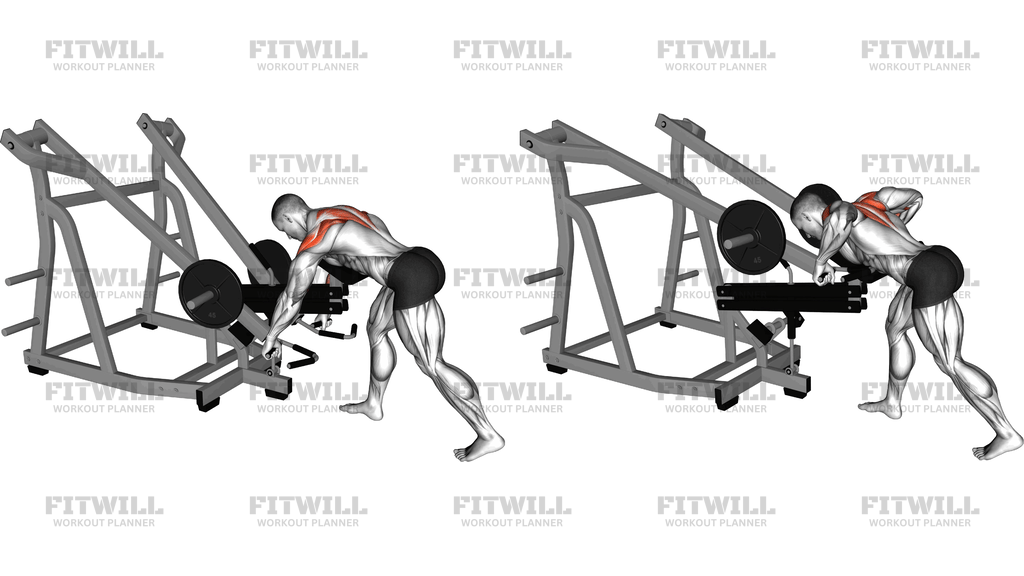
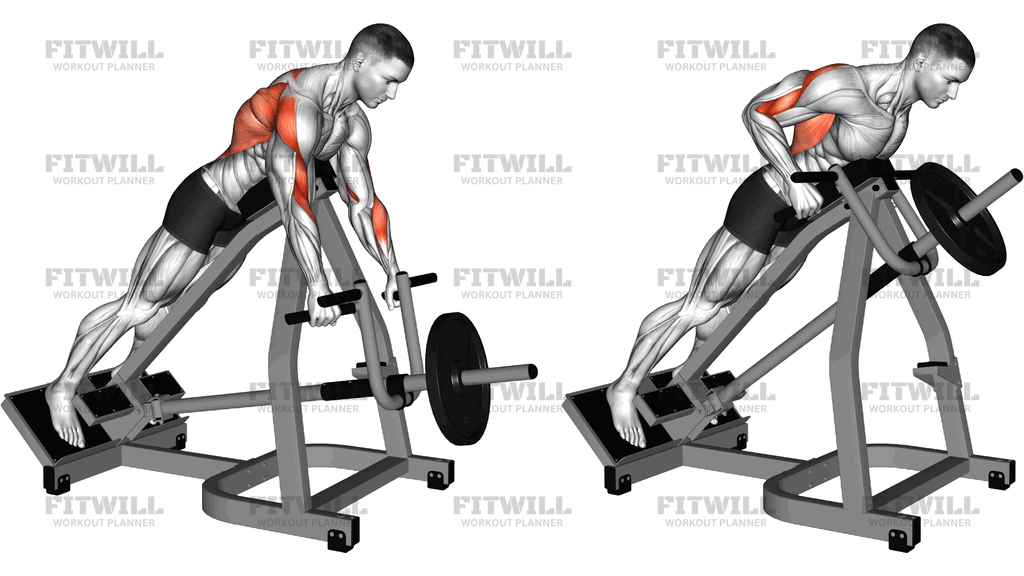
The Lever Incline Prone Row is a plate-loaded machine row performed while you lie face down on an angled pad, feet planted on the machine's foot plates at the low end and your arms hanging toward the floor gripping a pair of handles. Pulling the lever up until your hands reach roughly rib height drives the elbows back and squeezes the shoulder blades together, which makes this one of the cleanest ways to train the upper back without needing to hold your own torso position the way you would in a barbell row.
Because your chest is supported against the incline pad and your body weight is partially taken by the foot plates, cheating is hard to do. There is no lumbar swinging, no hip drive, and no momentum from the legs. That makes the movement a strong choice for lifters who want to isolate the rhomboids, mid traps, and rear delts, as well as for anyone who struggles to keep a flat back during free-weight bent-over rows.
The prone angle also changes the resistance path compared with a standing row. The lever arm moves along a fixed arc, so the hardest part of the rep sits around the point where your elbows pass behind your torso — exactly where the rhomboids and middle trapezius are at their strongest. The lats and rear shoulders assist throughout, and the biceps and forearms work as the gripping and elbow-flexing support team.
Setup matters more on this machine than people expect. If you slide too high on the pad, your arms start at an awkward angle and your shoulders take over; if you sit too low, you lose the chest contact that makes the exercise effective. Set the pad so your chest and upper abdomen rest on it comfortably and your arms hang straight down with a slight bend in the knees and your feet firmly on the plates.
Execution is simple but easy to rush. Start each rep from a full stretch with the shoulder blades protracted, pull the handles up and slightly back toward your lower ribs, pause briefly when the elbows are just past the torso, then lower under control to the start. Two to four sets of eight to twelve reps works well for most lifters, with the pause at the top doing more for back development than adding extra plates.
This exercise fits well as a main back-builder on a machine-focused or beginner-friendly program, as a strict accessory after heavy barbell or dumbbell rows, or as a rehabilitation-friendly option for lifters whose lower back becomes the limiting factor in free-weight rowing variations.
[ Workout Log & Planner ]
Put your next workout in Fitwill
Keep your plan and training log ready when you are.


Instructions
- Load plates onto the machine's lever sleeve and set the inclined pad so your chest and upper abdomen rest firmly against it when you lean onto the machine.
- Place both feet on the foot plates at the low end of the machine, legs nearly straight with a soft knee bend, so your body weight is supported and stable.
- Grip the two handles with a neutral or slightly wider grip and let your arms hang fully extended below your shoulders to reach the starting position.
- Brace your trunk against the pad, pull your shoulder blades slightly forward, and keep your neck in line with your spine rather than craning upward.
- Exhale and pull the handles up toward your lower ribs, driving your elbows back and keeping them close to your body rather than flared wide.
- Continue until your hands reach roughly hip or lower-rib height and your shoulder blades are pulled fully together, then hold that squeeze for a beat.
- Inhale and lower the handles slowly along the same arc, letting the shoulder blades spread apart at the bottom.
- Stop just short of letting the plates fully settle between reps so the back stays under continuous tension.
- Complete your set, then stand up carefully from the pad and step off the foot plates before unloading or adjusting the machine.
Tips & Tricks
- The most common mistake is turning this into a shrug — pulling with the upper traps first instead of driving the elbows back. Think 'elbows to the ceiling, hands to the hips' rather than 'lift the handles.'
- If you feel it in your biceps more than your back, your grip is too tight. Hold the handles firmly but loosely enough that the forearms stay relaxed and the pulling comes from the shoulders.
- Do not let your chest peel off the pad as you pull. If your torso lifts, the weight is too heavy and you are borrowing momentum from your trunk.
- A half-second pause with the shoulder blades squeezed at the top is worth more than two extra plates on the sleeve, because the hardest part of the arc is where the rhomboids work best.
- Keep the elbows around 45 degrees or less from your torso. Flaring them straight out to the sides shifts work toward the rear delts and away from the mid-back.
- Lower the handles over two to three seconds instead of dropping them. The stretch under control at the bottom is where much of the lat and mid-back stimulus comes from.
- If your shoulders pinch at the bottom of the stretch, shorten the range slightly and stop just before the plates touch, rather than forcing the full extension.
- Adjust your position on the pad before adding weight — a few inches up or down changes whether the pull hits your upper back or drifts into your shoulders.
- Use a full thumb-and-finger grip rather than hooking with fingers only, since the handles sit directly over the weight path and a slipped grip here is hard to recover.
Frequently Asked Questions
What muscles does the Lever Incline Prone Row work?
The primary movers are the rhomboids and middle trapezius of the upper back, with the lats and rear shoulders assisting through the pull. The biceps and forearms work as supporting muscles during gripping and elbow flexion.
Is the Lever Incline Prone Row good for beginners?
Yes, it is one of the more beginner-friendly rowing variations because the inclined pad supports your torso and the fixed lever path removes the balance and lower-back demands of a bent-over barbell row. Start light to learn the shoulder-blade squeeze before loading plates.
Why should my chest stay on the pad during this row?
Chest contact is what prevents trunk momentum from helping the pull, keeping the work on the upper back. If your chest lifts off the pad, the load is too heavy or you are pulling with your body instead of your arms and shoulders.
How high should I pull the handles on the Lever Incline Prone Row?
Pull until your hands reach roughly lower-rib height and your elbows have traveled just past your torso. Pulling toward the chest with flared elbows turns the exercise into more of a rear-delt movement rather than a mid-back row.
How is this different from a barbell bent-over row?
The machine locks you into a supported, prone position and a fixed arc, so your lower back and legs cannot assist or cheat. The barbell row allows heavier loads and more variation in angle, but the prone lever version is stricter and easier on the spine.
What can I substitute if my gym has no lever row machine?
A chest-supported dumbbell row on an incline bench is the closest match, since it also removes lower-back loading and keeps the torso fixed. A T-bar row with chest support or a seated cable row are reasonable alternatives with slightly different strength curves.
Should my feet be on the foot plates during the exercise?
Yes, keep both feet planted on the plates for the entire set. They support part of your body weight and keep you stable on the inclined pad, and stepping off or lifting the feet mid-set shifts your position and stress onto the shoulders and lower back.
Is it safe for my lower back?
The supported torso position makes this row much easier on the lower back than free-weight rows, which is why it is often used by lifters with fatigued or sensitive spines. Keep your trunk braced and avoid letting the hips sag or the back arch excessively as you pull, and stop if you feel discomfort.
How heavy should I go on the Lever Incline Prone Row?
Choose a load you can pull to full rib height with a one-second squeeze and lower over two to three seconds for eight to twelve reps. If the handles stall below your hip line or your chest leaves the pad, the weight exceeds what your upper back can strictly handle.
Can I use different grips on this machine?
Some machines offer multiple handle positions, and a narrower neutral grip emphasizes the lats slightly more while a wider grip biases the rhomboids and rear delts. Whichever grip you choose, keep the elbows tracking back rather than out so the mid-back stays involved.