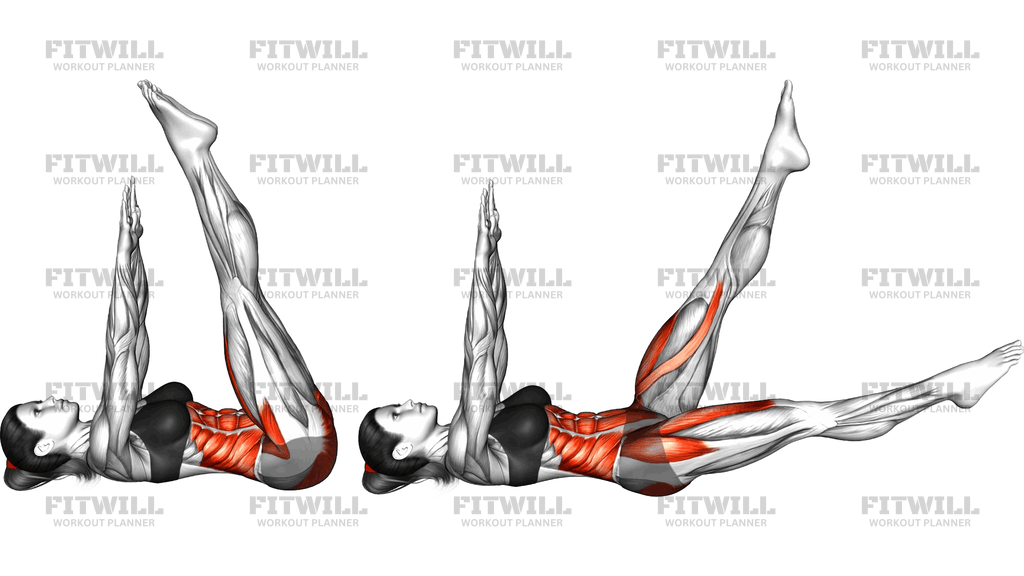
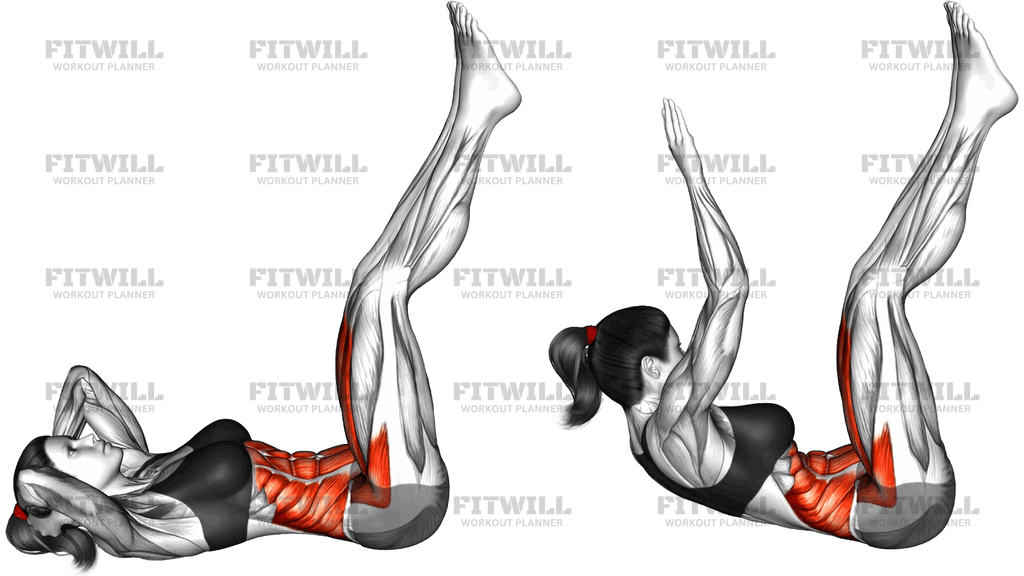
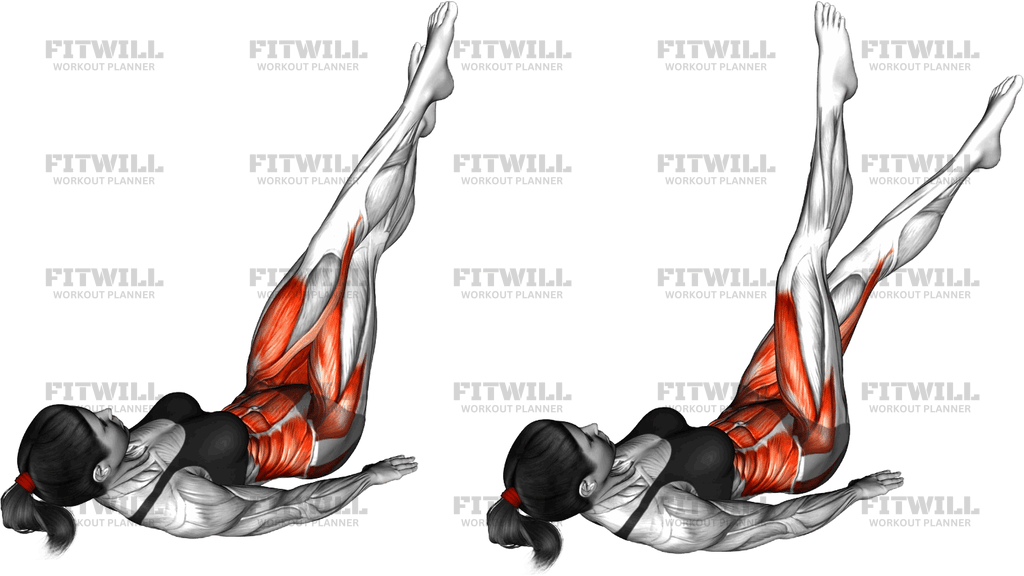
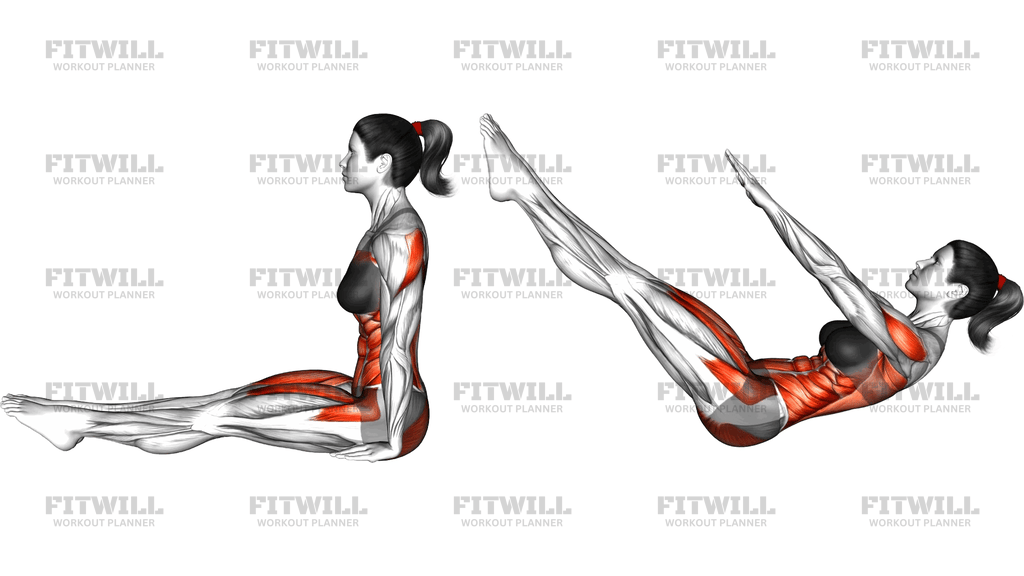
Pilates Machine Hundred
The Pilates Machine Hundred is the reformer version of the classic Hundred, one of the most recognizable exercises in the Pilates method. You lie supine on the carriage with the straps in your hands, head and shoulders lifted off the headrest, and legs extended out to a long diagonal. From there you pump the arms briskly up and down against the tension of the straps while breathing in a steady, rhythmic pattern, traditionally for ten breath cycles or one hundred arm pumps.
This is primarily an abdominal endurance exercise. The deep core has to hold your trunk stable while the hip flexors work hard to keep the legs suspended, and the arms add continuous small movement that challenges that stability. The strap tension gives your arms something to press against, which makes it easier to feel the ribs knit together and the torso stay quiet while everything else moves around it.
Setup matters more than speed here. Because the carriage is mobile, your body position on the machine determines how much load reaches the abs versus the hip flexors and neck. Sitting too far from the footbar or taking straps that are too heavy can pull you out of position, while legs held too low can tip the lower back into an arch. A well-set Hundred has a still pelvis, a softly nodded chin, and ribs drawn down toward the hips.
To perform it well, press the arms down and slightly back toward the hips with straight elbows, feeling the strap tension travel through the shoulder and into the trunk. Keep the pumps small and quick, driven from the shoulder, not big swings. Breathe in for five pumps and out for five, keeping the exhale active so the deep abdominals stay engaged through the whole set.
The Machine Hundred works well early in a reformer session as a warm-up and core activator, or as a standalone endurance set for anyone building abdominal stamina. It suits people who already have some Pilates or general training background; complete beginners usually start with legs in a tabletop position or head resting down until they can hold the position without straining the neck.
The main safety points are simple: stop lowering the legs if the lower back starts to arch or lift off the carriage, keep the neck relaxed rather than craning the chin to the chest, and choose a spring or strap setting you can control for the full duration. Quality of the breath and stillness of the trunk matter far more than reaching one hundred pumps quickly.
[ Workout Log & Planner ]
Put your next workout in Fitwill
Keep your plan and training log ready when you are.


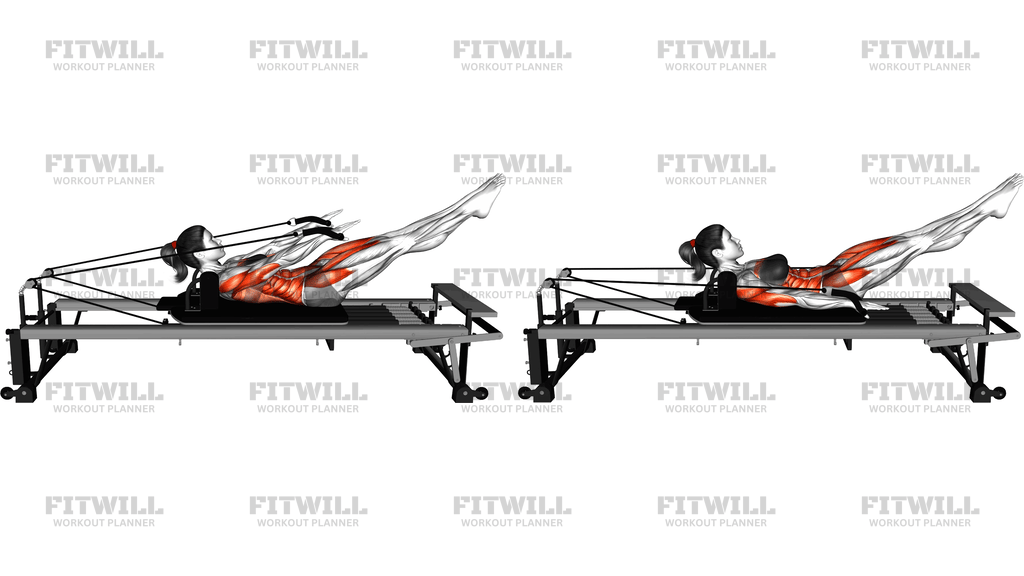
Instructions
- Lie on your back on the reformer carriage with your head resting on the headrest and your feet off the machine, knees bent over your hips in a tabletop position.
- Take one strap in each hand with the arms straight and held up toward the ceiling, hands roughly over the shoulders, elbows soft.
- Exhale and curl your head, neck, and shoulders up off the headrest, keeping the gaze down toward your knees and a small space under the chin.
- Extend both legs out to a long diagonal, around 45 degrees, and squeeze the legs together; if the lower back lifts, raise the legs slightly higher.
- Brace the abdominals by drawing the navel toward the spine and sinking the ribs down, and press the pelvis steady into the carriage.
- Pump the straight arms up and down a few inches, pressing down against the strap tension on each downbeat, keeping the shoulders relaxed away from the ears.
- Breathe in through the nose for five pumps and exhale through the mouth for five pumps, keeping the rhythm of the arms matched to the breath.
- Continue for ten full breath cycles, or one hundred pumps, keeping the trunk completely still except for the arms.
- To finish, bend the knees back into tabletop, lower the head and shoulders down to rest, release the straps, and place the feet on the frame to reset.
Tips & Tricks
- If your neck fatigues before your abdominals do, support the head with one hand for a few breaths, or keep the back of the head on the headrest for the first half of the set and lift only when you feel settled.
- Common mistake: letting the legs drop toward the carriage as the set goes on. Watch for the lower back beginning to arch, and instead of pushing through, bring the legs up to an easier angle.
- Do not reach for the straps with bent elbows or let the handles drift inward; straight arms pressing down toward the hips keep the work in the trunk instead of the biceps.
- The pump should come from the shoulder, not the wrist or the elbow. Floppy hands and quick wrist flicks mean the range is too small to matter and the shoulders will creep up.
- Match the exhale to the harder part of the pattern. Many people hold their breath in the middle of the set, which is usually the moment the trunk starts to wobble.
- On machines with adjustable spring tension, err on the lighter setting at first. Heavy straps pull the arms down so fast that the abdominals stop doing the stabilizing work.
- Keep the shoulder blades reaching down and wide rather than hunching. If the shoulders end up next to the ears, lower the torso slightly and reset the curl.
- Check your pelvis between breath cycles. A Hundred that drifts, with the hips rocking or one hip lifting, is usually a sign the legs are set too low or the arms are pumping too wide.
- If a full hundred is too much, do five breath cycles with clean form and build up gradually rather than squeezing in strained repetitions at the end.
Frequently Asked Questions
What muscles does the Pilates Machine Hundred work?
The primary work comes from the abdominals, especially the deep core that holds the trunk still, with strong assistance from the hip flexors that keep the extended legs lifted. The shoulders and arms work continuously through the pumping action against the strap tension.
Why use the straps on a reformer instead of doing the Hundred on a mat?
The straps give the arms resistance to press against, which helps you feel the connection between the arms, ribs, and trunk. The reformer also supports the upper back on the carriage, making it easier to find the right curl without gripping through the neck.
Should my legs be straight or bent in the Pilates Machine Hundred?
The classic version uses straight legs extended to about a 45-degree angle. Beginners and anyone whose lower back arches should keep the knees bent in tabletop, or extend the legs higher, until the trunk can stay stable.
How do I stop my neck from hurting during the Pilates Machine Hundred?
Keep the chin softly nodded, as if holding a small fruit under it, and look down toward your knees rather than up at the ceiling. If the neck still tires, rest the head on the headrest or curl up more from the shoulder blades instead of leading with the head.
How low should I lower my legs?
Lower them only as far as you can keep the pelvis completely still and the lower back in contact with the carriage. The moment the back starts to arch away or the hips lift, raise the legs a few degrees.
How many pumps make one set of the Pilates Machine Hundred?
Traditionally you breathe in for five pumps and out for five pumps, repeating ten times for a total of one hundred arm pumps. Shorter sets of five breath cycles are a perfectly good starting point.
Is the Pilates Machine Hundred suitable for beginners?
It can be, with modifications: keep the head down, hold the legs in tabletop, or shorten the set. Because the reformer adds strap tension and a moving carriage, it is worth learning the position from an instructor before training it alone.
What is the most common mistake in the Pilates Machine Hundred?
Chasing speed and letting the trunk collapse: legs dropping, ribs flaring, and shoulders hunching while the arms flap quickly. Slow the rhythm down, keep the pumps small, and make the torso the priority.
What can I do if I don't have access to a reformer?
The mat Hundred is the closest substitute and needs no equipment beyond a mat. A resistance band looped under the feet and held in the hands can recreate some of the arm tension while you pump.
Is it safe to do the Pilates Machine Hundred every day?
For most healthy people it is a low-load endurance exercise and can be practiced frequently, but it should never be performed through neck or lower back discomfort. If either area complains during or after the set, reduce the range or rest and reassess your setup.