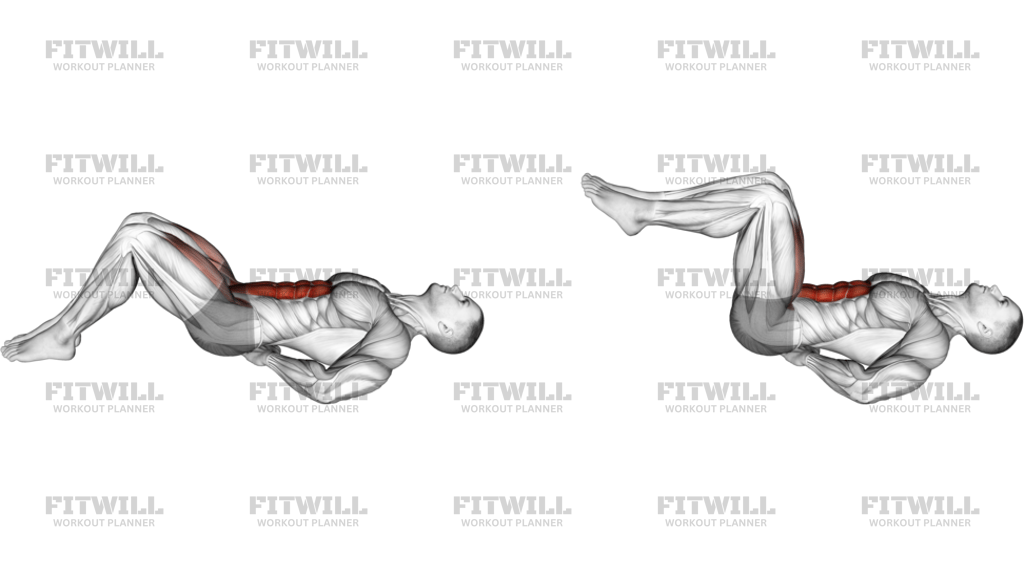
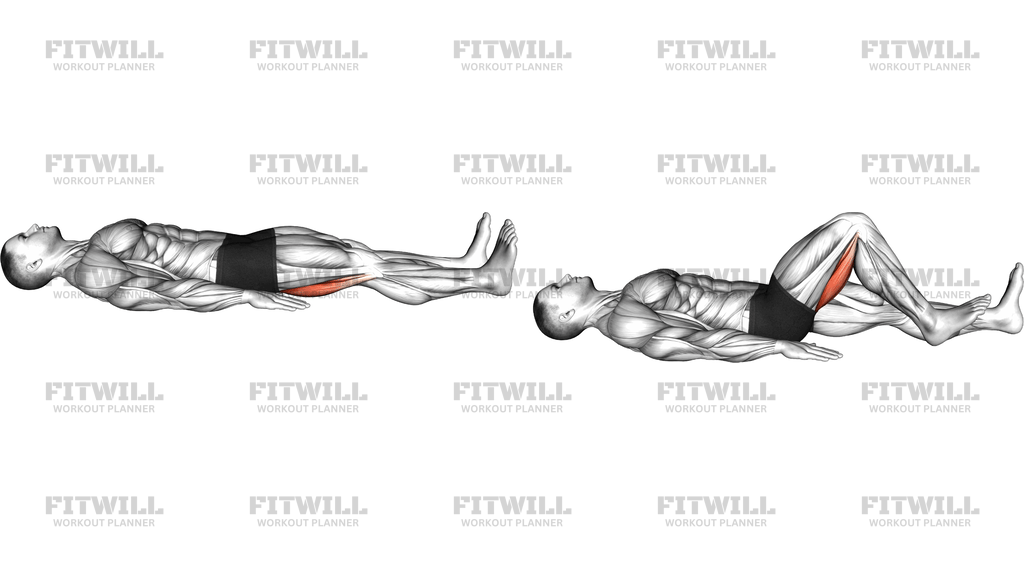
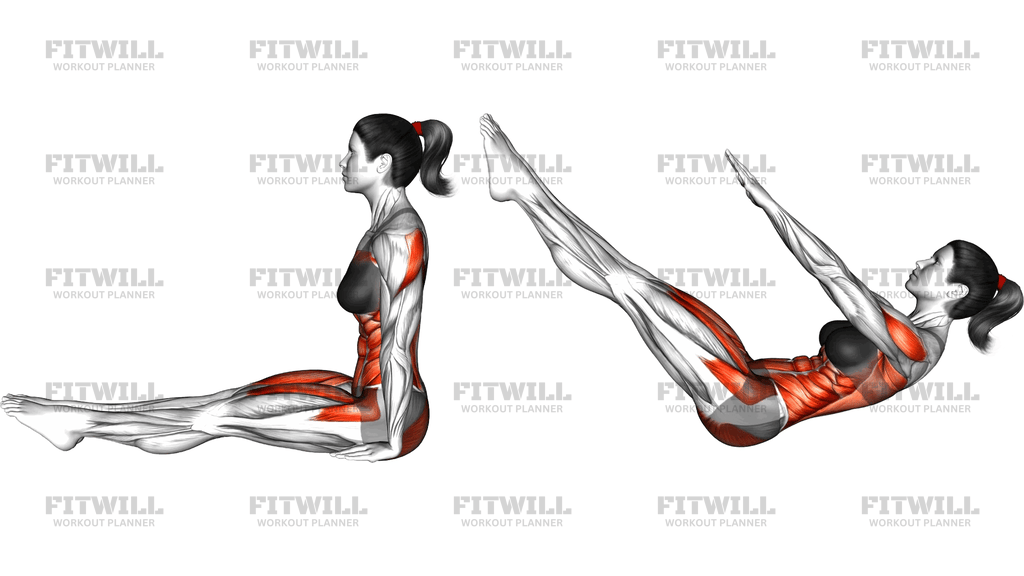
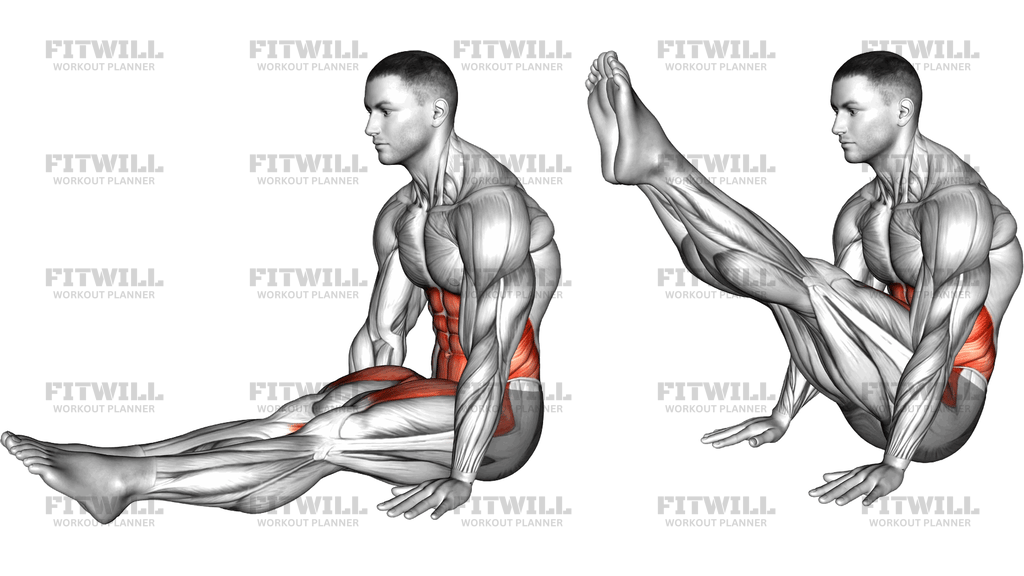
Lying High Criss Cross Legs
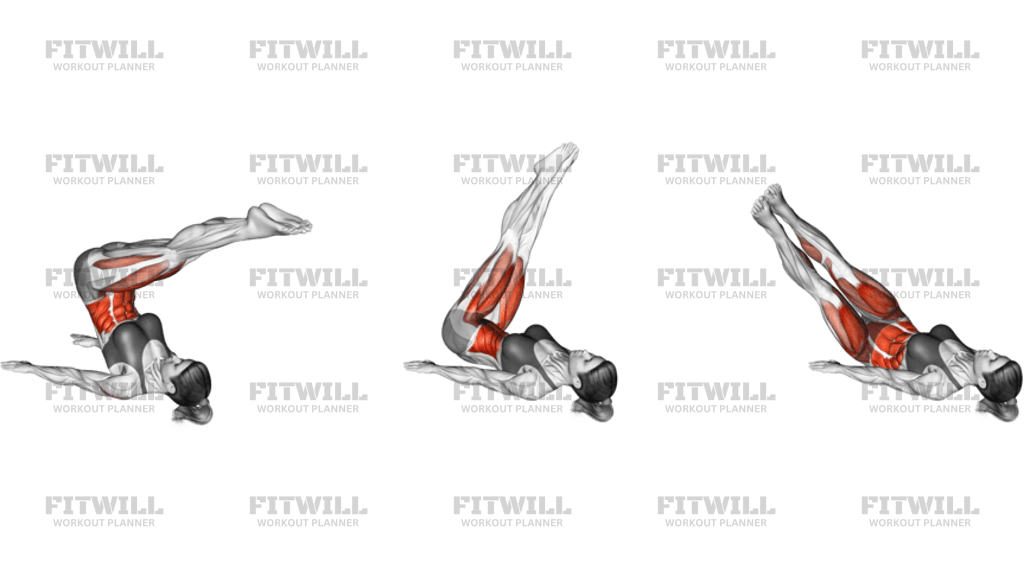
Lying High Criss Cross Legs is a bodyweight core exercise performed on your back with both legs pointed straight up toward the ceiling. From that vertical position, you cross one leg over the other, switch, and keep alternating in a smooth, controlled rhythm. Because the legs stay high throughout, the movement challenges the lower portion of the abs and the hip flexors without the lower-back strain that comes from lowering the legs toward the floor.
This drill sits nicely between a basic lying leg raise and more demanding options like scissor kicks or flutter kicks. Beginners who find floor-level leg work uncomfortable can use the high position to build trunk control first, while more experienced trainees use it as a strict, slow-tempo burnout at the end of an ab session. It is also a common inclusion in Pilates-style routines, where the emphasis falls on precise, rhythmic leg crossings driven from the center of the body rather than on speed.
The main muscles working are the lower abs, which hold the pelvis steady and keep your lower back pressed into the mat while the legs move. The hip flexors and quadriceps lift and hold the legs vertical, and the inner thighs contribute as the legs cross past each other and squeeze together at each crossover. Because the legs are nearly perpendicular to the floor, gravity loads them lightly, so the set is limited more by muscle control and endurance than by raw strength.
Setup matters more than most people expect. Lie flat on a mat with your arms relaxed at your sides, palms down, and extend both legs straight up so your hips are stacked under your knees and ankles. If your hips are rolled too far back or your legs drift toward your head, the abs stop doing the stabilizing work; if the legs tilt away from vertical, the lower back starts to arch. The goal is a tall, quiet torso with all the motion happening below the hips.
Execution should feel deliberate rather than rushed. Brace your trunk, then cross one leg over the other at roughly shin or ankle level, open the legs back to a narrow V, and cross with the opposite leg on top. Each cross-and-open counts as one repetition. Keep the knees straight but not locked, point or flex the feet consistently, and let the crossing come from the hips rather than from swinging the whole pelvis.
A few practical points keep this safe and effective. Move slowly enough that you could pause at any crossover without losing balance, and stop the set as soon as your lower back wants to lift off the mat or your rhythm turns jerky. If your neck or shoulders tense up, rest your head fully on the mat instead of propping it up. This is a low-load, high-control exercise, so quality repetitions in the twenty to forty range usually beat chasing a maximum number of sloppy crossovers.
[ Workout Log & Planner ]
Put your next workout in Fitwill
Keep your plan and training log ready when you are.


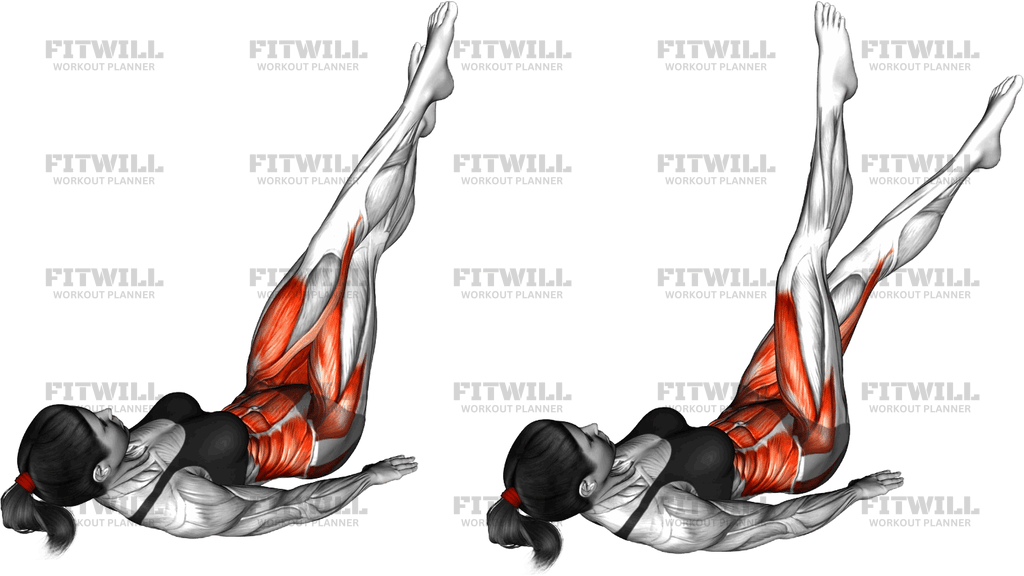
Instructions
- Lie flat on your back on an exercise mat with your arms alongside your body and palms facing down for light support.
- Extend both legs straight up toward the ceiling so your hips, knees, and ankles are stacked vertically, and let your head rest on the mat.
- Press your lower back gently toward the floor and brace your abdominal muscles before the legs start moving.
- Keeping both knees straight, cross one leg over the other at shin or ankle level so the legs pass close together.
- Open the legs back to a narrow V, still holding them near vertical, then cross with the opposite leg on top.
- Continue alternating crossovers at a slow, even tempo, keeping the pelvis completely still on the mat.
- Breathe steadily throughout, exhaling as each crossover happens and inhaling as the legs open.
- Keep your toes active and pointing up or slightly outward so the legs stay long and the crossing stays clean.
- When the set ends, lower both legs together with control, bending the knees slightly if needed before resting.
- Reset your lower-back position on the mat before starting the next set so you never begin with an arched spine.
Tips & Tricks
- If your legs drift toward your face as you fatigue, your hips have rolled back; lift the tailbone slightly and re-stack the legs under your knees.
- Crossing at the ankles with the legs too wide turns this into a lazy abduction drill — narrow the split so the shins actually pass each other.
- A common mistake is bending the knees to make the cross easier; straight legs keep the quadriceps and hip flexors honest.
- If your lower back lifts off the mat during the open phase, shorten the opening to a narrow V instead of letting the legs fall wide.
- Press your palms lightly into the floor to quiet any upper-body wobbling, but do not push so hard that your hips rise off the ground.
- Slow the tempo before you slow the count — two seconds per cross keeps the abs working instead of letting momentum swing the legs.
- If the backs of your knees feel tight, soften the knees by a few degrees while keeping the thighs vertical rather than forcing full lockout.
- Pointing the feet in different directions from rep to rep usually means attention has drifted; pick one foot position and hold it for the whole set.
- To make the exercise harder, hold each crossover for an extra second and squeeze the inner thighs together before opening.
Frequently Asked Questions
What muscles does the Lying High Criss Cross Legs exercise work?
The lower abs work hardest to hold the pelvis steady while the legs move, and the hip flexors and quadriceps keep the legs lifted and straight. The inner thighs assist each time the legs cross and press past one another.
Why are the legs kept high instead of lowered toward the floor?
With the legs near vertical, gravity pulls them away from the body only lightly, so the lower back stays flat on the mat with much less strain. Lowering the legs toward the floor dramatically increases the lever load on the trunk.
Is Lying High Criss Cross Legs suitable for beginners?
Yes, it is one of the more approachable leg-crossing drills because the high leg position keeps the load light. Beginners should start with slow, small crossovers and stop if the lower back begins to arch.
How is this different from scissor kicks or flutter kicks?
Scissor and flutter kicks lower the legs near the floor and move them front to back, which places a heavy demand on the trunk. Lying High Criss Cross Legs keeps the legs up high and crosses them side to side, making it more about controlled adduction and pelvic stability.
Should I cross at the ankles or the shins?
Either works, but crossing at shin or ankle level with the legs close together keeps the inner thighs and abs engaged. Crossing too low and wide turns the movement into an uncontrolled leg swing.
How many repetitions should I do?
Aim for 20 to 40 controlled crossovers per set, counting each cross-and-open as one repetition. Once the rhythm gets jerky or your lower back lifts, end the set even if you have not hit your target.
My neck gets tense when I do this — what should I change?
Keep the back of your head resting fully on the mat and avoid lifting it to watch your legs. Relax your shoulders and let your arms stay passive at your sides.
Can I make Lying High Criss Cross Legs harder without adding equipment?
Yes, add a one-second pause and an inner-thigh squeeze at each crossover, or slow the tempo to two seconds per cross. Opening the legs slightly wider between crossovers also increases the demand while keeping the setup identical.
What can I use instead of a mat?
Any firm, slightly cushioned surface such as carpet or a folded towel works, since the exercise only requires you to lie flat. A mat simply makes the lower back and tailbone more comfortable during longer sets.
Is it safe if I feel the work mostly in my thighs rather than my abs?
That is normal for this position, because the quads and hip flexors hold the legs vertical the entire time. If you want more ab involvement, double-check that your lower back stays pressed into the mat and avoid rocking the pelvis during the crosses.