Ring Rocky Pull Up Pulldown
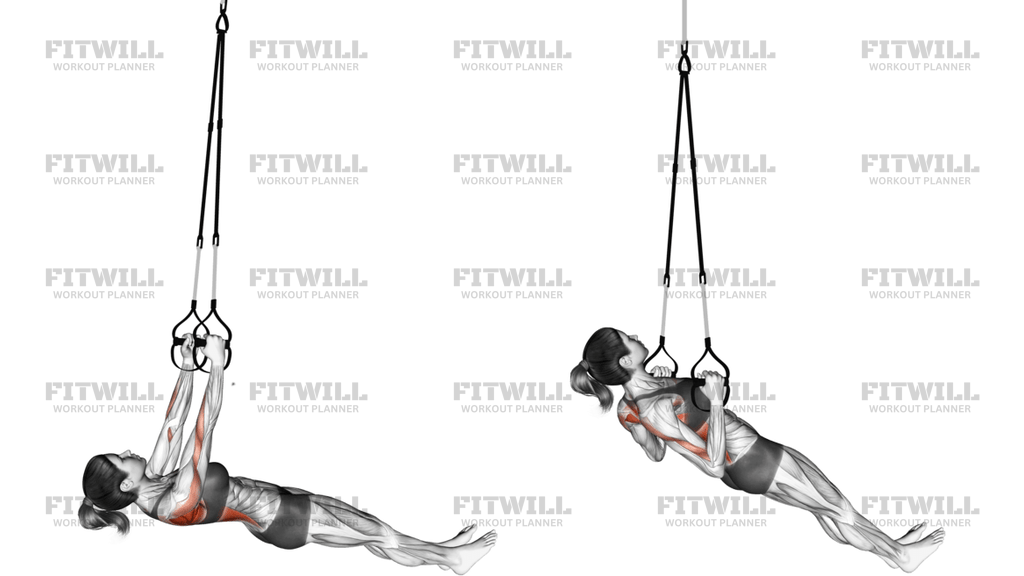
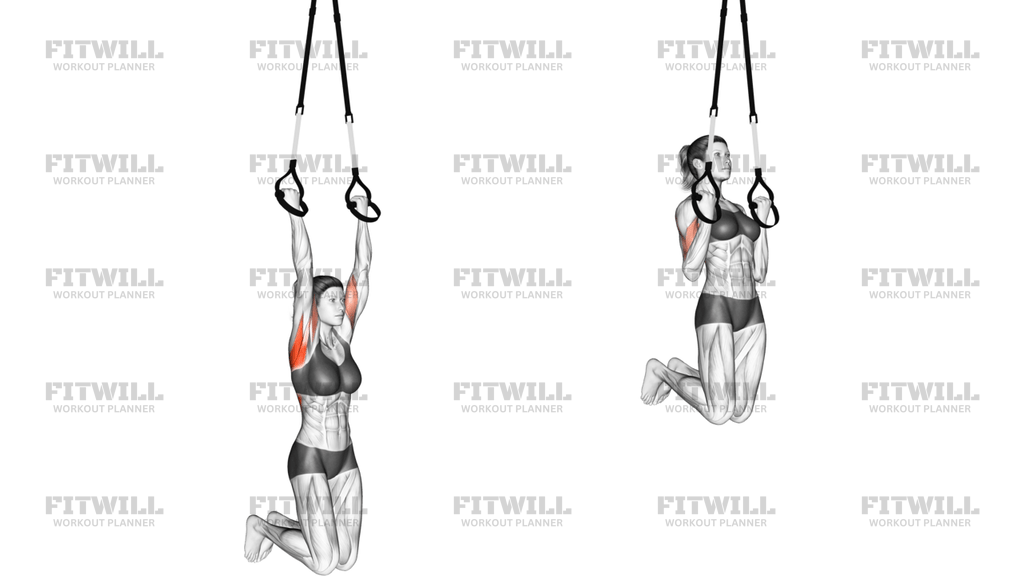
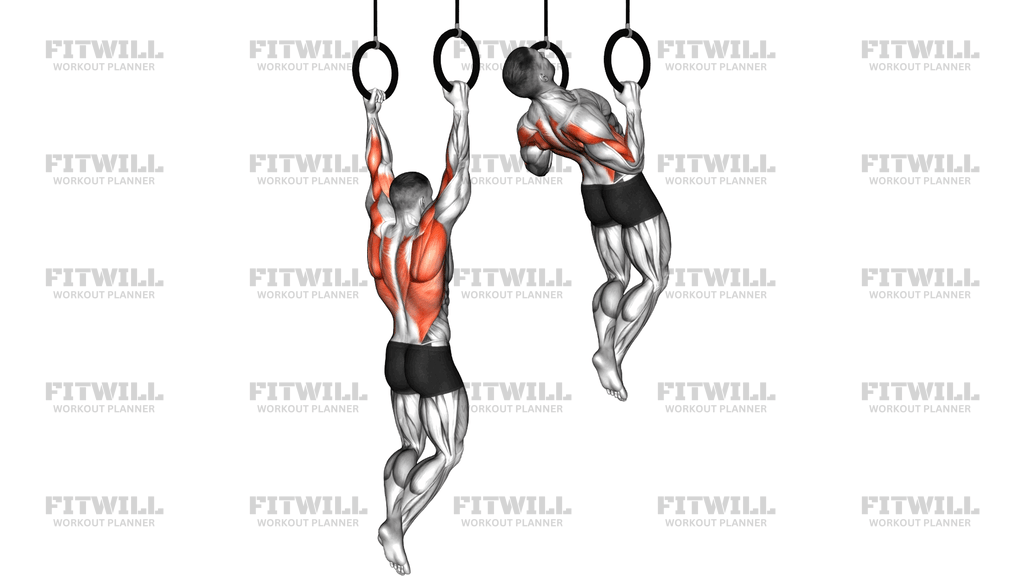
The Ring Rocky Pull Up Pulldown is a ring-based pulling exercise where you hang from a pair of gymnastic rings and pull your body up and across toward one ring at a time, alternating sides, before lowering back into a full dead hang. The name comes from the famous training montage it resembles: instead of pulling straight up with both arms working evenly, the emphasis shifts to a single side, so one arm and one side of the back do most of the driving while the other hand anchors and guides. Because the rings are unstable and free-moving, every rep also demands more from your grip, shoulders, and trunk than a fixed pull-up bar would.
This movement sits somewhere between a standard pull-up and a single-arm pulling progression, which is exactly what makes it valuable. If you have been stuck doing regular pull-ups and want to work toward one-arm pulls, archer pull-ups, or ring muscle-ups, this is a practical bridge. The offset pull loads one lat, one bicep, and one side of the upper back through a longer range than a symmetric pull-up allows, while the opposite side still contributes, so you can train unilaterally without needing to support your entire bodyweight on a single arm.
Beyond the lats, the exercise works the biceps, the mid-back muscles that pull the shoulder blade down and in, the rear shoulders, and the forearms. The rings themselves add a stabilization layer: your shoulders and core have to constantly correct small wobbles, which builds control around the shoulder joint that carries over to pressing, climbing, and carrying. Athletes in climbing, calisthenics, gymnastics, and combat sports tend to get the most out of it because those sports reward exactly this kind of asymmetric pulling strength.
Setup matters more here than on a bar. Set the rings so you can hang with full arm extension and your feet clear of the floor, and check that both straps are adjusted to the same length and anchored securely. Uneven strap lengths change the pull immediately and can twist your shoulders, so take the extra minute to level them before you start. Grip the rings with palms facing each other or slightly forward, and expect the rings to rotate inward as you pull toward one side.
To execute well, start from a fully extended hang with shoulders engaged, then pull your chest up and toward one ring, letting your torso tilt so the working side leads. Drive the elbow of the pulling arm down and back rather than just bending it, and aim to bring the ring to roughly chest or shoulder height. Lower under control to a full hang, reset your shoulder position, and pull toward the other side. The descent is where most people lose the benefit; dropping fast turns a strength exercise into a swing.
A few practical points before you begin. If you cannot yet complete several clean standard pull-ups on rings, build that base first, or reduce the difficulty by keeping a foot on a low box or using a band for assistance. Keep your legs still and reasonably quiet in front of or slightly behind you, avoid kipping into the pull, and stop the set as soon as your form leans on swinging or shrugging. Because the load shifts to one side, treat the first few sessions as a learning set and progress the range gradually.
[ Workout Log & Planner ]
Put your next workout in Fitwill
Keep your plan and training log ready when you are.


Instructions
- Set two gymnastic rings to equal strap lengths, anchored to a secure overhead point, so you can hang with your arms fully extended and your feet off the floor.
- Grip each ring with a neutral grip, palms facing inward, and step or jump up into a dead hang with your legs together or slightly bent behind you.
- Pull your shoulder blades down before the first rep so you hang tall in your shoulders instead of sinking into them.
- Brace your trunk and squeeze your glutes lightly to stop your body from swinging once the pull starts.
- Pull your chest up and toward one ring, letting your torso rotate slightly so the working side leads, and drive that elbow down and back until the ring reaches about chest height.
- Keep the opposite arm locked in as an anchor, holding its ring close and steady rather than letting it drift away from your body.
- Lower yourself slowly back to a full dead hang, letting the working arm extend completely before you change direction.
- Exhale as you pull up and across, inhale during the controlled descent, and keep the breathing rhythm steady rep to rep.
- Reset your hang for a moment, re-engage the shoulders, then repeat the pull toward the opposite ring.
- Alternate sides for the planned number of reps, and step down safely rather than dropping when you finish the set.
Tips & Tricks
- If your body swings as you pull toward one ring, you are likely starting the rep from a slack shoulder. Retract and depress the shoulder blade first, then pull, and the arc will tighten up.
- A common mistake is letting the non-working arm slide down or loosen its grip as you pull to the other side. Keep that hand high and firm so it acts as a real anchor.
- Do not let the pulling ring rotate far out of position. If it twists hard inward, your elbow is flaring and your lats are checked out of the pull; think elbow down and back instead.
- Rushing the lowering phase is the fastest way to lose the unilateral benefit. Aim for a two to three second descent so the working lat controls the full range.
- Keep your neck long and your chin in a neutral position. Craning toward the ring you are pulling toward strains the neck and shortens the range your upper back actually works through.
- If your grip gives out before your back does, chalk your hands and grip the ring with the web of the thumb wrapped over the top rather than holding it loosely with the fingers only.
- Straps of uneven length will push your stronger side to take over even more than the movement already demands. Level them before every session.
- When the offset pull feels too heavy, place one foot on a low box or loop a band through the opposite ring to shave off load while you keep the same path.
- Stop the set when you start kipping or shrugging to finish reps. With a one-sided pull, sloppy reps tend to load the shoulder joint in ways clean reps do not.
Frequently Asked Questions
Which muscles does the Ring Rocky Pull Up Pulldown work the most?
The main drivers are the lat on the side you pull toward, along with the biceps and the mid-back muscles that control the shoulder blade. The grip, forearms, rear shoulders, and core work hard to stabilize you on the free-moving rings.
How is the Ring Rocky Pull Up Pulldown different from a regular ring pull-up?
In a regular pull-up both sides pull evenly toward the center. Here you pull up and across toward one ring at a time, so each rep loads one side of the back and one arm more heavily, similar to an archer pull-up but with the rings free to move.
Can beginners do the Ring Rocky Pull Up Pulldown?
It is best treated as an intermediate progression. If you can do several clean standard pull-ups, you can start with a reduced range or light assistance from a band or a foot on a box; otherwise build up with regular ring rows and pull-ups first.
Why do the rings rotate when I pull toward one side?
The rings are suspended freely, so an offset pull naturally turns them. Some rotation is normal, but if a ring spins hard or your grip slips, slow the rep down and focus on driving the elbow down and back rather than yanking with the hand.
Should I alternate sides every rep or do all reps on one side first?
Alternating rep to rep keeps the workload even and gives each side a brief rest, which helps you keep form late in the set. Doing all reps on one side first is fine too, just match the number exactly on the other side.
What should my legs do during the Ring Rocky Pull Up Pulldown?
Keep them together with a slight bend behind you, or held quietly in front if you prefer. They should stay still; if your legs kick or swing, the pull is too heavy or starting from a slack hang.
What can I substitute if I do not have rings?
Archer pull-ups or uneven pull-ups on a bar train a similar one-sided pull, and a towel pull-up on one side works as a simpler option. Each has a fixed path, so expect less demand on shoulder stabilization than the ring version.
How do I know if my setup is safe?
Check that the rings are hung from a rated anchor point, the straps are equal in length, and the buckles are secured before you load them. Test with a short controlled hang and a partial pull before committing to full reps.
How many reps and sets should I use for this exercise?
Because it is a demanding unilateral movement, three to five sets of three to eight reps per side with full control is a reasonable working range. Prioritize clean reps over volume, especially while you are learning the offset path.