Suspender Squat Power Pull
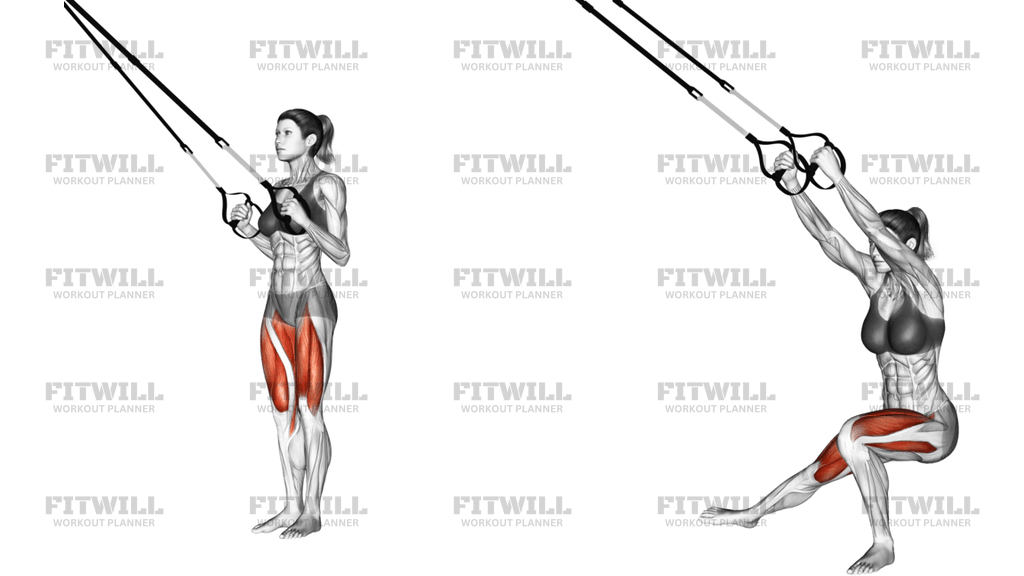
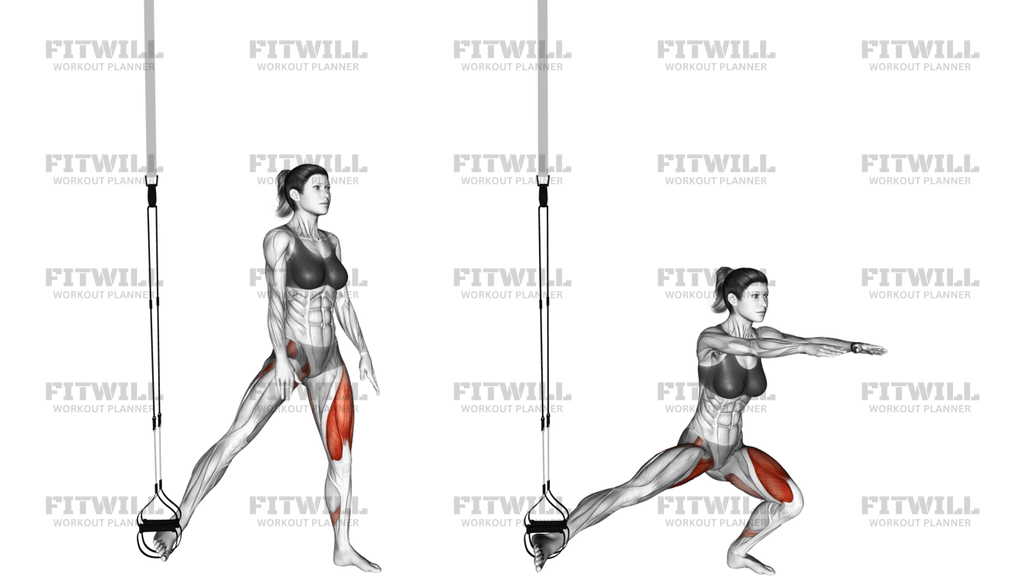
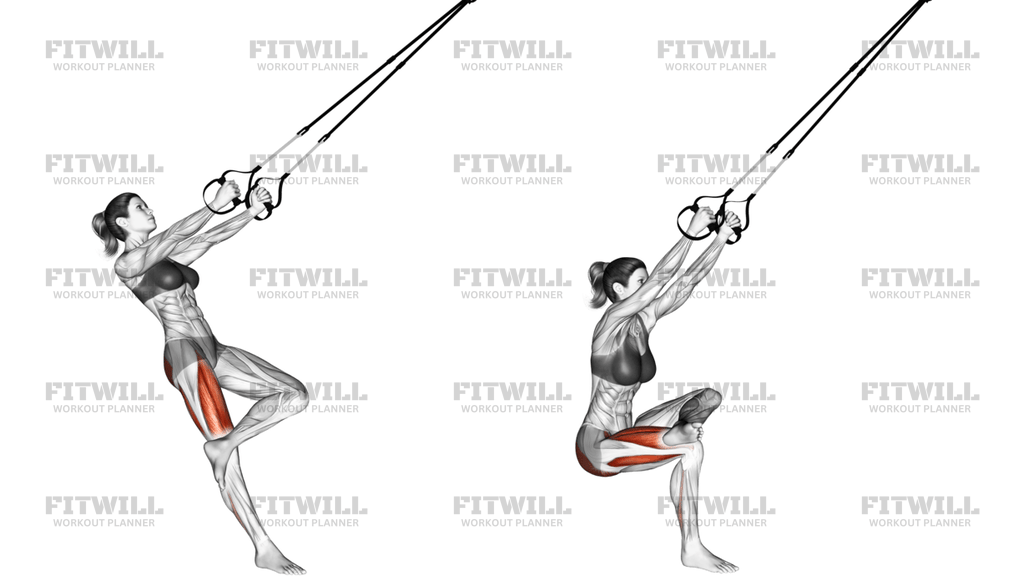
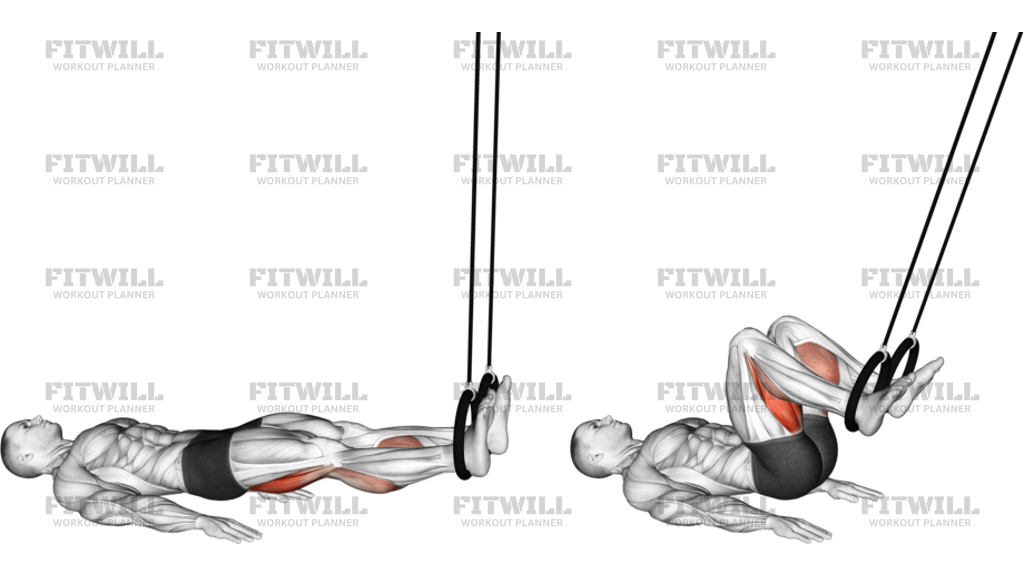
Suspender Squat Power Pull is a suspension-trainer movement that blends a loaded squat with a diagonal single-arm pull. It asks the legs, upper back, core, and shoulder to work together, so the exercise is as much about timing and body position as it is about strength. When the setup is right, each rep feels athletic and coordinated rather than rushed or unstable.
The lower body provides the main drive. The quads and glutes extend the hips and knees as you stand, while the lats, upper back, rear delts, and biceps help guide the handle down and back. The core and obliques keep the torso from twisting too far as the working arm pulls across a diagonal line, which is why this exercise is useful for coordination, unilateral control, and conditioning work.
Setup matters because the strap has to stay taut through the bottom of the squat and the standing phase. Face the anchor, hold one handle in the working hand, and step back far enough that the strap does not go slack when you sit down. Keep the chest lifted, the ribs stacked over the pelvis, and the free arm available for balance so the body can load into the squat without collapsing forward.
On the way up, drive through the feet first and let the pull happen at the same time as the stand. The handle should travel diagonally toward the lower ribs or side chest, not straight down or out to the side. A clean rep finishes tall with the shoulder down, the elbow back, and the torso controlled, then lowers back into the squat under tension instead of dropping quickly.
Suspender Squat Power Pull works well in warmups, accessory blocks, athletic conditioning circuits, or any session where you want lower-body power and upper-body pulling in one pattern. It is also a good way to challenge balance and trunk control without needing a heavy external load. Keep the movement smooth, repeatable, and pain-free, and stop the set if the strap starts jerking you off balance or the squat turns into a forward fold.
[ Workout Log & Planner ]
Put your next workout in Fitwill
Keep your plan and training log ready when you are.


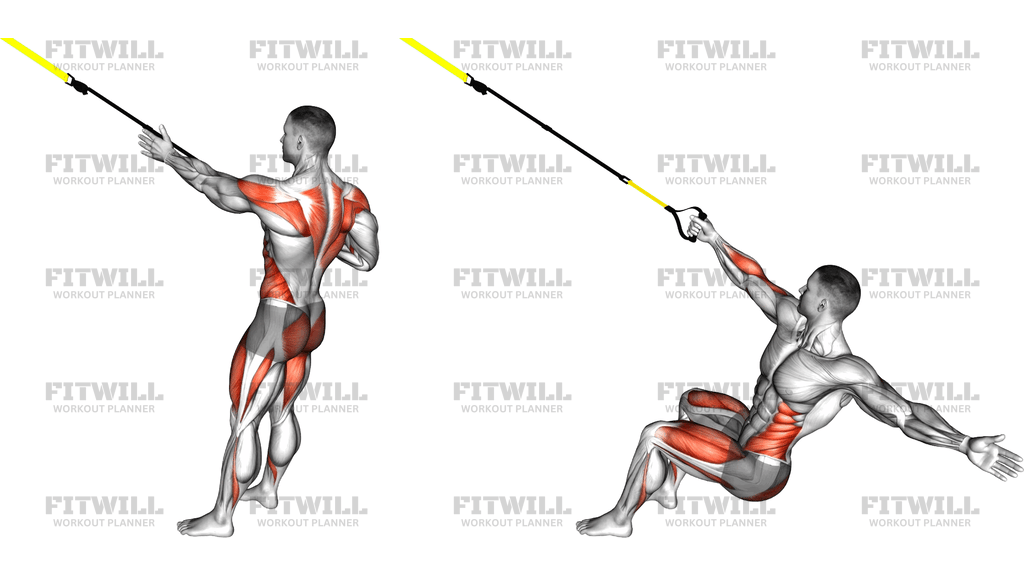
Instructions
- Clip the suspension strap overhead, grasp one handle with one hand, and step back until the strap is taut with your arm angled up toward the anchor.
- Stand facing the anchor with feet about shoulder-width apart, knees soft, and your free arm extended for balance.
- Sit your hips back and down into a deep squat while keeping your heels grounded and your chest lifted.
- Keep the working shoulder set down away from your ear and brace your core before you start to rise.
- Drive through both feet to stand up as you pull the handle diagonally down and back toward your lower ribs or side chest.
- Let the elbow travel behind your torso without shrugging the shoulder or overtwisting the hips.
- Finish tall with the glutes tight, the handle close to the side of your chest, and the strap still under control.
- Lower yourself back into the squat slowly while letting the arm extend, then reset your balance before the next rep.
- Complete the planned reps on one side, then switch hands and repeat on the other side.
Tips & Tricks
- Set the anchor high enough that the strap stays tight even when you sink into the bottom of the squat.
- If the handle goes slack at the bottom, step back a little farther before starting the set.
- Keep the pull diagonal toward the ribs; a straight row usually means the squat and pull are no longer synced.
- Let the legs start the rise first, then finish the rep with the arm and upper back.
- Keep the working shoulder packed down so the trap does not take over the pull.
- Use the free arm as a counterbalance instead of letting it swing across your body.
- If your heels lift, reduce squat depth before you try to add speed or load.
- Exhale as you stand and pull, then inhale as you sit back into the squat.
- Lower under control so the strap never yanks you forward at the bottom.
Frequently Asked Questions
What muscles does Suspender Squat Power Pull work?
It mainly trains the quads, glutes, lats, upper back, shoulders, and core. The legs drive the squat, while the pull adds back and arm work.
Is Suspender Squat Power Pull more of a lower-body or upper-body exercise?
It is both. The squat loads the legs and glutes, while the diagonal pull trains the back and arms through a coordinated finish.
Should my torso rotate during the pull?
A small amount of natural rotation is normal, but the hips and knees should stay controlled. If you are twisting hard, shorten the range and slow the rep down.
How deep should I squat in Suspender Squat Power Pull?
Go only as deep as you can keep the heels down, the strap taut, and the chest from folding forward. A slightly higher squat is better than losing control at the bottom.
Can beginners do Suspender Squat Power Pull?
Yes, but start with a shorter stance, slower reps, and a smaller squat. The balance challenge is the main limiter, not the strength demand.
What is the most common mistake in this exercise?
Most people stand first and then yank with the arm. The rep should rise and pull together so the legs, back, and core share the work.
What if the suspension strap feels jerky or unstable?
Step a little closer to the anchor or slow the tempo. The strap should stay under steady tension instead of snapping loose between phases.
Can I use this in a conditioning workout?
Yes. It fits well in athletic circuits because it trains standing power, pulling strength, and trunk control in one movement.
How many reps should I use for Suspender Squat Power Pull?
Use 6-10 reps per side for stronger, more powerful work, or 10-15 reps for conditioning as long as the strap stays smooth and controlled.