Suspension Inverted Row
The Suspension Inverted Row is a bodyweight pulling exercise performed with suspension straps and handles. It trains the upper back, lats, traps, rear shoulders, and biceps while also demanding core and glute tension to keep the body in a straight line. Because the load comes from your body angle, small changes in foot position and torso angle make a big difference in difficulty.
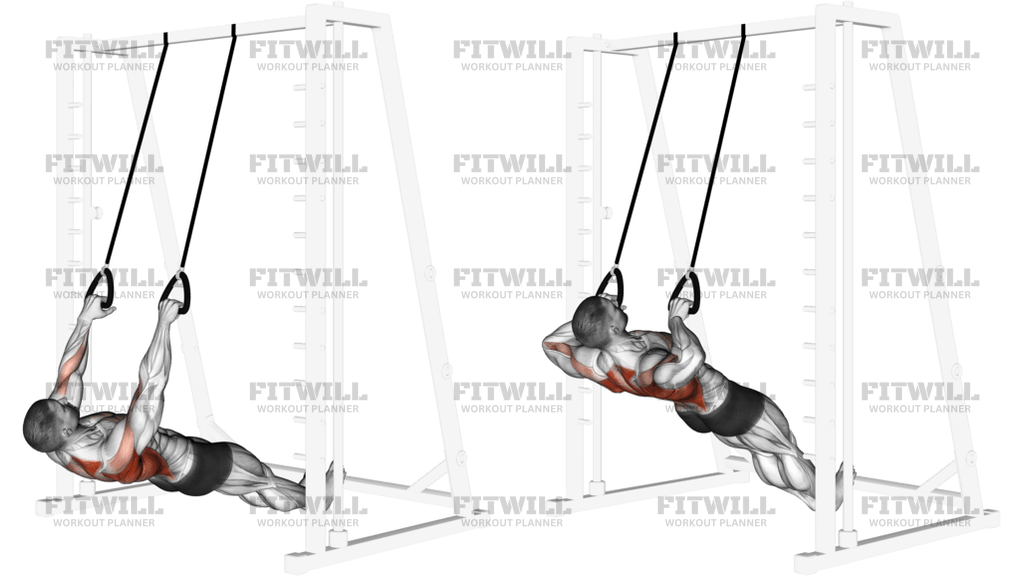
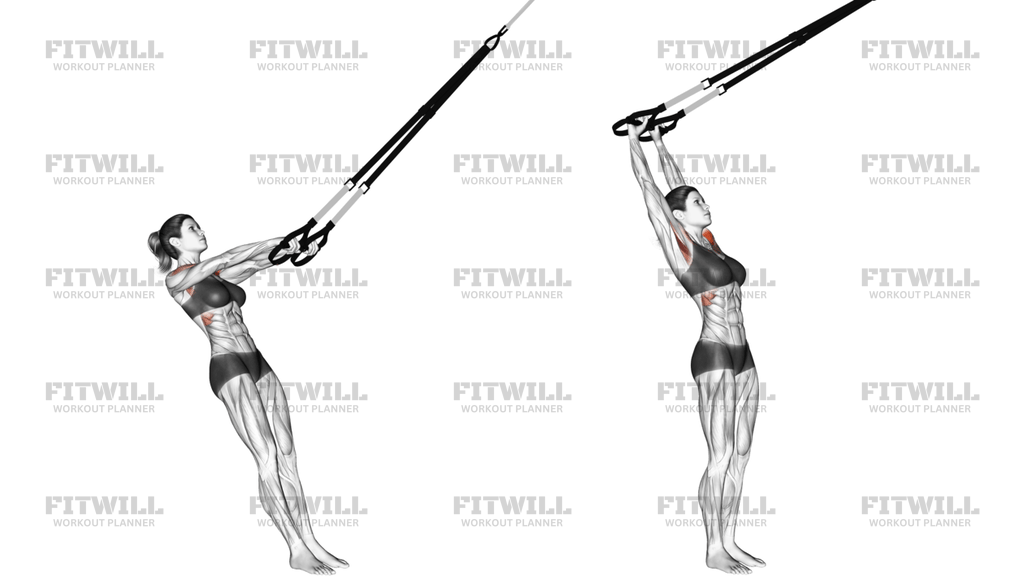
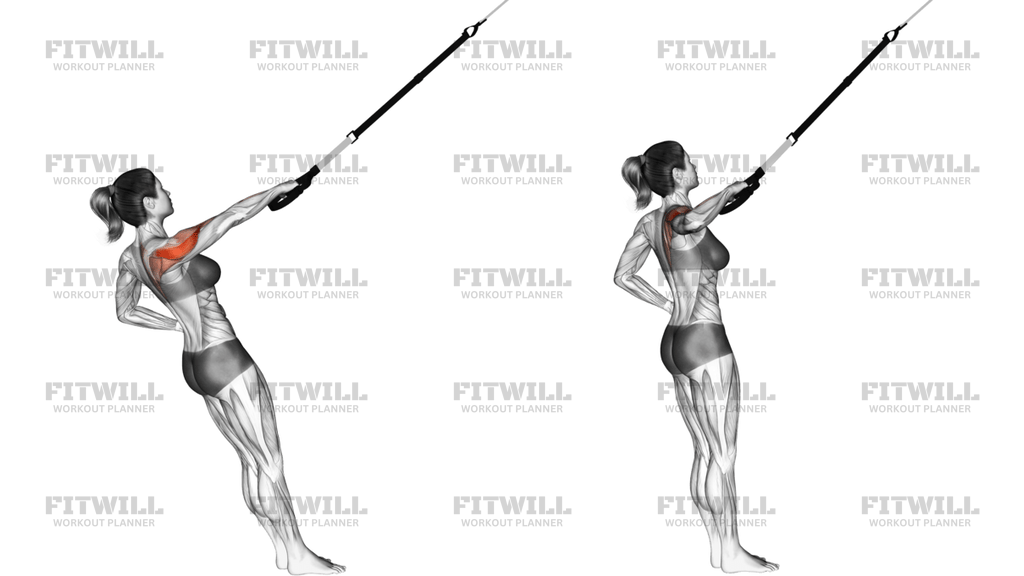
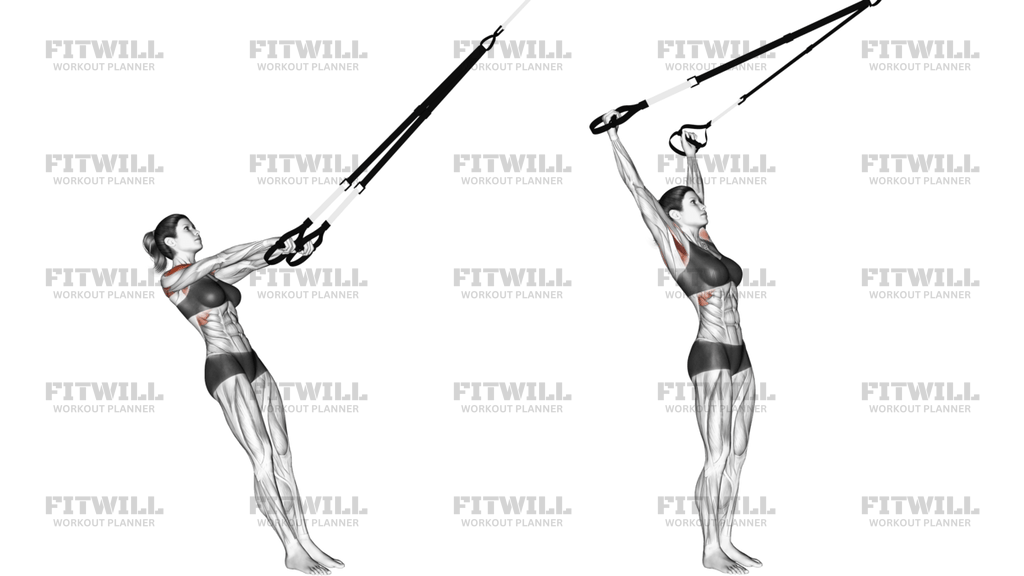
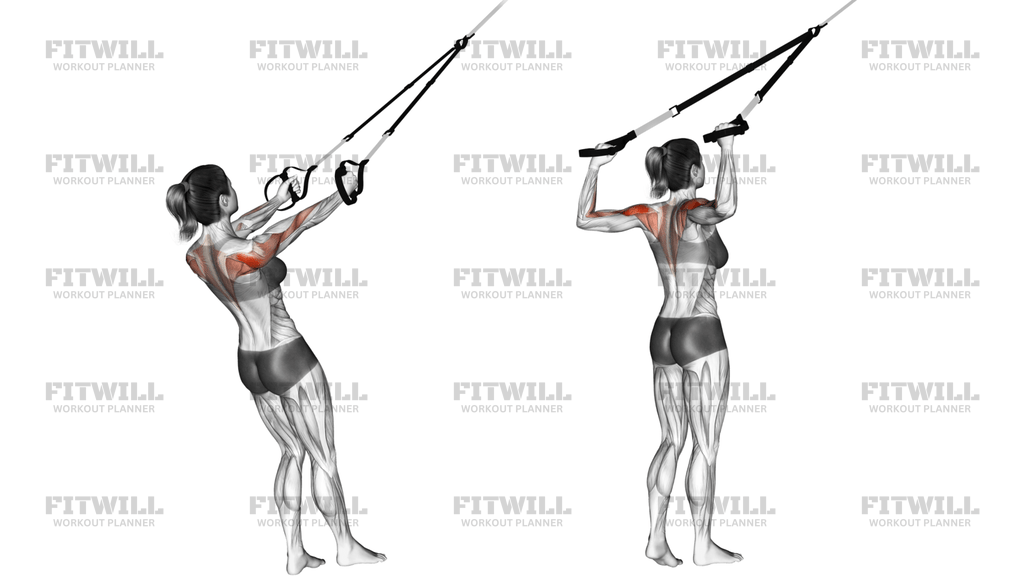
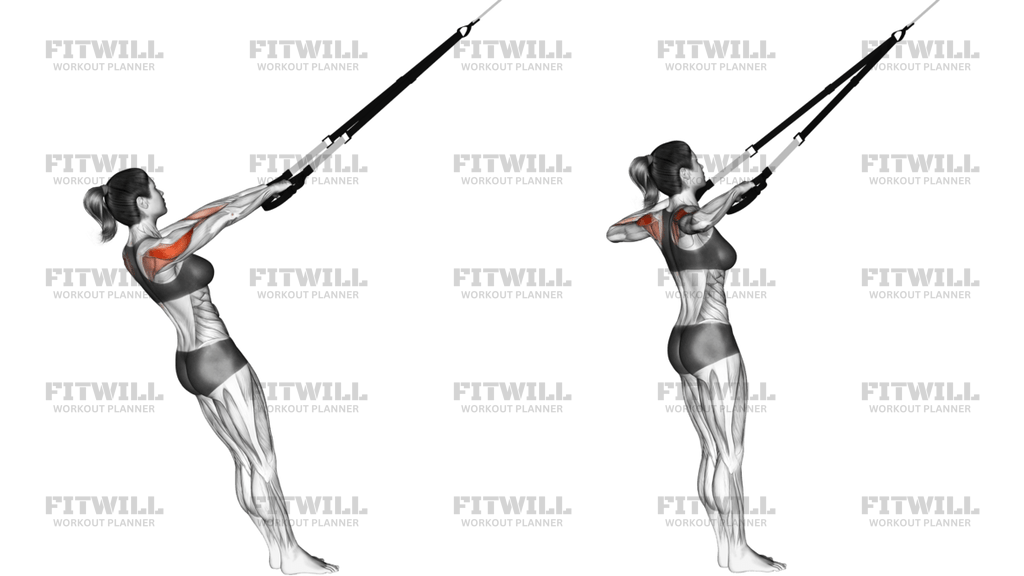
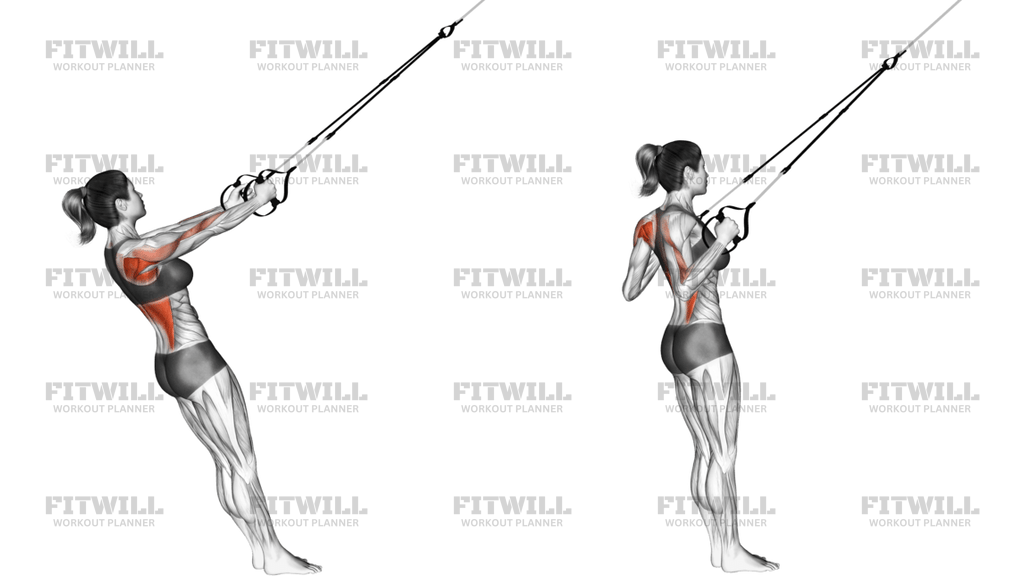
The image shows the row set up with the straps hanging overhead and the body held long from head to heels. That setup is the key to the exercise: the more you lean back, the harder the pull becomes, and the more you let the hips sag or the shoulders roll forward, the less useful the rep gets. A clean row starts with a rigid body, a proud chest, and the shoulder blades set before the elbows bend.
This movement is useful for building pulling strength without a barbell, especially when you want a joint-friendly option that still teaches scapular control. It is also a strong accessory for athletes and lifters who need better posture under load, stronger mid-back engagement, or more balanced pushing and pulling volume. Beginners can shorten the lever by standing more upright; advanced lifters can walk the feet farther forward and keep the body nearly horizontal.
Good reps should feel like you are pulling the handles toward the lower ribs while keeping the neck neutral and the ribs from flaring. The chest should rise to meet the hands rather than the chin jutting forward. Lower under control until the arms are straight and the shoulders are stretched without losing body position. If the straps wobble, the hips twist, or the feet slide, the angle is too aggressive or the set is too fatigued for clean work.
Fitwill
Log Workouts, Track Progress & Build Strength.
Achieve more with Fitwill: explore over 9600 exercises with images and videos, access built-in and custom workouts, perfect for both gym and home sessions, and see real results.
Start your journey. Download today!




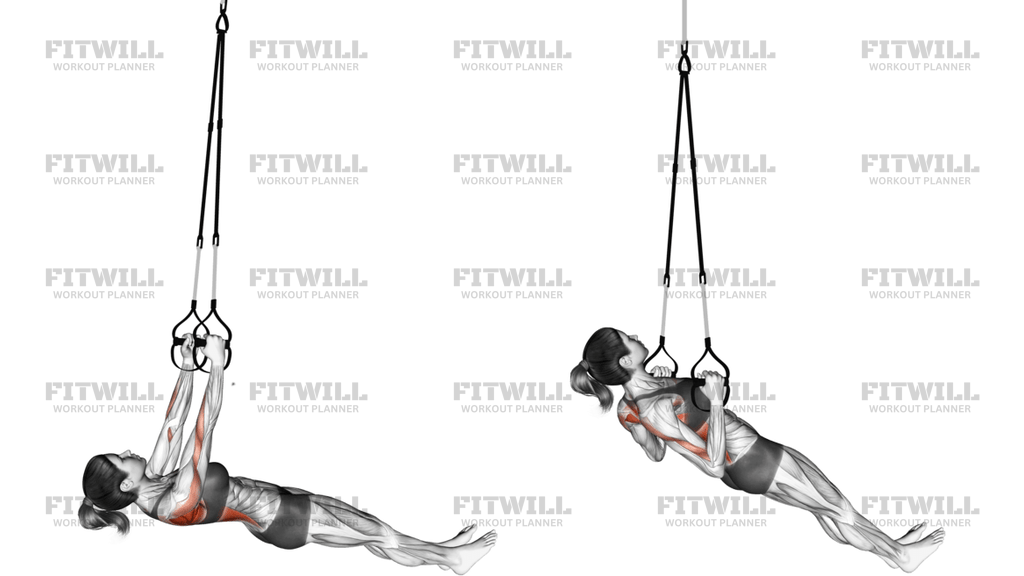
Instructions
- Set the suspension straps overhead and hold the handles with straight wrists.
- Walk your feet forward until your body is inclined back and your body forms a long straight line from head to heels.
- Plant your heels, squeeze your glutes, and brace your abs so your hips do not sag.
- Start with your arms straight and your shoulders set away from your ears.
- Pull the handles toward the lower ribs by driving the elbows back and opening the chest.
- Keep your torso rigid as the shoulder blades come together and the upper back finishes the pull.
- Pause briefly at the top without shrugging or overextending the lower back.
- Lower yourself under control until the arms are straight again and the shoulders stay organized.
- Inhale on the way down, exhale as you pull, and reset the body before the next rep.
Tips & Tricks
- Make the exercise harder by walking your feet farther forward, not by yanking harder with the arms.
- If your shoulders creep toward your ears, shorten the range slightly and finish with the shoulder blades, not the neck.
- Keep the ribs stacked over the pelvis; an arched low back usually means the core has stopped working.
- Think of pulling the handles to your pockets or lower ribs so the elbows track behind the torso.
- Let the straps stay quiet. Swinging or twisting usually means the rep is too fast or the angle is too steep.
- Use a grip that lets the wrists stay neutral and the forearms line up with the straps.
- Pause for a moment at the top if you want more upper-back work and less momentum.
- Stop the set when you can no longer keep the body in one straight line.
Frequently Asked Questions
What muscle does Suspension Inverted Row target most?
The main emphasis is on the upper back, especially the traps and rhomboids, with the lats and biceps helping finish the pull.
Can beginners perform this exercise?
Yes. Beginners can stand more upright and keep the body angle easier while they learn how to pull without shrugging or twisting.
How should my body be positioned in the suspension straps?
Keep a straight line from head to heels, squeeze the glutes, and brace the abs so the hips stay lifted instead of dropping.
Where should I pull the handles?
Pull them toward the lower ribs or upper waist. If the handles drift toward your face or shoulders, the pull is usually too high.
Should I pinch my shoulder blades together at the top?
Yes, but only while keeping the chest tall and the neck relaxed. Do not turn it into a shrug or overarch the back.
How do I make the row easier or harder?
Make it easier by standing more upright. Make it harder by walking the feet forward so your torso is closer to horizontal.
What is the most common mistake on this exercise?
Letting the hips sag or the body rotate as the pull gets hard. The whole rep should stay controlled and square to the straps.
Does this exercise help posture?
It can, because it strengthens the upper back and teaches the shoulder blades to move without collapsing forward.