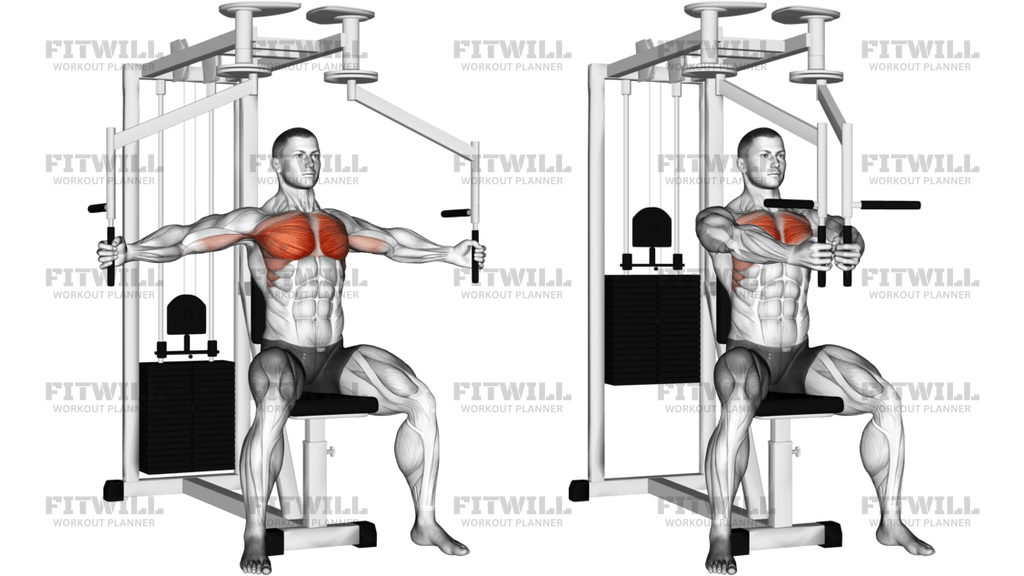
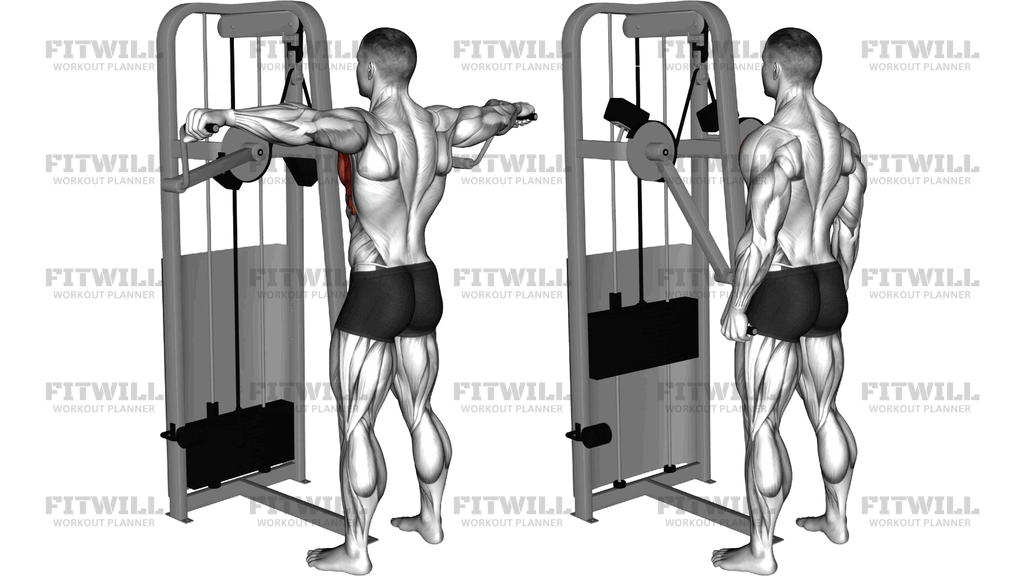
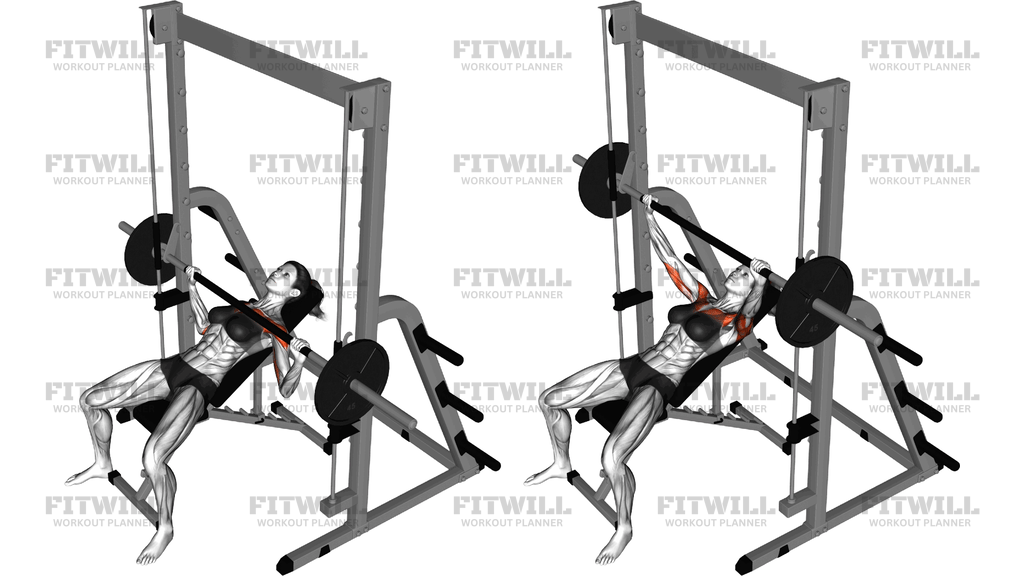
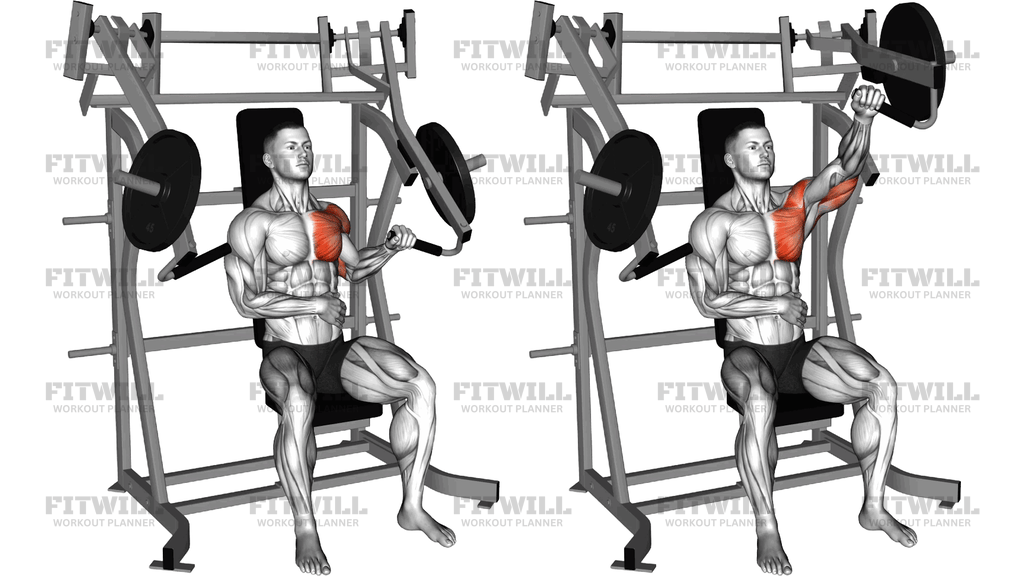
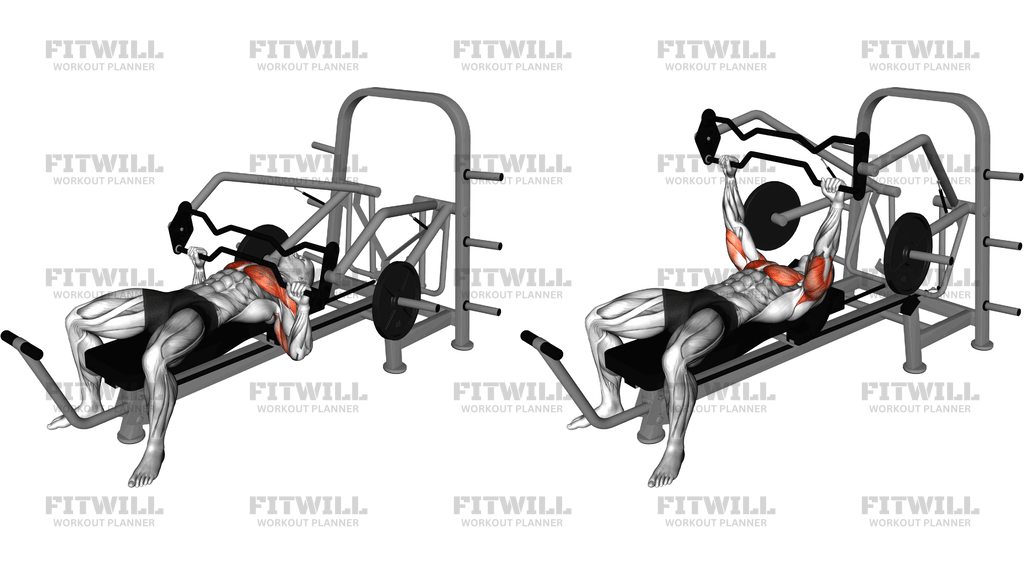
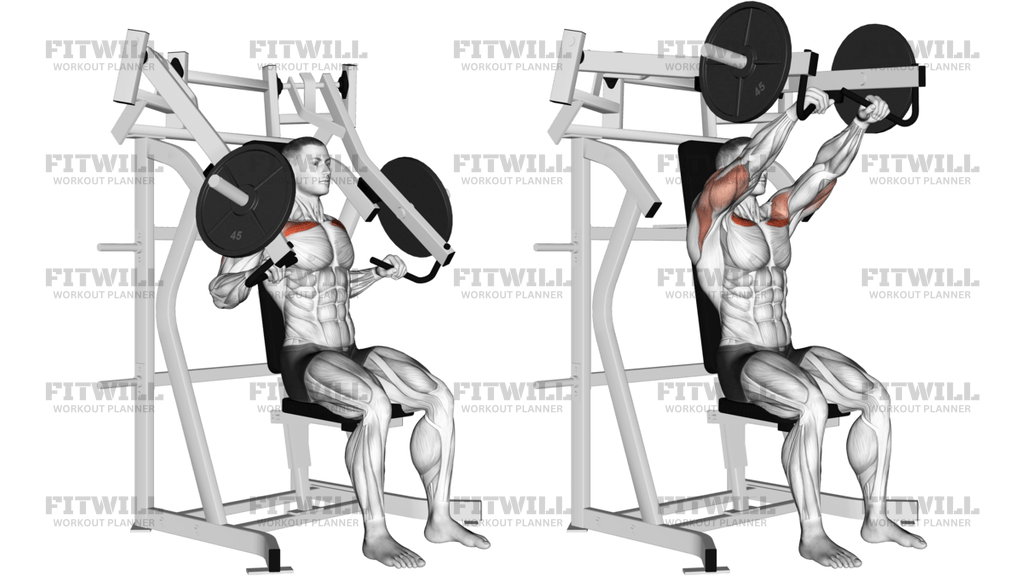
Lever Stack Seated Chest Press
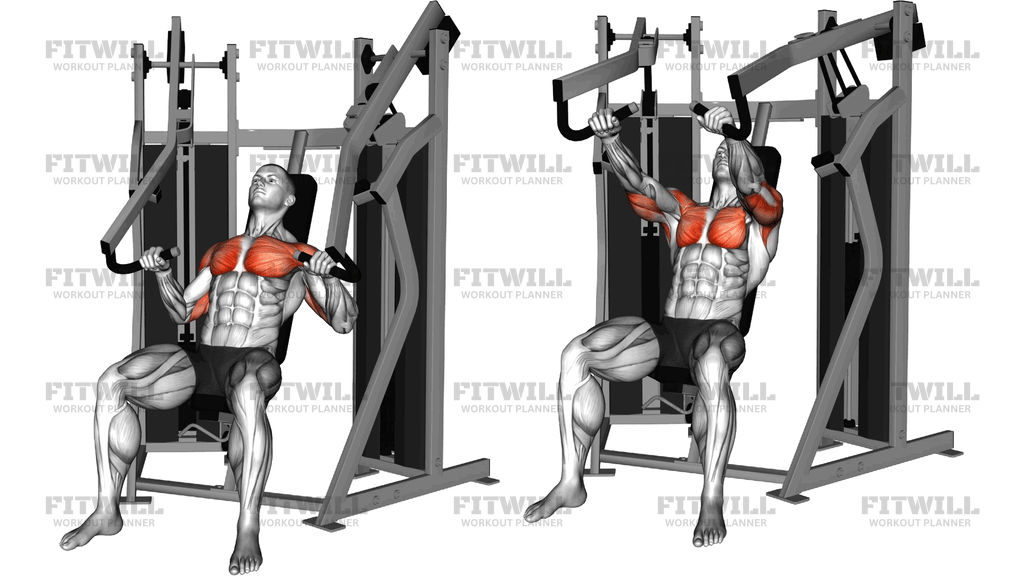
The Lever Stack Seated Chest Press is a machine-based pressing exercise performed on a plate-loaded leverage chest press station. You sit with your back braced against the vertical pad, grip the fixed handles at chest height, and press them up and away from your torso along a fixed lever path. Because the levers guide the handles, the movement stays consistent from rep to rep, which makes it easy to focus on how your chest is working rather than on stabilizing free weights.
This exercise primarily trains the pectorals, with the front delts and triceps assisting through the pressing arc. Compared with a barbell or dumbbell bench press, the leverage design removes much of the balance and stabilization demand, so the working muscles receive a more isolated stimulus. It is a good choice for lifters building their pressing strength base, people returning from time away from training, and anyone who wants solid chest volume without needing a spotter.
Setup matters more than most people assume. The seat height determines where the handles track relative to your chest, and that position decides whether the press feels smooth on your shoulders or cramped at the bottom. Adjust the seat so the handles sit roughly at mid-chest level with your back flat on the pad and your feet planted. If the handles start too high, the front delts take over; too low, and your shoulders drift into an uncomfortable stretch.
Execution is straightforward: grip the handles firmly, brace your torso against the pad, press the levers forward and slightly upward until your arms are extended without locking hard, then lower under control until your elbows are just behind your torso. Keep the movement smooth at both ends. Letting the weight stack crash down between reps or bouncing out of the stretched position are the two most common faults, and both waste the benefit of the machine's controlled path.
In practice, this movement slots in well as a primary chest lift on machine-heavy days, as a secondary press after free-weight work, or as a finisher where you can push close to fatigue safely. Because the levers support the load throughout, you can train to a challenging effort level without a partner, which is why it appears so often in commercial gym programs and rehab-adjacent training plans alike.
Fitwill
Log Workouts, Track Progress & Build Strength.
Achieve more with Fitwill: explore over 9600 exercises with images and videos, access built-in and custom workouts, perfect for both gym and home sessions, and see real results.
Start your journey. Download today!




Instructions
- Adjust the seat so that when you sit down, the machine's handles line up roughly with your mid-chest and your back rests flat against the vertical pad.
- Sit with your hips back on the seat, feet flat on the floor about hip-width apart, and select your weight on the plate stack.
- Grip the handles with a neutral to slightly angled palm position and pull your shoulder blades gently back and down into the pad.
- Brace your core lightly and keep your head, upper back, and hips in contact with the machine throughout the set.
- Press the handles forward and slightly upward, extending your elbows until your arms are nearly straight but not locked hard.
- Pause briefly at full extension and squeeze your chest without shrugging your shoulders toward your ears.
- Lower the handles slowly back toward your chest, stopping when your elbows are slightly behind your torso.
- Exhale as you press and inhale as you lower, keeping your breathing steady rather than holding it.
- Complete your reps, let the stack settle fully, then stand up carefully before changing the load or seat height.
Tips & Tricks
- If your shoulders roll forward at the start of the press, the seat is likely too high; drop it slightly so the handles track from mid-chest.
- Do not let your elbows flare out to a straight line with your shoulders at the bottom — keeping them a little lower protects the shoulder joint and lines up the pecs better.
- Avoid pressing with your hips sliding forward off the seat; driving through the handles, not your legs, is what trains the chest here.
- A common mistake is half-repping on the way back because the stretch feels awkward — control the last few inches before the handles return, that is where much of the chest work happens.
- Keep a small bend in your elbows at the top; snapping into a full lockout shifts tension to the joints and away from the pressing muscles.
- Set the pin so you get your target reps on the first attempt rather than guessing heavy — the fixed lever path offers no bail-out like a barbell does.
- If one side presses ahead of the other, slow the tempo down so the weaker arm dictates the speed of both levers.
- Wrist position matters: keep your knuckles aligned with your forearms instead of letting the wrists bend back under load.
- Use this press as your main lift when fatigued or training alone, and save free-weight pressing for days when you have more energy or a spotter.
Frequently Asked Questions
What muscles does the Lever Stack Seated Chest Press work?
The pectorals do most of the work, with the front delts and triceps assisting through the press. The fixed lever path keeps the emphasis on the chest rather than on stabilizing muscles.
How high should the seat be on the Lever Stack Seated Chest Press?
Set it so the handles start around mid-chest height when your back is flat on the pad. If the handles line up with your collarbones or shoulders, the front delts take over and the chest loses emphasis.
Is the Lever Stack Seated Chest Press good for beginners?
Yes. The guided lever path removes the balance demands of free weights, so beginners can learn what a chest press should feel like and build pressing strength safely without a spotter.
How is the Lever Stack Seated Chest Press different from a bench press?
The levers fix the arc of the press, so you cannot drift or compensate the way you can with a barbell. You trade some stabilizer involvement for a more consistent, isolated chest stimulus.
Should I let the weight stack touch down between reps?
No. Lowering until the stack settles fully removes tension from your chest and encourages bouncing. Stop the descent just before the plates meet and press back out under control.
What is the most common mistake on this machine?
Slouching or letting the lower back arch off the pad while pressing heavy. Keep your torso braced against the pad and let the chest and arms do the work instead of leaning into it.
Can I use the Lever Stack Seated Chest Press if one side is weaker than the other?
You can, though most leverage press machines move both levers together. Slowing the tempo helps, and pairing it with single-arm dumbbell pressing can address a noticeable imbalance over time.
What can I substitute if my gym has no leverage chest press?
A pin-loaded seated chest press machine, a dumbbell bench press on a flat bench, or a cable chest press from a seated position all train the same pattern with a similar chest emphasis.
How deep should I lower the handles?
Lower until your elbows are slightly behind your torso and you feel a stretch across the chest, but stop before your shoulders pinch or shift forward. Comfortable depth with control beats forcing extra range.