Lever Standing Pec Fly
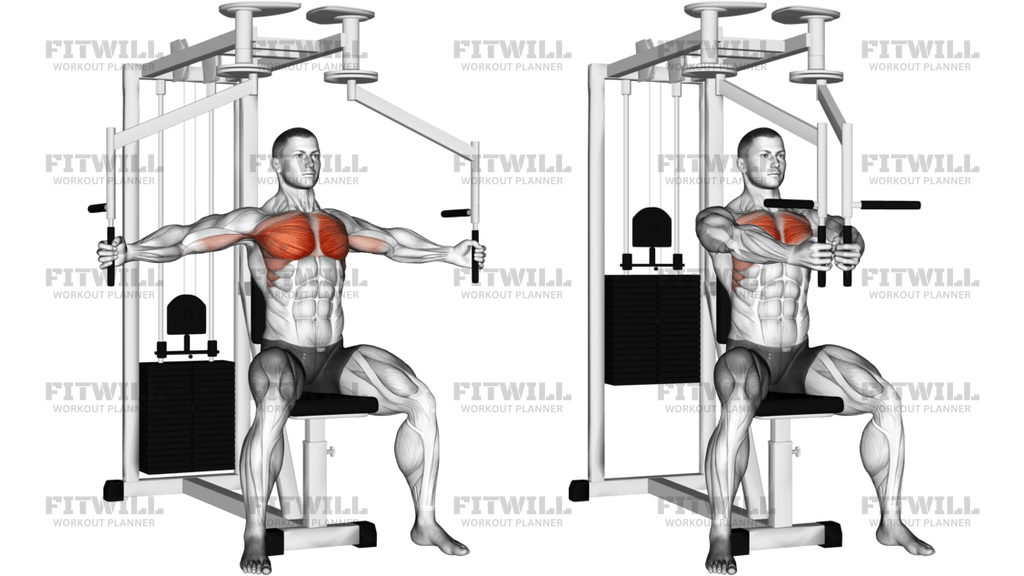
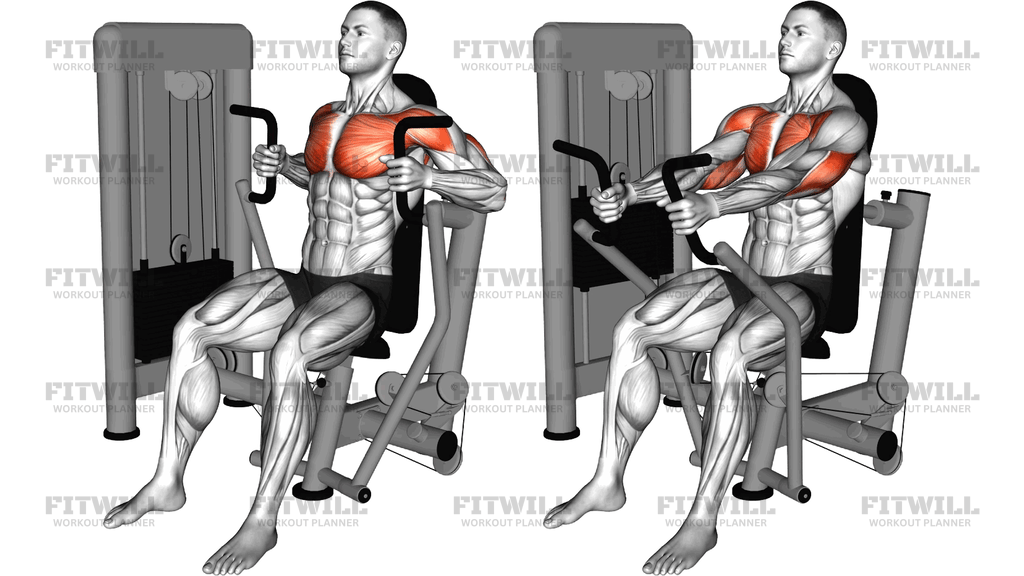
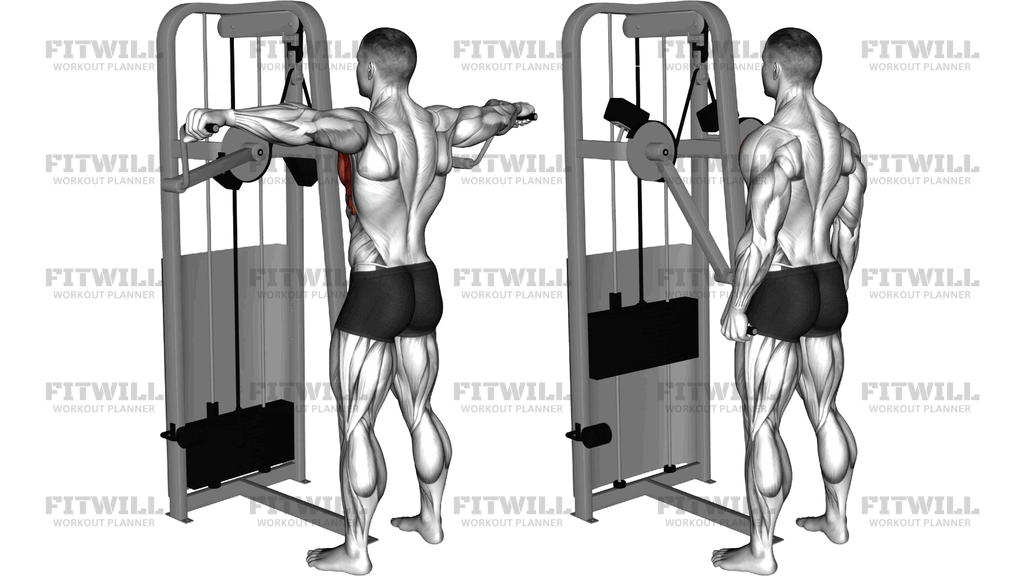
The Lever Standing Pec Fly is a machine-based chest isolation exercise performed on a standing leverage fly station. You face the machine, grip the two handles at roughly shoulder height with your arms open wide, and sweep them down and together in a wide arc until your hands meet in front of your thighs. Because the resistance travels on fixed lever arms, the movement stays stable and consistent from rep to rep, which makes it easier to focus purely on squeezing the chest rather than balancing a weight.
This exercise is a good fit for lifters who want targeted chest work without the stabilization demands of dumbbell flyes. Beginners appreciate the guided path and the simple weight stack adjustment, while more experienced trainees use it as a finisher to fatigue the chest after presses, or as a way to train one side at a time when a machine allows it. It is also popular in physique-focused training because the stretch at the open position and the hard squeeze at the bottom create a strong, easy-to-feel contraction through the pectorals.
The primary muscles worked are the pectorals, with the sternal head of the chest doing most of the work as the arms travel downward and inward. The front delts assist throughout the arc, and the grip, forearms, and core work lightly to hold your position as you press against the levers. Compared with a bench fly, the standing position and downward arm path shift some emphasis toward the lower and mid chest fibers, similar to a decline fly pattern.
Setup matters more than people expect on this machine. The handle height should align close to shoulder level, and your feet should be far enough from the machine that the levers do not scrape your body at the finish. Stand tall with a slight forward lean from the hips, a braced torso, and soft elbows. If you stand too close, the arc shortens and your shoulders round forward; if you stand too far, the levers pull you onto your toes and strain the front of the shoulders.
To execute it well, start with the handles out wide and slightly behind the line of your shoulders, then drive them forward and down in a smooth circular path, as if wrapping your arms around a large barrel. Finish with your hands together near your thighs, pause for a beat to feel the chest contract, and let the arms travel back out under control until you feel a stretch across the pecs. Avoid turning it into a press by bending the elbows excessively or into a front raise by shrugging the handles down with the upper traps.
Because the levers follow a fixed path, most safety concerns come from loading too heavy too soon. A weight you cannot slow down on the return will yank the shoulders into the stretched position, which is where strains tend to happen. Start moderate, keep the movement smooth in both directions, and progress the load only when you can pause at the bottom of every rep without momentum.
[ Workout Log & Planner ]
Put your next workout in Fitwill
Keep your plan and training log ready when you are.


Instructions
- Stand facing the leverage machine with a handle in each hand and your feet about hip-width apart, positioned so the levers can complete their arc without touching your legs.
- Set the handles at or slightly below shoulder height and take a neutral grip with your palms facing inward, elbows slightly bent and pointing outward.
- Stagger your stance slightly if it helps you lean in, then brace your core and keep your chest up and shoulder blades gently pulled down.
- Begin with your arms open wide and roughly in line with or slightly behind your shoulders, feeling a light stretch across the chest.
- Exhale and sweep both handles forward and down in a wide circular arc, as if hugging a large barrel, keeping the elbow bend constant.
- Bring your hands together in front of your thighs and squeeze your chest hard at the bottom for a one-count pause.
- Inhale as you slowly let the levers carry your arms back up and out to the wide starting position, resisting the weight rather than dropping into the stretch.
- Stop the return just before the weights or levers settle, keeping tension in the pecs, then begin the next rep.
- Complete your set, release one handle at a time in a controlled manner, and let the lever arms settle fully before stepping away from the machine.
Tips & Tricks
- If your shoulders roll forward at the finish, you are standing too close to the machine; step back a few inches so the levers can travel their full arc in front of you.
- Keep the elbow bend fixed at roughly 15 to 20 degrees for the whole set. Straightening the arms turns it into a leverage struggle, and bending them further turns it into a press.
- Do not let the handles drift behind your shoulders at the start. Going too deep into the stretch with a heavy load is the most common way lifters aggravate the front of the shoulder on this machine.
- Lead the downward arc with your elbows, not your hands. Thinking about drawing the elbows down and in keeps the pecs doing the work instead of the biceps and front delts.
- If your upper traps take over and creep toward your ears, lighten the load and consciously press your shoulder blades down before each rep.
- Because the levers keep the resistance constant, there is no resting point at the top. Use lighter weight than you would for presses and aim for smooth, even tempo in both directions.
- Avoid bouncing out of the stretched position. Pause for a half second at the open end of each rep to protect the shoulder and improve your control of the eccentric.
- If one handle consistently arrives before the other, slow the reps down and check that your stance is centered; a twisted stance often hides a side-to-side strength difference.
- Grip the handles firmly but not white-knuckled. Over-squeezing the grips recruits the forearms and can pull your wrists into an awkward angle as the arms come together.
Frequently Asked Questions
What muscles does the Lever Standing Pec Fly work?
The pectorals are the primary movers, especially the lower and mid chest fibers as the arms sweep down and together. The front delts assist, and the forearms and core work to hold your standing position.
Is the Lever Standing Pec Fly good for beginners?
Yes, it is one of the more beginner-friendly chest fly variations because the lever arms fix the path of motion and there is no balance requirement. Start with a light weight to learn the arc before adding load.
How should I stand when using the Lever Standing Pec Fly?
Face the machine with feet hip-width apart, handles at about shoulder height, and enough distance from the pad that the levers finish their arc in front of your thighs without contact. A slight forward lean with a braced torso keeps the shoulders in a safe position.
Why do my shoulders hurt at the start of each rep?
You are likely extending your arms too far behind your shoulders or using too much weight, which stresses the front of the shoulder in the stretched position. Shorten the range slightly and reduce the load until the movement feels smooth.
Can I replace dumbbell flyes with the Lever Standing Pec Fly?
For most chest training purposes, yes. The machine version removes the stabilization demand and keeps constant tension, though it will not build the same stabilizer strength as free-weight flyes.
How is the Lever Standing Pec Fly different from a seated pec deck?
The standing version moves the arms through a taller, downward arc that shifts more emphasis to the lower and mid chest, while a seated pec deck typically works the arms horizontally at chest level. The standing position also requires more trunk stability.
Where should the handles start and finish on each rep?
Start with the handles out wide at roughly shoulder height or slightly behind the shoulder line, and finish with your hands together in front of your thighs. Pausing at the bottom helps you feel the chest contract fully.
Should my elbows stay bent during the Lever Standing Pec Fly?
Yes, keep a slight, constant bend of about 15 to 20 degrees throughout the arc. If the elbow angle changes, the exercise drifts toward either a press or a straight-arm strain on the elbow joints.
How many sets and reps should I do?
It works well as an accessory or finisher, typically 2 to 4 sets of 10 to 15 reps with a controlled tempo. Because the levers provide no resting point, moderate loads with strict form beat heavy weights here.