Kettlebell Squat
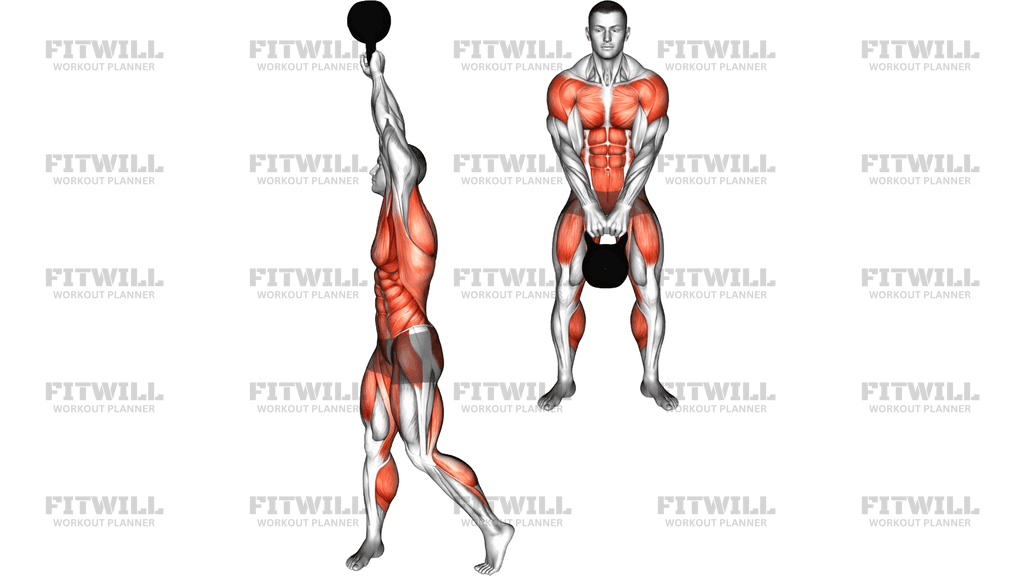
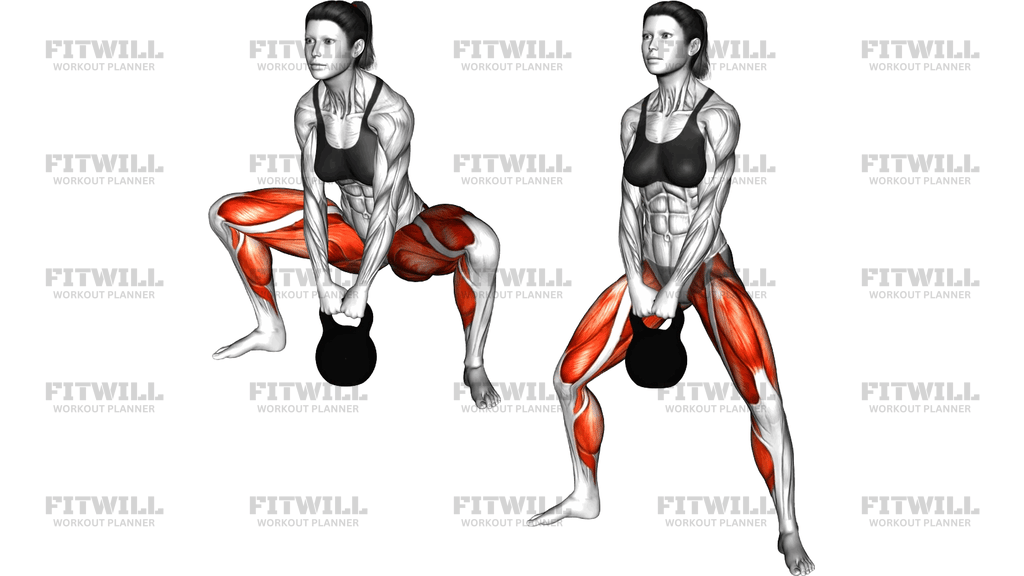
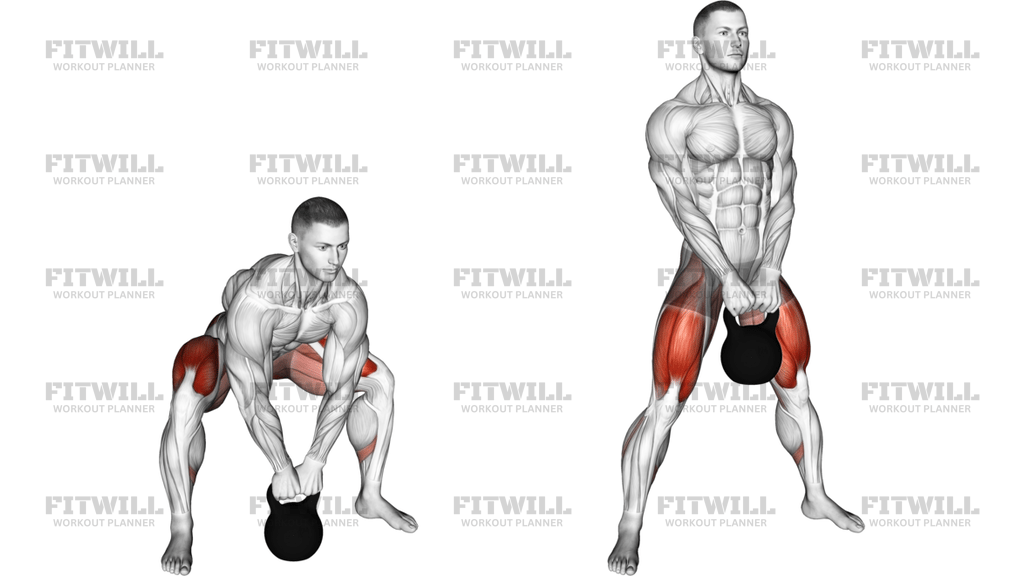
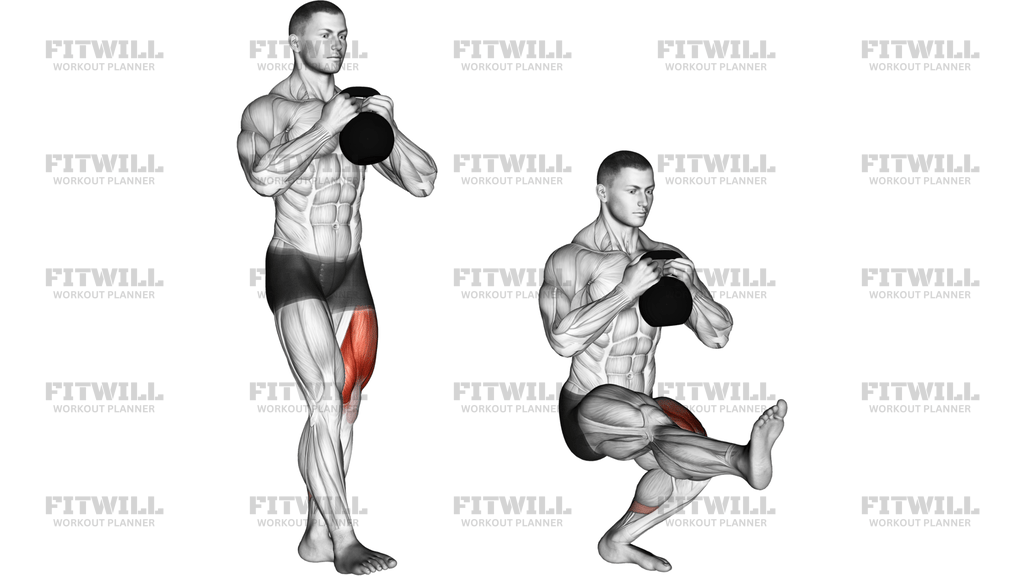
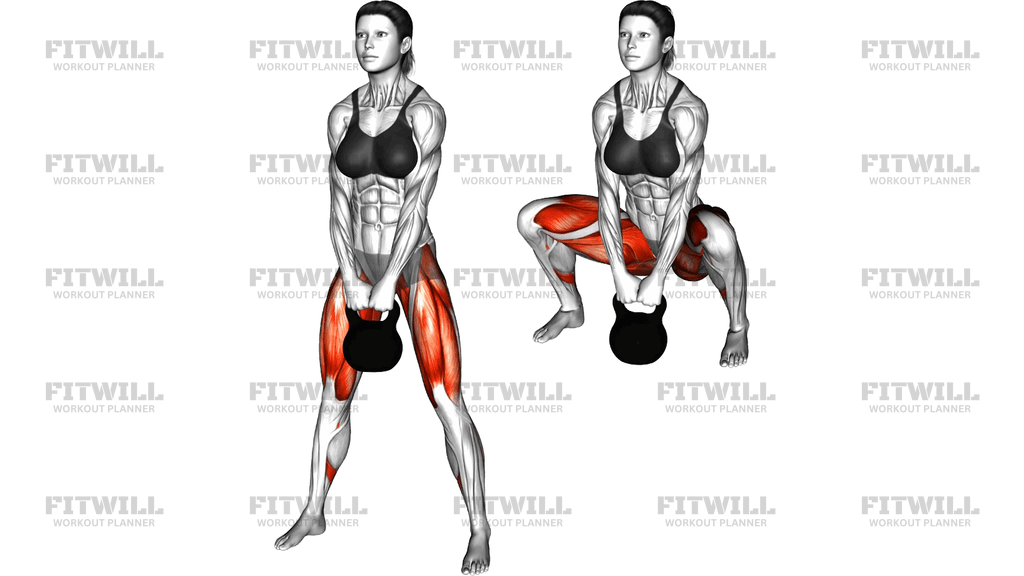
The Kettlebell Squat is a loaded lower-body squat performed with one or two kettlebells held at your sides by the handles, arms hanging straight down. This dead-bell position keeps the weight low and close to your hips, which makes the movement feel more natural than a barbell squat while still providing meaningful resistance. As you descend, the kettlebells track down alongside your legs and stay clear of your knees, so your torso can stay tall and your hips can sit back and down between your feet.
This exercise is a strong choice for beginners learning the squat pattern because the front-to-back loading is forgiving and self-balancing, and it also works well for experienced lifters who want higher-rep leg work without spinal compression from a bar. Because you hold the weight in your hands rather than on your back or shoulders, your grip and upper back get quiet but constant work through every rep, which many lifters notice first when the sets get long.
The primary work comes from the quadriceps as they extend your knees, with the glutes and hamstrings driving your hips back on the way down and finishing the ascent with a strong lockout. Your core braces continuously to keep your chest up under load, and the calves and ankle stabilizers keep you balanced over mid-foot through the whole range. The highlighted musculature in this movement sits across the thighs and glutes, which is exactly where you should feel the effort.
Setup matters more than most people expect. Your stance width and foot angle determine whether your knees track cleanly and whether you reach a comfortable depth, so take a moment to plant your feet before you pick the bells up. Keep the shoulders packed down rather than letting the kettlebells drag your chest forward and round your upper back. The kettlebells should hang like plumb weights, not swing forward or drift behind you.
To execute well, break at the hips and knees together, sit down between your legs rather than folding over them, and descend until your thighs are at least parallel or as deep as your mobility comfortably allows with a flat back. Drive the floor away through your whole foot to stand, squeezing your glutes at the top without leaning back. Exhale on the way up, keep the movement smooth, and reset your brace before each rep rather than grinding through sloppy ones.
In practice, this squat fits warm-up ramp-ups, home leg sessions, conditioning circuits, and accessory work after heavier barbell lifts. Common-sense safety points: start with a weight you can control for ten or more clean reps, stop the set if your lower back starts rounding at the bottom, and step the kettlebells down deliberately rather than dropping them when you finish.
[ Workout Log & Planner ]
Put your next workout in Fitwill
Keep your plan and training log ready when you are.


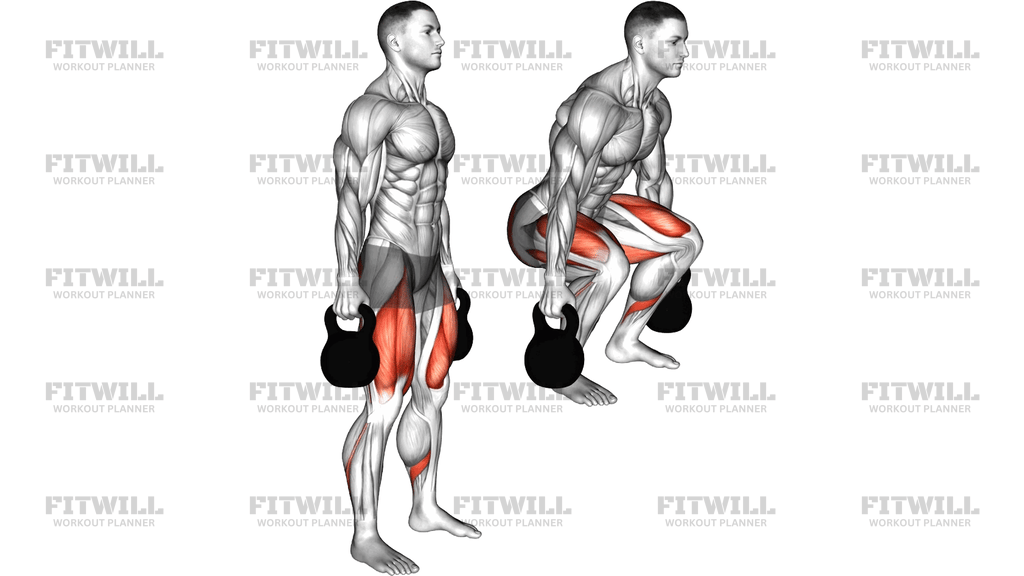
Instructions
- Place a kettlebell on the floor outside each foot, then set your stance about shoulder-width apart with toes turned out slightly.
- Hinge down, grip each kettlebell handle with a straight arm, and stand tall so the bells hang at your sides outside your thighs.
- Pull your shoulders back and down, lift your chest, and look at a point on the floor a few feet ahead of you.
- Brace your core as if bracing for a light punch, and shift your weight evenly across both feet with pressure on mid-foot.
- Push your hips back and bend your knees at the same time, letting the kettlebells slide down just outside your legs.
- Descend until your thighs reach parallel or slightly below, keeping your heels down and your knees tracking over your toes.
- Drive through your whole foot to stand, pushing the floor away and keeping your chest up as your hips and knees extend together.
- Squeeze your glutes at the top to a full stand, but do not lean back or hyperextend your lower back.
- Exhale as you rise, then inhale and re-brace at the top before starting the next rep.
- When the set is done, hinge at the hips and set both kettlebells on the floor together with control.
Tips & Tricks
- If the kettlebells swing forward as you descend, you are bending your knees first and letting the weight pull you; break at the hips at the same time so the bells stay close to your legs.
- Rounding in the upper back usually comes from letting the bells drag your shoulders down and forward. Keep your lats engaged and think about pressing the handles slightly outward against your thighs.
- If your heels lift at the bottom, your stance may be too narrow or your ankles too stiff. Widen your feet a little or place a small heel wedge under your heels while you build ankle mobility.
- Knees caving inward is a common failure point in this setup; cue yourself to spread the floor with your feet so your knees track over your second toes.
- Choose a bell size you can hold for the full set. If your grip fails before your legs, the load is too heavy for this variation.
- Do not rush the bottom. A brief pause at depth turns off the stretch rebound and forces the quads and glutes to do the lifting.
- Keep your head neutral. Craning your chin up at the bottom often coincides with the chest dropping and the lower back rounding.
- Set the kettlebells down by hinging, not by bending over with a rounded back. Most sloppy reps at the end of a set happen during the put-down, not the squat itself.
Frequently Asked Questions
What muscles does the Kettlebell Squat work?
The quadriceps do most of the work extending your knees, with strong contribution from the glutes and hamstrings on the way up. Your core, grip, and upper back also work isometrically to hold the kettlebells steady at your sides.
Is the Kettlebell Squat good for beginners?
Yes. Holding the weight at your sides keeps the load low and centered, which makes balance easier and lets beginners learn the squat pattern without a bar pressing on their spine or shoulders.
Why hold the kettlebells at my sides instead of at my chest?
The sides-held position shifts less demand to the upper back and shoulders than a goblet hold, so your legs become the limiting factor. It also lets you hang heavier bells for the same effort.
How deep should I squat with kettlebells at my sides?
Aim for thighs at parallel or slightly below as long as your back stays flat and your heels stay down. If your lower back rounds at the bottom, shorten the range and work on hip and ankle mobility before adding depth.
My grip gives out before my legs feel worked. What should I do?
Lighten the load, use a single heavier kettlebell held in both hands in front of you as a temporary substitute, or add direct grip work separately. Grip failing early is common in this variation and improves with practice.
Can I use just one kettlebell for the Kettlebell Squat?
Yes, holding one bell at your side works, but the uneven load challenges your core to resist side-bending. Keep the weight lighter at first and swap sides each set for balanced development.
How is the Kettlebell Squat different from a barbell back squat?
The kettlebell position places the load low and in front of your hips, which encourages a more upright torso and puts less compression on the spine. It generally allows heavier leg work with less setup and equipment.
How should I breathe during this exercise?
Inhale and brace your core at the top, hold that brace as you descend, and exhale steadily as you drive up. Re-brace at the top of every rep rather than holding your breath through multiple squats.
Is it safe to do Kettlebell Squats if my knees click or feel stiff?
Mild clicking without pain is usually harmless, but warm up thoroughly, control the tempo, and stay in a depth that feels comfortable. If you feel sharp pain, stop and have the movement reviewed by a qualified professional.