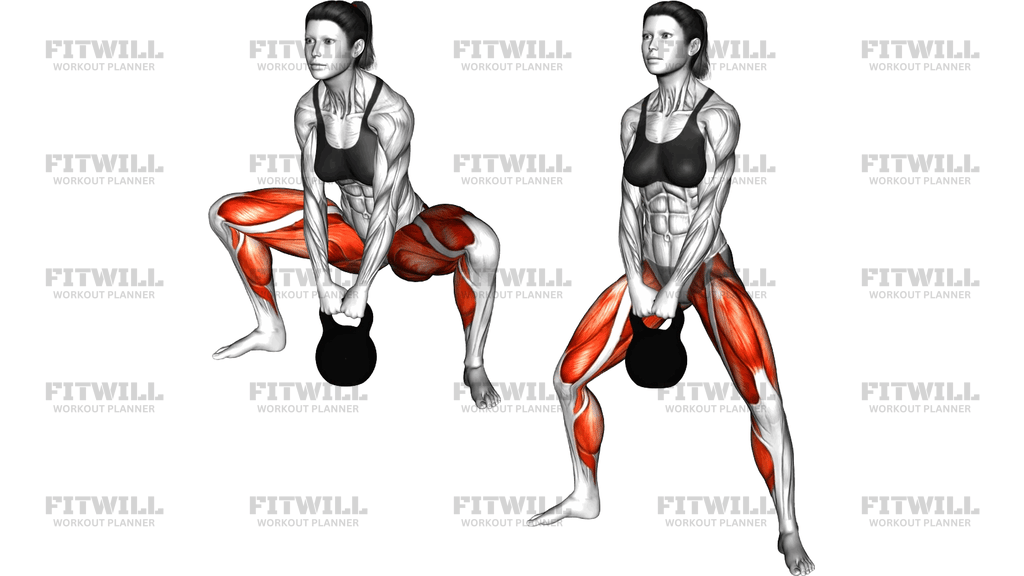
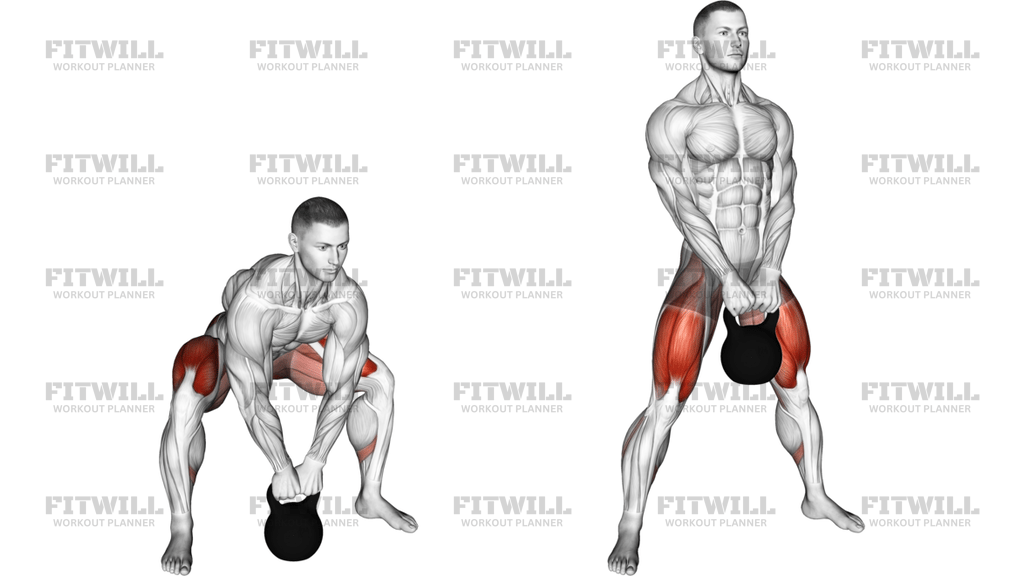
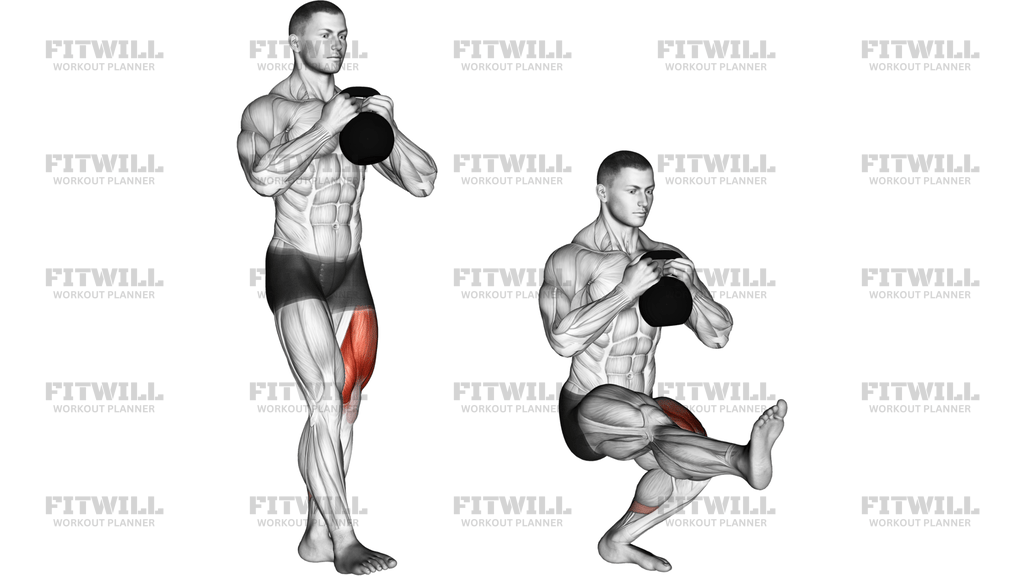
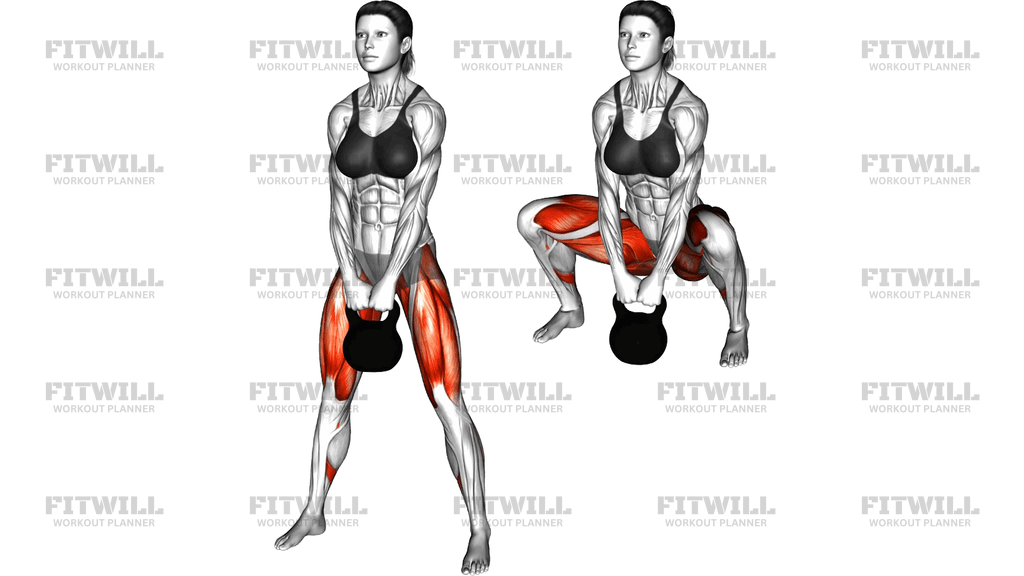
Kettlebell Back Squat
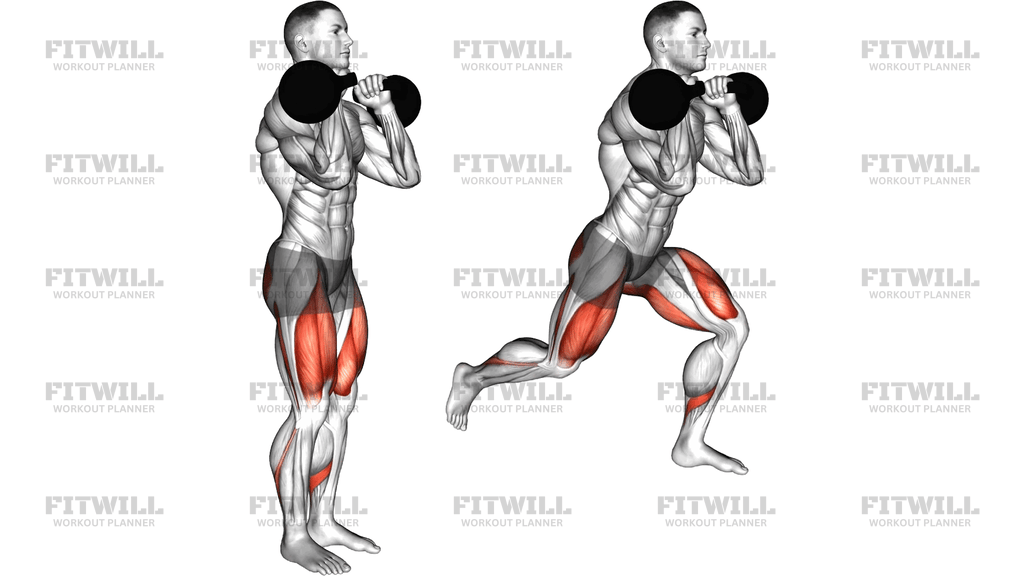
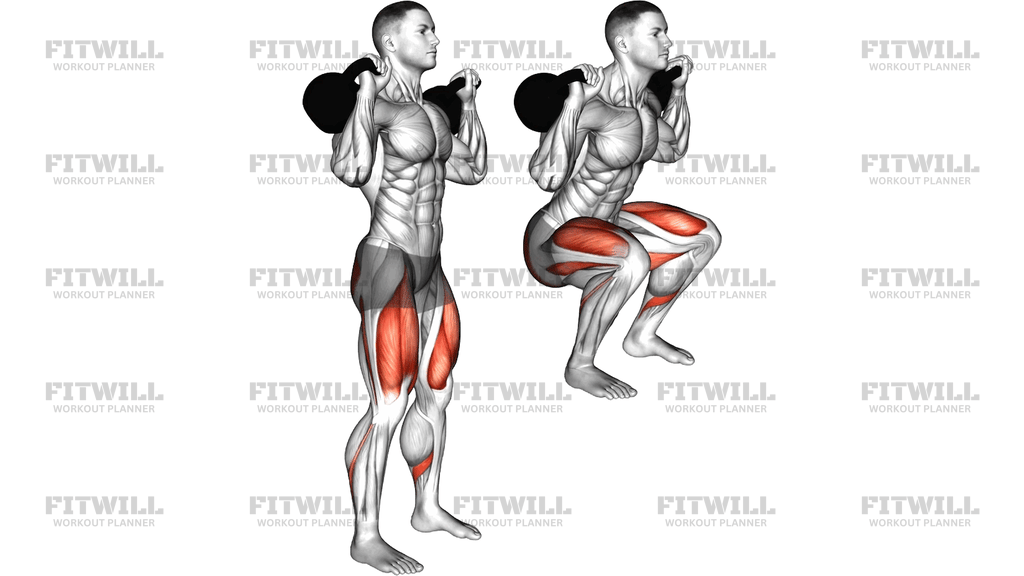
The Kettlebell Back Squat is a lower-body strength exercise performed with one or two kettlebells held at shoulder height, either in the rack position or resting behind the shoulders. Unlike a barbell back squat, the kettlebells sit close to the body, so the load stays compact and easier to control. That makes this version particularly friendly for people who squat in a gym without racks or safeties, since the kettlebells can simply be lowered to the floor if a set goes wrong.
The movement trains the quadriceps, glutes, and hamstrings through a full hip and knee bend, while the core works hard to keep your torso upright under the weight. Holding the kettlebells at shoulder level also challenges the upper back, traps, and forearms far more than a barbell squat does, which is why many lifters find their grip and midline endurance improve quickly with this variation.
Setup matters more with kettlebells than with most other squat variations because the weight is supported by your arms and torso rather than a bar. If the kettlebells drift away from your body or your elbows flare out, your upper back fatigues before your legs do and the squat pattern breaks down. Getting the bells settled comfortably against your chest and shoulders before you descend is what allows you to stay tall and squat deep.
To perform it well, stand with your feet roughly shoulder-width apart and toes turned out slightly, settle the kettlebells at your shoulders, and squat by pushing your hips back and bending your knees together. Descend until your thighs reach at least parallel, keeping your heels flat and your knees tracking over your toes, then drive through the floor to stand back up. Exhale as you rise, and reset your brace at the top of each rep.
This exercise suits beginners learning the squat pattern with a manageable load, intermediate lifters building leg volume without heavy spinal loading, and anyone training at home with limited equipment. It also pairs well with hinge movements like kettlebell swings or deadlifts, since the squat emphasizes the front of the thighs while the hinge emphasizes the back of the hips. Keep the weight honest: a load you can squat with a tall chest and full depth beats a heavier bell that turns every rep into a good-morning.
[ Workout Log & Planner ]
Put your next workout in Fitwill
Keep your plan and training log ready when you are.


Instructions
- Clean one kettlebell to each shoulder, or hold a single bell by the horns at chest height, letting the weight rest against the outside of your forearms and shoulders.
- Stand with your feet about shoulder-width apart, toes turned out 10 to 20 degrees, and distribute your weight across the whole foot with heels firmly planted.
- Squeeze your glutes lightly, brace your abs as if bracing for a light punch, and pull your shoulders down so your elbows stay tucked rather than flaring wide.
- Inhale, then push your hips back and bend your knees at the same time, descending as one unit instead of leading with the knees alone.
- Keep your chest tall and your elbows pointing down toward the floor as you lower; do not let the kettlebells pull you forward.
- Descend until your thighs are at least parallel to the floor, with your knees tracking in line with your toes and your heels staying flat.
- Drive through your mid-foot and heels to stand up, exhaling as you rise, and finish with your hips and knees fully extended.
- Take a breath and re-brace at the top before starting the next rep rather than rushing through a set on shallow breaths.
- After your final rep, lower the kettlebells in a controlled manner to your chest and then set them on the floor in front of you; never drop them from standing height onto a hard surface.
Tips & Tricks
- If your upper back gives out before your legs, the kettlebells are probably sitting too far in front of your shoulders; re-clean them so the bells rest against your forearms and chest, not held out at arm's length.
- Watch for knees caving inward as you fatigue, which is common in deep kettlebell squats; think about spreading the floor with your feet to keep the knees tracking over the toes.
- A common mistake with racked kettlebells is letting the elbows drift up and back on the descent, which tips the torso forward; consciously point your elbows toward the floor throughout the squat.
- If you cannot reach parallel with a flat back, elevate your heels slightly on a pair of small plates or a wedge to accommodate ankle mobility while you work on it.
- Keep the rep tempo controlled on the way down, around two to three seconds, because the compact kettlebell load makes it easy to bounce out of the bottom and lose tension.
- With two bells, make sure both shoulders are loaded evenly before you squat; one bell sitting higher than the other will pull you into a twist as you fatigue.
- Do not hold your breath for the whole set; use one full breath per rep at the top, or breathe continuously if you are using lighter weights for higher reps.
- Choose a bell weight you can clean comfortably, since a sloppy clean that janks your shoulders will compromise your squat before the first rep even starts.
Frequently Asked Questions
What muscles does the Kettlebell Back Squat work?
The quadriceps and glutes do most of the work, with the hamstrings assisting on the way up. Holding the kettlebells at shoulder height also engages the core, upper back, and forearms to a much greater degree than a barbell back squat.
Is the Kettlebell Back Squat good for beginners?
Yes, it is one of the most beginner-friendly loaded squats because the weight stays close to the body and can be safely set down at any point. Start with a single moderate bell held at the chest before progressing to two bells in the rack.
How deep should I squat with kettlebells at my shoulders?
Aim to lower until your thighs are at least parallel to the floor, or slightly deeper if you can keep your heels down and your back neutral. Depth you can control beats a bounce out of a deeper hole.
Why do my forearms and shoulders fatigue before my legs in this squat?
That usually means the kettlebells are drifting away from your body, forcing your arms to support the weight instead of your torso. Re-clean the bells so they rest against your forearms and shoulders, keep your elbows tucked down, and let your skeleton carry the load.
Should I use one kettlebell or two for the Kettlebell Back Squat?
One bell held at the chest is a great starting point and lets you focus on the squat pattern, while two bells in the rack position double the load and add a strong core and upper-back demand. Progress to two bells once your form is solid with one.
What can I use instead of kettlebells if I do not have any?
A dumbbell or two held at the shoulders works very similarly, and a barbell in the front squat position is the closest barbell equivalent. Body weight squats are also a fine substitute while you learn the pattern.
How is the Kettlebell Back Squat different from a barbell back squat?
The load sits at shoulder height supported by your arms rather than across your upper back, which keeps your torso more upright and shifts slightly more demand to the quads. It also removes the spinal compression of a bar and requires no rack, but limits how much total weight you can handle.
Is it safe to drop the kettlebells after a set?
Only lower them in a controlled way from the rack position down to your chest and then to the floor. Dropping bells from standing height can damage the floor, the kettlebells, or your feet.
How many reps and sets should I do of the Kettlebell Back Squat?
For general strength, work in sets of 5 to 8 reps with a heavier bell; for muscle and conditioning, sets of 8 to 15 reps work well. Start with 3 to 4 sets and stop each set when your torso starts to lean or your knees cave.