Weighted Backpack Walking
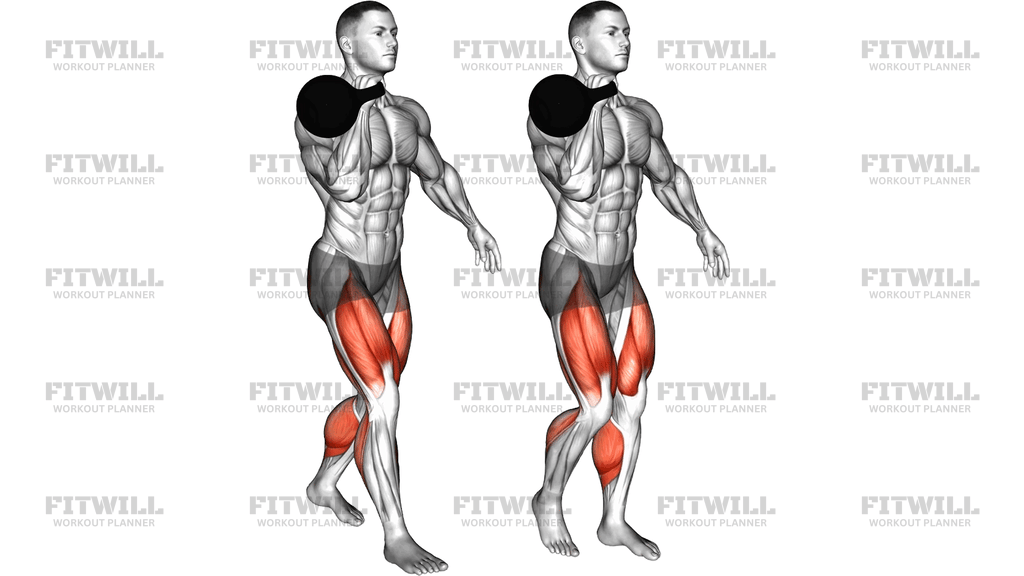
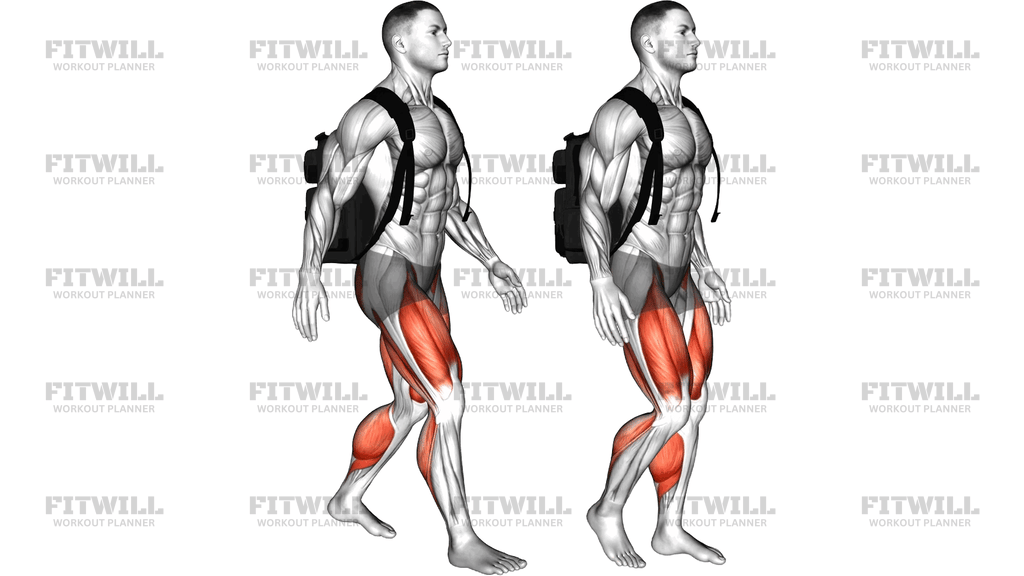
Weighted Backpack Walking is exactly what it sounds like: you load a backpack with weight, put it on your back, and walk with it for a set distance or time. The image shows the standard setup — a pack worn high on the back with both shoulder straps fastened, the walker staying tall with a natural arm swing and an even, rolling stride. It is one of the simplest ways to add external load to walking, and it turns an everyday activity into a strength and conditioning tool without requiring a gym, a sled, or any special equipment.
The load primarily challenges the legs — the quads, calves, glutes, and hamstrings all work harder with every step — while the core and lower back stabilize your torso under the extra weight. Because you are moving on foot rather than sitting in a machine, each step also trains balance, hip stability, and the small supporting muscles around the ankles and knees. The upper traps get work isometrically by holding the shoulder straps in place, especially as the load gets heavier.
This movement suits a wide range of people. Beginners can start with a light pack and flat ground to build work capacity and joint resilience. Hikers use it to prepare for loaded trips, soldiers and tactical athletes use it to build marching endurance, and strength trainists use it as low-impact conditioning on days between heavier barbell sessions. Because walking is low-skill and controlled, most people can recover from it quickly and repeat it several times per week.
Setup matters more than most people expect. A pack that sits low or swings from side to side will pull you out of position and stress the lower back, so tighten the shoulder straps and keep the load close to your upper back. Distribute the weight evenly inside the pack so it does not lurch to one side. Start with a load you could carry comfortably for the full planned distance, then progress gradually — adding five to ten percent at a time is plenty.
Execution is about staying tall and letting your gait stay natural. Keep your ribs stacked over your pelvis, look ahead rather than down, and let your arms swing freely. Strike with your heel, roll through the foot, and push off the back leg fully on each step. Avoid leaning forward into the load; if the weight forces you to hinge at the hips or shorten your stride noticeably, it is too heavy for now.
The main safety points are simple: progress the weight slowly, choose even terrain until you are comfortable with the load, and stop if you feel sharp knee, ankle, or lower back discomfort rather than normal muscular fatigue. Downhill sections under a heavy pack are the most demanding part of the movement, so treat them with extra care and shorten your stride there.
[ Workout Log & Planner ]
Put your next workout in Fitwill
Keep your plan and training log ready when you are.


Instructions
- Load a backpack with an even, balanced weight and pack it so nothing shifts or slides inside as you move.
- Put the pack on and fasten both shoulder straps, then cinch them so the pack rides high on your upper back and sits tight against your body.
- Stand tall with your feet hip-width apart, ribs stacked over your pelvis, and shoulders pulled gently back rather than rounded forward under the straps.
- Take a few easy steps to feel the load settle, and brace your core lightly as if bracing for a gentle push.
- Begin walking at a brisk, controlled pace, striking with your heel and rolling through the whole foot on every step.
- Keep your stride even and natural — do not shorten or overlengthen your steps because of the extra weight.
- Let your arms swing freely at your sides to counterbalance the load; avoid gripping the straps for the whole walk.
- Keep your eyes forward and your torso upright; push fully off the back leg so your glutes and calves do their share of the work.
- Breathe steadily through your nose and mouth throughout, and increase pace only when the load feels secure and controlled.
- Finish the planned distance or time, stand still for a moment to let your breathing settle, then loosen the straps and remove the pack before stretching your calves and hips.
Tips & Tricks
- A common mistake is wearing the pack loose so it bounces with each step — this jars your shoulders and pulls on your lower back; tighten both straps until the pack feels like part of your torso.
- Piling weight at the bottom of the bag makes it drag and lean you backward; pack heavy items close to your upper back and centered side to side.
- If you notice yourself leaning forward into the load, cue yourself to lift your chest and squeeze your glutes slightly rather than dropping weight immediately — but if you cannot hold it, the load is too heavy.
- Add weight before you add speed or hills. Getting comfortable walking tall with a moderate load builds far better mechanics than stumbling through a heavy one.
- On downhill stretches, shorten your stride and land more softly — the combination of momentum and a heavy pack is where knees and ankles usually get aggravated.
- Rotate between flat-ground walks and gentle inclines; steady uphill walking shifts more work to the glutes and calves without the pounding of downhill steps.
- Check your footprints in your rhythm: if your steps sound loud and slapping, you are over-striding; aim for quiet, rolling steps with a full push-off.
- If your traps or shoulders tire before your legs, the straps are too thin or too loose — adjust the fit, or rest the load by briefly standing tall and shrugging your shoulders back between intervals.
- Track your walks by distance or time rather than feel alone, so you can add load in small, measurable increments week to week.
Frequently Asked Questions
What muscles does Weighted Backpack Walking work?
The main work is done by the quads, glutes, hamstrings, and calves, since every step now carries extra load. Your core and lower back stabilize your torso throughout, and the upper traps hold the shoulder straps in place.
How much weight should I start with in Weighted Backpack Walking?
Start with 10-20% of your body weight or even less if you are new to carrying load. You should be able to finish the walk standing tall with your normal stride; if your posture breaks down, reduce the weight first.
Is Weighted Backpack Walking good for beginners?
Yes, it is one of the most beginner-friendly loaded exercises because the skill of walking is already familiar. Begin with a light pack on flat ground, keep sessions short, and add weight gradually over weeks.
How should the backpack fit during Weighted Backpack Walking?
Both shoulder straps should be fastened and tightened so the pack sits high on your upper back and stays snug against you. A loose, low, or swinging pack shifts your center of gravity and stresses your lower back.
What is the most common mistake in Weighted Backpack Walking?
Leaning forward into the load is the biggest one, usually caused by a loose pack or too much weight. Tighten the straps, lift your chest, and if you still cannot stay upright, the load is too heavy for your current level.
Can I do Weighted Backpack Walking instead of running for conditioning?
It works well as a low-impact conditioning option because your heart and lungs get challenged without the repeated impact of running. Many people use it on days between heavier training sessions precisely because recovery is quick.
Does Weighted Backpack Walking help prepare for hiking?
It is one of the best ways to prepare, since it replicates the exact demand of carrying a pack on trails. Practice with a load slightly heavier than your expected hiking pack on similar terrain and inclines.
What can I use if I do not have a weighted backpack?
A sturdy bag filled with books or water containers works the same way, as long as it has two shoulder straps and the weight stays secure. The key is an even, snug load on your back, not a specific brand of pack.
Is it safe to do Weighted Backpack Walking with knee or lower back issues?
Extra load increases the demand on your knees and spine, so if you have existing issues, start very light, keep terrain flat, and check with a qualified professional first. Stop the session if you feel sharp pain rather than normal muscular fatigue.
How far or how long should a Weighted Backpack Walking session last?
Twenty to forty minutes is a solid starting range on flat ground. As your tolerance grows, extend the distance or add gentle inclines before adding more weight to the pack.