Butterfly Pull Up
The Butterfly Pull Up is a dynamic, rhythm-based pull-up variation where you drive your body toward the bar using a continuous leg kick rather than a strict, isolated pull. Instead of keeping the legs still, you flex the hips to lift the knees forward and then snap them back down, creating a wave of momentum that travels up through the torso and helps your chest rise to the bar. Done in linked repetitions, the movement resembles the kick of a butterfly swimmer, which is where the name comes from.
This style of pull-up is popular in CrossFit and functional fitness competitions, where athletes need to complete high volumes of pulling work quickly and efficiently. It is also useful for intermediate lifters who can do several strict pull-ups but want to build work capacity, condition the lats and upper back under fatigue, or learn to coordinate hip drive with upper-body pulling. Because the legs and torso contribute to each rep, you can typically perform more repetitions than with strict pull-ups at the same effort level.
The primary muscles worked are the lats, which pull the elbows down and back toward the torso. The biceps, forearms, and grip handle the hanging and flexing demands, while the traps, rhomboids, and rear shoulders stabilize and retract the shoulder blades at the top. The hip flexors and abdominals generate and control the leg kick, so the core works harder here than in a strict pull-up.
Setup matters more than people expect. A bar high enough that your feet clear the floor at full hang, a grip slightly wider than shoulder width, and an active hang with the shoulders pulled down away from the ears all set you up to use momentum safely. Starting from a loose, passive hang or yanking on the bar with straight arms is where most shoulder complaints begin, so the first movement of every rep should be tension through the lats and shoulders.
Executed well, each rep flows into the next: the knees drive up, the body cracks like a lever, the chest meets the bar as the legs snap down, and you push away slightly at the top to fall back into the next kick. The goal is a smooth, repeating rhythm rather than a series of separate, jerky pulls.
Because this is a high-velocity movement, it is not the right starting point for a true beginner. Build a base of strict pull-ups and controlled hanging first, then learn the butterfly rhythm with small kicks and partial reps before chaining full repetitions together. Anyone with current shoulder, elbow, or lower back irritation should stick to strict variations or assisted options until cleared to swing under the bar.
[ Workout Log & Planner ]
Put your next workout in Fitwill
Keep your plan and training log ready when you are.


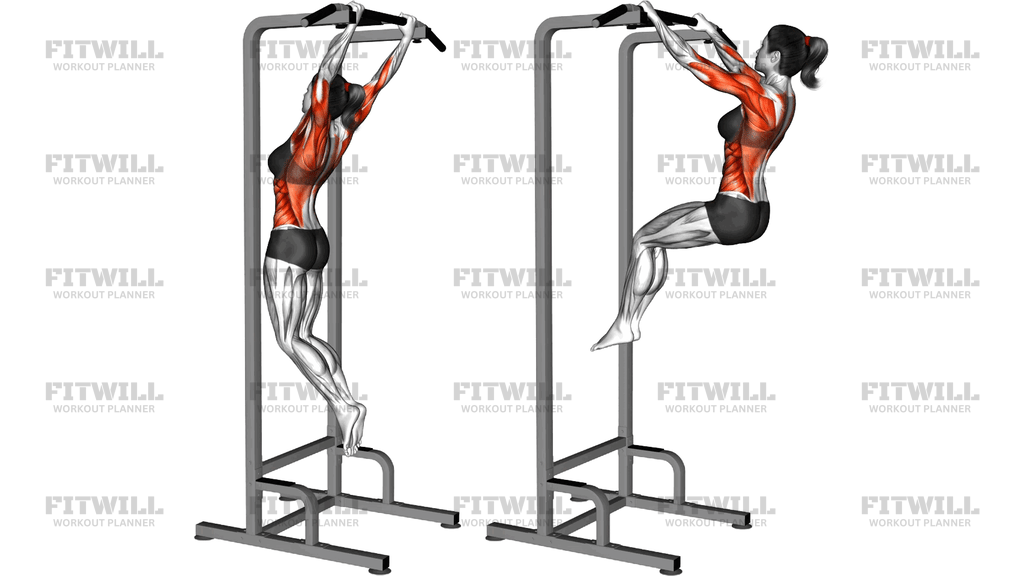
Instructions
- Stand under a pull-up bar high enough that your feet will clear the floor when you hang with arms fully extended. Reach up and take a pronated grip slightly wider than shoulder width, thumbs wrapped around the bar.
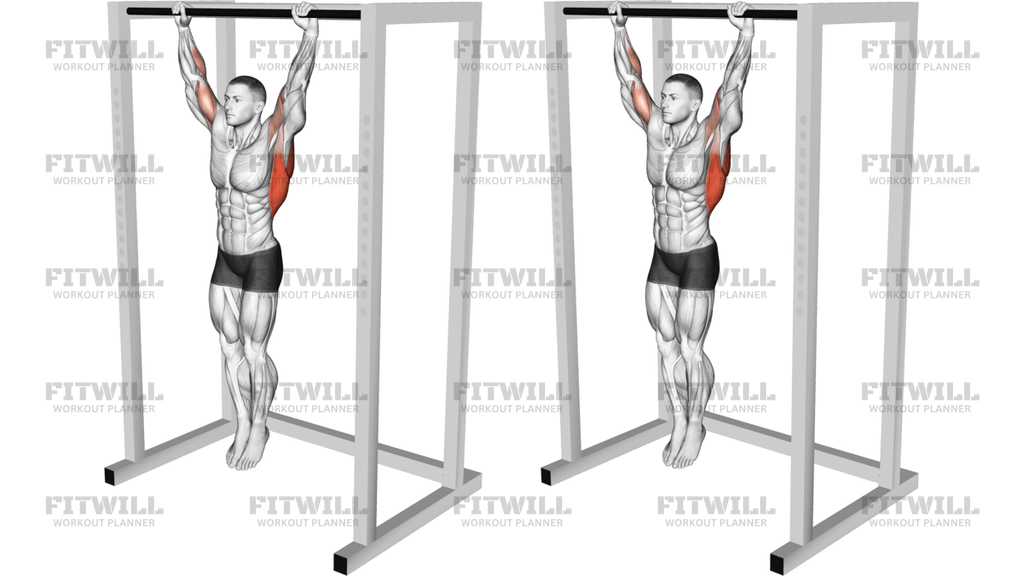
- Hang with arms straight, then pull your shoulder blades down and brace your ribcage down over your pelvis so your body forms one long, controlled line with legs together and toes pointed.
- Initiate the kick by flexing the hips and drawing your knees up in front of you while keeping your arms long and your shoulders depressed.
- As the knees rise, pull your elbows down toward your ribs and let your torso lean back slightly so your chest travels up toward the bar.
- Snap the legs down and back as you reach the top, so the momentum from the kick carries your chest to or just below the bar with elbows driving behind your torso.
- At the top, push yourself slightly away from the bar rather than dropping straight down, which sets up the next swing.
- Control the descent only long enough to flow into the next repetition: as you fall, drive the knees up again to catch the momentum and repeat.
- Exhale forcefully on the way up as the legs snap down, and inhale quickly at the bottom of each swing before the next rep.
- To finish, slow the kick on a descent, lower under control to a dead hang, and step down from the bar instead of dropping from the top.
- Reset your grip and shoulder position before starting the next set; never jump straight back into swinging from a loose, passive hang.
Tips & Tricks
- The most common fault is kicking with the legs while the arms stay slack, then yanking at the end. Start every rep by pulling the shoulders down into the bar before the knees come up.
- If your chest is not reaching the bar, the timing is usually off rather than the strength. Snap the legs down earlier so the hip drive and the final pull arrive at the bar together.
- Keep the kick compact. Lifting the feet all the way to hip height or higher wastes energy and swings your body away from the bar; a knee drive to roughly hip level is enough.
- Do not let the shoulders roll forward into a shrugged position at the bottom. An active hang with lats engaged protects the shoulder joint during the fast transition each rep.
- If you are swinging far forward and back under the bar like a pendulum, you are kicking too hard in one direction. Balance the knee drive and the leg snap so the movement stays mostly vertical.
- Chalk or a firm full grip matters here. Slipping mid-swing at speed is far more dangerous than losing grip on a strict pull-up, and a death grip on two fingers is a sign to end the set.
- Learn the rhythm on a low bar or with slow singles first. Practice the knee-drive-and-snap cycle from a hang without pulling to the bar, then add the pull once the timing feels automatic.
- Stop the set when your timing breaks down, not when your lats fail. Late, sloppy kicks turn the butterfly into an uncontrolled swing and put the stress on the shoulders and elbows.
- Because the hip flexors do real work each rep, tight fronts of the hips can flatten your kick. A short hip flexor stretch between sets often restores the range you need for a clean drive.
Frequently Asked Questions
What muscles does the Butterfly Pull Up work?
The lats do most of the pulling, supported by the biceps, forearms, and grip. The traps and rhomboids stabilize the shoulder blades, and the hip flexors and abdominals power and control the leg kick.
How is the Butterfly Pull Up different from a strict pull-up?
A strict pull-up isolates the pull with the legs still, while the Butterfly Pull Up uses a repeating knee drive and leg snap to generate momentum that carries the chest to the bar. This lets you do more reps but shifts some of the load away from the lats.
How is the Butterfly Pull Up different from a kipping pull-up?
A kipping pull-up uses a full-body swing from the shoulders with both legs whipping together, while the butterfly relies on a tighter, cyclical knee kick that keeps you closer to the bar and flows rep to rep. Most people find the butterfly rhythm faster once learned.
Can beginners do the Butterfly Pull Up?
It is not a beginner movement. Build up to several strict pull-ups and comfortable active hangs first, then learn the kick slowly from a low bar before linking full reps.
Why do my shoulders hurt when I do the Butterfly Pull Up?
Pain usually comes from starting from a passive hang or catching the swing with slack shoulders. Depress the shoulder blades and create lat tension before the first kick, and stop the set if you feel pinching at the front of the shoulder.
How high should I pull on the Butterfly Pull Up?
The standard target is the chest or upper chest touching the bar, with the elbows finishing behind the torso. Pulling only until the chin scrapes over usually means the leg snap and pull are mistimed.
What can I substitute for the Butterfly Pull Up?
Strict pull-ups, band-assisted pull-ups, lat pulldowns, and jumping pull-ups with a slow lower all train the same lats and upper back. Use a kipping pull-up if you specifically need the momentum skill but find the butterfly timing difficult.
How do I time the leg kick in the Butterfly Pull Up?
Drive the knees up as you begin to pull, then snap the legs down and back right as your chest approaches the bar. Practicing the kick alone from a hang, without pulling to the bar, is the fastest way to learn it.
How many Butterfly Pull Ups should I do per set?
Treat it as a conditioning movement: sets of 5 to 15 reps with solid timing are typical once the pattern is established. End the set as soon as your rhythm or chest-to-bar contact breaks down.
Is dropping off the bar after a set of Butterfly Pull Ups safe?
Repeated drops from the top under fatigue stress the elbows, shoulders, and ankles, so lower to a dead hang and step down. Land softly with bent knees if the bar is too high to dismount from a hang.