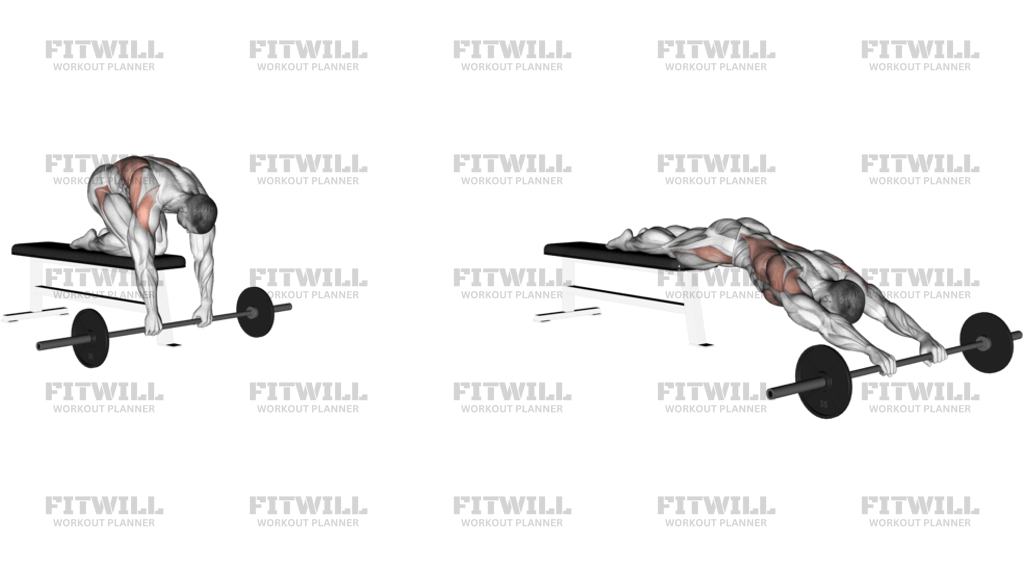
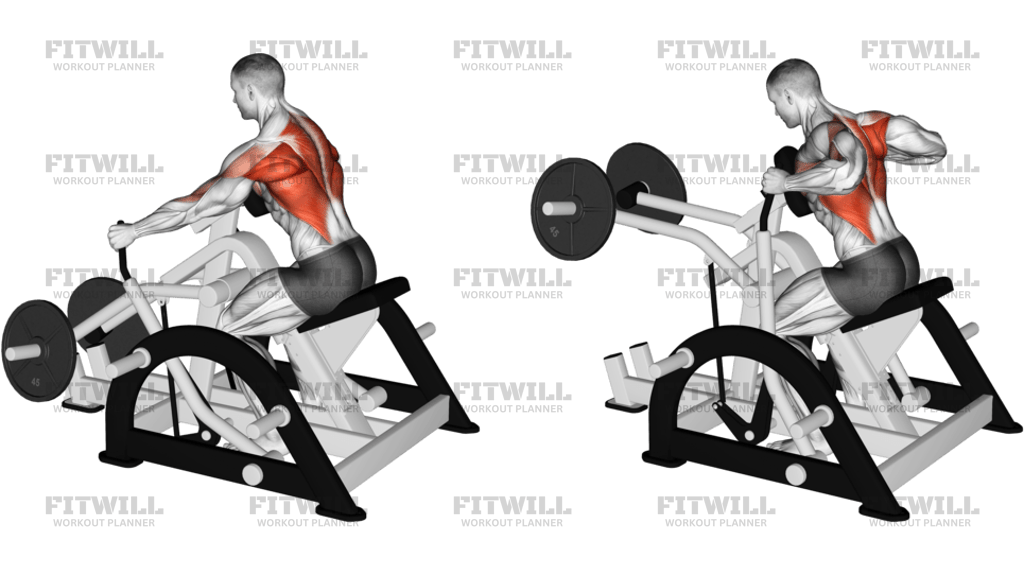
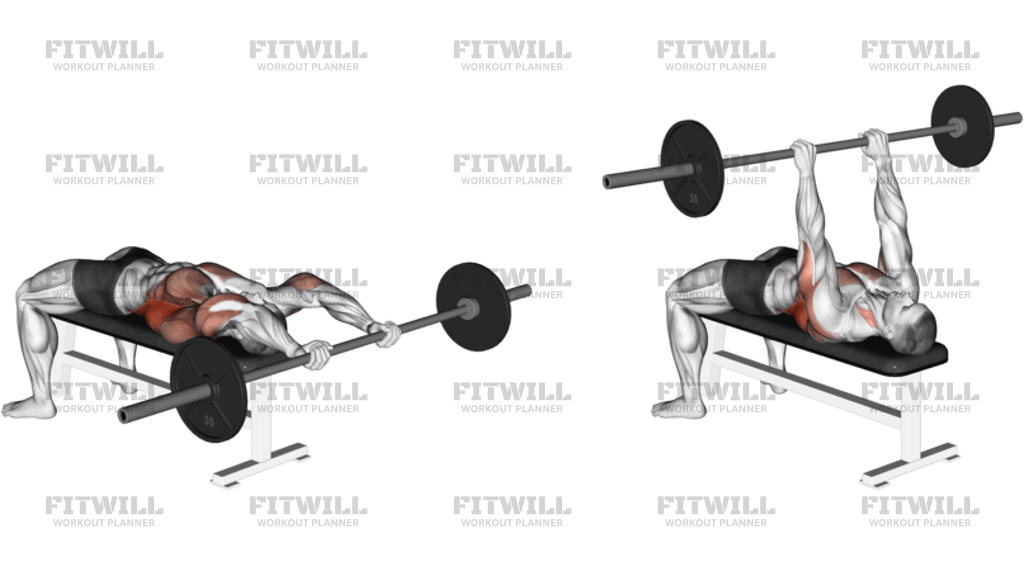
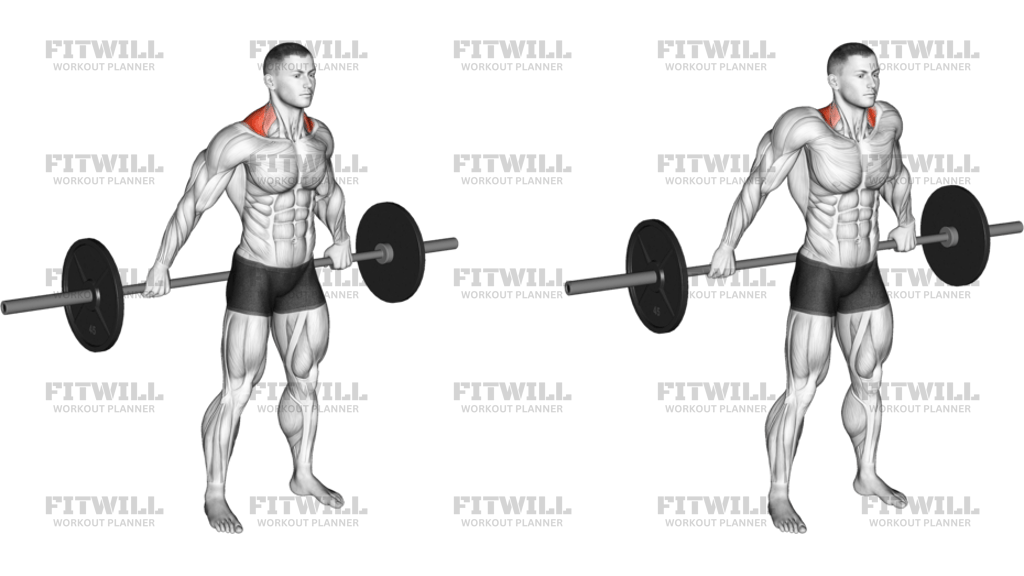
Barbell Bent Over Flexion Row
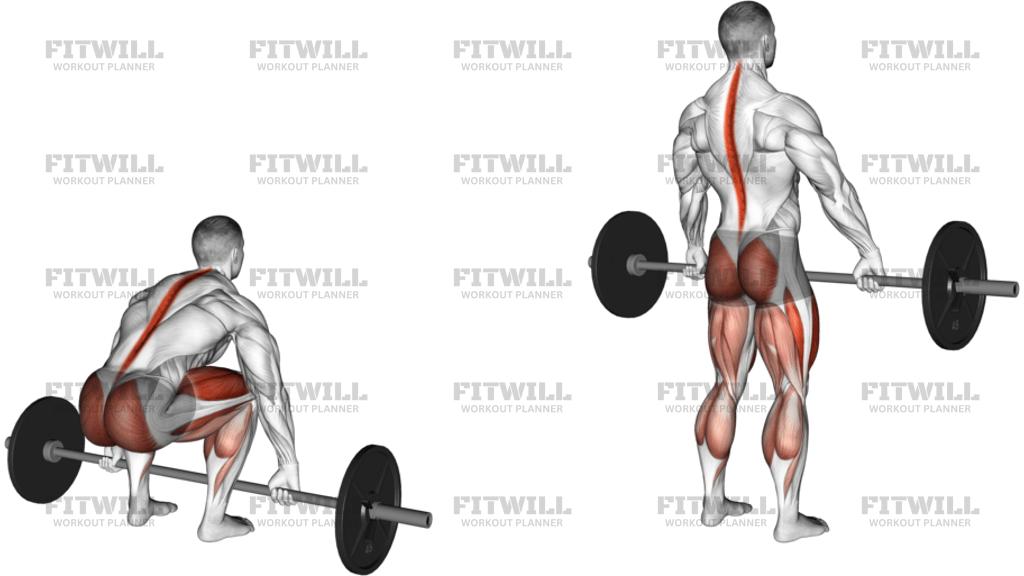
The Barbell Bent Over Flexion Row is a free-weight rowing movement performed from a deep hip hinge, with the torso folded forward toward the thighs and the barbell hanging at arm's length below the shoulders. From that fixed bent-over position, you pull the bar up toward your lower ribcage, squeeze the shoulder blades together, and lower it back down under control. Because the torso stays locked in flexion for the entire set, this version places more demand on the hamstrings, glutes, and spinal erectors than a more upright row variation.
This lift is a staple for building back thickness. The primary work comes from the lats, rhomboids, and mid-traps, which drive the bar up and pull the shoulder blades back and down. The rear delts assist at the top of the pull, the biceps and forearms handle the elbow flexion and grip, and the entire posterior chain works isometrically to hold the hinged position steady. That combination makes it one of the most complete upper-body pulling movements you can load heavily.
Setup matters more here than in most row variations. The depth of the hip hinge determines everything: hinge too shallow and the movement drifts toward an upright row with less lat involvement; hinge too far and the lower back takes on more load than it can brace against. Feet stay roughly hip-width apart, the knees are softly bent, and the spine should hold a straight, neutral line from head to hips rather than rounding.
To execute it well, think of pulling the bar toward your lower ribs or upper abdomen with your elbows pointing back, not out to the sides. Pause briefly at the top when the bar touches your body, then control the descent instead of letting gravity drop the weight. The torso angle should not change between reps; if your chest rises as you pull or jerks upward to start the rep, the weight is too heavy.
This row suits lifters who already have some hip-hinge experience and want a heavier back builder than a chest-supported or cable row allows. It fits well as a primary pull on back days, typically for sets of 6 to 12 reps. Beginners should start light, master the hinge position first, and progress gradually.
The main safety point is protecting the spine. A hinged, loaded position is unforgiving of rounding or sudden jerking, so brace the core before every rep, keep the bar close to the legs, and stop the set the moment your torso position breaks down. Setting the bar on the floor or a rack between sets gives your lower back and grip a chance to reset.
[ Workout Log & Planner ]
Put your next workout in Fitwill
Keep your plan and training log ready when you are.


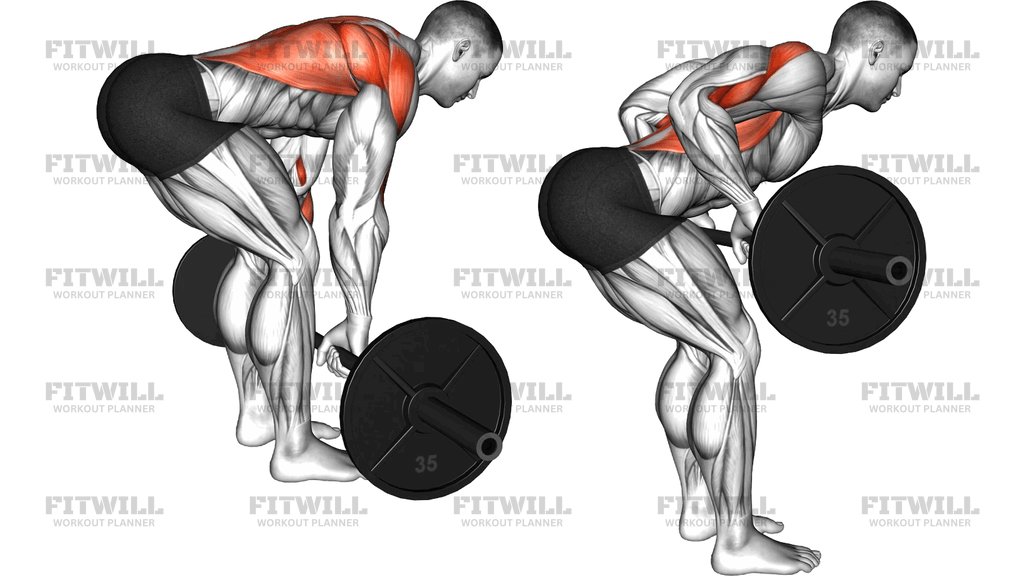
Instructions
- Stand with your feet about hip-width apart under a loaded barbell, shins close to the bar.
- Hinge forward at the hips, pushing your hips back and letting your knees bend slightly, until your torso is angled well toward the floor and you can grip the bar just outside your legs with an overhand grip.
- Brace your core and lift the bar to the hanging position directly below your shoulders, with your arms fully extended and your back flat from head to hips.
- Pull the bar up toward your lower ribcage by driving your elbows back and up, keeping the bar path close to your thighs and torso.
- Squeeze your shoulder blades together at the top so the bar makes contact with your lower abdomen or upper hip area.
- Lower the bar slowly along the same path until your arms are fully extended again, maintaining the bent-over torso angle.
- Exhale as you pull the bar up and inhale as you lower it, keeping your breathing steady throughout the set.
- Complete all reps without standing up, then set the bar down on the floor or return it to the rack before releasing your grip.
- Stand up fully, shake out your grip, and reset your stance before starting the next set.
Tips & Tricks
- If your lower back rounds as you hinge down, bend your knees a little more and hinge from the hips rather than slumping through the spine.
- A common mistake is pulling the bar too high toward the chest, which shifts work away from the lats and stresses the shoulders; aim the bar at your lower ribs instead.
- If your chest rises toward parallel with every rep, you are standing the movement up; either lighten the load or film yourself from the side to check your torso angle.
- Avoid jerking the bar off the hang with a torso bounce; each rep should start from a still, braced position with arms extended.
- Keep the bar within a few centimeters of your legs throughout the pull; letting it drift forward multiplies the strain on your lower back.
- Use a hook grip or lifting straps if your grip gives out before your back does, so heavy sets are not cut short by your forearms.
- Chalk or a firm overhand grip helps on heavy sets; a mixed grip is an option but can twist the torso slightly out of position.
- Set the bar down between sets rather than holding the hinge during long rests, since fatigue in the erectors creeps in quietly and shows up as form breakdown on the next set.
- If you cannot hold the hinged position comfortably for a full set, spend time on Romanian deadlifts or chest-supported rows first to build the hinge strength this row demands.
Frequently Asked Questions
Which muscles does the Barbell Bent Over Flexion Row work?
The lats, rhomboids, and mid-traps do most of the pulling, with the rear delts and biceps assisting. Your glutes, hamstrings, and lower back work hard the entire time just to hold the deep hinged position.
How is the Barbell Bent Over Flexion Row different from a regular bent-over row?
The flexion version is performed from a deeper hip hinge with the torso folded further forward, which increases the demand on the hamstrings, glutes, and spinal erectors. The rowing action itself stays the same.
Can beginners do the Barbell Bent Over Flexion Row?
Yes, but it is worth learning the hip hinge and a basic supported row first. Start with a light bar to practice holding the bent position, and only add weight once your torso angle stays consistent for a full set.
How far forward should my torso be bent during this row?
Your torso should be angled well toward the floor, hinged from the hips with a flat back, rather than standing near upright. Choose a depth you can hold without your lower back rounding, and keep that same angle for every rep.
Why does my lower back fatigue before my lats in the Barbell Bent Over Flexion Row?
The erectors are holding an isometric contraction the whole set, so some fatigue is normal. If they give out first, reduce the weight, brace harder before each rep, or rest the bar between sets so the hinge muscles start fresh.
Should I use an overhand or underhand grip for the Barbell Bent Over Flexion Row?
An overhand grip, as shown with both hands pronated just outside the legs, keeps the shoulders in a safer position and emphasizes the lats and upper back. An underhand grip shifts more work to the biceps and can strain the front of the shoulder if the elbows flare.
What can I substitute if I cannot hold the hinged position for the Barbell Bent Over Flexion Row?
Chest-supported rows on an incline bench or a seated cable row let you train the same pulling muscles without the spinal holding requirement. Romanian deadlifts are a good accessory for building the hinge strength you need to return to this row.
How heavy should I go on the Barbell Bent Over Flexion Row?
Pick a weight you can pull to your lower ribs without your torso angle changing or your chest rising between reps. If you have to jerk or stand up to finish a rep, the set is done and the load is too heavy.
Is it safe to round my back while doing the Barbell Bent Over Flexion Row?
No. In a loaded hinge, a rounded lower back concentrates stress on the spinal ligaments and discs, so keep your spine neutral and stop the set if your position breaks down. Reset with lighter weight and a firmer brace before continuing.