Dumbbell Decline Pullover
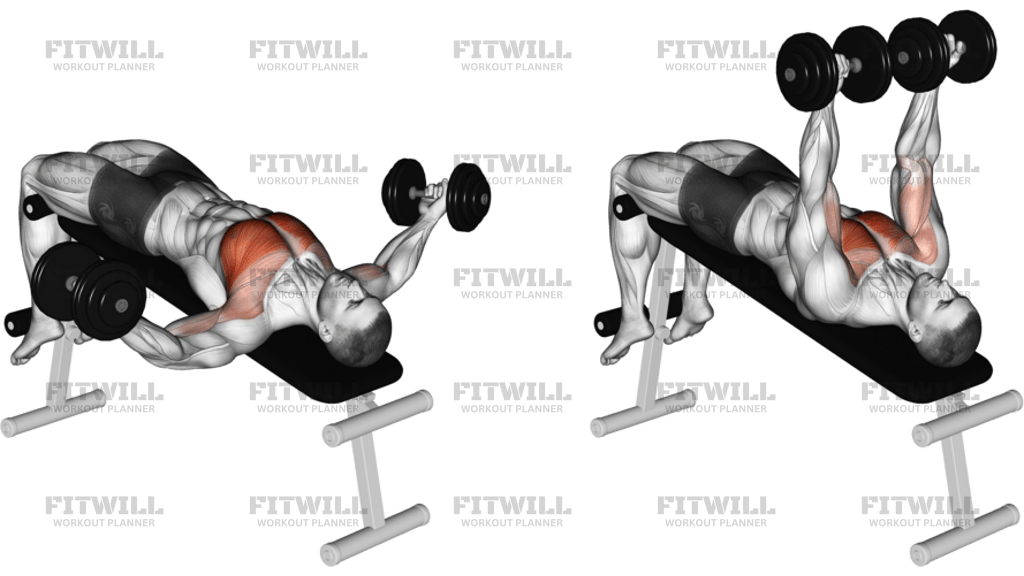
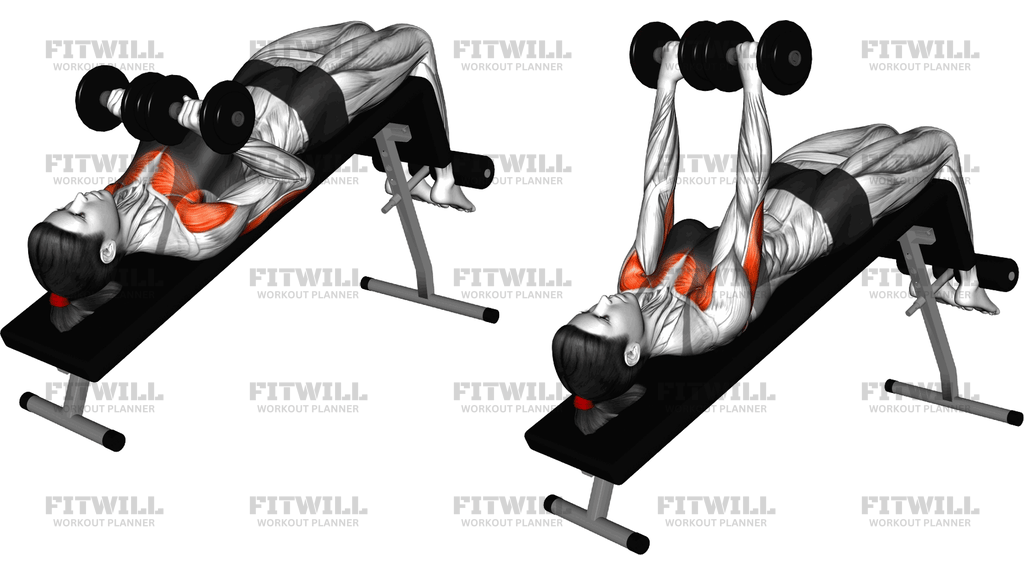
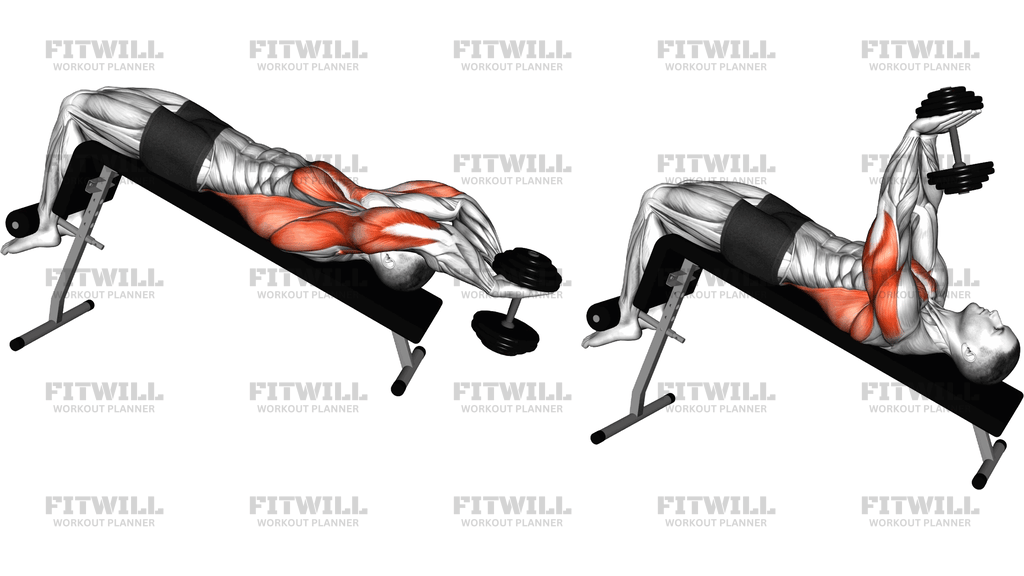
The Dumbbell Decline Pullover is a single-dumbbell pullover performed while lying face-up on a decline bench, with the ankles anchored under the leg rollers. You hold one dumbbell in both hands, start with your arms extended back over your head, and sweep the weight in an arc until it finishes above your chest with straight arms. The decline angle shifts the emphasis toward the lower portion of the chest and the lats, which is what separates this version from the flat-bench pullover most people learn first.
This movement is useful for lifters who want to load the chest and lats together through a long range of motion that pressing doesn't cover. Because the shoulders travel from an overhead position to a position over the torso, the lats, pecs, teres major, and serratus anterior all contribute. The triceps assist as the elbows stay nearly locked out. Lifters chasing fuller chest development or better shoulder extension strength tend to get the most out of it, and it pairs naturally with decline pressing work in the same session.
Setup matters more here than in most dumbbell exercises. On a decline bench your head sits lower than your hips, so the weight passes directly over your face and neck during the arc. Hooking your ankles securely under the rollers keeps your body from sliding toward the head of the bench, and keeping your hips in contact with the pad protects your lower back from arching into an exaggerated extension.
To execute it well, cup one end of the dumbbell with both hands rather than gripping the handle sideways, press your arms toward the ceiling, and lower the weight back over your head in a smooth arc. Keep your elbows slightly bent but fixed at that angle throughout. The path should look like a slow semicircle, not a press and not a throw. On the way back up, think about pulling with your armpits and chest rather than swinging the dumbbell.
Common use cases include finishing a chest day, adding volume to the lats without a pull-up bar or cable, and building rib cage and shoulder mobility under load. Because the resistance sits directly over your face at the start position, choose a dumbbell you can control for every rep, and stop the set before your grip or technique deteriorates. If your shoulders feel pinched at the top stretch, shorten the range instead of forcing the weight deeper.
[ Workout Log & Planner ]
Put your next workout in Fitwill
Keep your plan and training log ready when you are.


Instructions
- Set a decline bench at a modest angle and anchor your ankles under the leg rollers so your hips and lower back stay firmly on the pad.
- Pick up one dumbbell and hold it vertically by cupping the top head of the weight with both hands, fingers overlapping, thumbs wrapped around the handle area.
- Lie back on the bench and press the dumbbell straight up over your chest with fully extended arms; this is your finishing position, so walk the movement backward from here.
- Brace your core and pull your ribs down slightly so your lower back stays flat against the pad instead of arching up.
- Lower the dumbbell in a slow arc back over your head, keeping the slight elbow bend locked in place until the weight is behind your head with your upper arms in line with your torso.
- Reverse the arc by squeezing your chest and lats to sweep the dumbbell back up until your arms are vertical over your chest again.
- Exhale as you pull the weight up, and inhale slowly as you lower it back over your head.
- Keep the motion smooth from start to finish; avoid bouncing the dumbbell at the bottom or jerking it off the stretch.
- After your last rep, bring the dumbbell back to the vertical position over your chest, sit up carefully, and set the weight on the floor before releasing your ankles.
Tips & Tricks
- The most common fault is turning the pullover into a triceps extension: if your elbows are bending and straightening, the bend angle has drifted. Freeze it at about 15-20 degrees from the first rep.
- When your hips lift off the pad at the bottom stretch, the weight is too heavy or you're arching to fake extra range. Drop the load and pull your ribs down before continuing.
- Don't let the dumbbell drift behind your head in a straight line toward the floor; the correct path is an arc that keeps tension on the chest and lats rather than hanging passively on your shoulder capsules.
- If your grip starts failing before your chest does, chalk your hands or alternate which hand cups the top of the dumbbell between sets.
- A decline bench drops your head below your heart, so if you feel lightheaded, sit up slowly at the end of the set instead of popping upright.
- Shorten the range rather than forcing the dumbbell deeper behind your head if your shoulders complain at full stretch; the decline angle already gives you extra range compared to a flat bench.
- Tempo is your friend on this lift: two seconds down and two seconds up keeps the tension on the muscles and hides a lot of small form errors.
- Because the weight travels over your face and neck, check that the collars on the dumbbell are secure and that your hands fully cup the top head before you lie back.
Frequently Asked Questions
What muscles does the Dumbbell Decline Pullover work?
The primary movers are the chest, especially the lower and sternal fibers, and the lats. The triceps, teres major, and serratus anterior assist as your arms sweep from overhead back to vertical over your chest.
How is the Dumbbell Decline Pullover different from a flat bench pullover?
The decline angle lowers your head below your hips, which lengthens the arc and biases the lower chest and lats more than the flat version. It also requires the ankle anchor, since gravity pulls your body down the bench.
Is the Dumbbell Decline Pullover suitable for beginners?
Yes, but beginners should start with a light dumbbell and master the arc before loading it. Since the weight passes over the face on a decline angle, control and a secure grip matter from the very first set.
Why should I hold the dumbbell by one head instead of the handle?
Cupping one end of the dumbbell with both hands keeps the weight vertical, balanced, and close to your hands through the arc. Gripping the handle alone lets the dumbbell tilt and puts extra strain on your wrists and grip.
Should my elbows be bent or straight during the Dumbbell Decline Pullover?
Keep a small, fixed bend of roughly 15-20 degrees throughout the entire rep. If the elbows open and close, you're performing a triceps extension instead of a pullover.
Can I do this exercise without a decline bench?
A flat bench version is a reasonable substitute, though it changes the emphasis slightly toward the mid chest and lats. You can also use a cable pullover standing to train a similar movement pattern with less stress at the stretched position.
Is it safe for the shoulders?
Generally yes when you use a controlled weight and a range your shoulders tolerate comfortably. If you feel pinching at the deepest part of the stretch, shorten the arc and keep the dumbbell slightly higher behind your head.
How heavy should the dumbbell be?
Choose a weight you can sweep through the full arc with smooth control for 10-15 reps, because the hardest position has the dumbbell suspended over your face and throat. Progress only when your grip and tempo stay clean.
Should I breathe out on the way down or on the way up?
Inhale as the dumbbell lowers behind your head, and exhale as you sweep it back up over your chest. Holding your breath through the whole arc tends to spike pressure and make the bottom stretch feel unstable.
Where should the Dumbbell Decline Pullover go in my workout?
It works well as a finisher after decline or flat pressing, when the pressing muscles are already warm and the isolation demand is high. Placing it first is also acceptable if your goal is a controlled stretch on fresh shoulders.