Weighted Chin Up
The Weighted Chin Up is a pull-up performed with a supinated grip—palms facing you—while wearing additional load, typically a dip belt with a plate or dumbbell hanging between your legs. Because the chin-up grip puts the biceps in a stronger line of pull than a pronated grip, it is usually the most comfortable variation to load with external weight, which is why it serves as the standard benchmark for upper-body relative strength.
This movement trains the lats as the primary driver, with heavy contributions from the biceps, brachialis, and forearm flexors, plus the mid-back muscles—the rhomboids, mid and lower traps—that pull the shoulder blades down and together as you rise. The core and hip stabilizers also work hard to control the swinging and swaying that added weight creates on the belt. Compared with a bodyweight chin-up, the weighted version builds maximal pulling strength rather than just endurance.
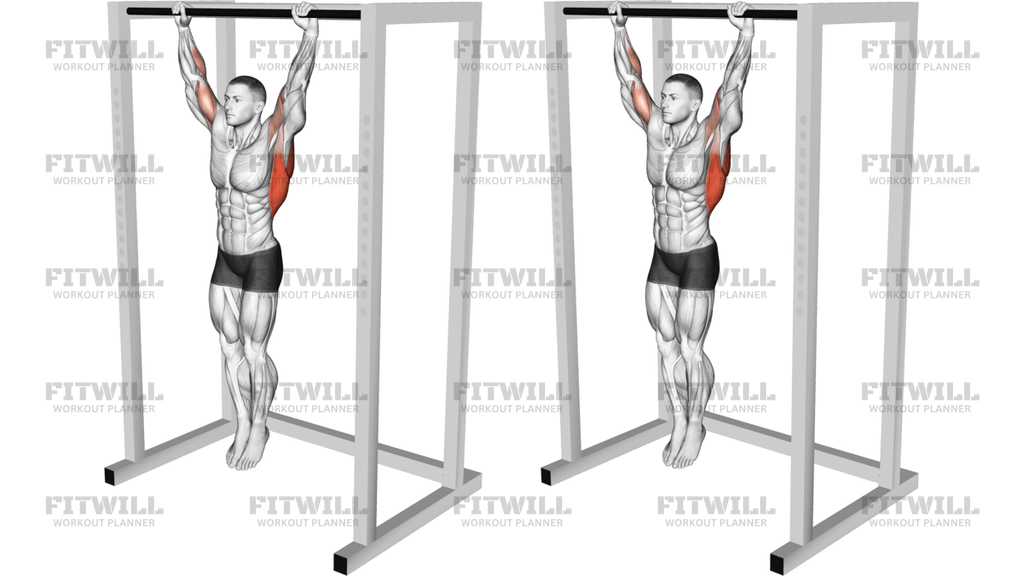
Setup matters more here than in almost any other pulling exercise. The weight must hang clear of your legs so it cannot swing or bump against you mid-rep, and your grip should be about shoulder width with the thumbs wrapped around the bar. Starting from a full dead hang with arms extended and shoulders engaged—not slack near your ears—protects the shoulder joint and gives every rep a consistent range.
Execution is straightforward but demanding: pull until your chin clears the bar while driving your elbows down toward your hips, then lower under control to a full hang before starting the next rep. The lowering phase deserves as much attention as the pull, because dropping fast under load stresses the elbows and shoulders and cheats you of much of the strength benefit.
The Weighted Chin Up suits intermediate to advanced lifters who can already perform several clean bodyweight chin-ups. It is a staple in strength-focused programs, a key exercise for climbers and grapplers who need pulling power, and a measurable way to track progress—adding load over time while keeping technique tight is the clearest sign of improving pulling strength. Keep the jumps in weight small, and stop the set before your form breaks down.
Fitwill
Log Workouts, Track Progress & Build Strength.
Achieve more with Fitwill: explore over 9600 exercises with images and videos, access built-in and custom workouts, perfect for both gym and home sessions, and see real results.
Start your journey. Download today!




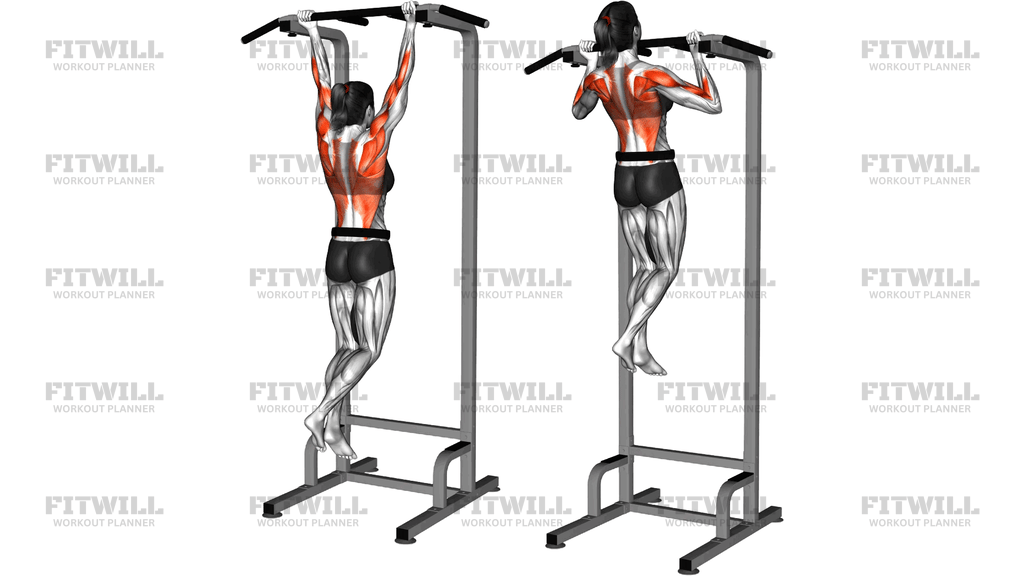
Instructions
- Attach a plate or dumbbell to a dip belt and fasten the belt snugly around your waist so the weight hangs in front of you, clear of your legs.
- Grip the pull-up bar with an underhand (supinated) grip, hands about shoulder-width apart, thumbs fully wrapped around the bar.
- Hang from the bar with arms fully extended, then squeeze your shoulder blades down and brace your core so your body feels tight rather than loose.
- Cross your ankles or bend your knees behind you to keep your legs from touching the floor or the weight from swinging.
- Exhale and pull yourself up by driving your elbows down toward your hips until your chin clears the top of the bar.
- Pause briefly at the top with your chest lifted and elbows close to your sides.
- Inhale as you lower yourself slowly and under control until your arms are fully straight again.
- Let the hanging weight settle for a moment, reset your grip and brace if needed, then begin the next rep.
- When the set is finished, step down carefully or release onto the floor with the weight still secured to the belt, removing the belt before letting the weight drop.
Tips & Tricks
- Choose a first weight you can handle for about five strict reps; if you have to kink your hips or swing to finish, the load is too heavy.
- Start every rep from a true dead hang. Shortening the hang to squeeze out extra reps turns the movement into a partial and stalls progress.
- If the hanging plate starts to swing, your pull or lower is too fast—slow the tempo and the pendulum usually stops on its own.
- Pull your elbows toward your front pockets instead of thinking about lifting your chin; this keeps the lats leading and stops you from shrugging.
- Keep your ribcage down and abs braced. Arching hard at the bottom under load strains the lower back and shifts tension away from the lats.
- Use a full thumb wrap. An open grip with added weight is a genuine safety risk when your hands fatigue.
- Add load in small increments—1.25 to 2.5 kg at a time. Big jumps on a bodyweight-plus-plate movement quickly produce sloppy reps.
- Chalk your hands or use lifting straps only if grip fails first; if grip is repeatedly the limiter, train it separately rather than strapping every set.
- Stop the set the moment your chin stops clearing the bar. Partial weighted reps teach poor range and hammer the elbows.
Frequently Asked Questions
Which muscles does the Weighted Chin Up work the most?
The lats are the primary muscle, with the biceps and forearm flexors contributing strongly due to the supinated grip. The rhomboids, mid and lower traps, and rear shoulders assist as you pull the shoulder blades down and together.
How is the Weighted Chin Up different from a Weighted Pull-Up?
The chin up uses an underhand grip, which gives the biceps a stronger line of pull and lets most people handle slightly more load. The pull-up's overhand grip shifts a bit more emphasis toward the lats and mid-back and away from the elbow flexors.
How do I attach weight for the Weighted Chin Up?
The most common method is a dip belt with a plate or dumbbell clipped to the chain so it hangs between your legs. A weighted vest also works, though it caps how much load you can add and puts weight on the shoulders rather than the hips.
Can beginners do the Weighted Chin Up?
Beginners should first build to several solid bodyweight chin-ups with a full range before adding load. Adding weight before you own the movement usually shows up as shortened range, swinging, and elbow strain.
Why does the hanging weight swing during my Weighted Chin Up?
Swinging comes from pulling or lowering too explosively, or from the weight resting too close to your legs. Slow your tempo, keep the belt chain long enough that the load clears your knees, and let it settle at the bottom of each rep.
How low should I go on each rep?
Lower until your arms are fully straight in a dead hang with your shoulders still engaged. Cutting the bottom short removes the stretch on the lats and makes it hard to compare progress between sessions.
Is a chin-up grip bad for my elbows when using added weight?
The supinated grip loads the elbow flexors heavily, so sudden jumps in volume or weight can irritate the inner elbow. Progress the load gradually, control the lowering phase, and keep the wrists fairly straight rather than flexed back.
What can I use instead of a Weighted Chin Up if I have no dip belt?
You can hold a dumbbell between your ankles or knees, wear a weighted vest, or use a sturdy backpack loaded with weight. The belt is usually the most comfortable option because the load hangs from the hips instead of squeezing the legs or shoulders.
How many reps and sets should I do for the Weighted Chin Up?
Most lifters get the best strength results in sets of three to six reps at a weight that leaves one or two reps in reserve, for three to five sets. Rest two to three minutes between sets so grip and pulling strength recover.
Should I use lifting straps for heavy Weighted Chin Ups?
Straps are reasonable on your heaviest sets if your grip consistently gives out before your back and biceps do. But use them sparingly, since hanging weight also challenges the forearms and grip, and those adaptations are worth keeping.