Bodyweight Standing Row
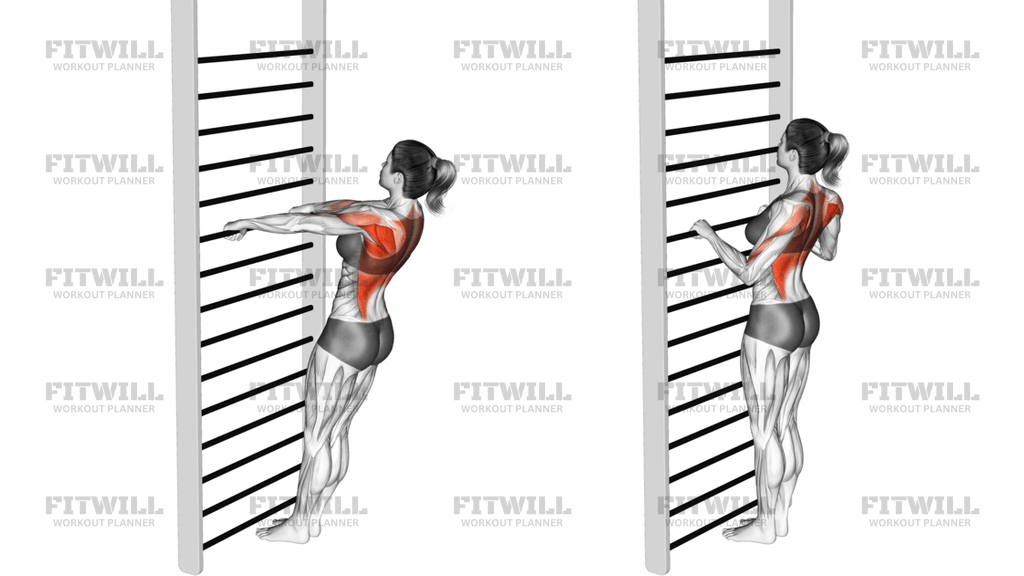
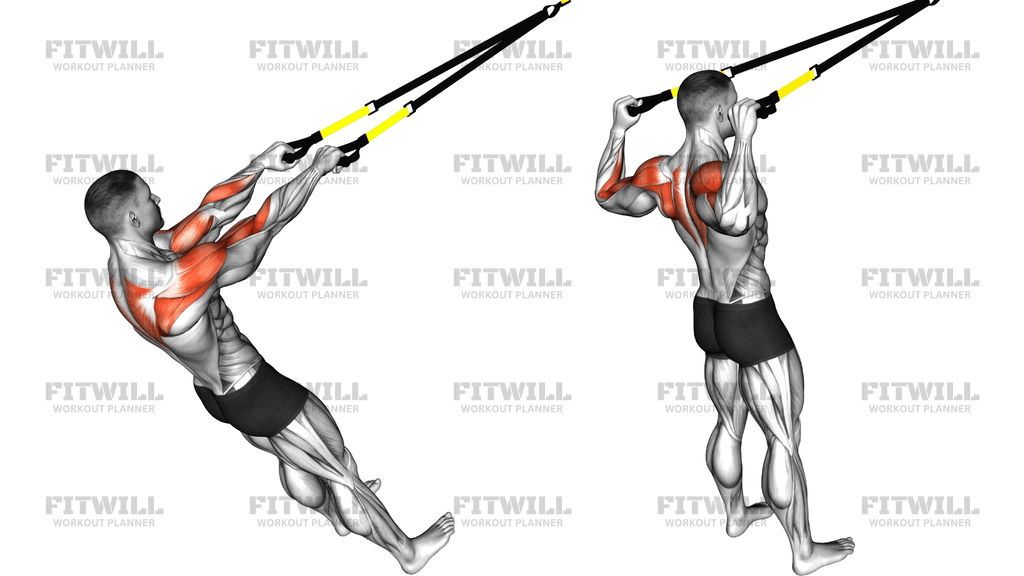
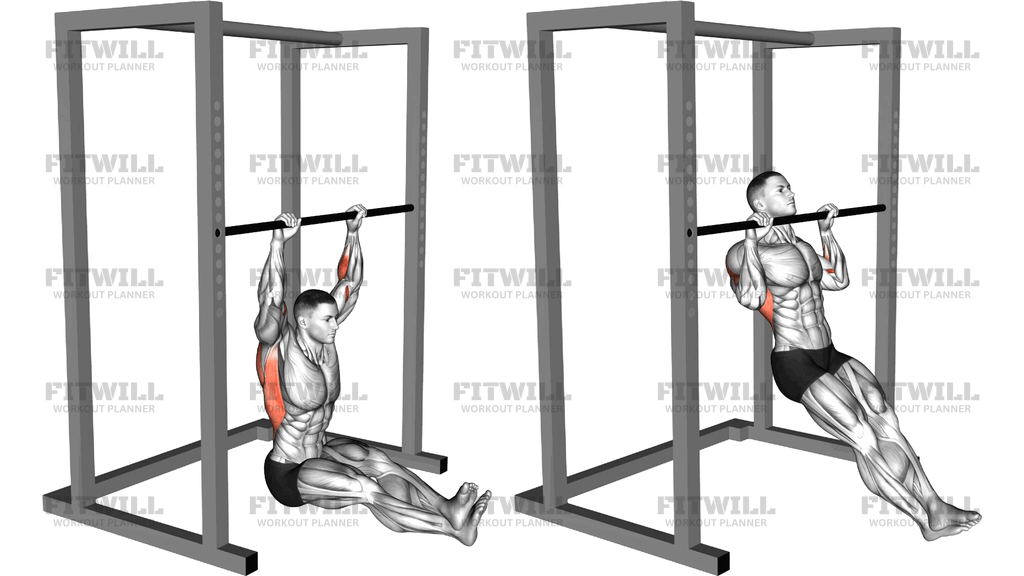
Bodyweight Standing Row is a horizontal bodyweight pull performed against a fixed support such as stall bars, a wall-bar ladder, or a similar anchored rung. You stand upright, lean back, and row your chest toward your hands by bending the elbows and pulling the shoulder blades back and down. The movement trains the upper back as a coordinated unit, with the traps doing the main work and the rhomboids, rear shoulders, lats, and biceps helping to complete the pull.
The setup matters because the angle of your body changes the difficulty. A more upright stance makes the row easier; stepping the feet farther forward and leaning back increases the load. Keeping the heels down, ribs stacked over the pelvis, and arms long at the start helps you avoid turning the exercise into a shrug or a hip-driven cheat. The fixed hand position also makes it easier to feel whether the elbows are driving the rep or whether the shoulders are taking over.
Use this row when you want a back-focused pull that is easier to scale than a barbell row or pull-up. It works well for beginners learning scapular control, for warm-ups before heavier pulling, and for accessory work when you want upper-back volume without spinal loading. Because the body stays in one line and the anchor never moves, it is also useful for teaching a clean elbow path and steady torso tension.
Each rep should begin from a controlled stretch with the shoulders set, then finish with the hands close to the chest or upper ribs and the shoulder blades firmly retracted. Lower yourself slowly until the arms are straight again, keeping the body rigid and the neck long. If your low back arches, your head reaches forward, or the shoulders creep toward the ears, shorten the angle and make the stance more upright.
Treat it as a strict pull, not a speed drill. The best reps look identical from set to set, with smooth breathing and no kicking from the legs. That makes Bodyweight Standing Row a practical option for building strength, posture, and control in the upper back while keeping the load easy to adjust by changing foot position.
[ Workout Log & Planner ]
Put your next workout in Fitwill
Keep your plan and training log ready when you are.


Instructions
- Stand facing the fixed rungs, grip a bar or rung at about lower-chest height, and walk your feet forward until your body is leaned back in a straight line.
- Plant your heels, keep your legs long but not locked, and set your hands just wider than shoulder width if the bars allow it.
- Draw your ribs down, brace your midsection, and let your arms straighten so you start with the shoulders set and the torso rigid.
- Pull your chest toward your hands by driving the elbows back and squeezing the shoulder blades together.
- Finish the rep when the handles or rung are close to your chest or upper ribs without shrugging the shoulders upward.
- Pause briefly in the top position and keep your neck long instead of jutting your chin forward.
- Lower yourself slowly until the arms are straight again and the shoulder blades are under control at the bottom.
- Reset the brace before the next rep and continue for the planned set, or step closer to the wall bars if the angle becomes too hard.
Tips & Tricks
- Make the exercise harder by walking your feet farther forward; make it easier by standing more upright before you change anything else.
- Keep the heels heavy so the pull comes from the upper back instead of a toe push or hip swing.
- Think about driving the elbows back and slightly down, not just bending the elbows harder.
- Stop the set if the shoulders start creeping toward the ears, because that usually means the traps are shrugging instead of rowing.
- Use a smooth two-part rhythm: controlled pull, brief squeeze, and a slower return to the start.
- If the low back arches, shorten the body angle and re-stack the ribs over the pelvis before the next rep.
- Keep the wrists neutral on the rung so the hands do not collapse and steal tension from the back.
- Choose a hand height that lets your chest reach the anchor without cranking the neck upward to finish the rep.
Frequently Asked Questions
What muscles does Bodyweight Standing Row train most?
It mainly targets the upper back and traps, with the rhomboids, lats, rear shoulders, and biceps helping to complete the pull.
Is the row done against a bar or a wall-bar ladder?
This version uses a fixed support such as stall bars or a wall-bar ladder, so the body moves while the anchor stays still.
How do I make the standing row harder?
Walk your feet farther forward and lean back more while keeping your body straight; that increases the bodyweight load immediately.
What should I do if I cannot keep my shoulders down?
Move your feet a little closer to the wall bars and reduce the angle until you can row without shrugging.
Where should my hands finish?
Aim for the chest or upper-rib area, not the neck, and finish with the shoulder blades pulled back rather than elevated.
Is this a good beginner back exercise?
Yes. The fixed grip and adjustable body angle make it a useful way to learn scapular control before harder pulls.
What is the most common mistake with this movement?
Most people either let the hips swing or shrug the shoulders up, which reduces the upper-back work.
Can I use Bodyweight Standing Row as a warm-up?
Yes. It works well as a warm-up or accessory pull because the load is easy to scale and the motion is easy to control.