Suspension Row
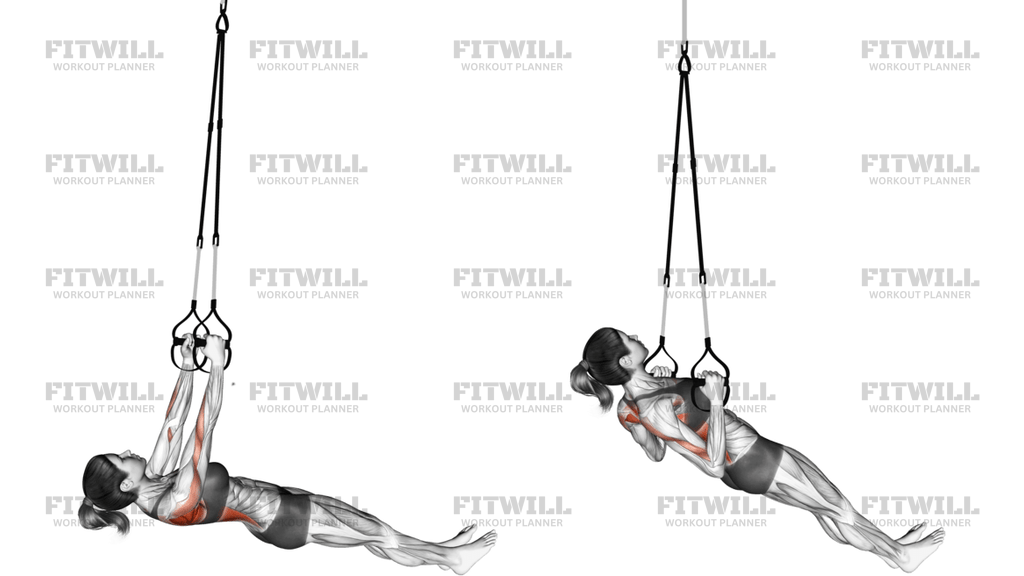
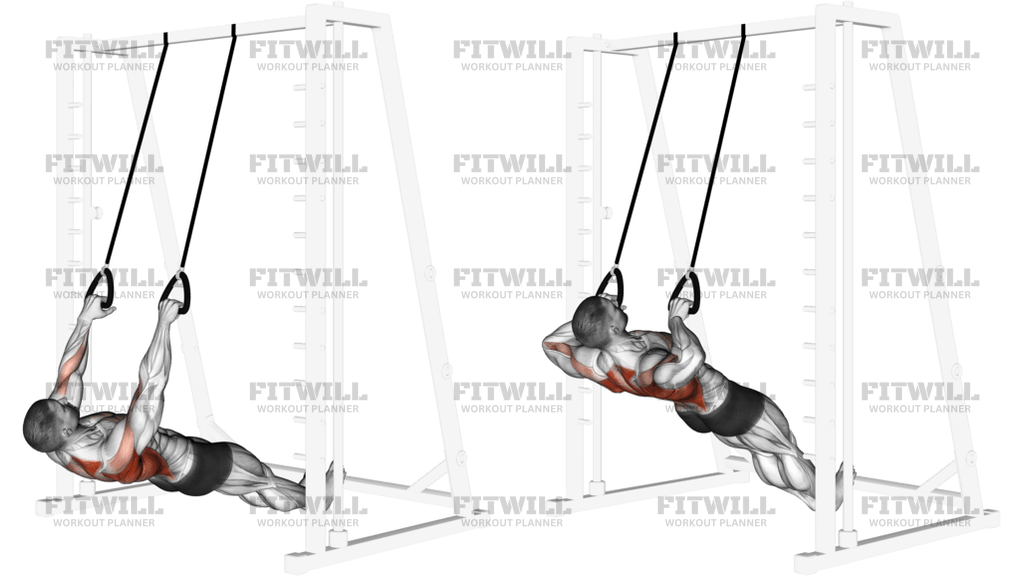
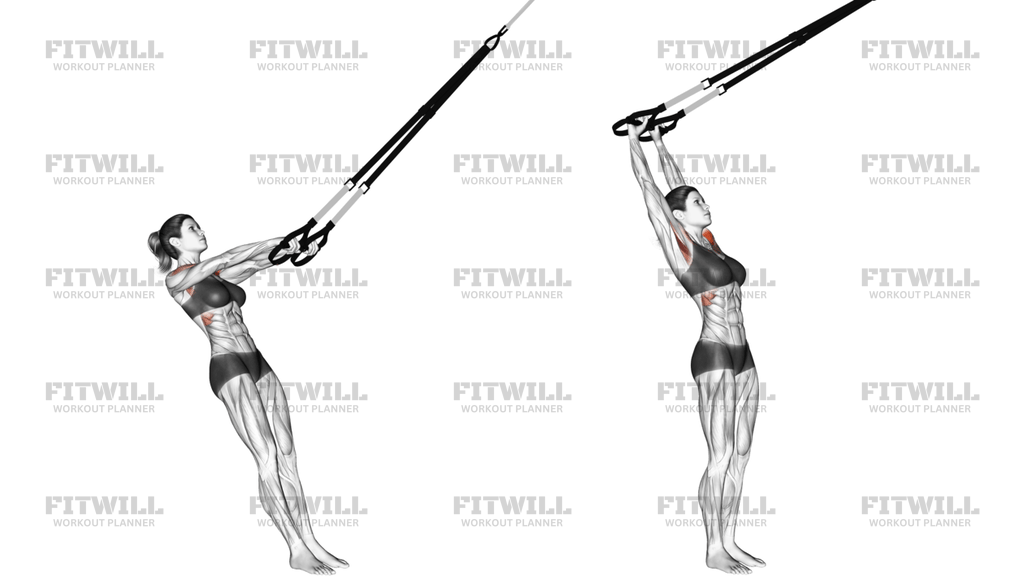
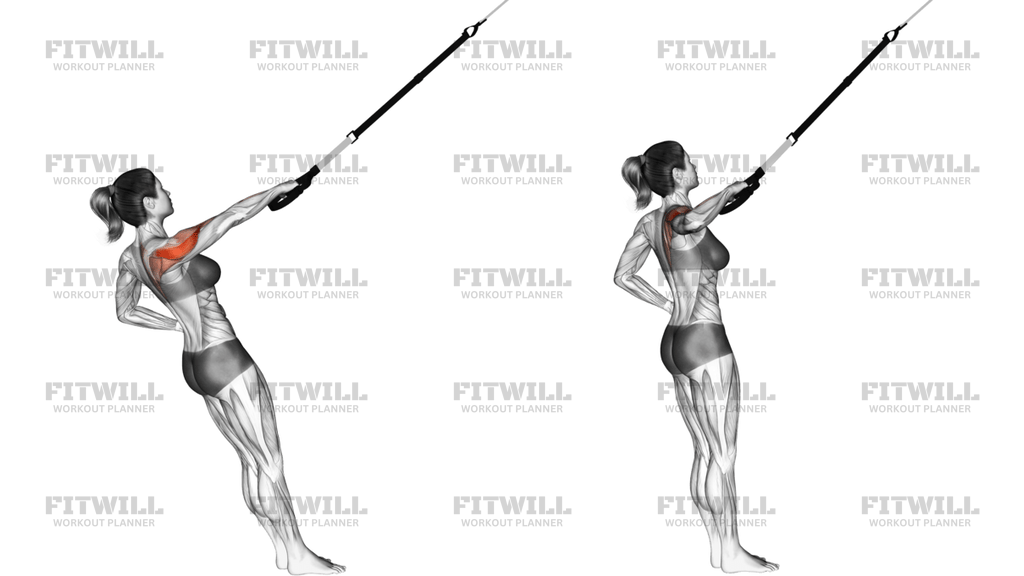
Suspension Row is a bodyweight pulling exercise performed with suspension straps anchored overhead. It trains horizontal pulling strength while demanding a rigid plank-like body position, so the row is never just an arm movement. The straps let you scale the challenge by changing your foot placement and body angle, which makes the exercise useful for beginners learning control and advanced lifters chasing more upper-back work.
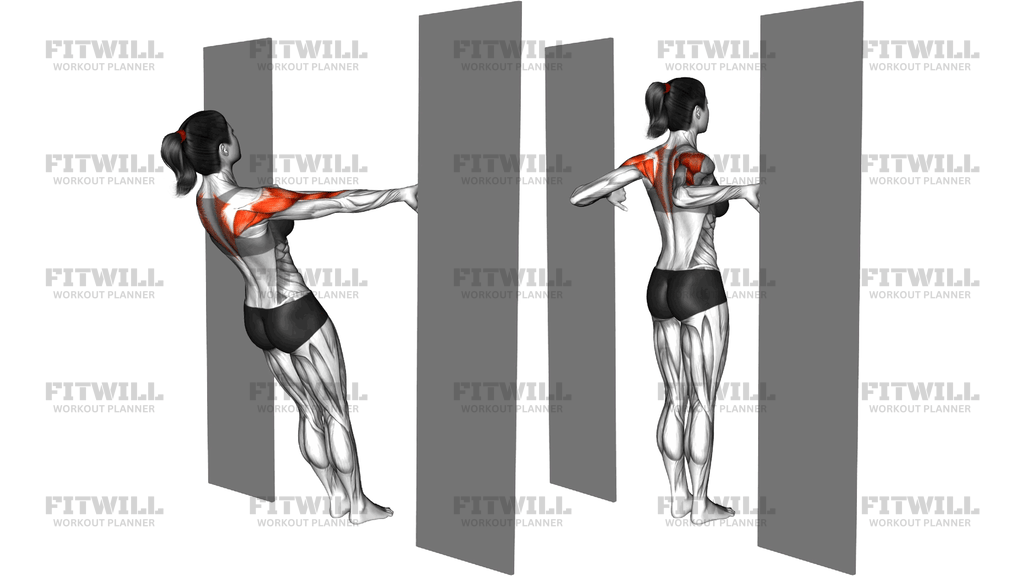
The main emphasis is on the traps and upper back, with the rhomboids, lats, rear shoulders, and biceps assisting the pull. Because the body stays long and braced, the core and glutes also have to work to stop the hips from sagging or twisting. In practice, the exercise is a good test of whether you can keep the shoulders packed while pulling the chest toward the handles.
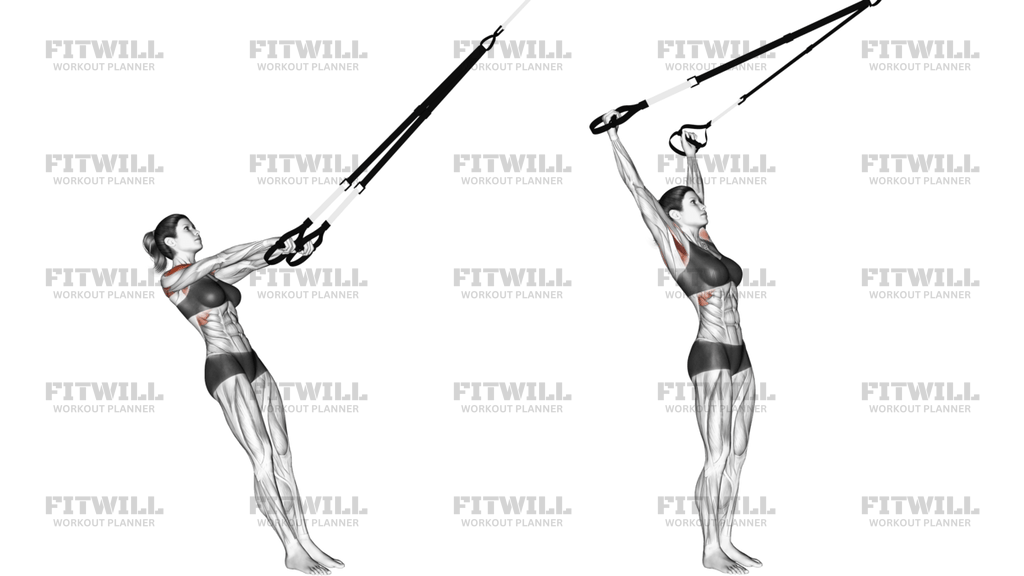
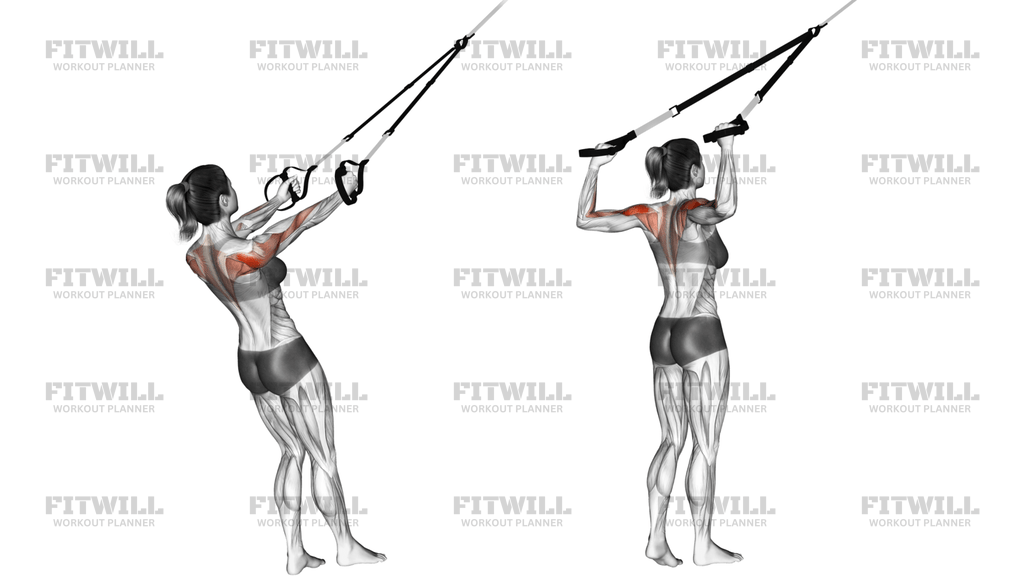
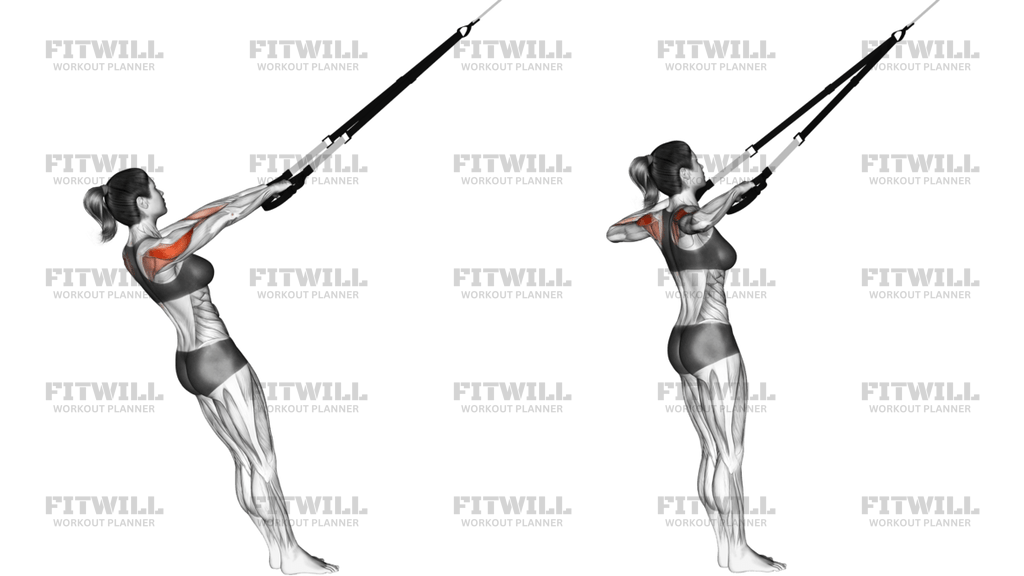
The setup matters as much as the pull. Start with the handles at about chest height relative to your anchor, grip them with neutral wrists, and walk the feet forward until your body forms one straight line from head to heels. A more upright stance makes the row easier; a flatter body angle increases the load and the demand on the upper back. If the straps are too short, the anchor too low, or the feet too far forward, the movement quickly turns into a shrug or a hip hinge instead of a clean row.
Each repetition should begin from a controlled hang with the arms straight and the shoulders steady. Pull by driving the elbows back and slightly down until the handles reach the sides of the lower ribs or chest line, depending on your body angle. Pause briefly at the top without losing posture, then lower under control until the arms are long again. Keep breathing smooth, avoid letting the neck crane forward, and stop the set if the ribs flare, the hips drop, or the shoulders start riding up toward the ears.
Suspension Row is most useful when you want back strength, posture control, or a joint-friendly pulling pattern without a barbell. It fits well in upper-body sessions, accessory work, warmups, and total-body circuits. The best results come from precise repetitions with a consistent body line and a difficulty level that lets you own every inch of the range.
[ Workout Log & Planner ]
Put your next workout in Fitwill
Keep your plan and training log ready when you are.


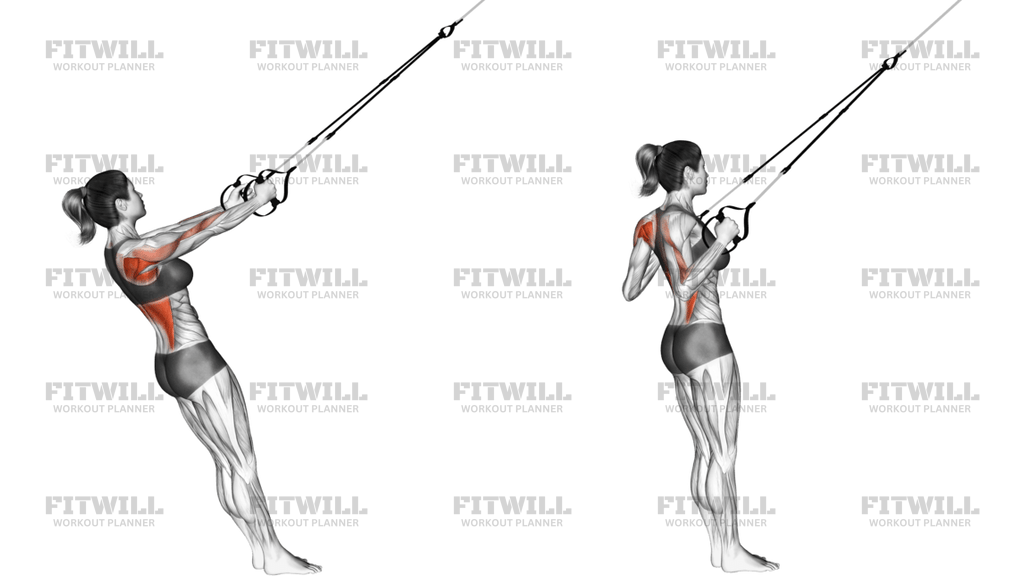
Instructions
- Set the suspension straps so the handles hang at about chest height and grip one handle in each hand with neutral wrists.
- Walk your feet forward and lean back until your body forms a straight line from head to heels, with arms fully extended.
- Plant your feet hip-width apart and keep your heels down so your balance stays steady through the whole set.
- Brace your abs and squeeze your glutes before you start each rep so your ribs and pelvis stay stacked.
- Pull the handles toward the sides of your lower ribs by driving your elbows back and slightly down.
- Keep your shoulders away from your ears as your chest moves toward the handles.
- Pause briefly at the top when your shoulder blades are pulled together and your body stays rigid.
- Lower yourself back to the start in a controlled way until the arms are long again.
- Breathe out as you row and inhale as you return, then finish the set by stepping closer to the anchor to unload the straps.
Tips & Tricks
- The more horizontal your body is, the harder the row becomes, so use foot position to match the load to your ability.
- Keep your wrists straight and the handles in a neutral grip instead of curling them toward your forearms.
- Think about pulling your chest toward the handles, not just yanking the handles toward your hands.
- If your shoulders shrug at the top, step your feet back a little and reduce the angle before the next set.
- A small pause at the top makes it easier to feel the mid-back working and reduces swinging.
- Do not let your hips sag or pike; the body should stay long like a moving plank.
- Lower under control for two to three seconds so the straps stay loaded instead of snapping you back.
- If the exercise feels too easy, walk your feet farther forward rather than speeding up the reps.
Frequently Asked Questions
What muscles does Suspension Row work?
It mainly trains the traps and upper back, with the rhomboids, lats, rear shoulders, biceps, and core helping to control the pull.
How do I make the row easier or harder?
Step closer to the anchor and stand more upright to make it easier. Walk your feet farther forward and make your body more horizontal to increase the load.
Where should the handles go at the top?
Pull them toward the sides of your lower ribs or chest line, not up to your shoulders. If they drift too high, your upper traps usually take over.
Should my body stay straight during the set?
Yes. Keep a straight line from head to heels so the row stays strict and your hips do not sag or hinge.
Is Suspension Row good for beginners?
Yes. It is beginner-friendly because you can change the difficulty instantly by adjusting your foot position and body angle.
Why do my shoulders feel crowded or shrugged?
You are probably too far under the anchor or pulling with the shoulders instead of the elbows. Make the angle a little easier and keep the shoulder blades down.
Can I use this exercise for posture work?
Yes. The row teaches you to retract the shoulder blades while keeping the trunk stable, which carries well into posture-focused training.
What is the biggest form mistake to avoid?
The most common error is turning the row into a hip thrust or body swing. Keep the torso rigid and let the upper back drive the movement.