Suspension Fly
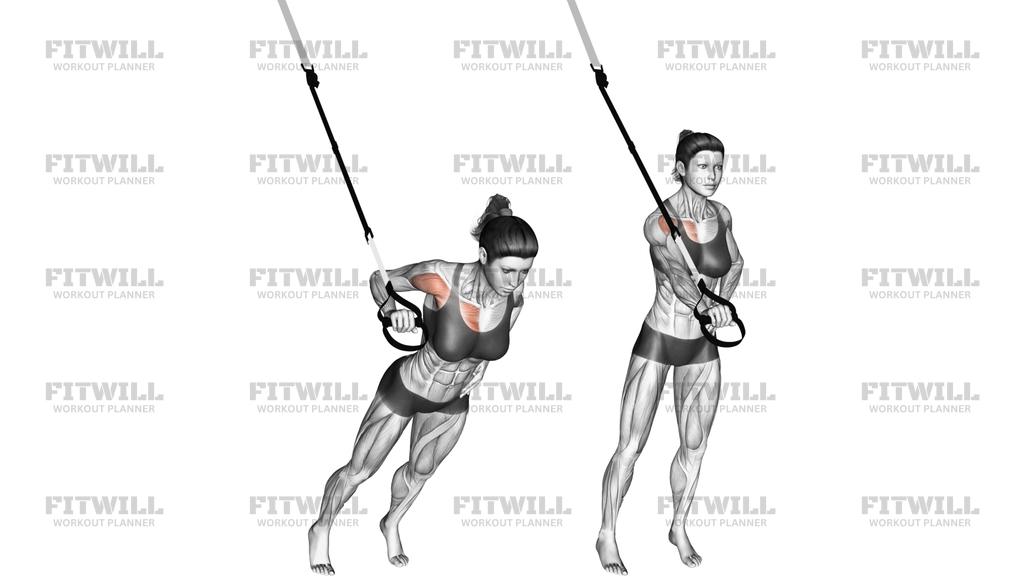
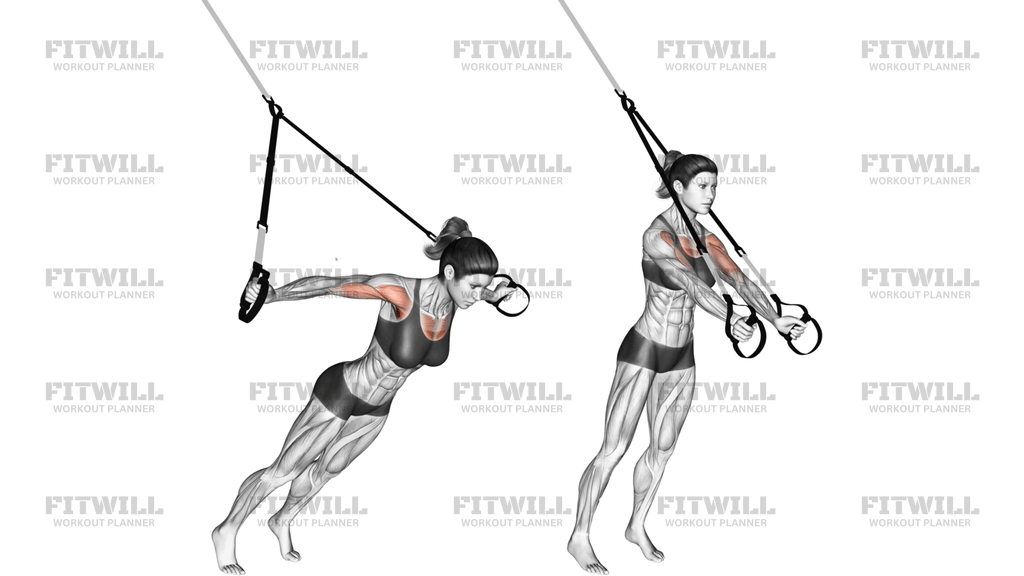
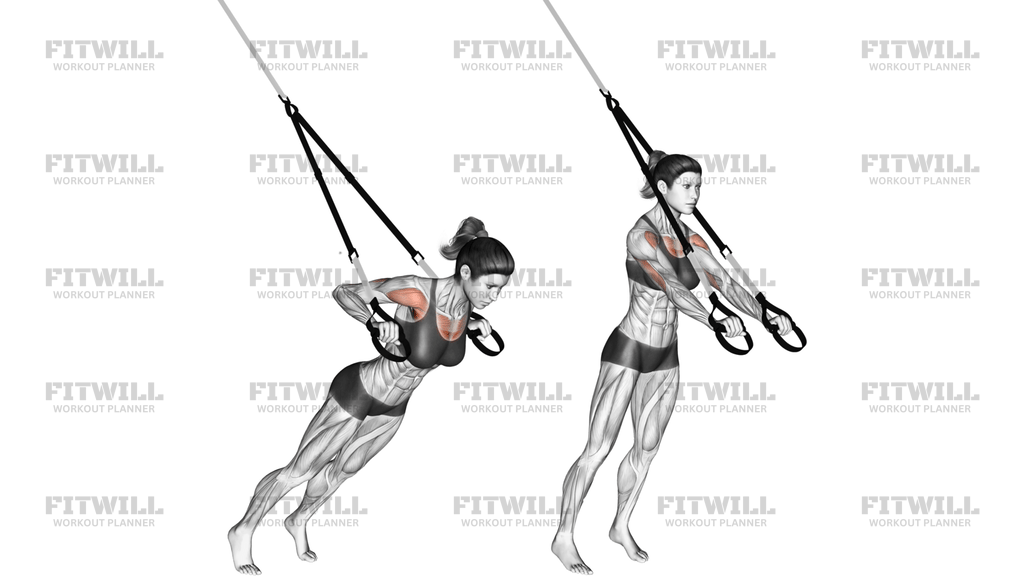
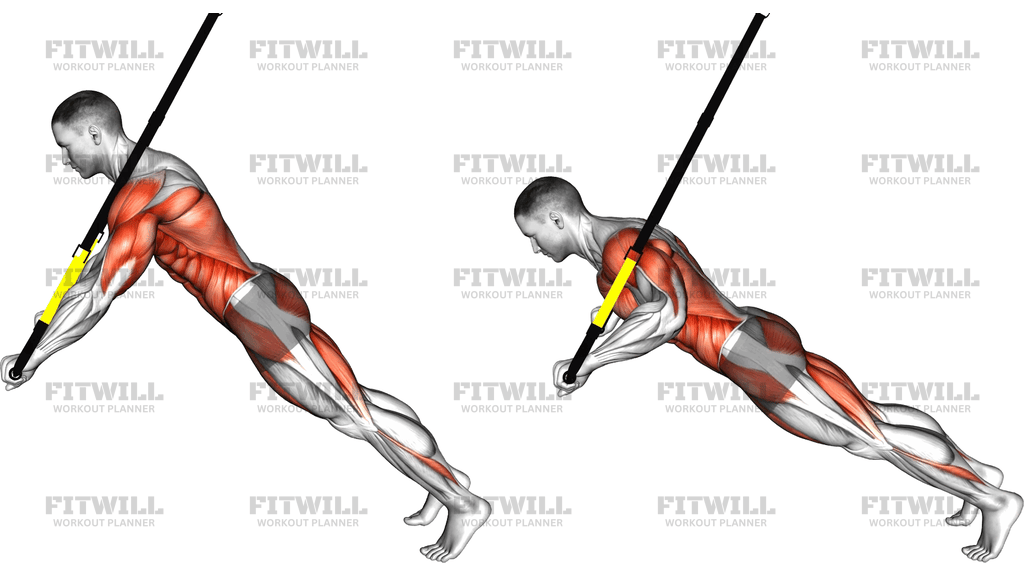
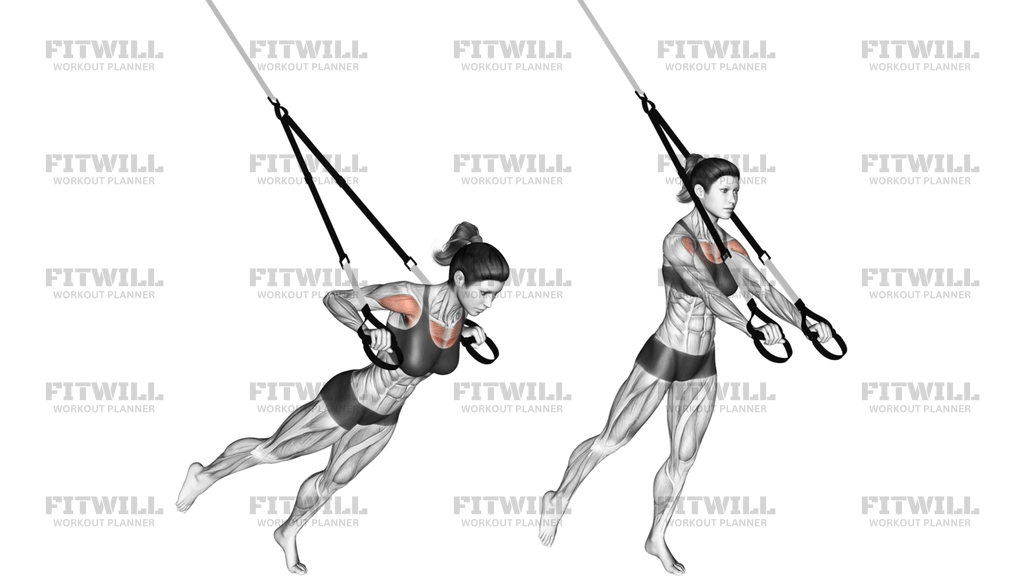
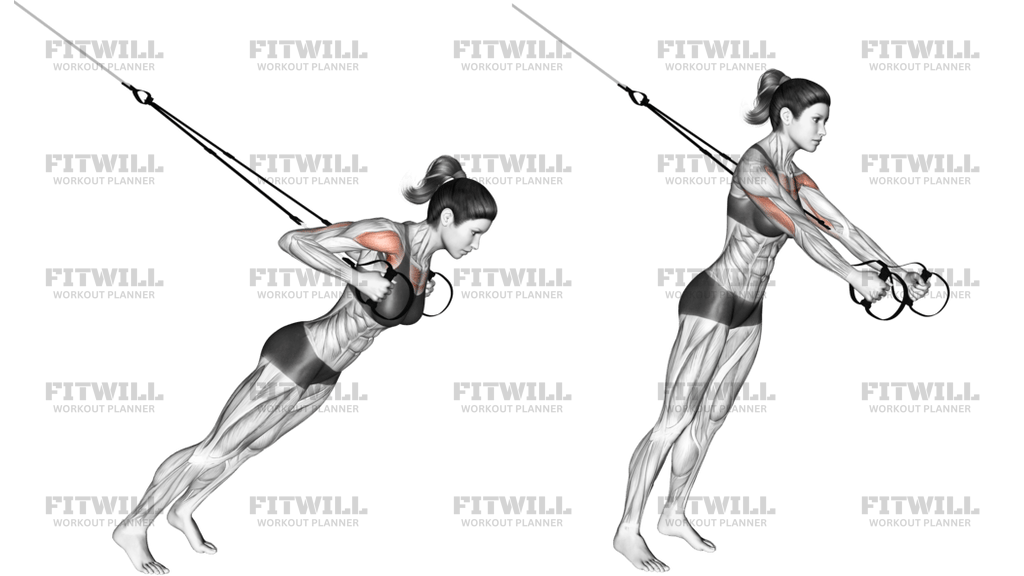
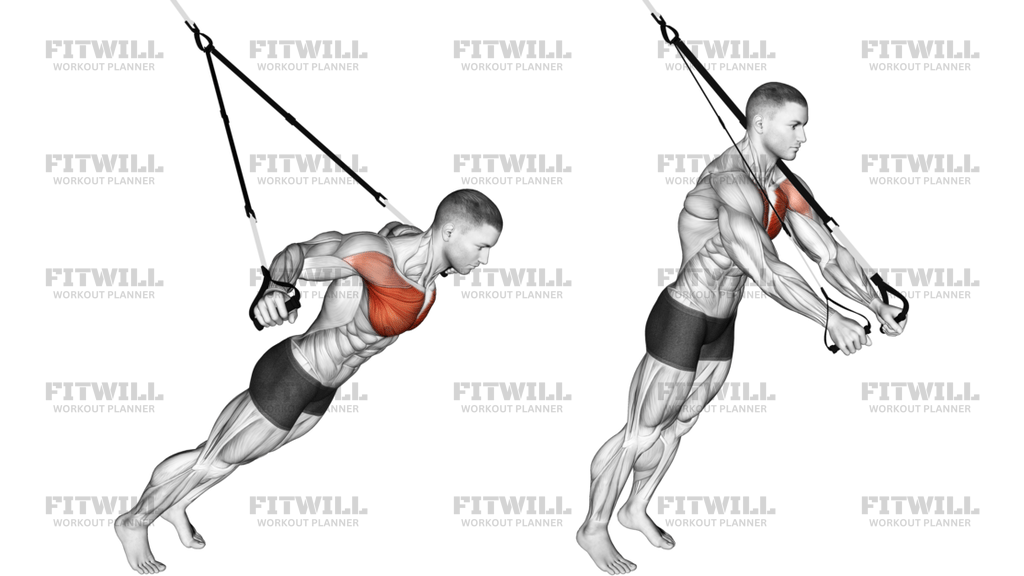
Suspension Fly is a standing suspension-trainer chest exercise that loads the pecs through a long horizontal fly pattern while your feet stay planted and your body holds a forward lean. The straps create an unstable line of resistance, so each rep asks you to control shoulder position, torso angle, and arm path at the same time. That makes it useful for building chest strength, upper-body control, and tolerance for adduction under tension.
The movement centers on the Pectoralis major, with the anterior deltoids, triceps, and core working to keep the body rigid and the handles tracking cleanly. Because the load changes as you move, the setup matters more than it does in a machine fly. A short strap angle and a strong body line will keep the exercise focused on the chest, while a sagging hips position or bent wrists will shift the work into the shoulders and joints.
At the top of each rep, the hands are together in front of the chest with the elbows softly bent. From there, you open the arms out in a controlled arc until the chest is stretched and the shoulders are still packed, then you squeeze the handles back together without jerking the torso. The goal is not to fall into the bottom position; it is to own the stretch, keep the rib cage from flaring, and finish each rep by bringing the handles together with the chest rather than by throwing the body forward.
This exercise fits well in chest-focused accessory work, upper-body conditioning, or a suspension-training circuit when you want a demanding but joint-friendly fly pattern. It can be adjusted for beginners by walking the feet farther back and reducing the body angle, or made more difficult by moving the feet forward. Keep the reps smooth, stop the set when the shoulders start to drift forward, and use the exercise to train control as much as effort.
[ Workout Log & Planner ]
Put your next workout in Fitwill
Keep your plan and training log ready when you are.


Instructions
- Set the suspension straps at about chest height, face away from the anchor, and hold one handle in each hand with your arms slightly bent.
- Step forward until the straps are taut, then lean your body into a straight line from head to heels with your feet hip-width apart.
- Bring your hands together in front of your chest and set your shoulders down and back before the first rep.
- Keep a soft bend in the elbows and open the arms out in a wide arc until you feel a strong stretch across the chest.
- Stop the lowering phase before the shoulders roll forward or the rib cage starts to flare.
- Exhale and squeeze the handles back together in front of the chest by driving the movement through the pecs.
- Finish tall through the torso without snapping the hips, shrugging, or bending the elbows more to cheat the rep.
- Repeat for the planned reps, then step back and release the tension under control.
Tips & Tricks
- The more upright you stand, the lighter the fly feels; the more you walk your feet forward, the more bodyweight and chest tension you create.
- Keep the elbows softly bent and almost fixed so the handles move in an arc instead of turning the exercise into a triceps press.
- If your shoulders roll forward at the bottom, shorten the range and stop the descent sooner.
- Think about pulling the upper arms around the rib cage rather than just squeezing the hands together.
- Keep the wrists neutral so the handles stay aligned with the forearms instead of folding toward the thumbs.
- A slight exhale as the handles come together helps keep the ribs from popping up and the torso from swaying.
- Use a slower lowering phase to stay in control of the stretch and reduce strain at the front of the shoulder.
- If the core shakes or the lower back arches, reduce the lean before adding more repetitions or resistance.
Frequently Asked Questions
What muscles does the Suspension Fly work most?
The main target is the chest, especially the pecs. The front delts, triceps, and core help stabilize the movement.
How do I set up the straps for this fly?
Set the handles around chest height, face away from the anchor, and lean forward until the straps are tight with your body in a straight line.
Where should my hands travel during each rep?
Open the arms out in a wide arc until you feel a chest stretch, then bring the handles back together in front of the chest.
Should my elbows stay straight?
No. Keep a small bend in the elbows and hold that bend mostly the same through the rep so the shoulders do the work, not the elbows.
Is this exercise hard on the shoulders?
It can be if you drop too deep or let the shoulders roll forward. Use a controlled range and stop before the front of the shoulder feels pinched.
Can beginners use the Suspension Fly?
Yes. Beginners should walk their feet back less, keep a shorter range, and slow the lowering phase to stay in control.
What is the most common form mistake?
Letting the torso sag or flare while trying to force a bigger stretch. The body should stay braced and the movement should come from the chest.
How do I make the fly harder without adding weight?
Walk your feet farther forward so your body angle increases, or slow the eccentric phase and pause briefly in the stretched position.