Suspension Close-Grip Chest Press
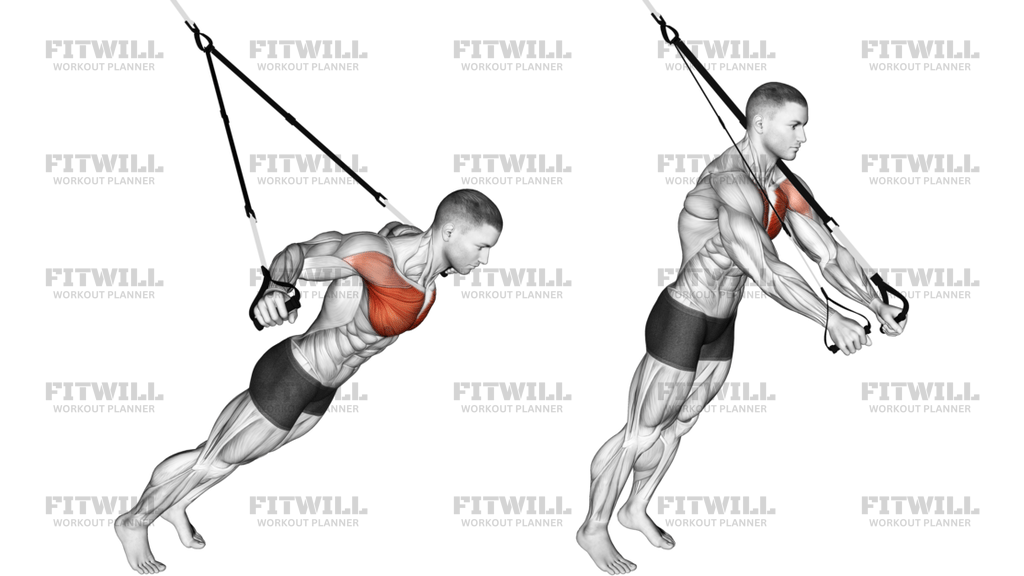
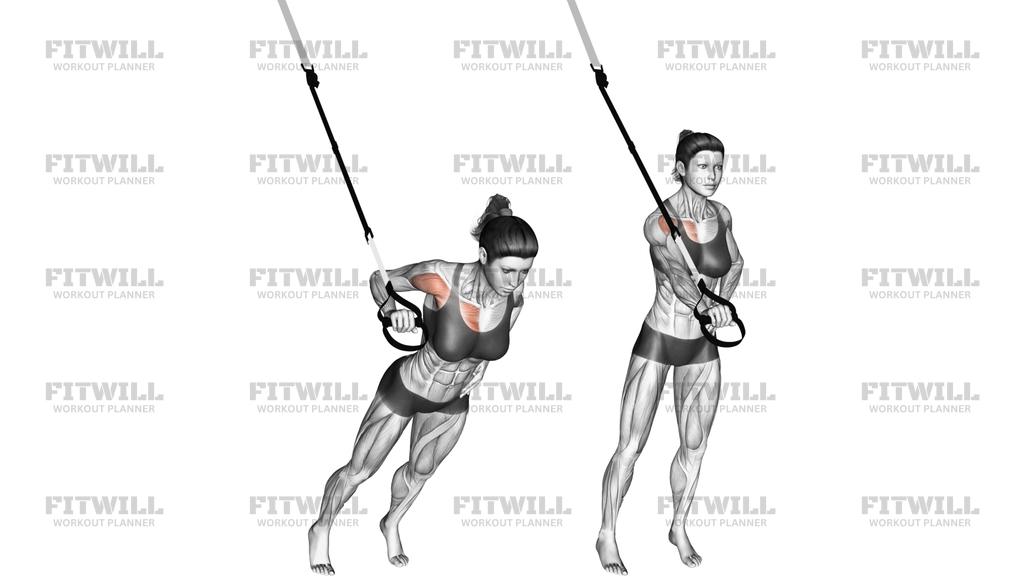
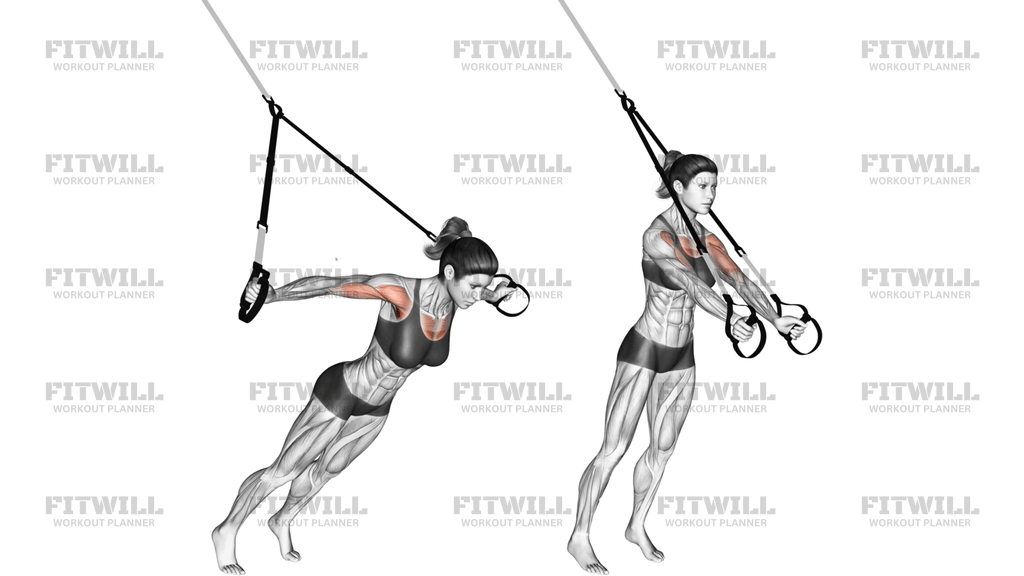
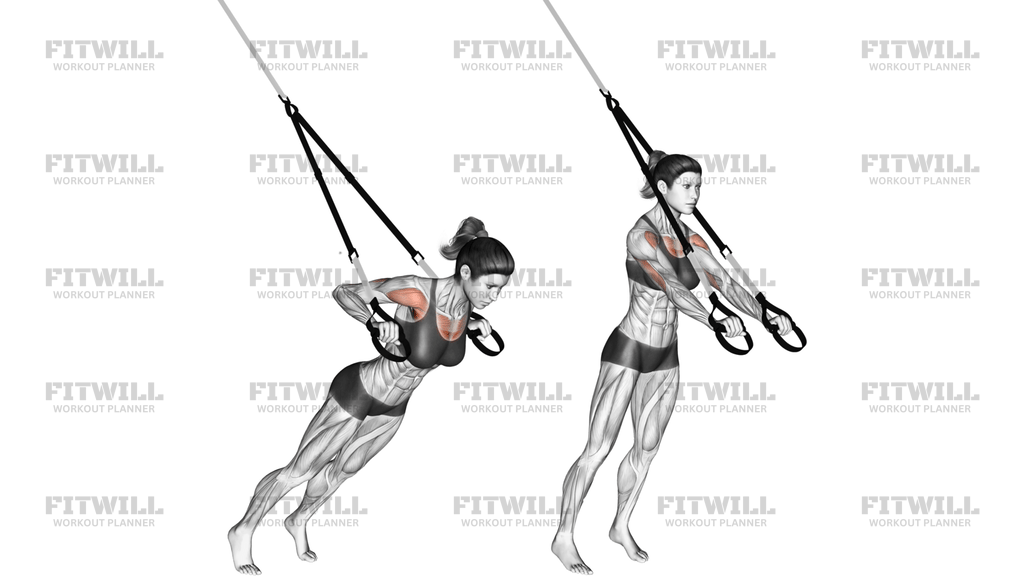
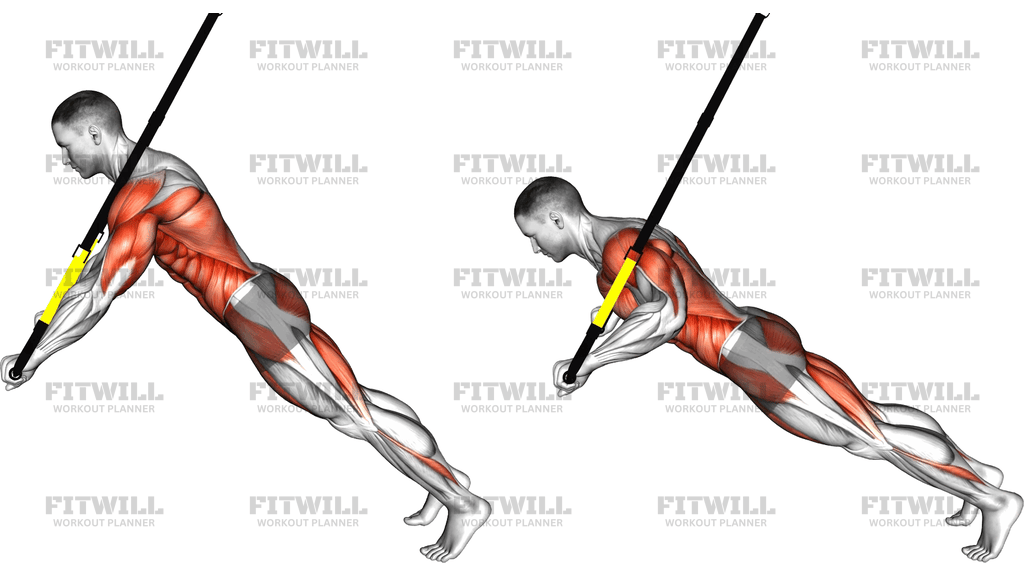
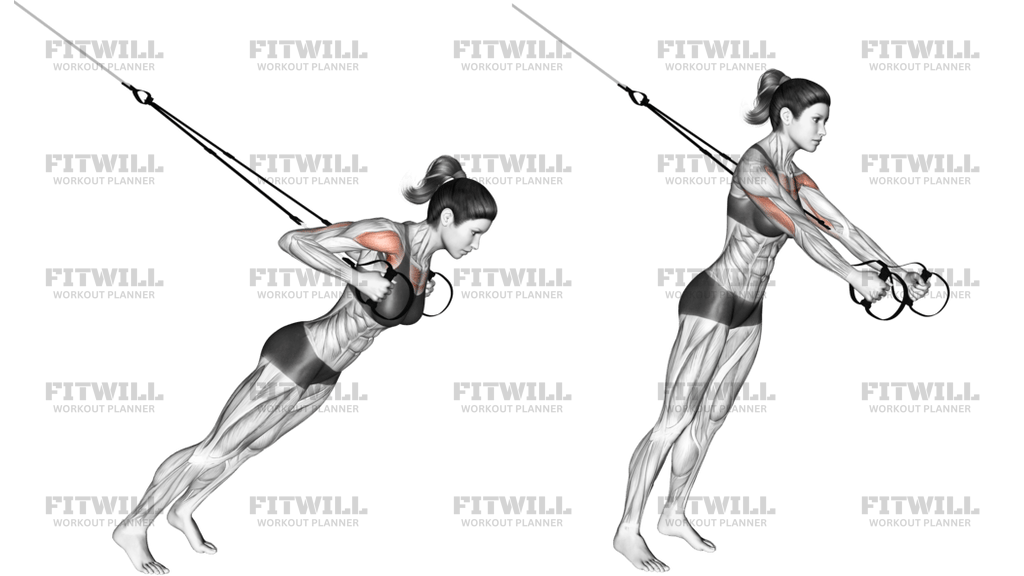
Suspension Close-Grip Chest Press is a standing suspension exercise that builds pressing strength while demanding body control. In the image, the straps are anchored high, the hands stay close together, and the body leans forward in a straight line so the chest can press the handles away from the torso and return under control. That close-grip setup shifts the emphasis toward the chest and triceps while still asking the shoulders and trunk to stabilize every rep.
The exercise trains the pectoralis major as the main mover, with the anterior deltoids, triceps, and abdominal wall helping manage the press and keep the body rigid. Because the load is created by body angle rather than plates or a machine stack, small changes in foot placement or lean angle make a big difference. Stepping farther back increases the challenge, while moving the feet closer to the anchor reduces it. That makes the movement useful for progression, regression, and technique work in the same pattern.
Good setup matters more here than in a fixed-path press. The hands should start near the lower chest or upper ribs, the elbows should stay tucked instead of flaring wide, and the shoulders should stay away from the ears. A tall, braced posture helps the press feel smooth and keeps the line from ankle to head organized. If the trunk sags or the ribs pop forward, the press turns into a compensation drill instead of a clean chest press.
Each repetition should feel like a controlled push away from the straps, followed by a slow return until the chest comes back between the hands without losing alignment. Pressing in a slightly upward-forward arc is normal because the straps are anchored overhead, but the goal is still to keep tension on the chest and triceps rather than swinging the whole body. Exhale as you press, inhale as you come back, and stop the set if the shoulders shrug, the wrists bend back, or the feet have to shuffle to save the rep.
Suspension Close-Grip Chest Press works well as an accessory press, a warmup for more demanding chest work, or a bodyweight-strength option when you want chest tension without a bench or barbell. It also fits well in home or travel training because the difficulty comes from angle and control, not heavy external load. Done well, it is a precise, repeatable pressing pattern that develops upper-body strength, trunk stiffness, and shoulder control at the same time.
[ Workout Log & Planner ]
Put your next workout in Fitwill
Keep your plan and training log ready when you are.


Instructions
- Anchor the suspension straps high and hold both handles together at about lower-chest height with neutral wrists.
- Face the anchor, step your feet back, and lean forward so your body forms one straight line from head to heels.
- Set your feet hip-width or slightly staggered, squeeze your glutes, and brace your ribs down before you start the press.
- Begin with the elbows bent and tucked close to your sides, keeping the handles just outside the chest.
- Press the handles forward and slightly upward until your arms are nearly straight and your chest is stacked between the straps.
- Keep the hands close together and avoid letting the elbows flare wide as you drive away from the anchor.
- Lower yourself back under control until the chest returns between the handles and the shoulders stay packed.
- Exhale as you press, inhale on the return, and keep the same body angle for every repetition.
Tips & Tricks
- The farther your feet are from the anchor, the harder the press becomes because your body angle carries more of your weight.
- If your shoulders feel crowded, shorten the range slightly and keep the elbows a little lower instead of forcing the handles farther forward.
- Keep the handles close together throughout the set so the movement stays chest-dominant instead of turning into a wide fly.
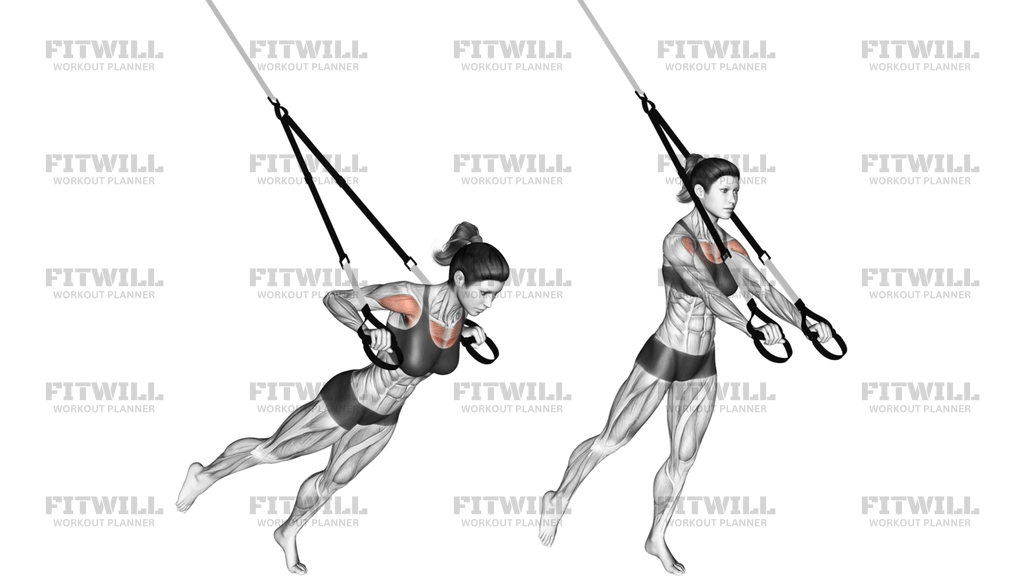
- A small staggered stance can make it easier to keep balance without twisting your torso.
- Do not let the ribs flare toward the anchor on the press; that usually means the core has stopped doing its job.
- If the straps shake or the feet slide, reduce the lean and regain control before adding more range.
- Think about pushing the floor away while the handles travel forward; that helps the whole body stay organized.
- Use a smooth tempo on the way back so the chest stays loaded instead of dropping into the start position.
Frequently Asked Questions
What muscle does Suspension Close-Grip Chest Press target most?
The chest is the primary target, with the triceps and front shoulders helping finish the press.
Is this easier than a floor or bench press?
Usually yes, because you can change the challenge by stepping closer or farther from the anchor instead of loading external weight.
Where should the handles travel during the press?
They should move forward and slightly upward from the lower chest toward arm extension, not swing out in a wide arc.
Should my elbows stay tucked in this version?
Yes. The close-grip setup works best when the elbows stay near the torso instead of flaring wide.
Can beginners use this exercise?
Yes, as long as the body angle is shallow enough to control and the straps stay steady through the return.
What should I do if my shoulders feel pinchy?
Bring your feet a little closer to the anchor, shorten the range, and keep the shoulders down away from the ears.
How do I make the movement harder without adding weight?
Step farther forward into a deeper lean, or slow the lowering phase so the chest and triceps stay under tension longer.
Do I need to keep my body perfectly rigid?
You want a straight, braced line with no sagging or twisting, but a slight natural shift is fine as long as the press stays controlled.