Suspension Incline Push-Up
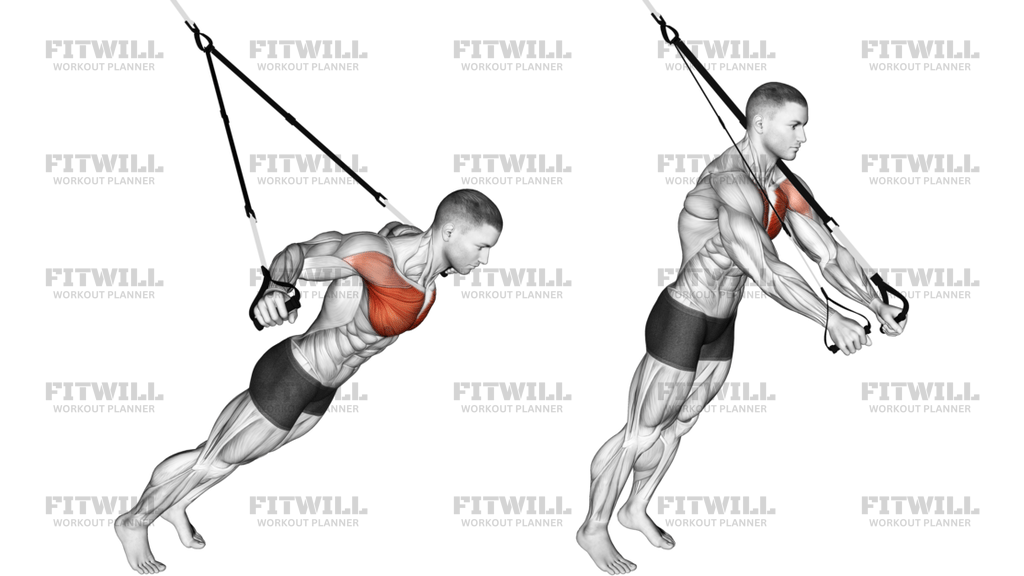
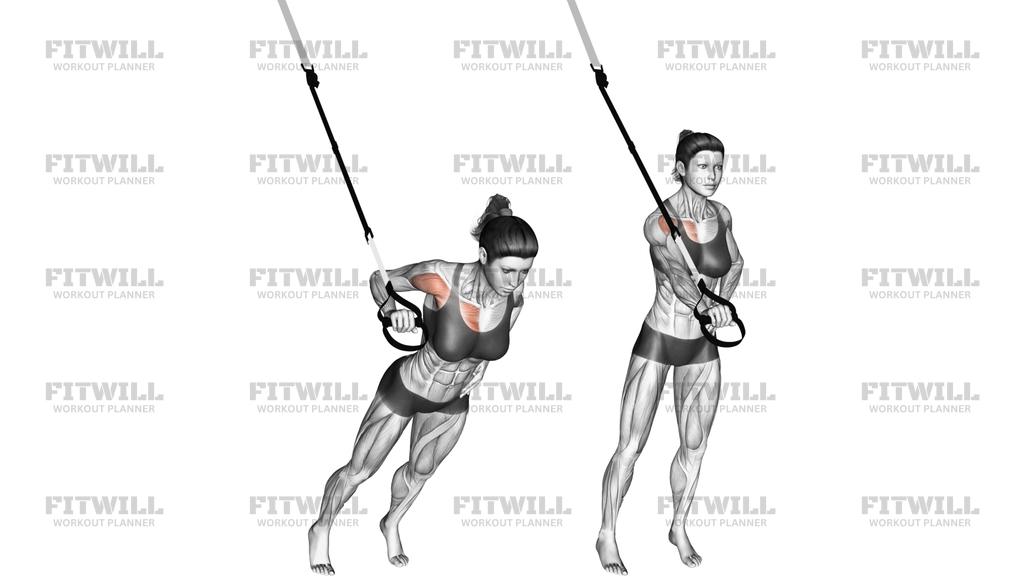
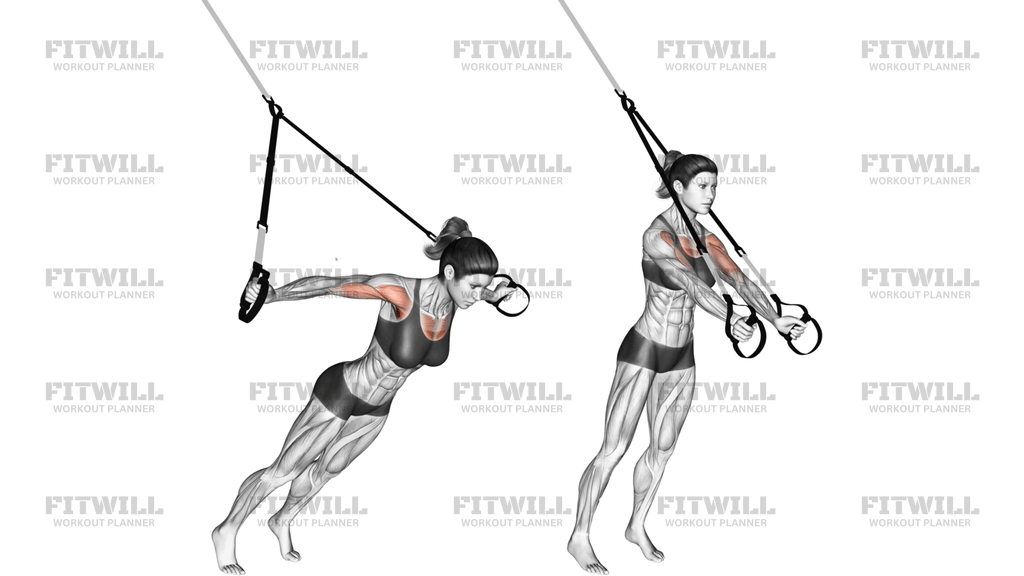
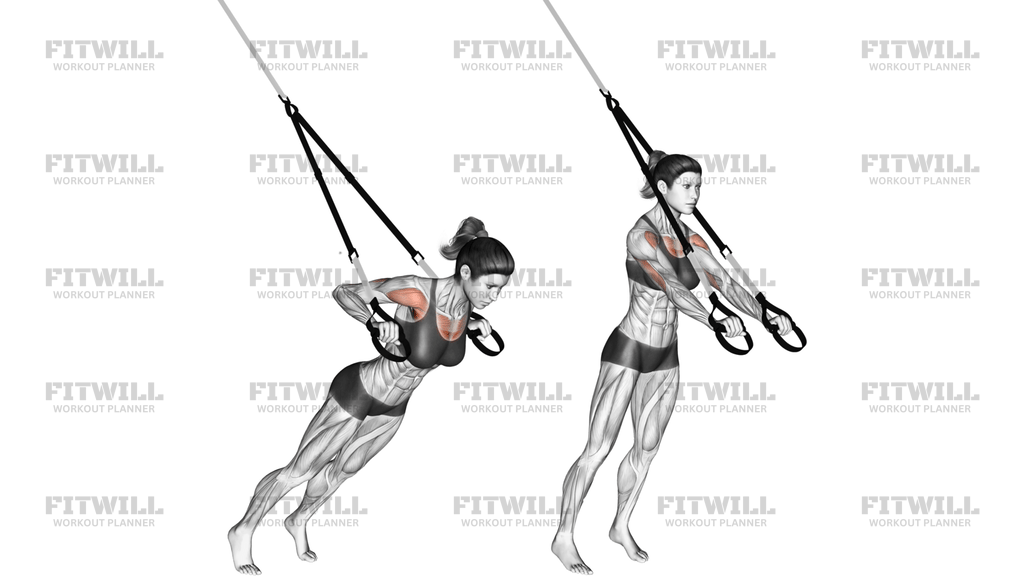
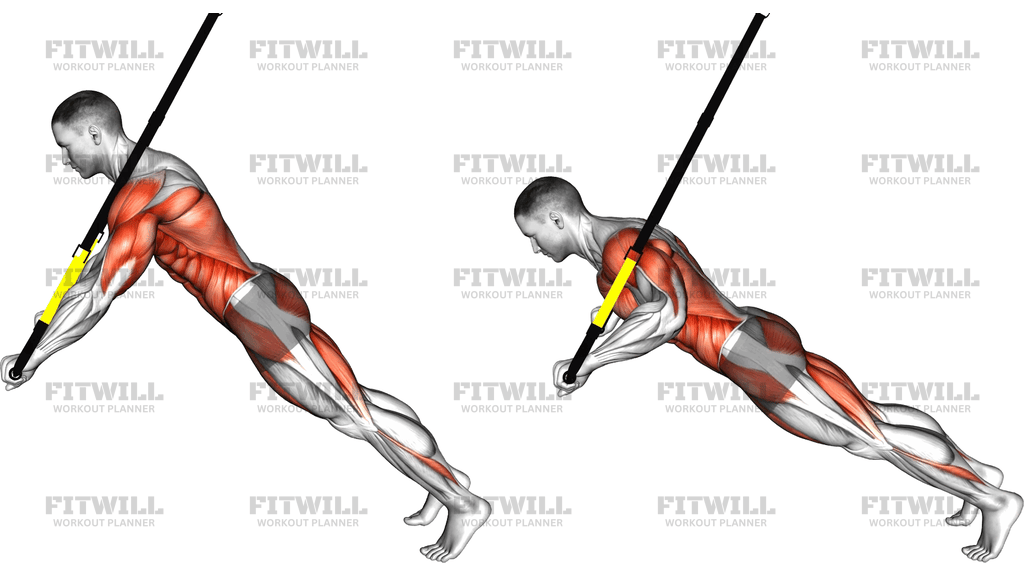
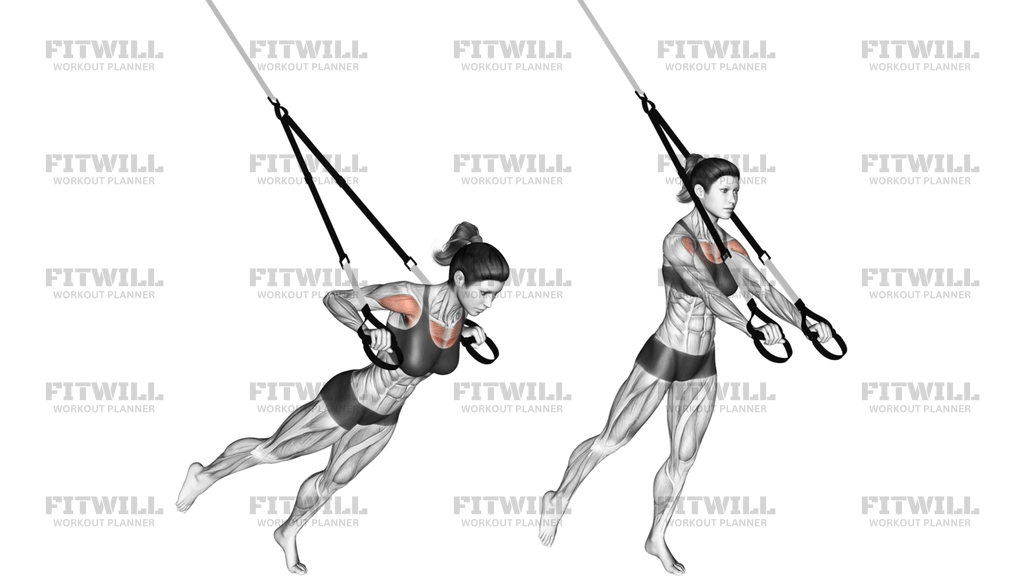
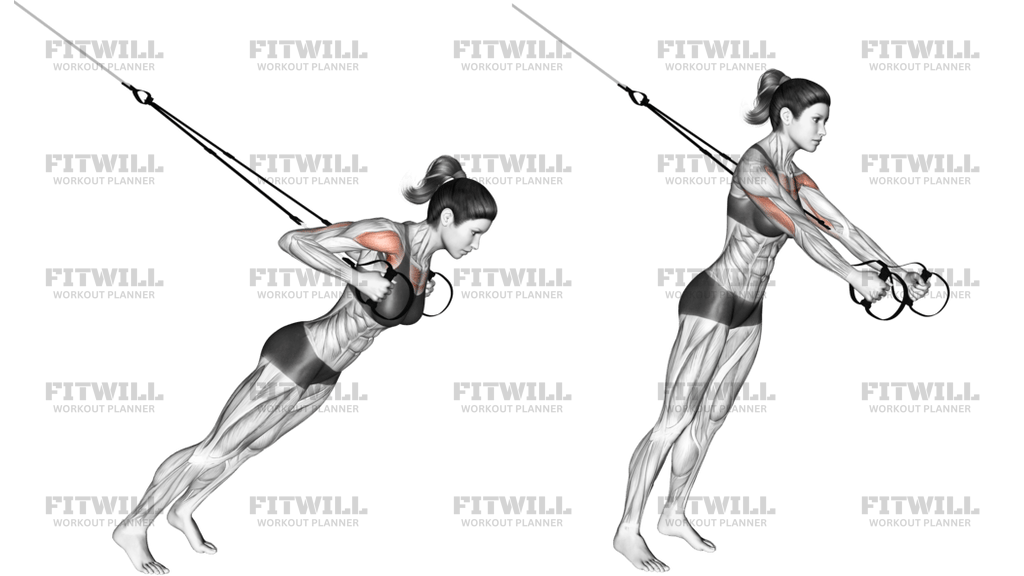
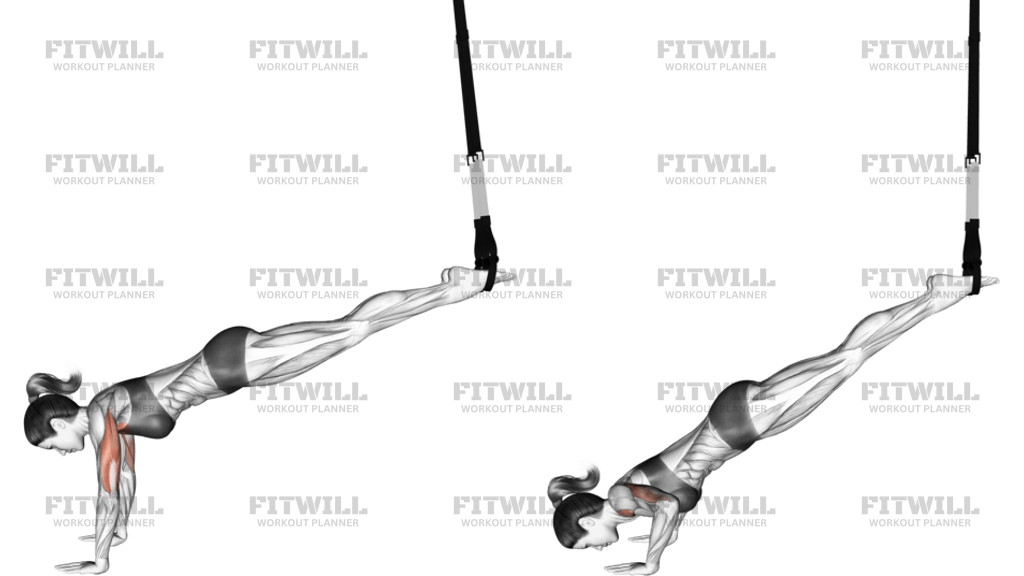
Suspension Incline Push-Up is a suspension-based pressing exercise that challenges the chest, front shoulders, triceps, and core at the same time. The suspended lower body makes every rep more demanding than a standard push-up because you have to control both the press and the line of the body instead of just moving through the arms.
The setup matters because the straps change how much load reaches the upper body and how much the trunk has to resist swaying. Place the hands on the floor slightly wider than shoulder width, keep the wrists stacked under the shoulders, and secure the feet in the suspension straps so the body stays long from head to heels. A strong plank, with the ribs down and glutes squeezed, keeps the exercise focused on pressing instead of turning into a loose hanging drill.
Each repetition should lower the chest between the hands with the elbows angled back rather than flared straight out. That path keeps the shoulders in a cleaner position and usually gives the chest a better line of force. Press the floor away until the arms are straight, but do not shrug the shoulders toward the ears or let the hips lead the movement. A brief pause near the bottom removes bounce from the straps and makes the set more honest.
Suspension Incline Push-Up is useful as upper-body accessory work, as a warm-up when you want pressing volume without a barbell, or as a core-heavy variation when you need the trunk to stay rigid under load. It rewards clean reps, controlled breathing, and a stable setup more than speed. If the straps swing, the hips sag, or the neck reaches forward, shorten the set or make the leverage easier so the movement stays smooth and repeatable.
Fitwill
Log Workouts, Track Progress & Build Strength.
Achieve more with Fitwill: explore over 9600 exercises with images and videos, access built-in and custom workouts, perfect for both gym and home sessions, and see real results.
Start your journey. Download today!




Instructions
- Secure your feet in the suspension straps and place your hands on the floor slightly wider than shoulder width, with the wrists under the shoulders.
- Walk your body forward until you form a straight line from head to heels, then squeeze your glutes and brace your abs so the lower back stays flat.
- Set your shoulders away from your ears and turn the elbows slightly back so the chest is ready to travel between the hands.
- Lower your chest toward the floor under control, keeping the body rigid and the straps quiet instead of letting the hips drop first.
- Stop at the bottom when the chest is close to the floor and the shoulders still feel packed, not jammed forward.
- Press the floor away and return to a strong plank, finishing with straight elbows and the ribs still tucked down.
- Breathe in on the way down and exhale through the press so the trunk stays braced without holding your breath the entire set.
- Step out of the straps carefully after the final rep before relaxing tension from the shoulders or low back.
Tips & Tricks
- Shorten the suspension straps if your feet swing, because excess strap length makes the set unstable before the chest actually fatigues.
- Keep pressure through the whole palm so the wrists do not fold back when the body gets tired.
- Think about lowering the chest between the hands, not dropping the hips toward the floor first.
- A small pause near the bottom removes rebound from the straps and makes each rep more chest-dominant.
- If the front shoulders take over, move the hands a touch wider and keep the elbows angled back from the torso.
- Stop the set when the neck starts craning forward, because that usually means the trunk has stopped holding the line.
- Use fewer reps per set than a regular push-up if the straps are shaking enough to blur the movement path.
- For a harder set, walk the body slightly farther back so more bodyweight is transferred through the arms and chest.
Frequently Asked Questions
What muscles does Suspension Incline Push-Up train most?
The chest does most of the work, with the front shoulders, triceps, and core helping keep the body rigid while you press.
Why do the suspension straps make this harder than a regular push-up?
The straps add instability to the lower body, so your trunk has to resist swaying while the chest and arms press.
How should my hands be set in Suspension Incline Push-Up?
Place them slightly wider than shoulder width and keep the wrists under the shoulders so the pressing path stays clean and balanced.
What should I do if my feet swing during Suspension Incline Push-Up?
Shorten the straps, reduce the body angle slightly, or stop the set sooner. Swinging usually means the setup is too long for your current control.
How low should I go on each rep?
Lower until the chest is close to the floor and the shoulders stay controlled, but stop before the hips sag or the shoulders roll forward.
Is Suspension Incline Push-Up beginner friendly?
Yes, if the straps are set short and the reps stay slow. Beginners should keep the set conservative and avoid chasing high reps while the body is still learning the balance.
Should my elbows flare out?
No, keep them angled slightly back from the torso. That usually feels better on the shoulders and keeps the chest involved.
What is a good regression if Suspension Incline Push-Up feels too unstable?
Use a regular push-up or an incline push-up with your hands on a bench. Both reduce the instability and make the pressing path easier to control.