Suspension One-Arm Chest Press
Suspension One-Arm Chest Press is a unilateral pressing exercise that trains the chest through a suspended handle while forcing the trunk to resist rotation. It is not just a chest drill. The uneven load, body angle, and moving strap all ask the pecs, front shoulders, triceps, and core to coordinate the press while the hips and ribs stay organized.
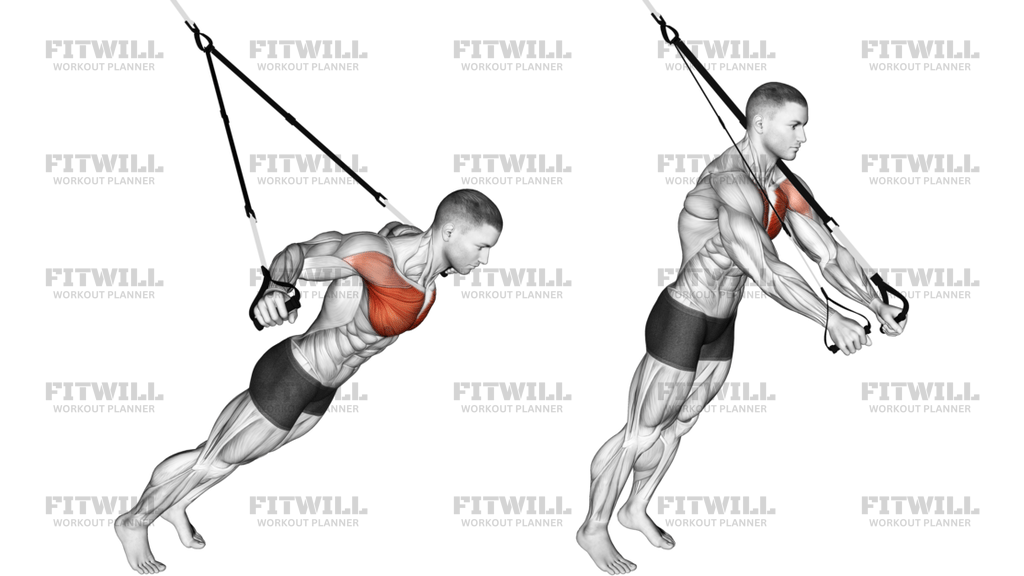
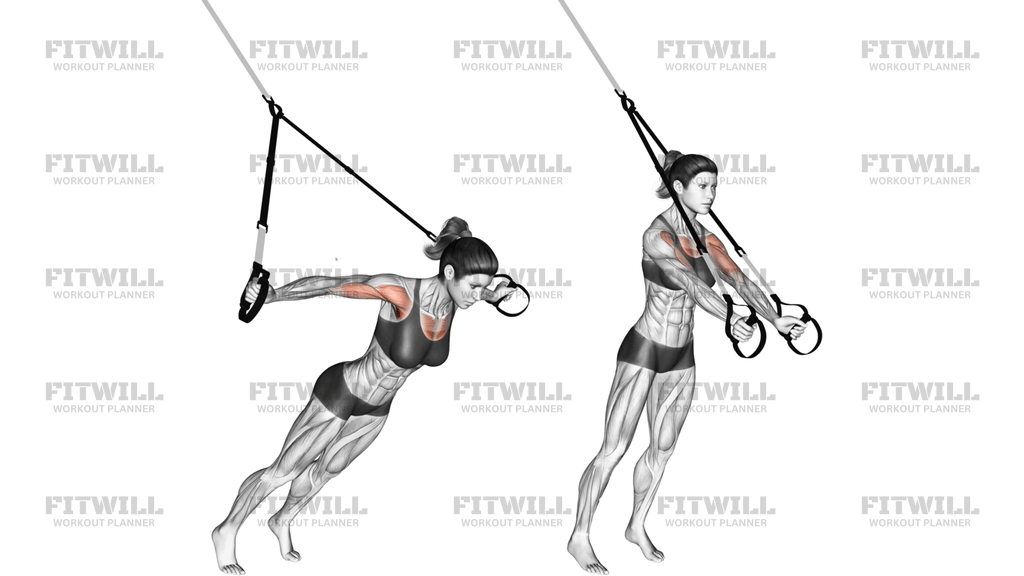
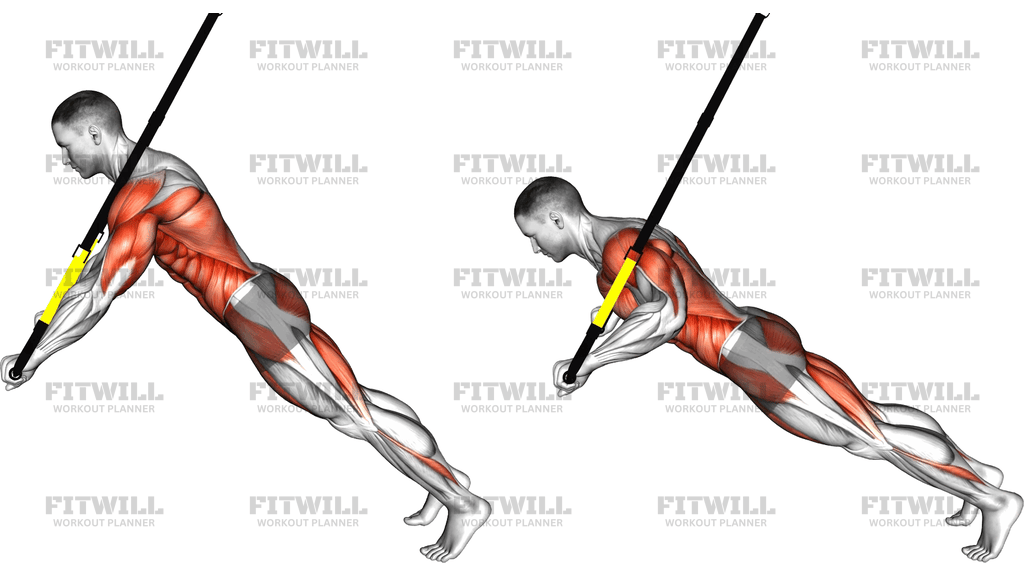
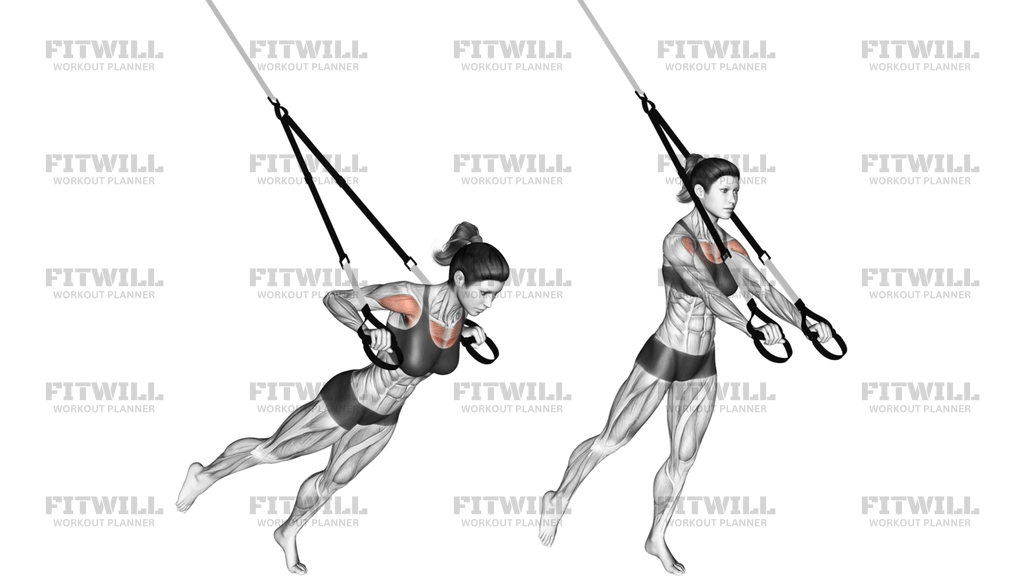
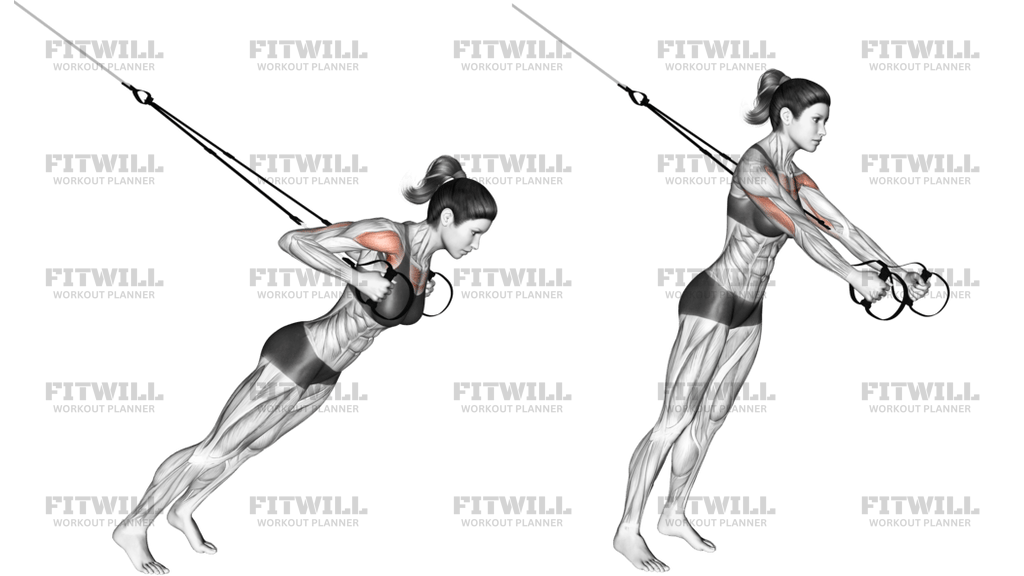
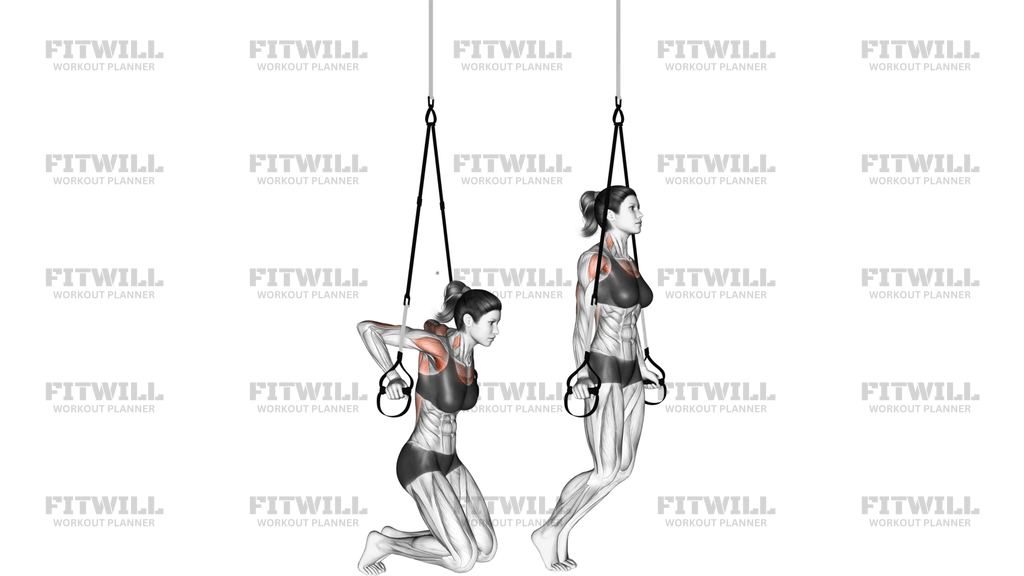
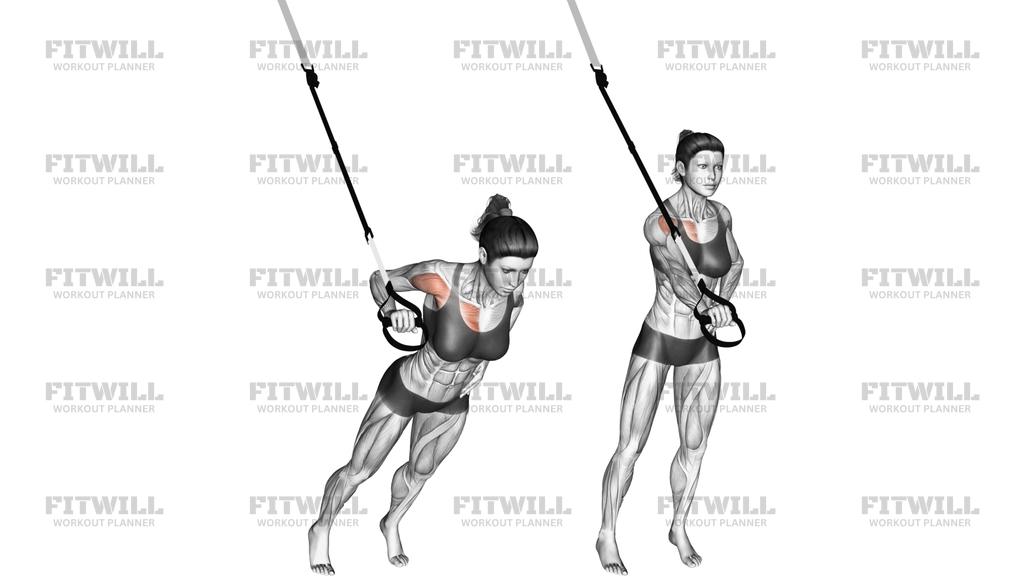
The image shows a standing, leaned-forward setup with one hand pressing from a bent-elbow position and the other side of the body staying quiet. That setup matters because the angle of your feet and torso changes how much bodyweight you are asking the working arm to move. A more upright stance makes the press easier; stepping farther away from the anchor and leaning more forward makes it harder. The goal is to keep the strap taut without letting the shoulder shrug or the torso twist open.
At the bottom of the rep, the working hand should sit near the chest or lower ribs with the elbow bent and the wrist stacked. From there, press the handle forward and slightly inward until the arm is almost straight, then control the return until the elbow comes back under the shoulder line. The movement should feel smooth and deliberate, with the chest driving the press and the core preventing the ribcage from turning toward the strap. Exhale through the press and inhale as you come back.
This exercise is useful when you want chest work that also teaches anti-rotation strength, shoulder control, and clean unilateral pressing mechanics. It fits well in accessory blocks, circuits, or warm-ups for athletes and lifters who need more control than a traditional bench press can provide. Because the load comes from body position rather than plates, the exercise can be scaled very easily by changing lean angle, stance width, or strap length.
The main safety priority is keeping the shoulder packed and the wrist neutral while the body stays in one line from head to heel. If the handle jerks, the torso swings, or the shoulder rolls forward at the bottom, the variation is too hard or the setup is off. Step closer to the anchor, shorten the range, or reduce the lean until each rep looks controlled. When done well, this is a precise chest press that also challenges balance, posture, and bracing without needing a heavy external load.
[ Workout Log & Planner ]
Put your next workout in Fitwill
Keep your plan and training log ready when you are.


Instructions
- Face away from the anchor and hold one suspension handle in the working hand at chest height with a neutral wrist.
- Take a staggered stance and lean forward until the strap is taut, keeping the free hand on your hip or by your side.
- Square your hips and ribs to the floor, then stack the elbow slightly below shoulder height with the upper arm about 45 degrees from your torso.
- Brace your abs and glutes so your body stays in a straight line from head to heel before you start the press.
- Press the handle forward and slightly inward until the arm is almost straight without letting the shoulder shrug.
- Exhale as you press and feel the chest finish the movement, not the lower back or the front of the shoulder.
- Pause for a moment in the extended position while keeping tension in the strap and the torso quiet.
- Return slowly until the hand is back near the chest, resisting rotation and keeping the wrist, elbow, and shoulder aligned.
- Complete all reps on one side, then step back under control and switch hands.
Tips & Tricks
- Use your stance to adjust difficulty: stand more upright to make the press easier and lean farther forward to make it harder.
- Keep the working wrist straight and the handle deep in the palm so the forearm stays lined up with the strap.
- Let the elbow travel on a smooth diagonal path instead of flaring straight out to the side.
- Keep the ribcage stacked over the pelvis; if the chest opens and the low back arches, the load is too heavy.
- Resist the urge to twist toward the anchor as you press; the core should stop the rotation.
- Finish the rep with the arm nearly straight, not with a hard lockout or a shrug toward the ear.
- Control the return for the full eccentric so the strap does not yank the shoulder forward.
- If the handle shakes or the torso rocks, shorten the range of motion before adding more lean.
- Match your breathing to the rep rhythm: exhale on the press, inhale as you come back.
Frequently Asked Questions
What muscles work most in the suspension one-arm chest press?
The chest is the main mover, with the front shoulder, triceps, and core helping to control the press and keep the body from rotating.
Why does this exercise feel harder than a regular chest press?
The suspension strap makes the load unstable, so you have to press and stabilize at the same time instead of moving a fixed bar or dumbbell.
How should the handle sit in my hand?
Keep the handle deep in the palm with a neutral wrist so the forearm stays in line with the strap and the shoulder does not take over.
How do I know if my body angle is right?
If you are almost upright, the press will be easier; if you lean farther forward, the exercise gets harder. Choose an angle that lets you stay square and controlled.
What is the most common mistake with this movement?
The biggest error is twisting the torso or letting the shoulder shrug forward when the arm reaches out. Both usually mean the stance is too aggressive.
Can beginners use this exercise?
Yes, but they should start with a more upright body angle and a shorter range of motion until they can keep the ribs and hips quiet.
Should I feel this in my core too?
Yes. The free side of the body has to resist rotation, so the obliques and deep trunk muscles should work along with the chest.
What should I change if my shoulder feels uncomfortable?
Step closer to the anchor, reduce the lean, and stop the press a little earlier so the shoulder stays packed and pain-free.