Kneeling To Box Jump
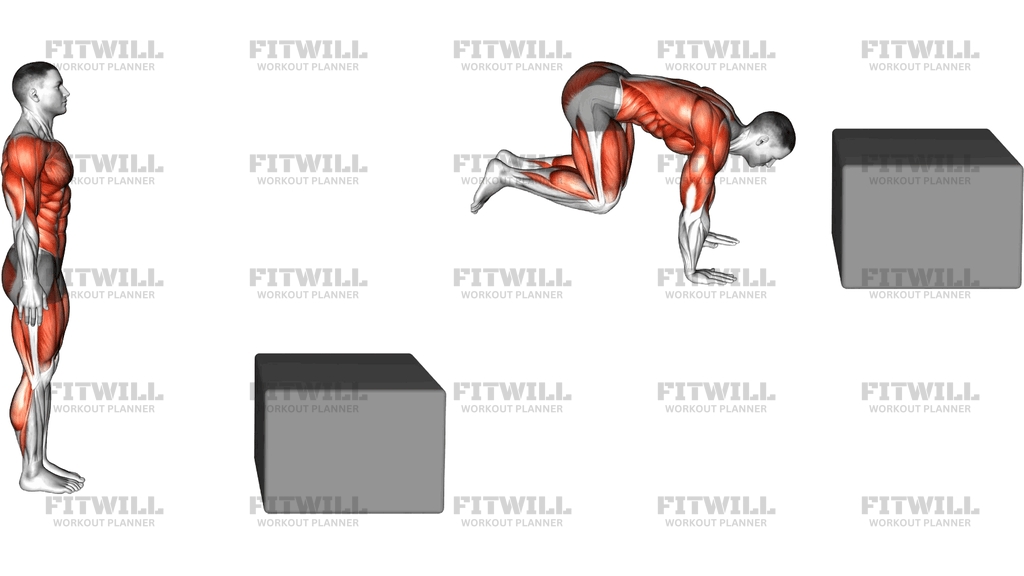
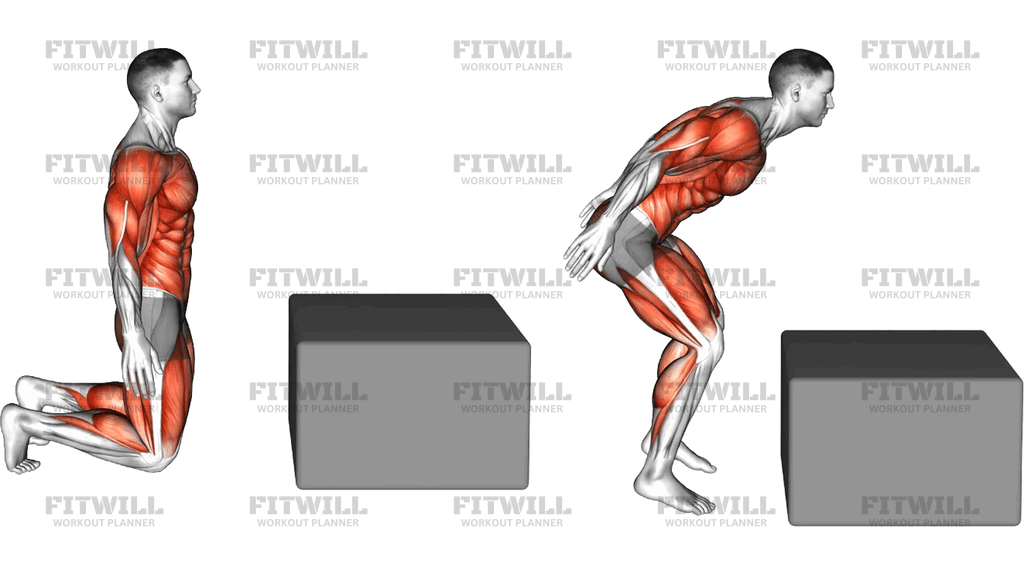
The Kneeling To Box Jump is an explosive lower-body drill that starts from a tall kneeling position on the floor and finishes with you landing on a sturdy plyo box or step platform in front of you. From your knees, you rock back, then violently swing your arms forward and drive your hips up and forward so your feet whip underneath you and land on top of the box. It is one of the most demanding expressions of hip power you can do without weights, because you have to generate force from a position where your legs have almost no mechanical advantage.
This movement is popular with athletes who need rapid hip extension — sprinters, martial artists, wrestlers, football and rugby players — and with intermediate to advanced lifters who want a fresh stimulus for explosive strength. It is not a beginner plyometric. If you cannot yet perform a confident standing box jump with a soft, quiet landing, build that skill first before attempting to jump from your knees.
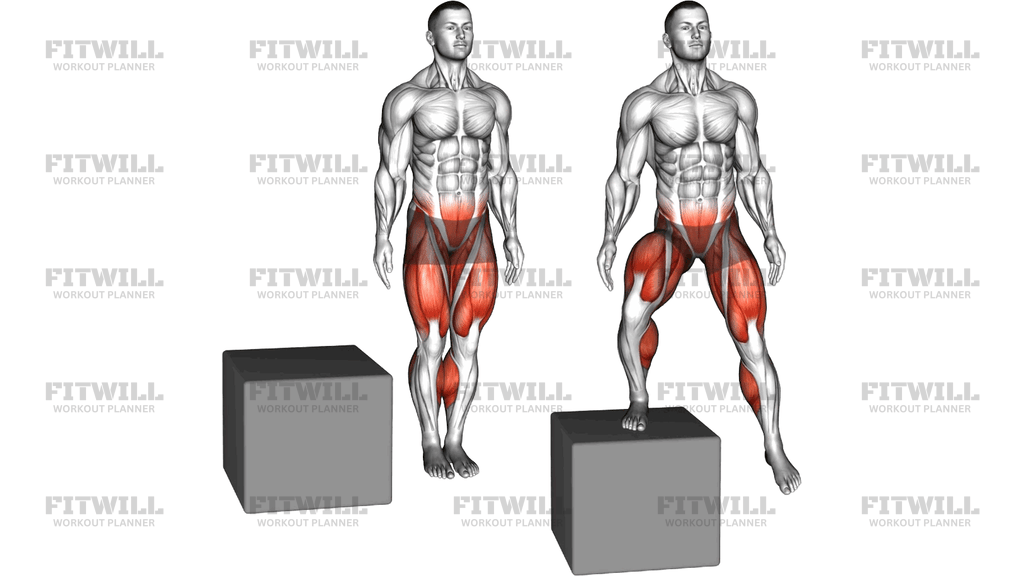
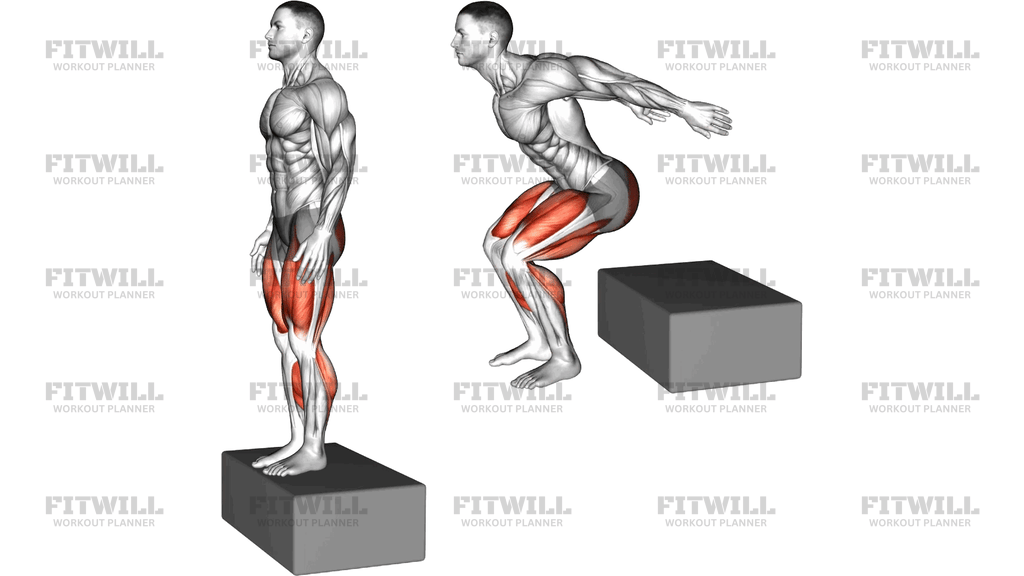
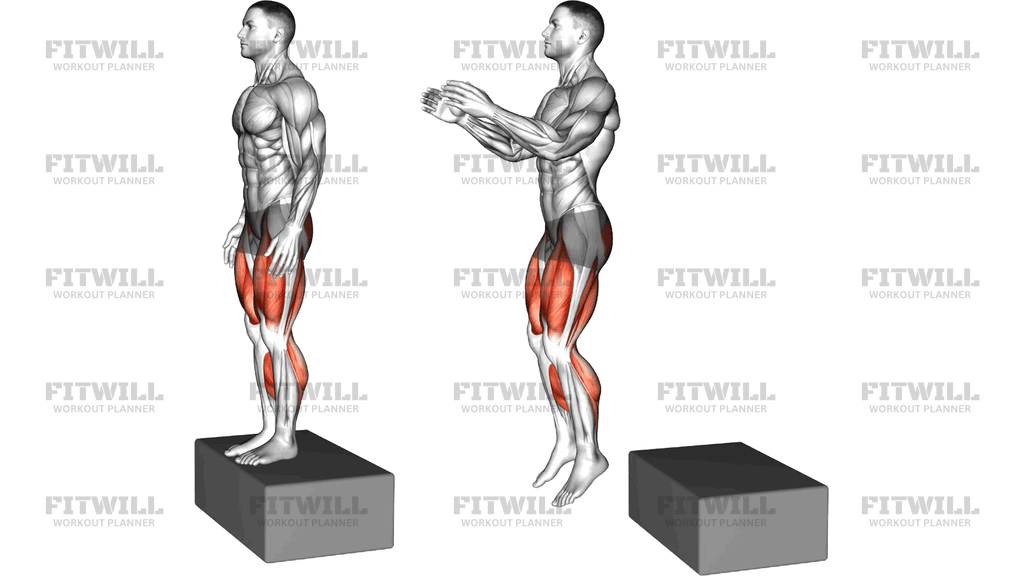
The main drivers are the quads and glutes, which extend the hips and knees to launch you upward, while the hamstrings and calves help snap the feet under your body for the landing. Your core works hard throughout: it braces the torso during the arm swing and stabilizes your spine as you absorb the landing. The hip flexors also play a visible role, pulling the knees forward so your feet clear the floor and reach the box.
Setup matters more here than in almost any other jump variation. The box must be low enough that you can realistically land on it from a kneeling start — most people do well with a height they could comfortably step onto, well below their standing box jump height. Position the box close enough that your feet will land on it, but leave a small gap so your shins do not clip the edge. The surface should be non-slip and stable, and the landing area on top should be completely clear.
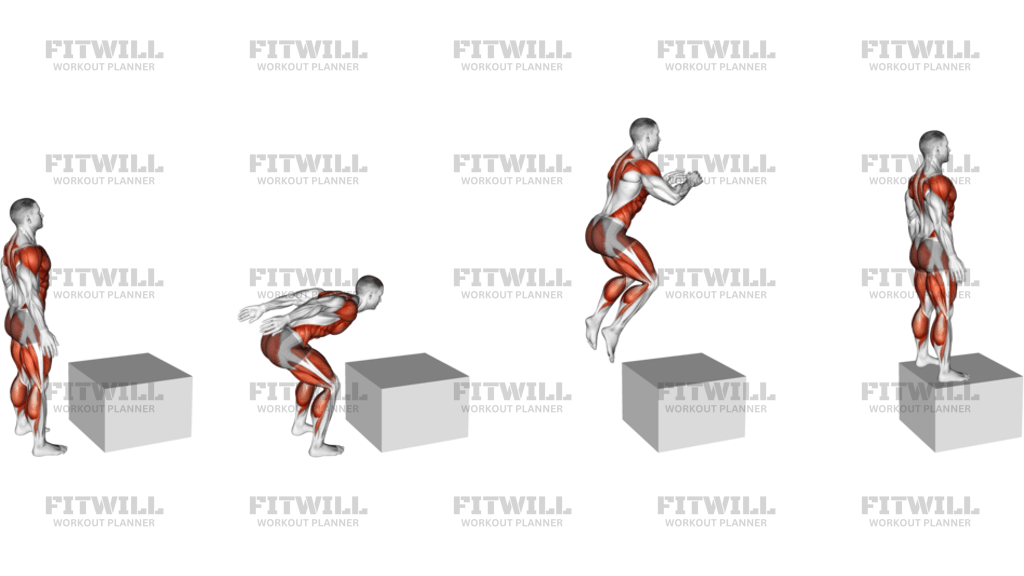
To execute well, sit tall on your knees with your torso upright and arms relaxed at your sides. Rock your hips back toward your heels while sweeping your arms behind you, then reverse the motion explosively: arms whip forward and up, hips drive forward and up, and your feet snap under you as you rise. Land on the box in a quarter squat with your weight mid-foot and your chest up, then stand tall to complete the rep. Step down one foot at a time, reset your kneeling position, and take a breath before the next attempt.
Because every rep is a maximal effort, treat this as a power exercise, not a conditioning one. Keep the sets short, rest fully between attempts, and stop as soon as your height or landing quality drops. Fatigue turns an effective explosive drill into a shin-scraping, ankle-rolling hazard, so quality of landing — not number of reps — is the standard you chase.
[ Workout Log & Planner ]
Put your next workout in Fitwill
Keep your plan and training log ready when you are.


Instructions
- Set a stable plyo box or step platform a short step in front of you, choosing a height you can clearly land on from a kneeling start, well below your standing jump height.
- Kneel on the floor facing the box with your knees about hip-width apart, the tops of your feet flat on the ground, and your torso held upright with arms hanging at your sides.
- Brace your core and keep your gaze forward toward the box so your head and spine stay aligned through the whole movement.
- Rock your hips back toward your heels while sweeping both arms behind you to load the jump, keeping your chest tall.
- Explosively reverse the motion: swing your arms forward and overhead while driving your hips forward and up off your knees.
- As you rise, flex your knees and snap your feet forward and under you so they clear the floor and travel toward the box.
- Land on top of the box in a quarter squat with both feet flat, knees tracking over your toes, and your weight mid-foot.
- Stand fully upright on the box to finish the rep, then step down one foot at a time rather than jumping off.
- Exhale sharply on the jump, breathe as you stand, and take a full reset and a breath or two of rest before kneeling back down for the next rep.
Tips & Tricks
- Scraped shins are the most common complaint on this drill, and they almost always mean the box is too close or too high. Move the box back an inch or two or drop the height until your feet land cleanly on top.
- If you stall out and simply fall forward onto your feet instead of jumping, you are rocking back too slowly. The loading phase should be quick and snappy — think of it as a counter-movement, not a stretch hold.
- Drive the arms deliberately. Jumping from kneeling without a forceful forward arm swing strips most of the momentum out of the movement and turns it into a struggle.
- Squeeze your glutes and brace your abs at the moment of takeoff; a soft, folded torso at the hips leaks power and dumps you forward toward the box edge.
- Land quietly. A loud slap on the box means stiff knees and no absorption — aim for a soft quarter squat that catches your weight through the hips.
- Keep the reps low, around 3 to 5 per set. This is a nervous-system drill, and your last rep should feel as crisp as your first.
- Warm up with standing box jumps and bodyweight squats first so your knees, ankles, and hips are ready for the unusual takeoff angle.
- Do not attempt this on a wobbly aerobic step stacked too high or on a slippery surface — a shifting box mid-jump is the single biggest injury risk in this exercise.
- If your knees or the tops of your feet are uncomfortable in the kneeling position, kneel on a mat or pad; the takeoff itself should never hurt.
Frequently Asked Questions
What muscles does the Kneeling To Box Jump work?
The quads and glutes do the main work of extending your hips and knees to launch you off the floor, with help from the hamstrings and calves on takeoff and landing. Your core braces hard through the arm swing and stabilizes the landing.
Is the Kneeling To Box Jump suitable for beginners?
It is best treated as an intermediate drill. Beginners should first be comfortable with tall kneeling hip hinges and standard standing box jumps with soft landings before adding the kneeling takeoff, which demands much more hip power.
How high should the box be for the Kneeling To Box Jump?
Start low — typically the height of a single sturdy step or a box you could step onto easily. Because you lose the pre-stretch and leverage of a standing start, most people need a box well below their standing box jump height.
How far should the box be from my knees at setup?
Place it close enough that your feet can land on top, usually a foot or so in front of your knees, but leave a small gap so your shins cannot strike the edge if a rep falls short.
Why do I keep falling forward onto my feet instead of jumping?
This usually means the arm swing and hip drive are too slow or the hips are folding at takeoff. Make the rock back snappy, whip the arms forward hard, and squeeze the glutes to keep your torso rigid as you leave the ground.
Can I do the Kneeling To Box Jump without a box?
Yes — the kneeling jump to a standing squat position (often called a no-hands getup or ninja jump) trains the same hip drive. The box just gives you a defined target and slightly increases the demand on landing.
How many reps and sets should I do?
Keep it to 3 to 5 quality reps per set with full rest between sets, for 3 to 4 sets. Stop the set as soon as your jump height or landing quality noticeably drops.
Should I jump back down off the box after landing?
No. Step down one foot at a time to protect your knees and ankles. The taxing part of this drill is the takeoff from kneeling, so there is no benefit to adding a high-impact drop landing.
What surface is safest for kneeling before the jump?
A gym floor or rubber matting works well. If the ground is hard, place a thin pad under your knees — just make sure it cannot slide when you drive out of the bottom position.