Box Drop 2 Foot Land
The Box Drop 2 Foot Land is a landing-focused plyometric drill where you step off a low box or platform and absorb the drop with both feet at the same time, sinking into a controlled quarter squat before standing back up. Unlike a depth jump, there is no rebound jump out of the landing — the entire point is to teach your body how to accept force cleanly, which is one of the most overlooked skills in general training.
This movement is useful for almost anyone who moves. Athletes in jumping and cutting sports use it to build the eccentric strength and landing mechanics that protect the knees during games. Beginners use it as the entry point before attempting any jump training, because learning to land should always come before learning to fly. General lifters benefit too, since controlled landings load the quadriceps, glutes, and calves in a way slow lifting tempo only approximates.
The setup matters more than it looks. The box should be low — roughly knee height or below — and stable, with a clear, non-slip landing surface in front of it. You simply step off the edge rather than jumping, which keeps the drop height honest and the impact manageable. Starting too high turns a technique drill into a joint-bashing contest, so err on the side of a lower box until your landings are quiet and consistent.
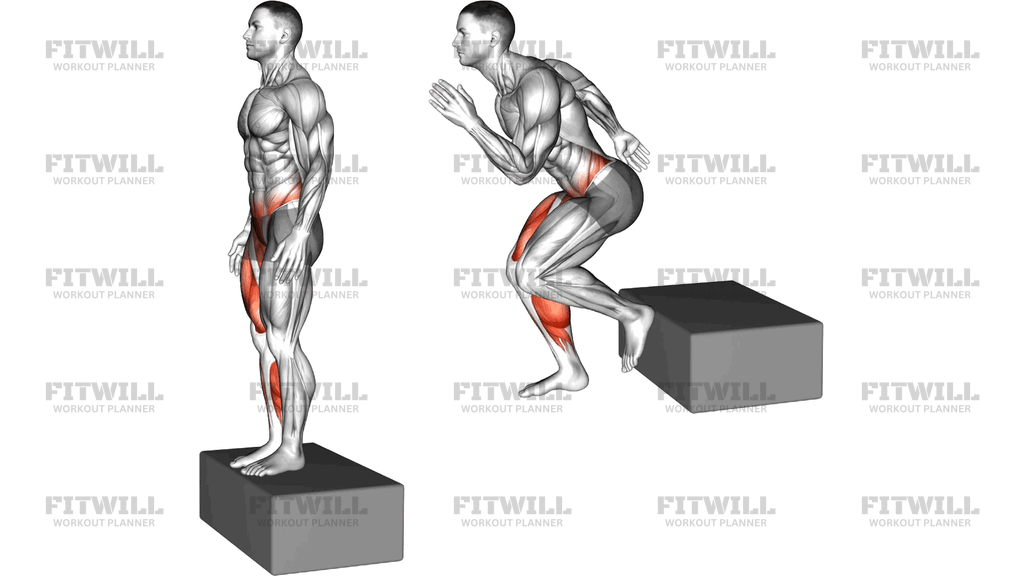
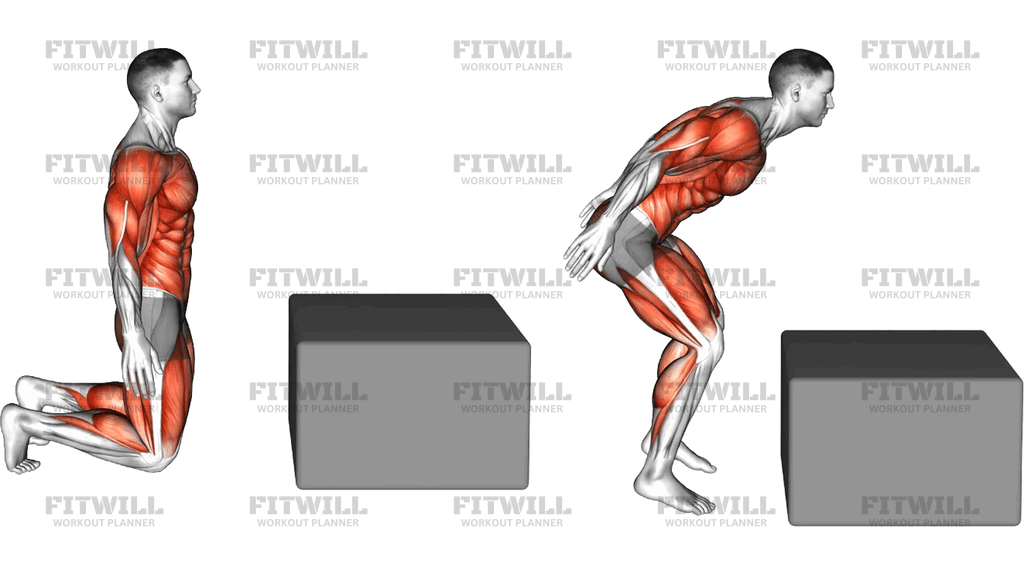
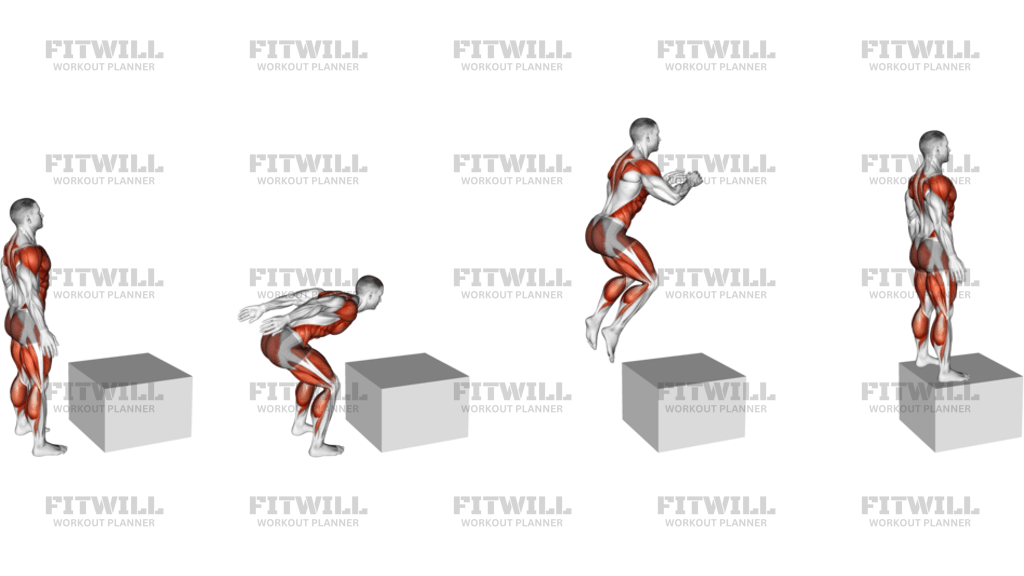
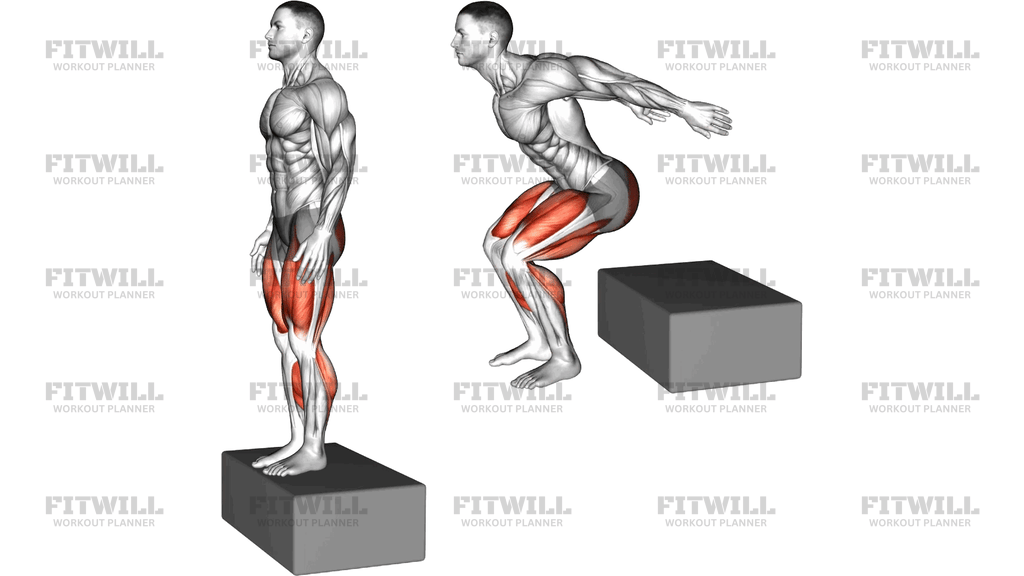
Execution is about stiffness in the right places and softness everywhere else. Keep your torso tall with a slight forward lean, bend your knees and hips together as you land, and let your arms swing behind you for balance, matching the position shown in the movement. Your weight should spread across both feet, with knees tracking over the middle of the foot rather than collapsing inward. The landing should sound quiet; a loud slap means you are stiff-legged and absorbing force in your joints instead of your muscles.
A common use case is as a warm-up primer before squats, sprint work, or jump training — a few crisp landings wake up the nervous system without causing fatigue. It also works as a standalone block in a plyometric session, typically for 3 to 5 sets of 3 to 5 quality reps with full recovery between sets. Because the demand is neurological as much as muscular, quality beats quantity every time.
From a safety standpoint, respect the surface and the volume. Land on a firm, even floor with cushioning if available, stop when your landings get sloppy, and keep the drop height conservative. If you have existing knee, hip, or ankle issues, master floor-level squats and step-downs first, and consider starting from a very low platform before progressing.
[ Workout Log & Planner ]
Put your next workout in Fitwill
Keep your plan and training log ready when you are.


Instructions
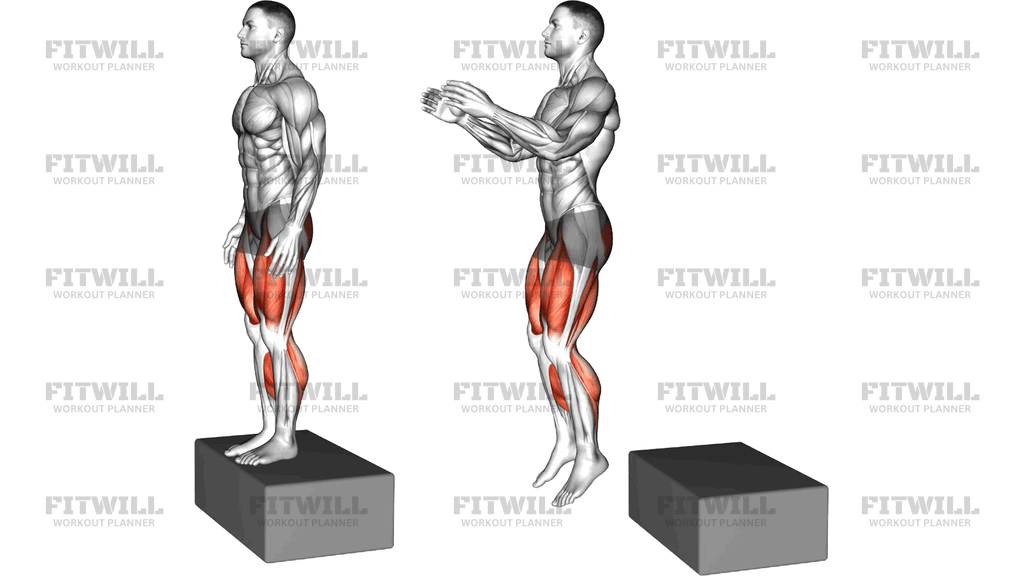
- Stand tall on top of a stable box or step platform with both feet together at the front edge and your arms hanging naturally at your sides.
- Check that the floor in front of the box is clear and even, and set your gaze slightly ahead rather than down at your feet.
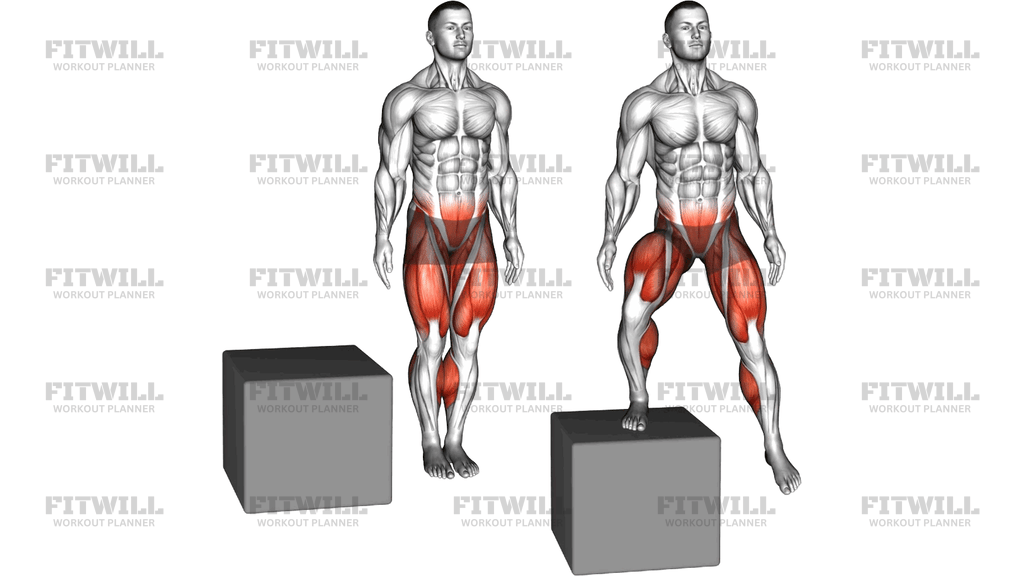
- Step off the edge with one foot and let gravity drop you — do not jump upward or push off explosively.
- As you fall, keep your chest up with a small forward lean and prepare to meet the ground with both feet at the same time.
- Land on the balls of both feet simultaneously, letting your heels settle down as your knees and hips bend together into a quarter squat.
- Swing your arms back behind your body as you descend to counterbalance the torso lean, as shown in the landing position.
- Keep your knees tracking in line with your toes and your weight spread across the middle of both feet as you absorb the impact.
- Exhale as you land, then drive through both feet to stand fully upright out of the quarter squat.
- Reset by walking back to the box calmly, standing tall at the edge, and setting your next rep before stepping off again.
- Breathe normally between reps, staying relaxed in the shoulders and face — tension before the drop ruins landing quality.
Tips & Tricks
- Aim for a quiet landing. If your heels slap the floor, your legs are too stiff — think about bending your knees and hips at the same moment instead of only the knees.
- Step, don't jump. Pushing off the box turns the drill into a higher-impact drop and defeats the purpose of learning to absorb a controlled fall.
- Watch for knee collapse. If your knees cave inward on landing, cue yourself to spread the floor slightly with your feet and land with knees over the second toe.
- Keep the box below knee height. Most landing errors come from excessive drop height, not poor intent — progress height only once every landing is silent and symmetrical.
- Do not let your torso pitch too far forward. A slight lean is natural, but if your chest drops toward your thighs you are folding at the hips and dumping stress away from the legs.
- Stop the set when landings get uneven. The drop catches you off guard as fatigue builds, and a sloppy second-half rep reinforces bad mechanics.
- Land flat-footed after the ball of the foot touches first. Perching permanently on the toes or slamming the heels both miss the point of the drill.
- Use full rest between sets — this is a nervous system drill, so treat it more like a sprint than cardio work.
- Film yourself from the side occasionally. Asymmetry between feet or a one-sided landing pattern is much easier to spot on video than to feel mid-rep.
Frequently Asked Questions
What muscles does the Box Drop 2 Foot Land work?
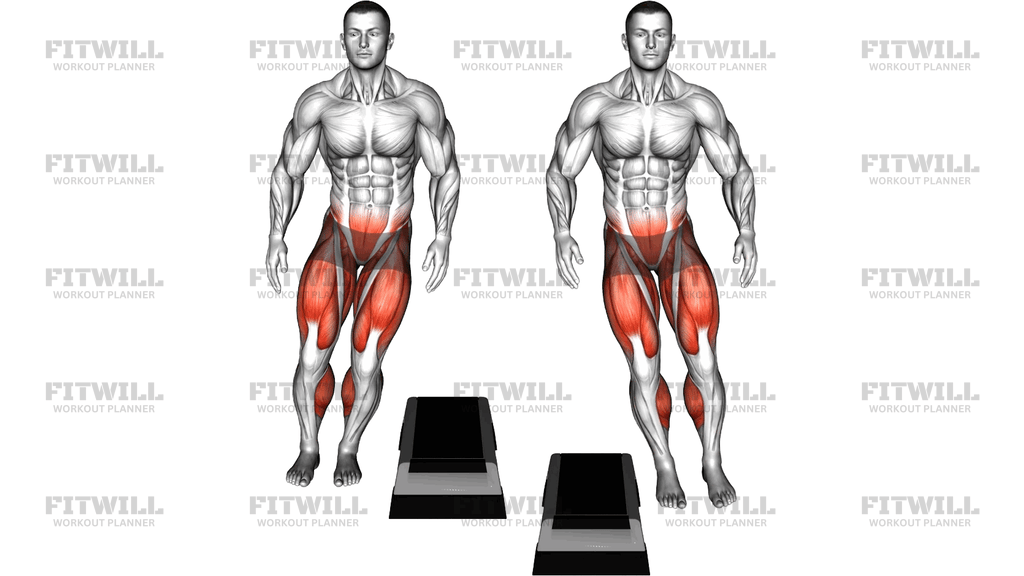
The quadriceps, glutes, and hamstrings absorb the bulk of the landing force, while the calves and ankle stabilizers control the foot strike. Your core works isometrically to keep the torso tall through impact.
How high should the box be for the Box Drop 2 Foot Land?
Start around 30 to 45 centimeters, roughly below knee height. The goal is a drop you can land quietly with perfect knee alignment, so choose height based on landing quality, not bravado.
Should I step off the box or jump off it?
Step off. Jumping raises the effective drop height and turns the drill into an uncontrolled impact. The exercise is designed for a clean, repeatable fall that you learn to absorb.
Is the Box Drop 2 Foot Land good for beginners?
Yes, and it is arguably the best first plyometric drill for beginners because it removes the jumping requirement. Once your landings are consistently quiet and symmetrical, you can progress to depth jumps or box jumps.
Why do my knees hurt a little after this drill?
Knee soreness usually means the drop height is too high or you are landing stiff-legged with your weight on the heels. Lower the box, land on the balls of the feet, and bend hips and knees together to shift absorption into the muscles.
How many reps and sets should I do?
Keep it low-volume: 3 to 5 sets of 3 to 5 landings with full rest between sets. This is a technique and nervous system drill, and quality drops off sharply with fatigue.
Can I use the Box Drop 2 Foot Land as a warm-up?
Yes, a few crisp landings before squats, sprints, or jump training prime the legs for absorbing and producing force. Keep it to a couple of easy sets so you do not fatigue yourself before the main work.
What can I substitute if I don't have a box?
Use any stable, low, non-slip surface such as a sturdy step or low platform. If nothing is available, practice two-foot landings from a small hop close to the floor, keeping the same quiet, knees-over-toes landing mechanics.
How is this different from a depth jump?
A depth jump adds an explosive rebound jump immediately after landing, while the Box Drop 2 Foot Land ends with a controlled stand-up. The drop-only version builds landing mechanics first, which should always come before rebound work.
What surface should I land on?
A firm, even floor with some give, such as a gym floor or rubber matting, works best. Avoid uneven ground, concrete if possible, or soft thick foam that lets your ankles wobble on contact.