Suspension Hamstring Runner
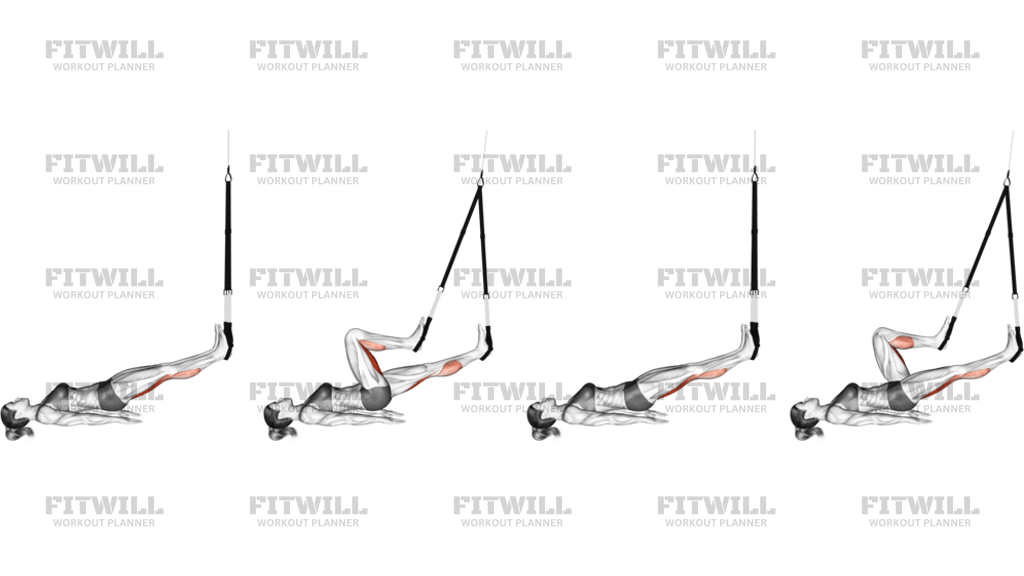
Suspension Hamstring Runner is a suspension-based hamstring drill performed with your heels in the straps while you hold a bridge on the floor. It trains the hamstrings hard, but it also asks the glutes and trunk to keep the pelvis level while one leg bends and the other lengthens. Because the movement alternates from side to side, it rewards rhythm, symmetry, and control more than brute force.
The setup matters because the straps become your only foot contact, and small changes in strap length or body position change the demand on the hamstrings. Lie on your back under the anchor, place your heels in the cradles, and press the floor away until your hips are lifted enough to keep the line from shoulders through knees steady. If the hips sag or the low back takes over, the exercise stops feeling like a hamstring drill and turns into a compensation pattern.
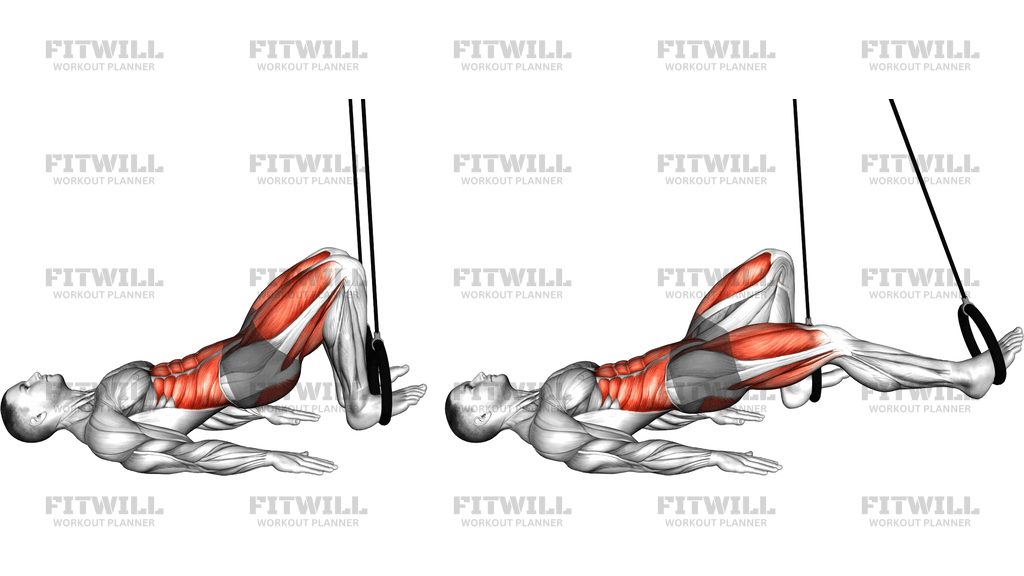
The working phase is a running-style march against suspension tension. As one knee drives in, the opposite leg reaches long without letting the pelvis twist or the ribs flare, then you switch sides smoothly. The goal is to keep the bridge height consistent while the legs alternate, so each rep teaches the hamstrings to stabilize the hips as well as bend the knees.
Suspension Hamstring Runner is useful as accessory work, hamstring-focused conditioning, or as a bridge between basic hamstring curls and harder single-leg suspension work. It fits well after a warmup or lower-body lift when you want posterior-chain tension without loading the spine. Tempo matters more than speed: clean switches, quiet hips, and a controlled return will give you more value than trying to race through reps.
Use lighter leverage and a shorter range if your hamstrings cramp or your bridge collapses as soon as one leg extends. The safest version is the one where you can keep both straps even, your pelvis square, and your neck relaxed on the floor. When those pieces stay organized, Suspension Hamstring Runner becomes a very specific way to build hamstring strength, hip control, and single-leg coordination at the same time.
[ Workout Log & Planner ]
Put your next workout in Fitwill
Keep your plan and training log ready when you are.


Instructions
- Lie on your back under the suspension anchor and place your heels in the foot cradles so the straps support both feet evenly.
- Bend your knees, plant your arms on the floor, and position your shoulders down with your head resting long on the mat.
- Press through your heels and lift your hips into a bridge until your body is supported from shoulders to knees.
- Keep your ribs down and your pelvis level before you start the alternating leg action.
- Drive one knee in toward your chest while the other leg reaches long, keeping tension on both straps.
- Switch legs in a smooth runner pattern without letting your hips drop or twist.
- Pause briefly when one leg is curled in and the other is extended, then reverse the action under control.
- Continue alternating for the planned reps while breathing steadily and keeping the bridge height consistent.
- Lower your hips to the floor, remove your feet from the straps, and reset the setup before the next set.
Tips & Tricks
- Keep the straps even in length so one heel does not sit higher and rotate your hips.
- Press through the heel that is staying in the strap; letting the toes take over usually shortens the hamstring tension.
- If your low back arches, lower the bridge height instead of forcing a bigger leg swing.
- A smaller runner range is fine as long as the pelvis stays square and the straps keep moving smoothly.
- Slow the switch between legs if the motion becomes jerky or the hamstrings start to cramp.
- Squeeze the glutes at the top so the hips stay lifted while the knees alternate.
- Keep the chin relaxed and the ribs stacked over the pelvis to avoid turning the rep into a back extension.
- Stop the set when one leg can no longer extend fully without the bridge collapsing.
Frequently Asked Questions
What muscle does Suspension Hamstring Runner target most?
The main target is the hamstrings, especially as they work to bend the knee and hold the hips up while the legs alternate.
Where should my feet sit in the suspension straps?
Place your heels securely in the cradles so the straps support the back of the foot evenly. If the foot slips or feels unstable, shorten the setup and make sure both straps match.
Should my hips stay up the whole time in Suspension Hamstring Runner?
Yes. The bridge should stay lifted while the legs alternate, and the pelvis should stay as level as possible from rep to rep.
Is Suspension Hamstring Runner the same as a regular hamstring curl?
It is a runner-style version of a suspension hamstring curl. Instead of both legs moving together, the legs alternate, which adds more pelvic control and coordination demand.
Can beginners do Suspension Hamstring Runner?
Yes, but most beginners should use a smaller range and a lower bridge first. If the hips drop or the hamstrings cramp immediately, start with a basic suspension hamstring curl instead.
Why do my hamstrings cramp during Suspension Hamstring Runner?
Cramps usually mean the range is too big or the hips are too high for your current control. Shorten the motion, keep the glutes active, and build tolerance with slower reps.
What common mistake should I watch for with the straps?
A common error is letting one strap go slack while the other does all the work. Keep both straps under tension so the alternating pattern stays smooth and even.
How can I make Suspension Hamstring Runner harder without adding weight?
Slow the switches, hold the bridge slightly longer at the top, or extend the opposite leg farther while keeping the hips level. Those changes increase hamstring and trunk demand without changing the setup.